





 Portuguese
  English
  Spanish
  2 min of reading
  0 comments


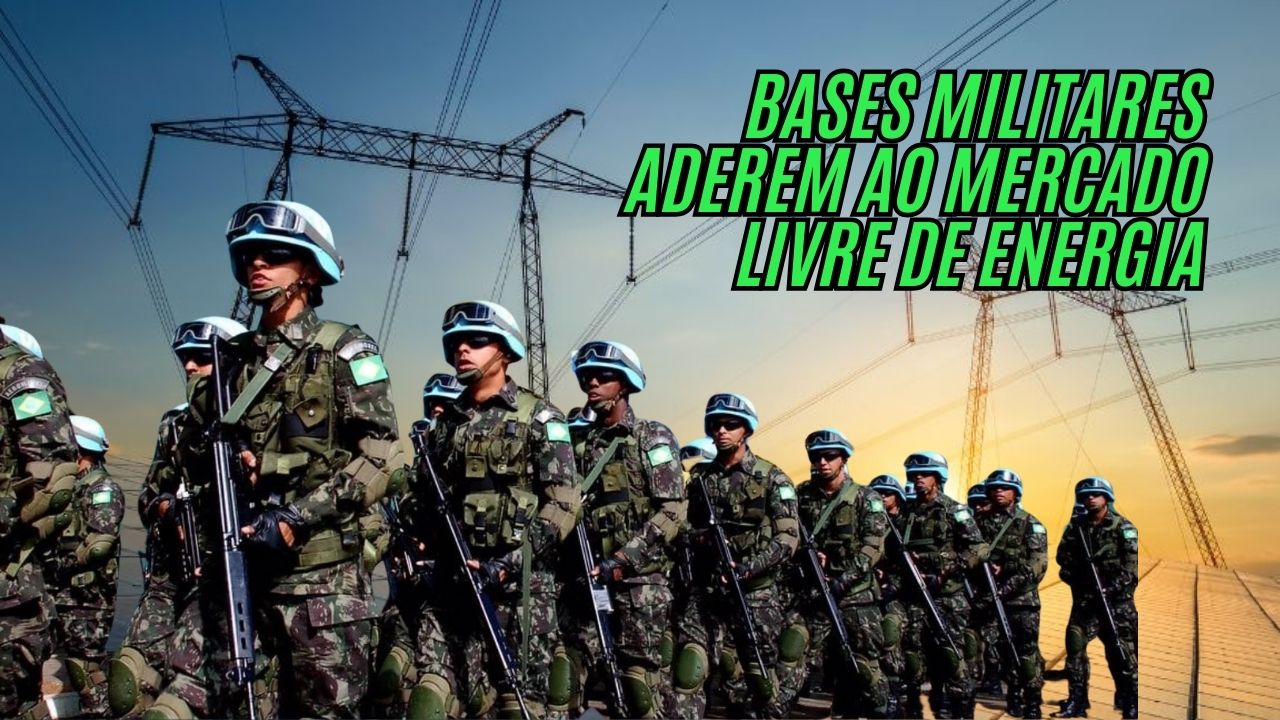
Military Bases Join the Free Energy Market, Promising Huge Savings and Redefining Public Spending in Brazil.
The migration of the Armed Forces to the Free Energy Market promises to transform the financial management of Navy, Army, and Air Force bases. Since October, several military units have joined the Free Market Environment (ACL), with savings forecasts that may exceed R$ 160 million by 2030.
The opening of the Free Energy Market to consumers with a demand of less than 500 kilowatts (KW) in 2024 was the starting point for the inclusion of the Armed Forces in this scenario.
Recently, the Brazilian Navy announced contracts for the migration of 18 military bases located in states such as Bahia, Federal District, and Rio de Janeiro. The change has already resulted in agreements with major suppliers, such as Matrix Energia and Urca Trading.
-
Brazil raises alarm to avoid blackout: the country may need 3 Itaipus and is already wasting up to 5,135 MW of energy on days of excess solar.

-
Renewable energy advances over protected areas in Brazil, and a survey by the Energy Transition Observatory reveals silent impacts that challenge environmental conservation and pressure sensitive traditional territories.

-
Rio Grande do Sul accelerates energy transition: State invests in renewable technologies and consolidates decarbonization strategies and pathways to attract billions in new industrial investments.

-
With 160,000 m² of collectors, an area larger than 20 football fields, Silkeborg, in Denmark, hosts a solar thermal plant that heats 19,500 homes and could become the largest solar heating plant in the world.


The Taubaté Air Force Base, under Army control, and Air Force facilities have also joined the model, demonstrating that the migration is more than a trend, becoming an essential strategy to optimize spending.
Significant Cost Reduction
The savings generated by joining the Free Energy Market are significant. According to Gilberto Rossi, commercial manager of Matrix Energia, the movement is crucial for reducing public spending:
“The path for the public sector is this. It is to enter the free market safely, well advised, well grounded. It will reduce spending for us, the taxpayers.”
Studies by the Energy Research Company (EPE) indicate that public agencies consume about 15 gigawatt-hours (GWh) per year, representing 3% of all electricity in Brazil. With the migration, cost reductions can exceed 30%, easing the public coffers.
Intense Competition Among Suppliers
Matrix Energia, which won bids for seven Navy bases, is eyeing new opportunities in the public sector. Urca Trading, with contracts in the Navy, Air Force, and municipalities such as Porto Alegre and Rio de Janeiro, is betting on an increasingly consolidated market.
According to Roni Wajnberg, director of Urca Trading, the market dynamics resemble the evolution of the telecommunications sector in the 2000s, with mergers and acquisitions:
“We are already seeing a market with considerable movement regarding consolidation, mergers, acquisitions, and that will most likely happen.”
Future Perspectives
In addition to serving large consumers in industries and public services, suppliers are already preparing for the possible opening of the Free Energy Market to residential consumers. This change will further broaden the reach and benefits of this model.
Meanwhile, the Armed Forces continue to be at the forefront of this transformation, setting an example for other public agencies by taking advantage of the flexibility and financial advantages provided by the Free Energy Market.









Seja o primeiro a reagir!