





 Portuguese
  English
  Spanish
  7 min of reading
  1 comment


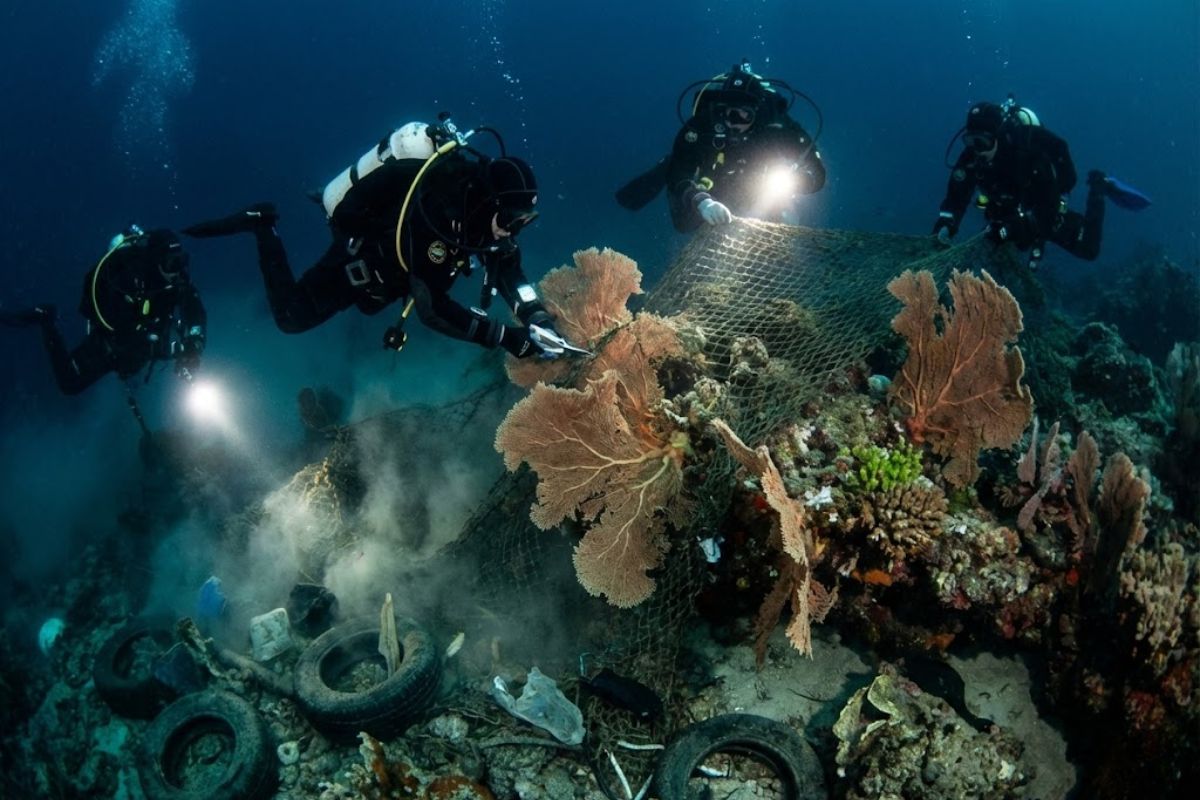

In La Herradura, In Spain, Volunteers Descend to the Ocean Bottom, Use Technical Diving, Remove Debris from Industrial Fishing, and Push for Real Protection of a Reef That Existed for Hundreds of Thousands of Years.
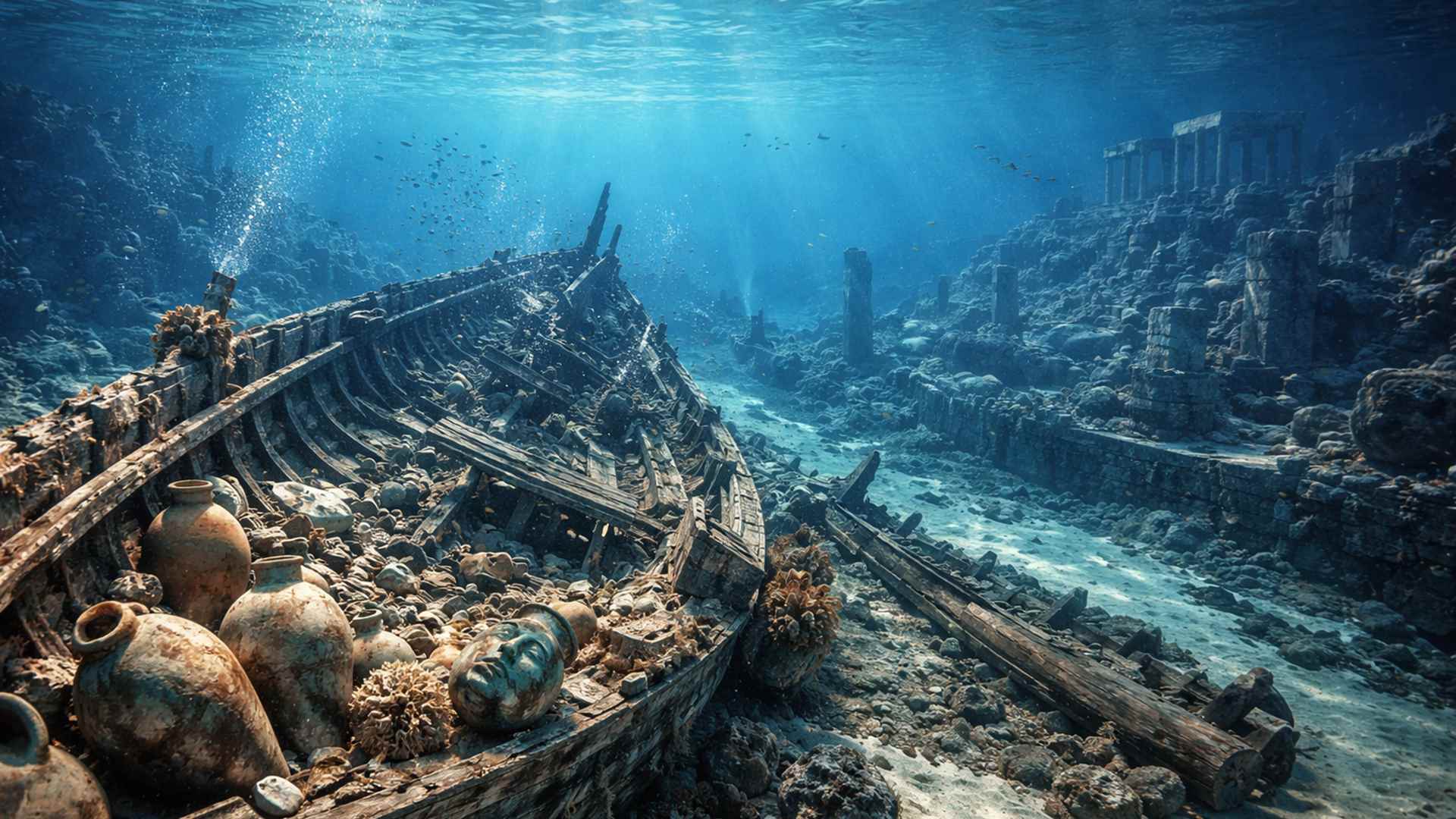
In the Mediterranean, on the coast of La Herradura, In Spain, a group of divers decided to go where almost no one looks: the ocean floor. They dive to 40 meters deep to free a reef suffocated by abandoned fishing nets, facing unpredictable currents and a job that requires technique, controlled timing, and real risk with each operation.
The mission is straightforward and brutally concrete: cut, unscrew, and remove ghost nets and fishing lines that have become entangled in the reef and act as a permanent trap, strangling endangered corals, degrading the habitat and pushing that “underwater paradise” into a decline that has lasted for decades, while official protection remained only on paper.
The Reef That Sustained Life and Became a Place of Suffocation

A reef is more than “pretty coral.” It serves as the physical structure of the ecosystem, as shelter, as a feeding area, and as a survival corridor for countless forms of life.
-
Expedition 501: Scientists drill into the ocean floor and discover a giant reserve of fresh water hidden beneath the sea, extracting nearly 50,000 liters and revealing an invisible system that could reshape the map of water scarcity.
-
Archaeologists find an intact tomb over 2,500 years old, with more than 100 preserved objects, weapons, jewelry, and human remains never touched.
-
Volcanic lava transforms into threads as fine as human hair that travel over 30 kilometers by wind and fall like cutting rain on roofs and backyards in Hawaii and Iceland.

-
NASA issues a warning for the feared Godzilla El Niño that could change the planet’s climate in 2026 with extreme warming of the Pacific capable of causing devastating droughts in some regions and historic floods in others simultaneously.


In the case of La Herradura, the sea floor hosts one of the most diverse ecosystems in the Mediterranean, with cold-water corals and a fauna that appears in layers: corals, fish, octopuses, and marine life of different sizes, species, and functions.
However, the same complexity that makes the reef so valuable also makes it vulnerable: when nets and lines get caught in the branches, they become “dead weight” that doesn’t go away.
Instead of an isolated event, it turns into a slow, silent, and continuous process of suffocation.
The net doesn’t need to “attack” the coral; it just needs to stay there, pressing, scraping, covering, impeding circulation and occupying the space that should be alive.
The Pollution That Sinks and Disappears from View

Most people imagine ocean pollution as floating patches on the surface. But here, the main threat is the one that disappears from sight.
The logic described by the team is simple and frightening: most plastic and ocean-related debris sinks, and what sinks ends up exactly where the life of the reef happens.
This “invisible” part is what makes the problem persistent. On the ocean floor, debris is not only ugly: it slowly strangles marine life and is often never recovered.
And this has a direct impact on the reef, because reefs are rare in the ocean and still support a huge portion of marine life.
In the case described in La Herradura, the situation becomes even harsher when the source of the debris comes into play.
It is estimated that over 75% of the plastic in the oceans comes from the fishing industry, made up of nets, lines, and debris related to fishing.

In the La Herradura area, the mission itself suggests that this number is even higher, which helps explain why ghost nets have become the everyday enemy of that reef.
An Ecosystem Protected “On Paper” and Abandoned in Practice
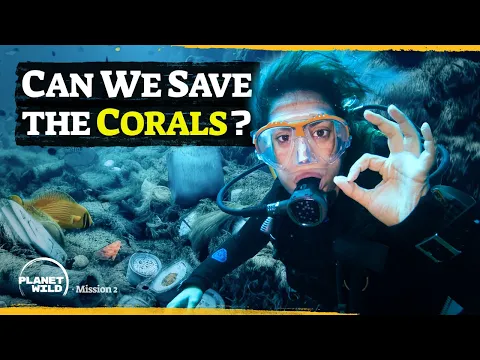

There is a point that changes the tone of the story: those sea bottoms are treated as formally protected, but the actual enforcement of the rules does not happen.
The team describes a contradiction that is common in coastal ecosystems: the status of protection exists, but the supervision and effective removal of what destroys the reef do not follow.
It is in this vacuum that the local response appears. Marina, presented as someone who knows the ocean floor of La Herradura “better than anyone,” has spent years pushing for action and seeing little done.
From frustration was born the initiative that became the engine of rescue: Coral Soul, the local organization described as the only one facing the problem head-on, with repeated, risky, and continuous work.
Coral Soul: Diving, Cutting, and Returning the Next Week
What sustains the recovery of the reef in La Herradura is not a symbolic gesture; it is repetition. Marina has gathered a team of professional divers from the local community.
They go out together week after week to do the heavy work: locating nets trapped on the reef, loosening the most tangled parts, cutting extensive sections, bringing the material to the surface, and disposing of it on land.
When Marina started, the damage seemed close to irreversible: 73% of the corals were severely damaged. This is not a cold statistic.
It is the measure of how far the reef has been pushed to the brink of collapse and how each additional net, each abandoned line, accelerated that decline.
What seemed impossible over time became operation.
Today, there are described more than 30 volunteers working together, like a trained “army.”
And there is an important detail for the credibility of the effort: the work is treated like a professional routine, with checks, equipment organization, team division, and controlled execution.
Diving to 40 Meters Is Not “Just Diving”
Descending to 40 meters changes everything. The pressure increases, the body consumes more air per breath, and the dive becomes a matter of time mathematics.
Technical divers use rebreathers, heavy equipment that recycles exhaled oxygen to extend time on the bottom, but require specific training.
Moreover, there is the factor that is not fully controlled: the underwater currents. They can be strong and unpredictable, making diving exhausting and, in certain cases, dangerous.
The team checks weather forecasts for wave and general sea conditions, but there is no absolute certainty about the actual current until they are there, at the moment of diving.
And what tightens the most is the clock.
After reaching the bottom, the time “starts to run” because they need to reserve about 60 minutes just for the ascent with decompression stops.
This leaves, on average, about 45 minutes of real work on the bottom to deal with nets that can be hundreds of meters long, heavy, tangled, and dangerously close to the coral.
Every minute counts because the most precious resource down there is time. And the currents worsen this: if they require more physical effort, oxygen consumption increases, time shrinks, and risk rises.
The Operation From the Inside: Small Teams and Defined Targets
The routine described in the mission is almost military, precisely to reduce improvisation in an environment where improvisation can be costly.
The divers work in teams of two or three. Each team receives a target and a specific area, defined based on previous reconnaissance dives.
On the bottom, the work is precise. The nets and lines are usually “cultivated” with the coral, meaning that they cannot be pulled with force without destroying what they want to save.
It is necessary to loosen carefully, cut what is needed, fold, organize, and prepare to bring it to the surface.
The ascent is another chapter. The operation mentions progressive stops until the “Decostop” with pure oxygen at 6 meters deep, highlighting that there is a very narrow margin: neither deeper nor shallower, because the procedure has clear technical limits.
Technology to Cross the Current and Gain Efficiency
To face a scenario where currents hinder movement and drain energy, the team received underwater scooters.
The idea is simple: if the diver expends less effort to reach the target and stay in the area, they conserve oxygen, save time, and increase the chance of removing more nets without compromising safety.
This kind of support alters the productivity of each descent. If before the current could limit reach, now it can be “overcome” with more efficient navigation.
The practical result, according to the report, is a more effective operation that has the potential to maintain the pace for years.
What Happens When the Net Leaves the Reef
When the nets arrive at the boat, there is a gesture that shows the meaning of what is being done: the team takes time to carefully remove any marine life that can still be saved.
Then, back at the port, the work continues with organization, cleaning of equipment, cataloging of debris, and disposal on land.
And there is a scene that reinforces the contrast between destruction and life: Even dolphins appearing to “greet” after a successful dive.
Not as romanticization, but as a symbol that that area still has enough life to respond when the reef is no longer suffocated.
The effort also gets sustained behind the scenes: there is mention of operational costs financed for a period, covering coordination and administration work, because restoring the reef is not just diving.
It is keeping a mechanism running so that the weekly outings continue to happen.
An Ancient Reef on the Brink and the Dispute for the Future
One dimension that changes the weight of the story: without continuous removal, the submerged nets would slowly suffocate the ecosystems, starting with the reef described as existing for over 400,000 years.
This scale of time shows what is at stake: it is not a “tourist point,” it is an ecological structure that has endured eras and can now be toppled by decades of waste.
At the same time, it becomes clear that the ultimate goal is not just to clean once.
The proposal is to restore all the corals of this reef and create enough awareness so that protection stops being “on paper” and becomes real, with actions that prevent the return of suffocation.
The central contradiction is harsh: the reef is treated as precious, but the removal of what kills it depends on volunteers descending to 40 meters, week after week, in dangerous conditions.
If a local group managed to put the reef of La Herradura back on the path to recovery just by using technical diving, persistence, and organization, what is missing to transform this type of operation into the rule rather than the exception in the Mediterranean?





WOW awesome and thank you to all for doing this wonderful much needed work to save our coral 🪸 and the ocean life that depends on it.