





 Portuguese
  English
  Spanish
  3 min of reading
  45 comments


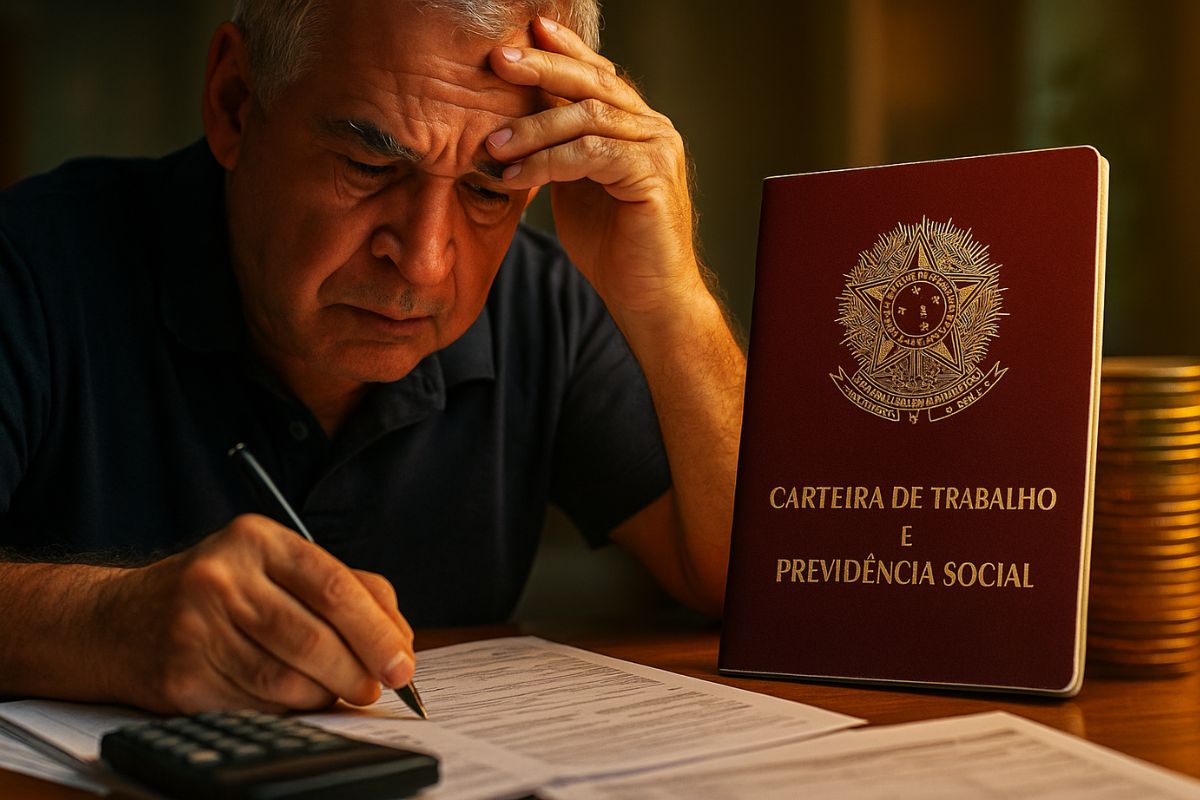


STF Bars Desoppointment: Retiree Who Continues Working Is Required to Pay INSS and Cannot Recover Contributions
According to ABL Advogados, the retiree is required to pay INSS even if they continue working. The contribution continues to be automatically collected whenever there is a formal link, but the amount paid does not generate reimbursement, does not result in exemption, and does not increase the already granted benefit.
The doubt is common among insured individuals who remain active after retiring. Many believe that extra contributions could be reversed into a review or even a refund, but the STF (Supreme Federal Court) already decided in 2016 that there is no such right, by prohibiting the so-called desoppointment.
Why Does the Retiree Keep Paying?
The Brazilian pension system operates on the principle of solidarity. This means that active workers finance the benefits of those who are already retired. Thus, even those who already receive retirement benefits and maintain an employment link must continue contributing to sustain the system.
-
Larger than entire cities in Brazil: BYD is building a 4.6 km² complex in Bahia with a capacity for 600,000 vehicles per year, but the discovery of 163 workers in conditions analogous to slavery has shaken the entire project.

-
With an investment of R$ 612 million, a capacity to process 1.2 million liters of milk per day, Piracanjuba inaugurates a mega cheese factory that increases national production, reduces dependence on imports, and repositions Brazil on the global dairy map.

-
Brazilian city gains industrial hub for 85 companies that is equivalent to 55 football fields.

-
Peugeot and Citroën factory in Argentina cuts production by half and opens a layoff program for more than 2,000 employees after Brazil drastically reduced purchases of Argentine vehicles.


In practice, the retiree is required to pay INSS like any other formal worker, but without any direct return on the value of their benefit.
What Was Desoppointment?
Until 2016, there was a judicial discussion called desoppointment. It argued that those who already received retirement but continued contributing could request a review to increase the benefit amount. The classic example was of an insured person who retired and continued paying for another 10 years, asking for that extra time to be included in the calculation.
The STF rejected this thesis, stating that it is not the Judiciary’s role to create a right not provided for by law. Later, it also ruled out the so-called re-retirement, which provided for a new retirement based on older age and additional contribution time. Thus, there is no judicial possibility of leveraging these amounts.
Is There a Chance to Change the Rule?

Today, the rule is clear: the retiree is required to pay INSS and receives nothing in return. The only way to change this would be by law. There are projects underway in the National Congress that attempt to allow these extra contributions to be used to increase the benefit, but none have been approved so far.
As long as there is no legislative change, contributions made after retirement remain only in the system, helping to fund the benefits of other insured individuals.
The reality is harsh for those who continue working: the retiree is required to pay INSS but has no right to reimbursement, review, or increase in the benefit. This is the current rule established by the STF since 2016, which only can be altered if Congress approves new legislation.
Do you think it’s fair that the retiree keeps paying without receiving anything in return? Or do you believe that these contributions should count towards improving the benefit? Leave your opinion in the comments — we want to hear the experience of those who live this situation.









Somos parte da maioria, diferente de quem está no poder que acumulam várias aposentadorias com excelentes valores, provando a desigualdade social.
Sim, é evidente que o aposentado que continue trabalhando e contribuindo, tenha seus direitos assegurados. Que seja aprovada urgente lei que regule esta situação.
Incrivel ver alguem falar nesse tema que tanto me pertuba, fico horrorizada com essa proca vergonha e falta de respeito com os aposentados, como eu, é a lei do cao .