





 Portuguese
  English
  Spanish
  6 min of reading
  0 comments


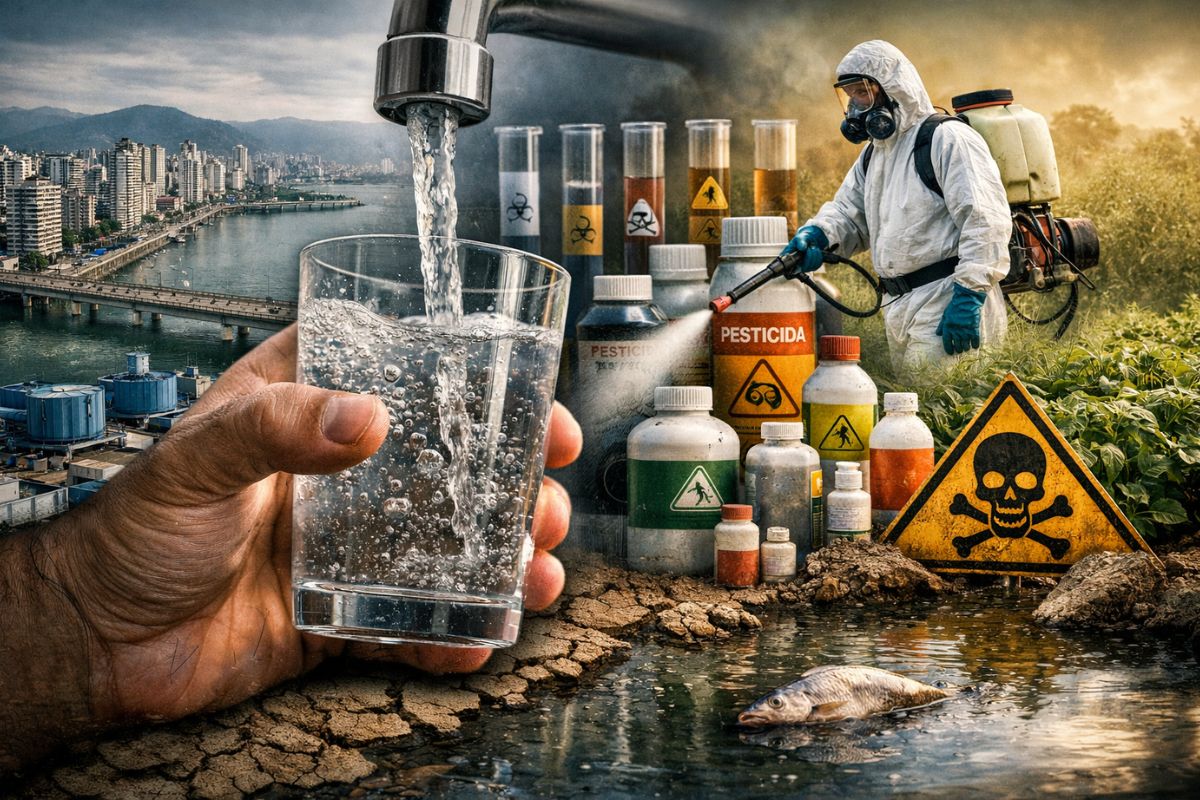
Water with Pesticides Appeared in 155 of 295 Municipalities Analyzed Between 2018 and 2023, in a Five-Year Study by the Food Without Risk Program. The MPSC Found 42 Active Residues, Including Five Banned, and Says That Even Within the Parameters, Chronic Exposure Can Accumulate Effects and Demand Action.
Water with pesticides has come under scrutiny in Santa Catarina after a study commissioned by the MPSC showed chemical residues in the drinking water of 52% of the municipalities in Santa Catarina, with 42 substances detected and five banned for use in Brazil, according to the survey presented on Wednesday (28).
The central data is twofold: on one hand, the water supplied by the distribution network fell below the national drinking water standards and, therefore, was not considered unfit for consumption; on the other hand, the MPSC raised an alert for chronic exposure and the risk of cumulative effects over time.
What the MPSC Study Found in the Drinking Water of Santa Catarina
The survey concluded that 155 municipalities out of a total of 295 in the state showed residues of pesticides in the analyzed drinking water, which corresponds to 52% of the municipalities in Santa Catarina with some type of detection.
-
Scientists from USP issue a warning about the air in the countryside after a study indicates that breathing outside of São Paulo may conceal silent risks, with evidence that worries experts about health impacts.

-
The change in weather arrives tomorrow: heavy rains and storms return to the Central-South after a hot week, with a cold front along the coast bringing instability between Santa Catarina, Paraná, and the Southeast, affecting capitals strongly until Thursday.
-
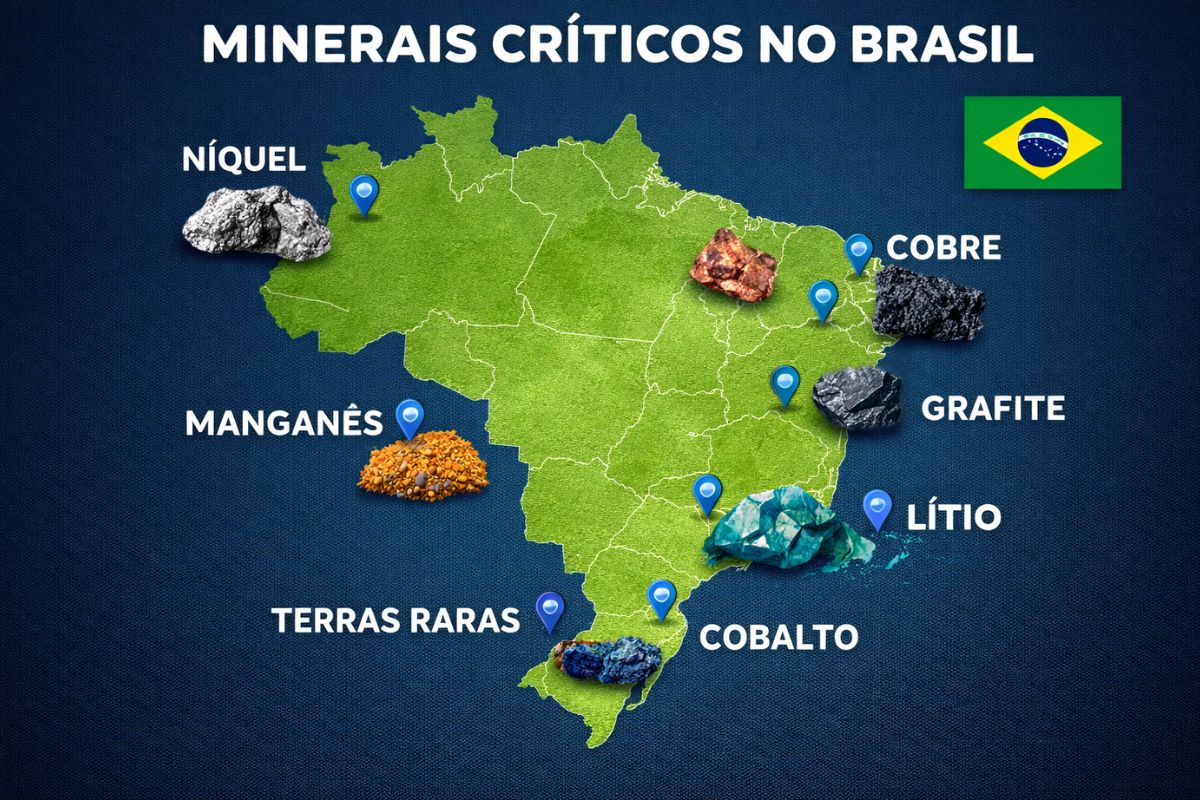
The rapporteur of the critical minerals project said today that Brazil will not create a state-owned mining company, but Lula has already discussed the creation of Terrabras with ministers last Friday, and the United States has already invested 565 million dollars in a Brazilian mining company without waiting for a response from the government.
-
Roads made with recycled plastic, crushed tires, and construction waste are already being applied in several countries, reducing tons of waste in landfills and increasing the durability of the pavement by replacing traditional materials.

In total, 42 active residues were identified in the samples. Within this set, the study pointed out five substances banned for use in Brazil, a fact that raised the level of concern because it indicates the presence of banned active ingredients even with existing health regulations and controls.
The results also reinforced a broader interpretation of the problem: contamination is not restricted to water. The study itself indicates that pollution reaches soil, air, and water resources, suggesting an exposed environment even before water reaches the consumer.
How the Research Was Conducted and Why It Took Five Years
The collection and analysis took place between 2018 and 2023, within the Food Without Risk Program, an initiative by the MPSC aimed at monitoring and combating the indiscriminate use of pesticides.
The analyses were carried out in accredited laboratories, with collections made from the treated water that supplies all municipalities in the state.
The design of the study included supply from surface and underground sources, which expands the picture of what reaches the taps in different local realities.
The objective was detailed in three fronts: to identify which substances appear, in which concentrations, and to compare the findings with the limits defined by Brazilian legislation. The study concluded that, although the detected levels remained within permitted limits, this does not eliminate concerns about the cumulative effect.
“It’s Safe Now, But What About Long-Term?”: The Divergence Between Immediate Risk and Chronic Risk
Prosecutor Aline Restel Trennepohl stated that, despite the presence of residues, the water distributed through the supply network in Santa Catarina is safe for consumption and poses no immediate risk to consumers.
According to her, treatment processes ensure protection against dangerous contaminants, such as bacteria and parasites, reinforcing that potability has been maintained within national parameters.
At the same time, the MPSC highlighted a point that often goes unnoticed in the routine of those who turn on the tap: chronic risk. The institution emphasizes that, even with concentrations within the legal limit, successive contact through air, skin, or ingestion can lead to cumulative effects.
The study mentions that scientific research associates continuous exposure with increased long-term risks for diseases such as non-Hodgkin lymphoma, stomach cancer, prostate cancer, and thyroid cancer, as well as possible endocrine and neurological alterations.
The central message from the MPSC is that the problem is not just the sporadic presence, but the repetition over time.
Water as the “Last Matrix”: Why the MPSC Says the Entire Environment Has Already Been Impacted
In a meeting with the State Health Department, the technical team evaluated that water is the last matrix through which the pesticide will pass.
In practice, this means that, before appearing in the supply network, the residue has already circulated and settled in other mediums.
Prosecutor Aline explained that if the residue reaches the water, this suggests a prior exposure pathway: first the air and soil, then the bodies of water, until reaching human consumption.
This interpretation broadens the focus of the debate, as it shifts the discussion from an isolated point to the idea of a polluted environment.
Regions of SC with Greater Presence and How Numbers Vary Across the State
The study showed clear differences by region, with percentages that vary significantly depending on the area analyzed.
In the West, 63 out of 118 municipalities had at least one active ingredient.
In the North, there were 11 out of 26 municipalities, equivalent to 42.3%.
In the Serra, 10 out of 30 municipalities, or 33.3%.
In the Greater Florianópolis, 12 out of 21 municipalities, reaching 57.1%.
In the South, the index was the highest in the regional cut: 35 out of 46 municipalities, or 76.1%.
In the Itajaí Valley, 24 out of 54 municipalities, totaling 44.4%.
This regional map shows that the presence of residues is not a localized event in a single area but a distributed phenomenon, with some areas being more critical and others having a lower incidence.
Itajaí Valley in the Center of the Alert: What Happened in Imbuia and Ituporanga
The diagnosis pointed to the Itajaí Valley as one of the most critical regions. In many municipalities, the recorded presence was one, two, or three active ingredients, but some cases stood out due to the volume and combination of substances simultaneously.
In Imbuia, 17 different types of pesticide residues were identified. The more sensitive finding is that the study pointed out two active ingredients banned in Brazil since 2019, but found in samples from 2022 and 2023. Furthermore, in Imbuia, a fungicide was detected at a concentration exceeding 12 micrograms per liter (µg/L), a level described as high by experts.
In Ituporanga, the data is even more striking due to the simultaneity: 23 active ingredients present at the same time. The report also recorded nine substances above 1,000 micrograms per liter (µg/L) and the presence of residues of fungicides banned in the country.
In addition to Imbuia and Ituporanga, the study pointed to occurrences of banned pesticides in Balneário Camboriú, Rancho Queimado, Canelinha, Itaiópolis, and São João do Sul, expanding the list of cities where the problem goes beyond the simple detection of permitted residues.
What the MPSC Intends to Do and Why the Demand May Reach Brasília
Based on the results, the MPSC stated that it intends to act in a coordinated manner on two fronts.
On the regional plan, the proposal is to create working groups and suggest the establishment of administrative procedures in the regional prosecutor’s offices, a movement aimed at closely monitoring the situation and pressing for local measures.
On the national plan, the goal is to raise awareness within the Ministry of Health to review the acceptable limits of chemical residues in drinking water.
The logic is straightforward: if the discussion already involves chronic exposure, the debate about legal limits and oversight becomes a long-term public health issue.
In the end, the question that remains for those living in Santa Catarina is simple and uncomfortable: with so many records of water with pesticides, do you trust that the current limits and oversight adequately address chronic risk, even when contamination is not visible to the naked eye?






Seja o primeiro a reagir!