





 Portuguese
  English
  Spanish
  4 min of reading
  0 comments


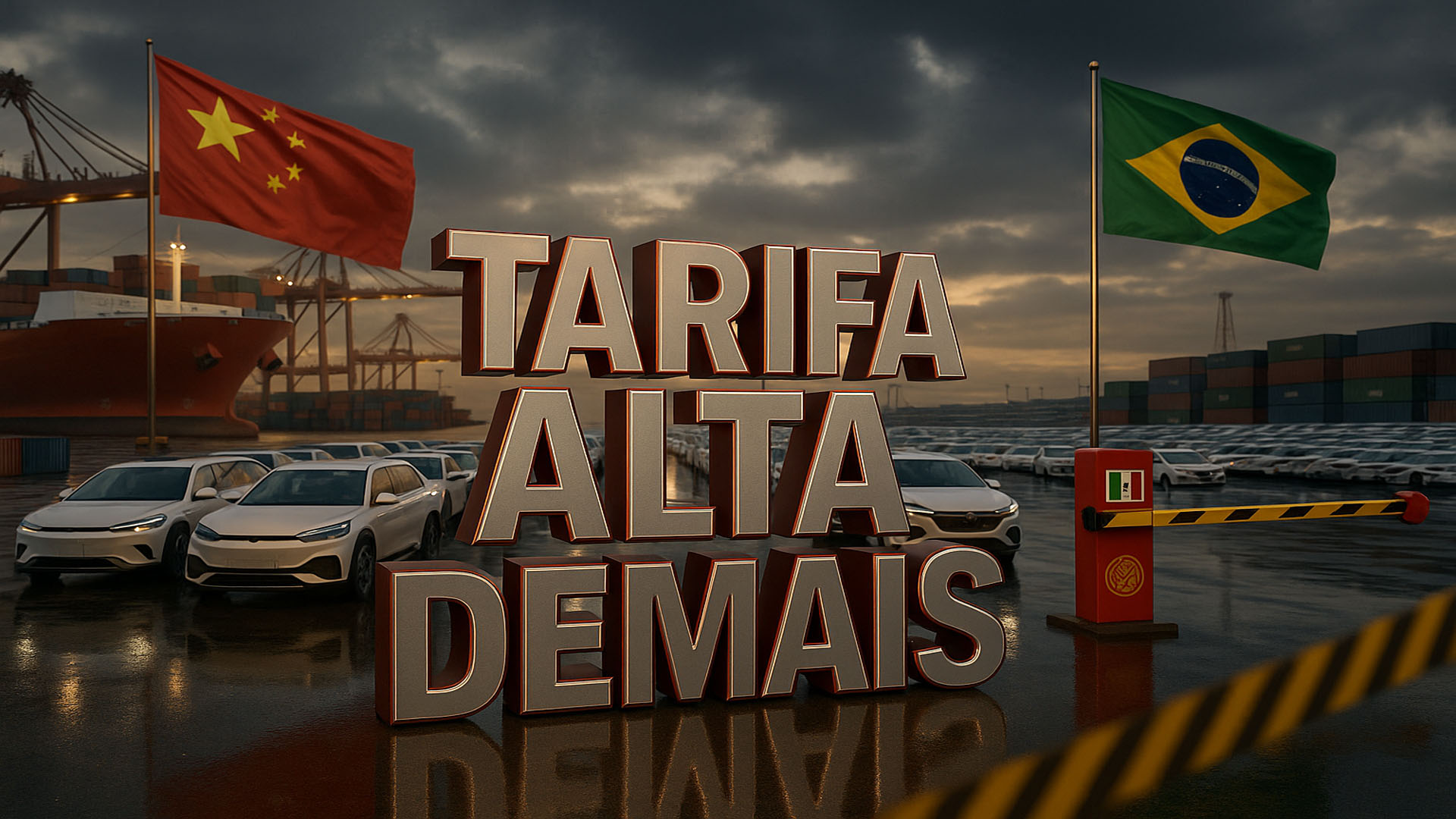
Mexico Aims to Shield Its Industry and Prevent Price Distortions Seen in Brazil. Tariff Increase Affects Vehicles from Countries Without Trade Agreements, Focusing on China.
The Mexico announced it will raise the import tariff for automobiles from countries without trade agreements, such as China, to 50%, up from the current 20%. This measure is part of a comprehensive review of import rates and was presented this month of September 2025 by the country’s Ministry of Economy. The plan still depends on approval from the Mexican Congress.
The official justification is to protect jobs and respond to pricing practices considered below reference levels. Analysts also see this as a move to accommodate pressures from the United States. The China reacted immediately, with protests against the increase.
The parallel with Brazil is unavoidable. Here, the recomposition of tariffs on electrics and hybrids was gradual starting in January 2024, which opened a window for a strong influx of Chinese vehicles and local stock formation before the full increase. Mexico is trying to avoid this scenario.
-
Petrobras sends a message to Brazilian truck drivers after fuel collapse and reveals plan to have 100% domestic diesel.

-
Mothers and daughters come together, create an ‘express’ beauty salon and turn the idea into a network with 21 units, revenue of R$ 16.7 million and 12,000 subscribers.

-
End of the 6×1 schedule: how the reduction of hours can affect service companies, industry, and agribusiness.

-
Brazil Ignores Trump’s threats to BRICS, Buys 42 tons of gold and reduces the Dollar’s share by 6.45% in international reserves.


Mexico Raises Tax to 50% and Seeks to Shield the Market
The Ministry of Economy stated it will raise the car tariff to the allowed ceiling, reaching 50% for imports from countries without agreements with Mexico. The current rate is 20%. The package also expands taxes in sectors like textiles, steel, and auto parts and covers tens of billions of dollars in imports.
According to the government, the change aims to defend fair competition and prevent vehicles from entering the country below reference prices, which would affect jobs in the automotive supply chain. The ministry also mentioned that the increases comply with the limits of the WTO. Beijing criticized the decision and indicated monitoring.
The increase was announced as part of a package that could reach 50% in 1,400 tariff lines, including automobiles, reinforcing the target on Asian suppliers.
To take effect, the Congress needs to approve it. Meanwhile, Mexico is conducting consultations and discussions about the impacts on the industry and the USMCA, while trying to maintain predictability for investors.
Brazil Delayed, and the Stock of Chinese Electrics Exploded
In Brazil, the government decided to resume the Import Tax on BEVs, PHEVs, and HEVs in stages between 2024 and 2026, after years of exemptions or reduced rates. The official schedule anticipates 35% only in July 2026, with intermediate increases. On July 1, 2025, the rates changed to 25% for BEV, 28% for PHEV, and 30% for HEV.
The gradual increase created a window that favored early imports. In 2024, Brazilian ports became congested with over 70,000 Chinese electric vehicles without immediate sale, according to reports from InvestNews and South China Morning Post. BYD and GWM led the volumes.
Additionally, Brazil accelerated in July 2025 the tax increase for CKD and SKD of electrified vehicles, which will reach 35% in January 2027, attempting to close logistical gaps used to mitigate full tariffs.
In summary, the Brazilian strategy was gradual, with “soft semi-annual increases”, which generated short-term distortions such as high stock levels and price pressure. Mexico, aiming for 50% at once, seeks to dissuade similar moves.
Expected Effects: Price, Local Production, and Geopolitics
In Mexico, the immediate consequence may be a rush for stock before the law takes effect, followed by price increases for consumers. Experts already point to this short-term effect when tariffs rise quickly, while the measure may protect jobs in the domestic supply chain.
The dispute has a geopolitical component. The Mexican decision is seen as aligned with pressure from the United States to curb the expansion of Chinese cars in North America. China reacted publicly, raising trade tensions.
In the European Union, additional tariffs have raised the total burden to up to around 45% on Chinese EVs in 2024, which reinforces the trend toward regionalization and local production as a solution for manufacturers seeking to access large markets without the tariff burden.
For Brazil, the focus now is to manage the schedule until 2026, the new rule for CKD and SKD, and the plans for nationalization of Chinese brands, which include industrial investments. Changes in Mexico may redirect logistical and investment flows in the region.
Do you believe that Brazil should copy Mexico and implement higher tariffs right away, reducing the risks of market distortion, or maintain the schedule until 2026 to avoid a price shock for consumers? Leave your comment.








-

2 pessoas reagiram a isso.