





 Portuguese
  English
  Spanish
  4 min of reading
  17 comments


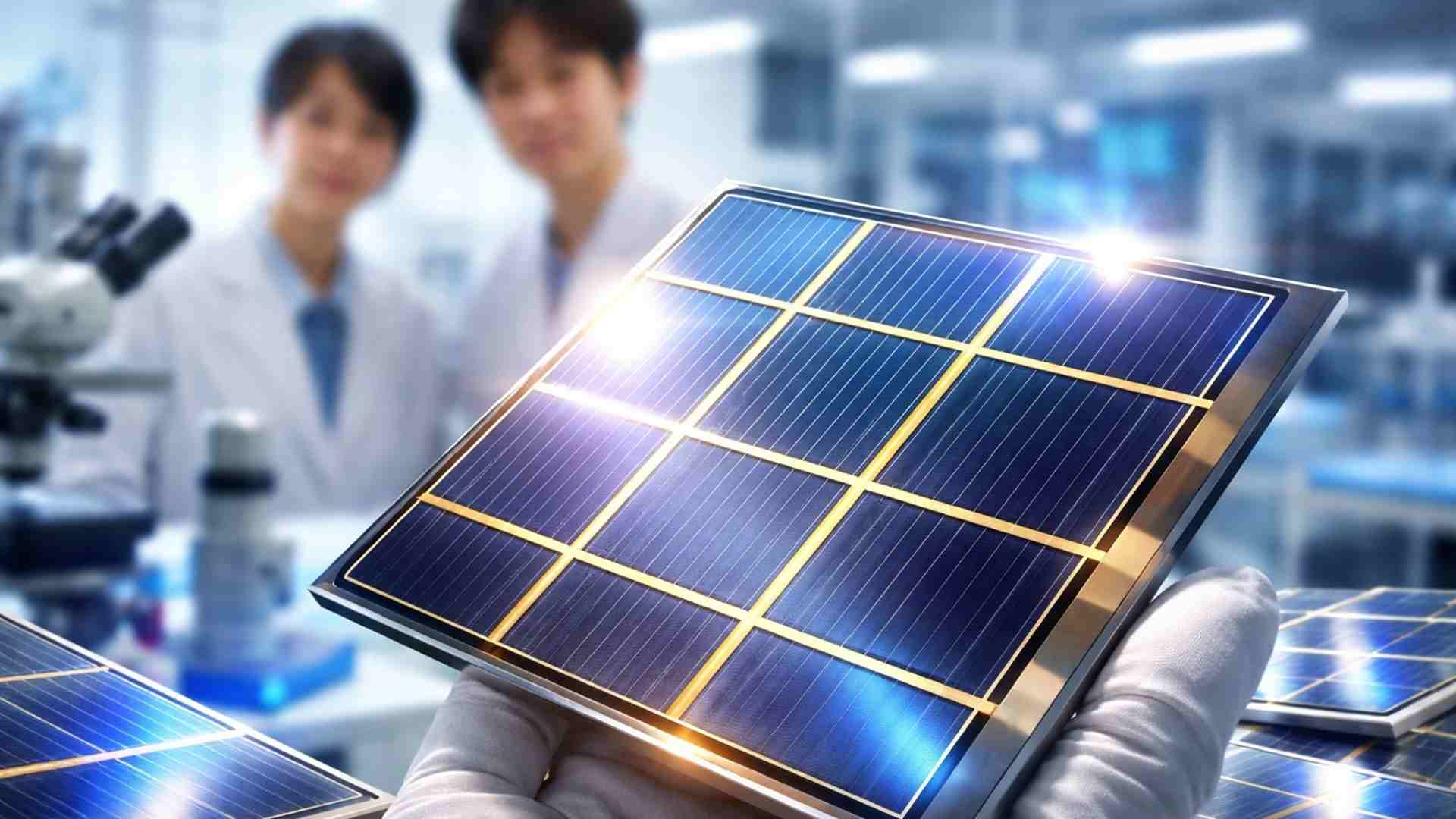


Developed by Students of the University of Tokyo, the New Titanium-Selenium Solar Cell Reached an Efficiency of 4.49%, Voltage of 0.795 V, and Performance Up to 1,000 Times Superior to That of Conventional Panels, Pointing the Ways to Reduce Costs, Expand Durability, and Overcome Historical Limits of Solar Technology
The history of solar technology in the United States began in 1883, in New York, when Charles Fritts designed the first gold-coated selenium solar cell. More than a century later, Japanese students present the first titanium-selenium cell, considered 1,000 times more powerful than conventional solar panels, with the potential to redefine the energy sector.
Historical Origins and the Current Technological Leap
The trajectory of solar energy is marked by gradual advances since Charles Fritts’ pioneering experiment in 1883. His selenium cell, although limited, established the conceptual foundations of the direct conversion of sunlight into electricity.
Decades later, solar technology expanded globally, becoming a central element in the energy transition. By 2025, installed solar capacity reached new heights, but quantitative growth did not ensure full utilization of the available energy potential.
-
Seagri’s headquarters invests in solar energy with Neoenergia Coelba and promises to cut electricity costs, highlighting a strategic advance in sustainability and energy efficiency within state public administration.

-
Solar Pyramid draws attention by converting solar energy into million-dollar savings and repositioning the City Hall of Curitiba as an example of innovation, sustainability, and intelligent use of public resources.
-
Europe records strong euro economy with solar energy in March and sparks curiosity about which country leads growth that redefines the energy market and reduces costs.

-
Piauí reaches a historic milestone in energy transition: State records nearly 160,000 households powered by solar energy and leads growth in the Northeast.

In this context, Japanese students developed the first titanium-selenium cell, seen as a game changer. The new technology emerges as a direct response to the persistent limitations of conventional solar systems.
Persistent Challenges of Conventional Solar Technology
Despite its strategic role in combating climate change, traditional solar technology faces significant technical and economic hurdles. A report by FUERGY points out that merely increasing the number of panels does not resolve structural issues in the sector.
Among the main challenges are low long-term durability, which makes panels susceptible to corrosion and the constant need for maintenance. These factors raise operational costs and reduce the reliability of systems.
Another critical point is the limited efficiency. Only a fraction of the incident solar energy is converted into electricity, requiring large areas for installation to increase total generation, which is not always feasible.
Additionally, high initial costs restrict access to solar energy in regions with lower investment capacity. These obstacles have motivated the search for new materials and solutions.
Development of the Titanium-Selenium Cell in Japan
To tackle these challenges, students from the University of Tokyo analyzed different combinations of semiconductor materials. The result was the creation of the first solar cell based on the association between titanium dioxide and selenium.
Titanium dioxide acts as a semiconductor capable of allowing visible light to pass while absorbing ultraviolet radiation. Selenium contributes to the efficiency of energy conversion.
The combination of the two materials forms a thin layer that reduces the interference of the contaminant tellurium, a critical factor in previous technologies. This enhanced configuration is at the heart of the record performance achieved.
Although Japan already has a history of relevant solar innovations, including projects equivalent to the capacity of 20 reactors, the students themselves claim that this cell exceeds previous expectations in terms of performance and applicability.
Technical Results and Record Performance
According to Green Humans, initial tests revealed a solar conversion efficiency of 4.49%, attributed to better layer bonding and reduced tellurium contamination.
The tests also recorded an open-circuit voltage of 0.795 V, short-circuit density of 11.13 mA/cm², and a fill factor of 50.7%. These parameters reinforce the competitiveness of the new cell.
The increase in open-circuit voltage, coupled with lower dark leakage current values compared to other projects, highlights the relevance of the design adopted by the Japanese students.
These results position the titanium-selenium cell at the forefront of next-generation solar technologies, even in the early stages of development and laboratory testing.
Additional Benefits and Ongoing Challenges
Besides electrical performance, the new technology presents complementary advantages. Among them are greater durability and lifespan, reducing maintenance costs over time.
The panels are described as lightweight, which increases the versatility of application in different structural contexts. The production is also considered more eco-friendly, with lower environmental impact.
Another highlighted point is the potential for cost reduction, an essential factor in broadening access to solar energy in countries and regions with limited resources. This could change energy dependence dynamics.
The main current challenge involves the contaminating effects of yttrium. The Japanese team is working to make titanium purer, which could make the technology even more economical and scalable.
Potential Impacts and Next Steps
The development of the titanium-selenium cell demonstrates that high levels of performance can be achieved with accessible and viable solutions. This expands the social and economic reach of solar energy.
The possibility of reducing dependence on energy imports is seen as strategic, especially for nations with few natural or financial resources. Energy independence tends to drive economic growth.
As studies continue to overcome remaining challenges, Japan is also exploring other alternative forms of generation, such as energy production from snow, broadening its portfolio of solutions.
Experience shows that the combination of academic research and practical need remains an effective path for significant advances in the global energy transition.










Me interesa,más información al respecto
No entiendo nada, co.o va a ser 1000 veces mejor una tecnología con eficiencia de 4.5% si los paneles actuales tienen eficiencia de alrededor de 20%?
Se uma placa comum produz 100 w/h quanto produz uma dessas Fabio?