





 Portuguese
  English
  Spanish
 4 min of reading
  0 comments


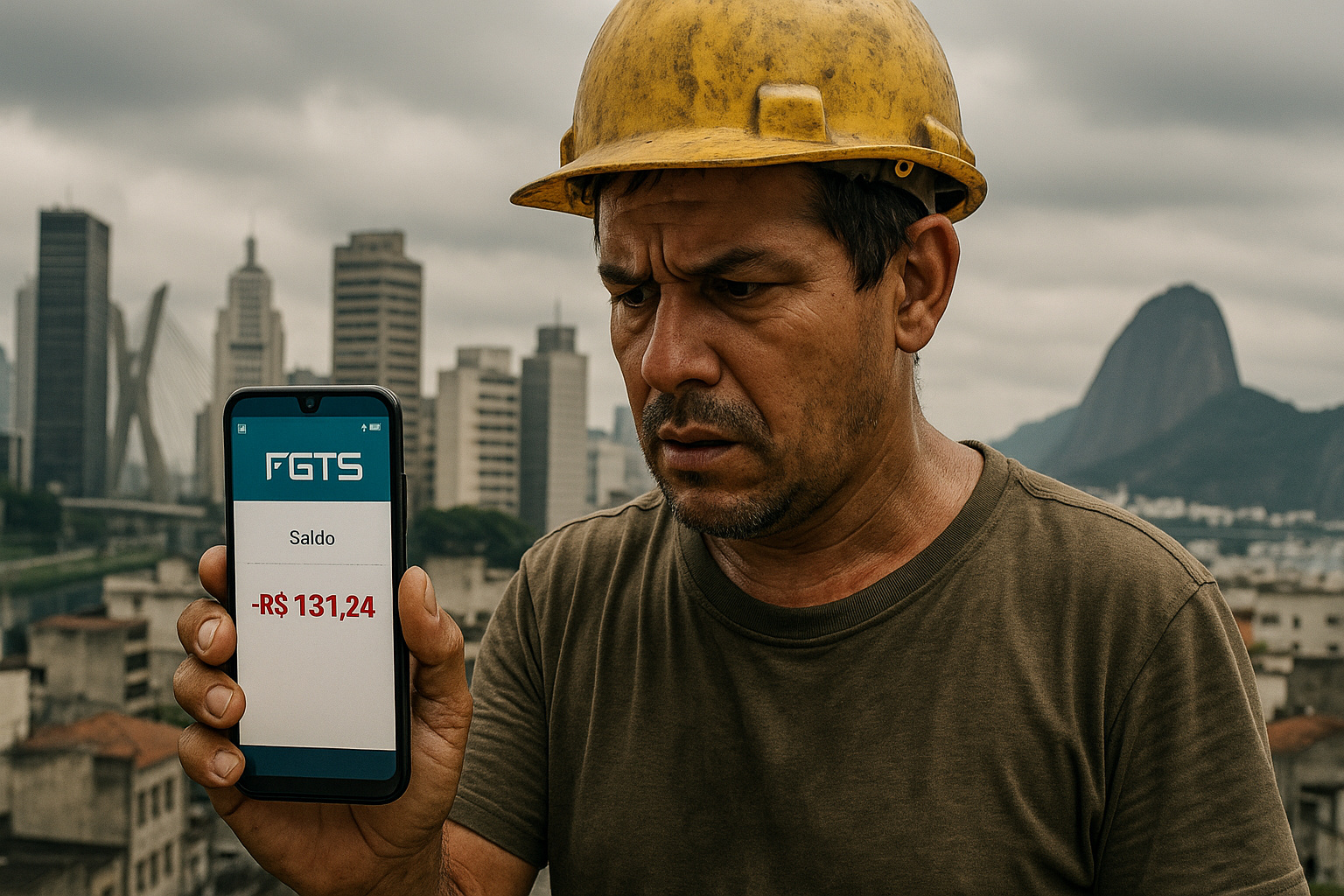
Neglect by Companies Affects SP, MG, and RJ More Intensively; 1.6 Million Employers Failed to Meet Labor Obligations, Impacting Home Ownership and Retirement Plans for Millions
Millions of Brazilian workers with formal employment are experiencing a true financial nightmare as they notice the absence of deposits in the Severance Indemnity Fund (FGTS). The shortfall has already reached R$ 10 billion nationwide, directly affecting 9.5 million workers. This information was reported by Jornal Nacional, based on official data from the Ministry of Labor.
The problem is not confined to small localities, but is concentrated mainly in São Paulo, Minas Gerais, and Rio de Janeiro, states that lead the ranking of employees harmed by the lack of payment. In total, 1.6 million companies in Brazil are late or have not made the mandatory FGTS deposits.
This scenario puts the financial security of millions of families at risk, who rely on the fund as protection in cases of unjust dismissal, serious illnesses, retirement, or even to realize the dream of home ownership.
-
In Spain, a law has created paid menstrual leave funded by the state, turning debilitating cramps into legal leave and placing the country among the most advanced in Europe in terms of women’s health rights.

-
Government enacts new law: paternity leave increases from 5 to 20 days with gradual increases until 2029, and Social Security pays the paternity salary; companies no longer bear the absence cost, estimated at R$ 5.4 billion.

-
End of the 1-hour lunch break in the CLT? Current labor law maintains the break, allows for negotiated reductions, and defines rules for working hours and home office in Brazil.

-
Employee Fired After Accumulating 114 Days of Medical Leave in One Year, Labor Court Upholds Company’s Decision



Real Stories That Reveal the Severity of the Situation
The lighting technician Ronaldo de Souza Dias, for instance, worked for more than three years at a company and received only three deposits in the FGTS. He only discovered the irregularity when salaries started to be delayed. “When my salary started to be delayed, I was curious to check the company’s other obligations. If the main one, which is paying on time, was not being met, imagine the others. And I realized that nothing was in order,” Ronaldo reported.
Cases like his are not exceptions. The industrial automation technician João Vitor Silva Amorim, a resident of Belo Horizonte, went through a similar situation when he was dismissed. Upon accessing the FGTS app, he found that the available amount was less than it should be. This seemingly bureaucratic detail had a devastating impact: it delayed the dream of home ownership. “At the moment of termination, we count on that money, make plans, but when we realize we can’t use it, all the financial planning crumbles,” João Vitor stated.
These stories show that the lack of deposits is not just an administrative irregularity. It is a social problem that directly affects the stability of millions of Brazilians.
The Law’s Position and the Actions of the Ministry of Labor
According to labor lawyer Gabriel Brum de Moraes, the absence of FGTS deposits constitutes a “serious breach” on the part of companies, which may even lead to indirect termination of the employment contract. In these cases, the employee can leave the company with all rights guaranteed, as if it were an unjust dismissal.
The Ministry of Labor states that it is working on the collection process. According to Marcelo Nargele, the general coordinator of Management and Oversight of the FGTS, an attempt at amicable negotiation is initially made. If the company does not respond, it may be inspected, fined, and penalized. However, until these measures are completed, workers continue to accumulate losses and uncertainties about the future.
What Is at Stake for Brazilian Workers
The FGTS is one of the main social protection mechanisms in Brazil, created to guarantee security in critical moments of professional life. However, with a deficit of R$ 10 billion, the credibility of the system is compromised. Experts warn that if the situation persists, millions of Brazilians may have their retirement jeopardized or face even greater difficulties when acquiring a home.
Additionally, the lack of deposits also impacts the national economy. Since the FGTS is used in housing, infrastructure, and sanitation programs, the billion-dollar shortfall jeopardizes investments that would benefit society as a whole.
In light of this reality, it is clear that oversight needs to be intensified, and workers must be increasingly vigilant, regularly monitoring their accounts through the official Caixa app. This practice can prevent unpleasant surprises at critical moments in life.
The Need for More Responsibility and Oversight
The lack of FGTS deposits is more than an accounting problem — it is a matter of social justice that threatens millions of Brazilian families. The stories of Ronaldo and João Vitor are just the tip of an iceberg that affects 42 million citizens entitled to the fund.
While the government seeks ways to intensify collection and punish defaulting companies, it is up to the worker to closely monitor their account and report irregularities. After all, the FGTS is not just a labor right: it is the guarantee of a safer, more planned, and dignified future for those who dedicate years of their lives to work.









Seja o primeiro a reagir!