





 Portuguese
  English
  Spanish
  4 min of reading
  48 comments


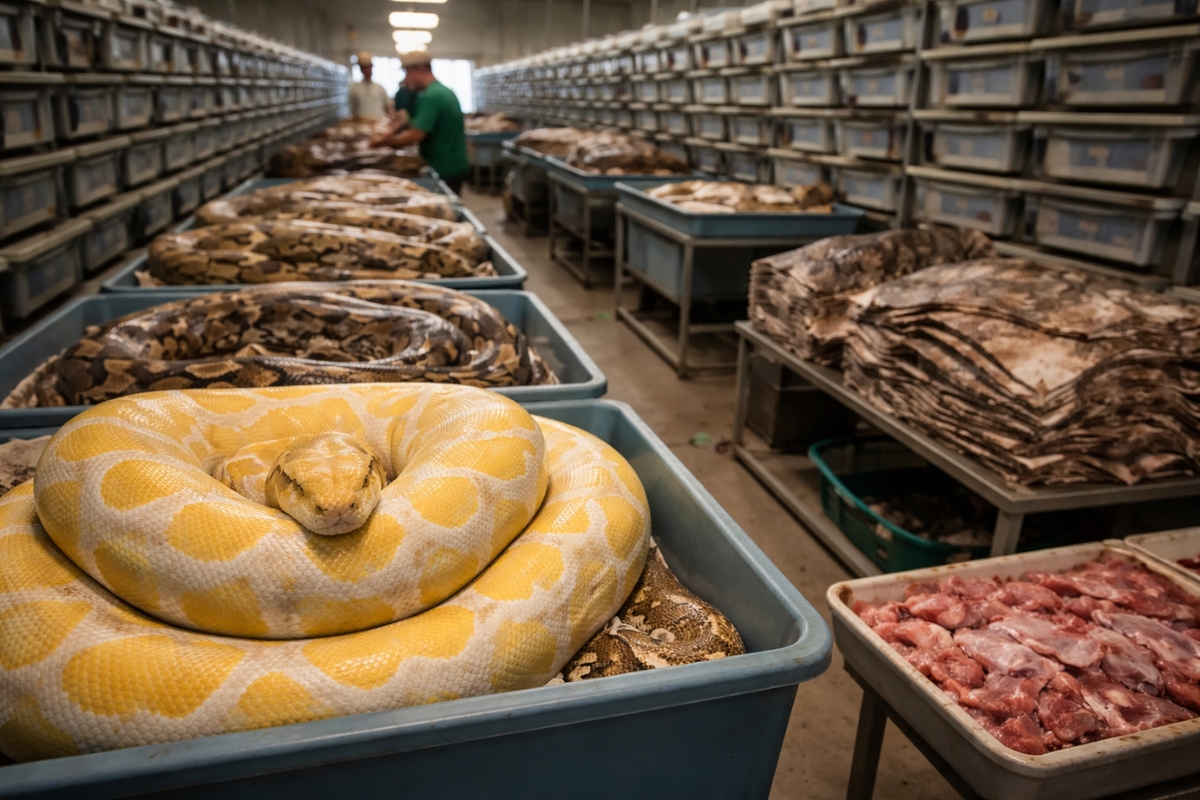


Farms In Southeast Asia Breed Millions Of Pythons In Controlled Environments, With Production Focused On Meat And Leather And Direct Impact On International Trade
For centuries, snakes have been associated with danger, mystery, and fear. However, there is a very different, silent, and highly organized reality.
Today, millions of pythons do not roam freely in nature. They are born and grow in controlled environments, following standardized routines and integrating into a global production chain.
The process does not rely on hunting or improvisation. It is about planned breeding, with control over each stage and a defined destination for the products generated.
-
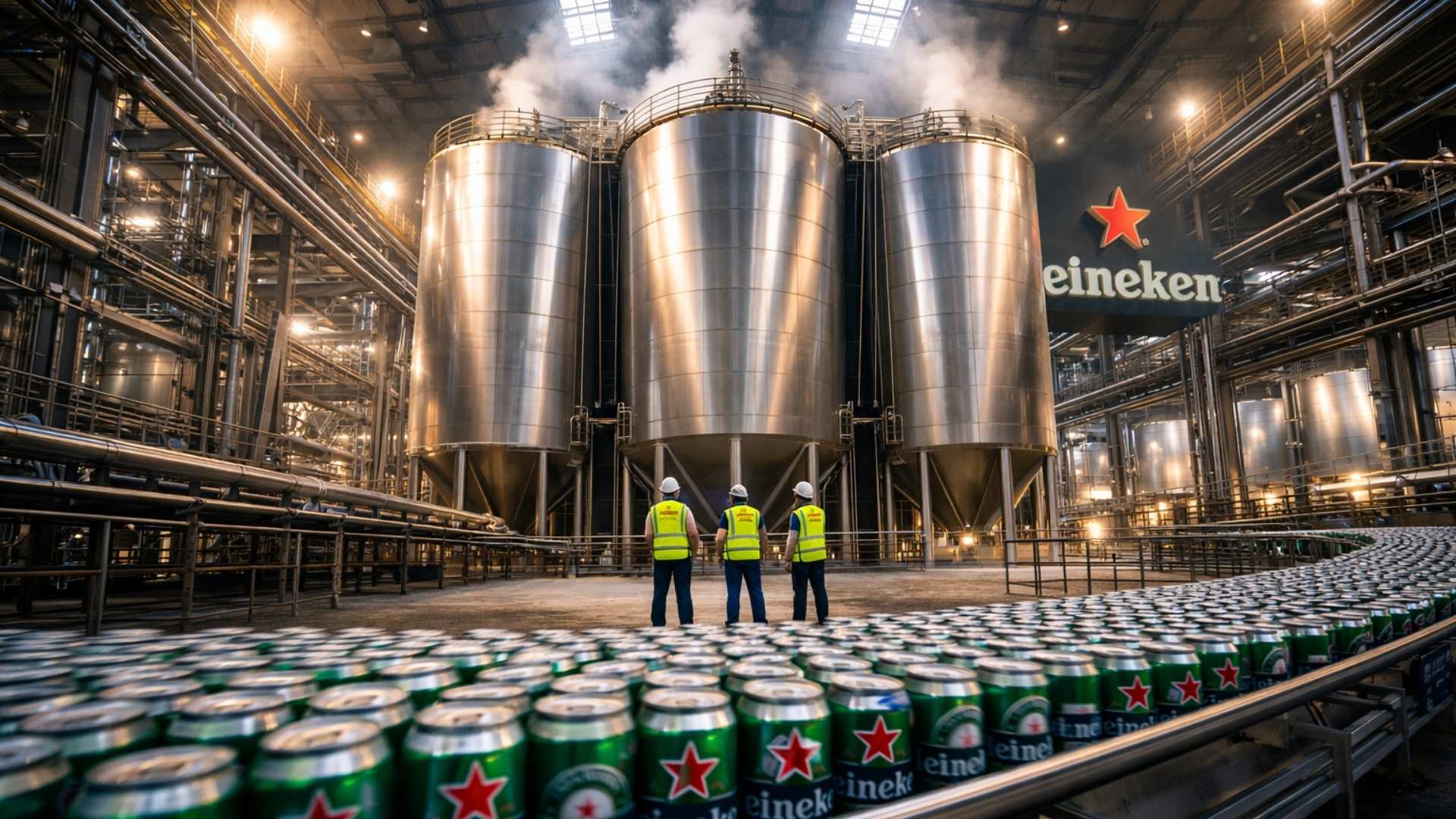
Heineken’s factory in Brazil produces 300 million beer cans in just 4 months, reaches 1 million hectoliters, received R$ 2.5 billion, and is already projecting an annual capacity of 5 million with sustainable technology.
-
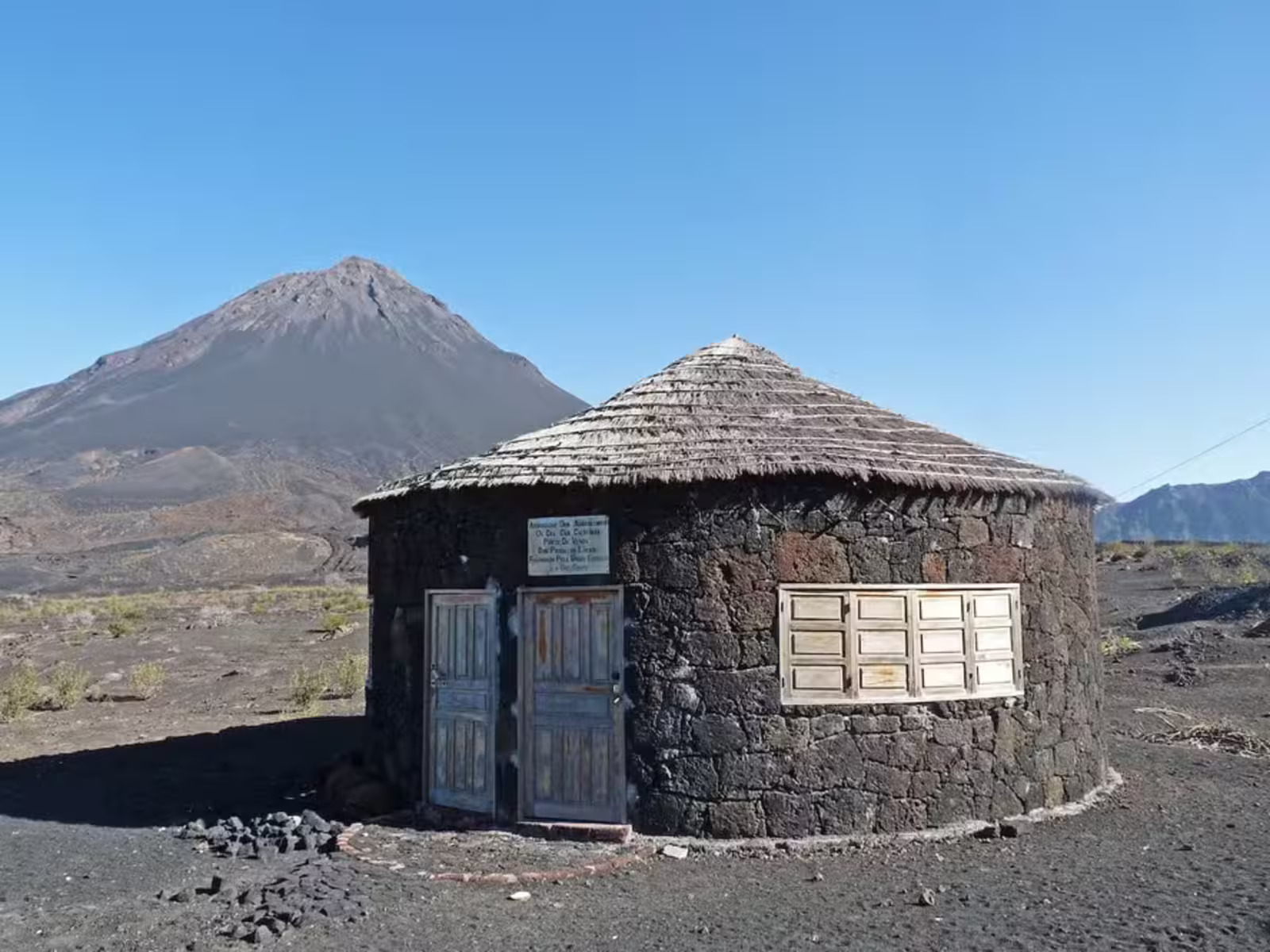
Inside an active volcano in Africa, residents use volcanic rocks to build houses in an impressive setting.
-
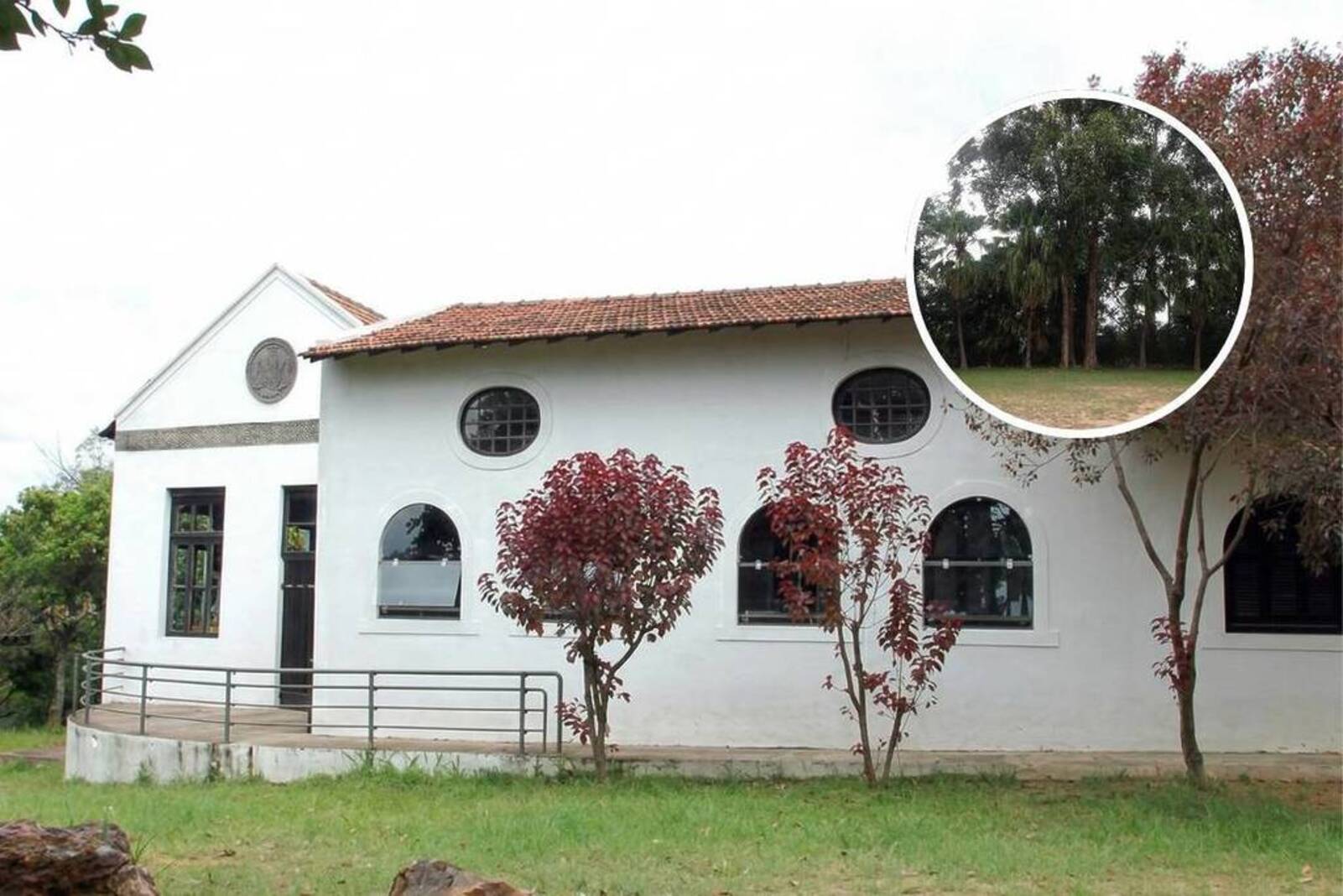
After 14 years of waiting, a rammed earth mansion built in 1702 in the North Zone of São Paulo will become a park with leisure facilities and green areas, with a million-dollar investment.
-
With 2 unfinished nuclear reactors, up to 25 billion in costs, and proven fraud, the Nukegate case has left 800,000 consumers still paying today for energy that will never be produced.


What Happened And Why It Got Attention
Industrial-scale python breeding mainly takes place in the southeast asia, particularly in Vietnam, Indonesia, and Thailand.
The setting is far from forests and natural habitats. The facilities operate in warehouses and organized installations designed for efficiency and control.
Everything is designed to maintain stability, from the animals’ space to air circulation, as well as temperature and humidity precisely adjusted.

Where This Breeding Happens And What The Structures Are Like
The farms are specialized and operate with planned management systems. The goal is to maintain a standard operation that allows predictable growth and reduces losses.
The environment is controlled to avoid variations that would harm development. The idea is to ensure stable and repeatable conditions over time.
With this model, reptile breeding has grown without drawing much public attention, even with its presence in legalized operations connected to international trade.
How Planning Works Before Birth
Nothing happens by chance. Before birth, each animal is already part of a planning process that defines reproduction, management, and growth capacity on the farms.
The farms maintain selected breeding stock based on genetics, health, and productive potential. Each breeding is planned, and the number of eggs corresponds to the system’s capacity.
Incubation and development occur with control over temperature, humidity, and lighting cycles. This allows for a more predictable process from egg to adult phase.
How The Growth Phase And Daily Control Works

After birth, the longest phase begins, which is growth. Pythons are kept in individual compartments or grouped by size, making handling easier and reducing risks.
Feeding follows strict schedules to meet nutritional needs at each stage. There is no room for improvisation in this routine.
Health is monitored with daily inspections, checking weight, behavior, and signs of change. Staff record details of growth and behavioral changes to prevent issues from escalating.
Why Standardization And Record Keeping Are So Important
As the pythons grow, data is constantly collected and recorded. This list includes weight, size, age, growth patterns, and environmental conditions.
Any variation can affect production uniformity and the quality of the final result. Therefore, standardization is treated as a central part of the process.
In addition to commercial value, control also supports legal and sanitary requirements. Without this, logistics and export can become unfeasible.
The Destination Of Meat And Skin In The Final Phase Of The Chain
When they reach the considered ideal size and age, the animals enter the final stage. Each phase follows planned and regulated procedures.
The meat supplies local and regional consumption, present in cultures that incorporate this food into traditional or specialized preparations. It undergoes inspections to meet sanitary standards.
The skin goes through specific tanning and treatment processes. Afterward, it becomes raw material for the fashion industry, giving rise to bags, belts, shoes, and other high-value accessories.
What May Happen From Now On And Why The Subject Generates Debate
The chain can cross continents. The skins go to specialized tanneries, undergo finishing, and then reach factories, eventually making their way to storefronts in various countries.
The sector is discreet to the average consumer but connected to the global economy. Meanwhile, the debate about ethical limits and environmental impacts is growing.
Some see breeding as an alternative to illegal hunting, with regulated income and production control. Other views point to animal exploitation and question the use of originally wild species.
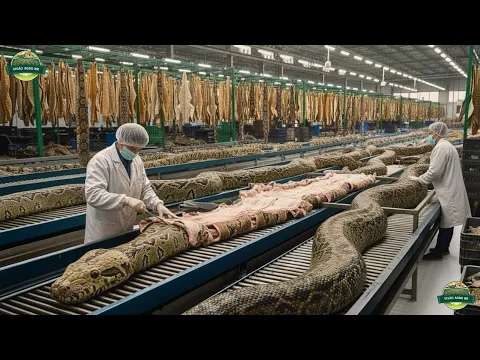

The discussion involves ethical, environmental, cultural, and economic points, with different perspectives on the same system.
The breeding of millions of pythons shows how a feared and fascinating animal can be transformed into part of a global productive mechanism. The impact appears in fashion, food, and international trade.
In the end, the main change lies in the perception of the origin of what is consumed and the awareness that there is an entire chain operating far from most people’s sight.




I am terrified of snakes…but i do respect them and just steer clear….this is beyond cruel!
The Core of Depravity is thriving in Thailand Vietnam and Indonesia.
Don’t buy any clothes or furniture or anything made with **** skin.
This is a terrific report but chilling.
Man will destroy our world anyway he can to make money. The horrific suffering inflicted on these animals is well documented. They live lives in extreme torturous conditions. Their die violently and in pain and sometimes endure skinning in their senses. Southeast Asia must be boycotted. Thank you for highlighting this horrendous practice.
This is barbaric it has to be stopped 😔 my God the suffering these animals are enduring I would be happy to die for this to stop 😔 my God 😔😤🤬🤬🤬 sick b#ststds barbaric demons that’s what every one of them involved are 🤬🤬🤬