





 Portuguese
  English
  Spanish
  6 min of reading
  3 comments


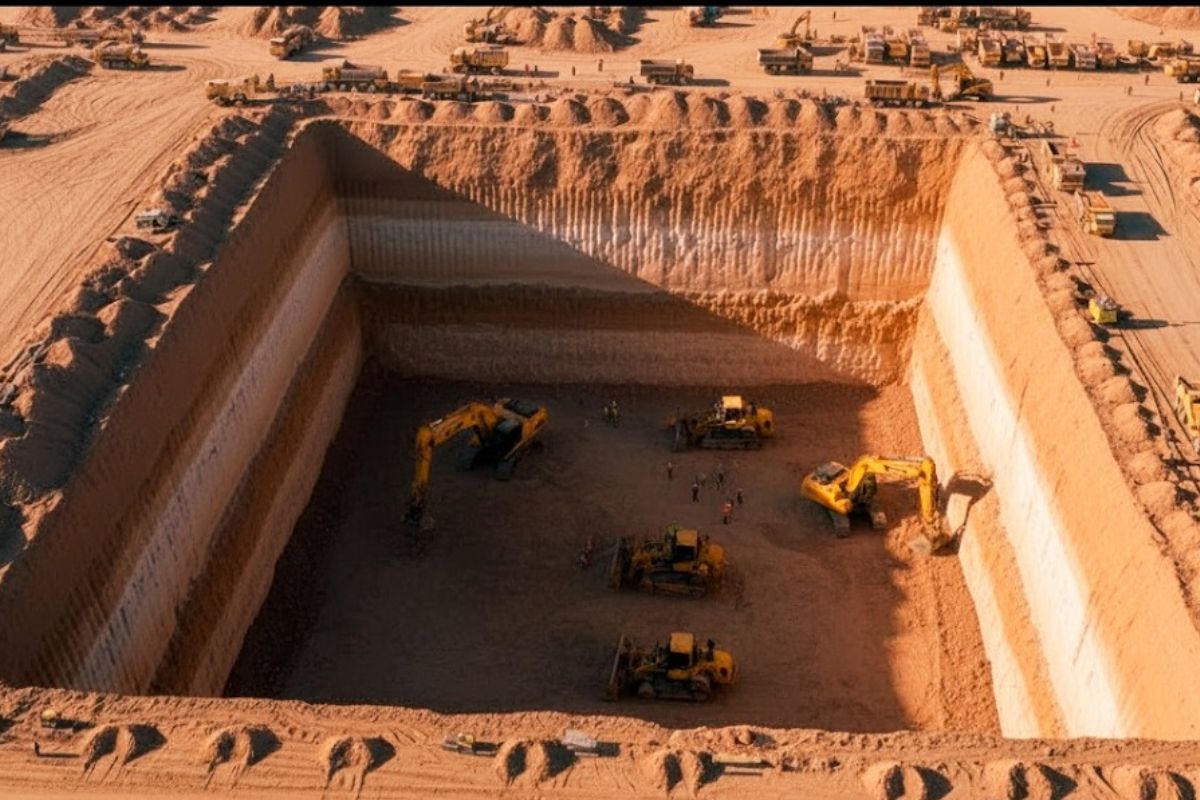


In The Chinese Desert, The Sand That Suffocated Villages And Reached Beijing Prompted A Last-Ditch Plan: Straw Boards Stabilize Dunes, Solar Pumps Pull Water From 100 Meters And Irrigate 200 Thousand Trees Along The Tarim Highway, Slowing Desertification And Opening Global Debate Today.
In the Chinese desert, what seemed like a dead-end scenario gained a pattern repeated like a chessboard: straw buried in squares of 6 meters to slow wind, hold dunes, and create microclimates that retain moisture long enough for a seedling not to die on the first day.
The turning point came when the scale of heat and dryness ceased to be just a landscape and became a human threat: summers nearing 50°C, winters below 20°C negative, storms that swallow villages, and dust capable of traveling thousands of kilometers, pushing the country towards a response that mixes straw, solar energy, and massive planting.
Why The Chinese Desert Became A Problem That Reached Beijing
The Taklamakan Desert is described as a “sea of death” with about 337,000 km² of desolation. Between the Tian Shan mountains to the north and Kunlun to the south, moisture is blocked and the result is extreme: in some stretches, each square meter receives only 5 liters of water per week, like a small bottle.
-
Inside an active volcano in Africa, residents use volcanic rocks to build houses in an impressive setting.
-
After 14 years of waiting, a rammed earth mansion built in 1702 in the North Zone of São Paulo will become a park with leisure facilities and green areas, with a million-dollar investment.

-
With 2 unfinished nuclear reactors, up to 25 billion in costs, and proven fraud, the Nukegate case has left 800,000 consumers still paying today for energy that will never be produced.

-
The household appliance that consumes the most energy in Brazilian homes is not the air conditioner; it is located in the smallest room of the house, is used daily, and can account for up to 25% of the electricity bill, while an alternative in the same outlet can reduce this cost by up to 75%.

This environment pushes the sand like a silent predator. Sandstorms can swallow villages without warning, farms are suffocated, rivers are pressured, and millions of people end up displaced from their homes.
In the 1990s, Beijing felt the direct impact: residents had to wear masks for more than 80 days a year, not for viruses, but for sand coming from afar, traveling about 2,000 km from the Chinese desert to the capital.
The Great Green Wall: A Decade-Long Bet To Slow Desertification
The response gained a name and timeline. In 1978, the project known as the Three-North Shelter Forest Program emerged, which the world came to call the Great Green Wall.
The ambition is 4,500 km in length and 35 million hectares of trees, with 72 years of continuous work and a projected completion in 2050.
The logic is straightforward: create a living barrier capable of holding sand, reducing storms, and changing the microclimate in critical areas.
However, the Chinese desert poses the most difficult question: how to plant trees where it practically doesn’t rain and where the wind frequently shifts the dunes?
Millions Of Straw Bales And The Chessboard That Holds The Dunes
The method started with something simple and brutally repeated: common farm straw transported in huge volumes to the heart of the Chinese desert.
With it, teams dug shallow trenches and set up a geometric grid, a chessboard in which each square measures 6 meters on each side.
The goal is not to “decorate” the sand. The straw grids slow the wind, stabilize the dunes, and create microclimates where the morning moisture gets trapped for a few more hours. This extra time can mean the difference between a seed dying on the first day or taking root.
As weeks go by, the straw begins to rot and becomes organic fertilizer, while the roots seek deeper layers, where sand meets clay.
Solar Pumps In The Chinese Desert: Water From 100 Meters For 200 Thousand Trees
Planting without water does not add up. Pumping water from underground using fossil fuel generates CO2 and ultimately worsens desertification. The turnaround is to use the Chinese desert’s own advantage: excess sunlight.
The Taklamakan receives about 2,700 hours of sunlight per year. Along the Tarim Desert Highway, the installation of 86 solar pumping stations was described over a stretch of 436 km that cuts through the heart of the desert.
Each station has hundreds of photovoltaic panels that generate electricity to pump water from 100 meters deep and nourish 200,000 trees along the highway, with subsurface drip irrigation.
The panels are also installed about 2 meters off the ground to allow plants to grow in the shade, keeping the soil cooler and wetter. Species such as alcaçus, thorny bushes, and red willows are reported to be sprouting under this “artificial roof.”
Mirrors, Tower And Molten Salt: Energy That Continues At Night
In addition to solar pumps, a second engineering block appears: thousands of heliostat mirrors that track the sun and concentrate light in a central tower.
Inside the tower, molten salt is heated to about 540°C, generating steam under high pressure to turn turbines.
The mentioned capacity is 50 MW, with a cited cost of US$ 130 million. The decisive point is storage: molten salt retains heat, so the plant continues generating energy even at night or during cloudy weather.
The narrative describes this as a desert that turned into a solar battery, sustaining energy and part of the effort against desertification in the Chinese desert.
The Tarim Highway: 300 Km Of Asphalt With Layers To Avoid Being Swallowed
None of this works without access. China built a road in the middle of nowhere: 300 km of asphalt cutting through the heart of the Taklamakan.
The Tarim Desert Highway began in 1993, facing heat near 50°C, sandstorms, and a construction process described as hellish.
The cited inauguration is on October 4, 1995, and the cost is mentioned as 1.75 billion, presented as equivalent to about US$ 260 million, with engineering layers beneath the asphalt: gravel, straw mats, geotextiles, and other barriers to prevent sand from swallowing the road.
Today, this highway is described as an axis connecting solar farms, research stations, and even tourism, with the edges of the Chinese desert becoming a destination for ecotourism and dune tours.
Announced Results: Hectares Recovered And A Decrease In Sandstorms
After decades, the cited numbers are large. It is said that 30 million hectares have been recovered and there has been a leap in the country’s forest cover: from 10% in 1949 to over 25% today.
There has also been a significant decrease in storms: 82% less since the 1980s, in addition to a reduction in dusty days in mentioned regions, from 100 to 30 per year.
It is also mentioned that these forests absorb more than 20 thousand tons of CO2 per year, reinforcing the idea of “green lungs” in areas once dominated by sand.
The Controversial Point: Monoculture, Groundwater And The Risk Of Repeating The Error In Green

The plan itself is described as controversial. The central criticism is monoculture, with a predominance of poplars and willows: they grow fast and impress, but have a short lifespan and can intensely suck up groundwater.
In an outbreak of disease, it is reported that more than a billion trees died in northern China, wiping out years of work.
It is also mentioned that international studies point to the ongoing expansion of desertification in some areas, despite the increase in forest area reported.
The listed causes include wrong trees, insufficient rain, and excessive irrigation draining groundwater even further.
The proposal defended by experts is to change the focus: stop “counting trees” and restore complete ecosystems, with mixed forests, native species, grasses, and shrubs, instead of just painting the Chinese desert green.
If You Had A Big Budget To Face The Chinese Desert, Would You Bet On Straw, Solar Pumps, And Massive Planting, Or Would You Prioritize Restoration With Native Species Even If The Result Took Longer?







Las orejas de elefante son muy resistentes tambien
En Nazca Perú. En los años 600 los nazcas poblaron el desierto de Nazca con sistemas hidráulicos subterráneos que aún hoy funciona en Cantalloc en Oncogalla y otros. En Cahuachi en pleno desierto debajo de las pirámides de barro tenían depósitos de alimentos para las ceremonias religiosas En Chaucilla cementerio con tumbas y mantos originales. Esto además de la Líneas de Nazca y Palpa.
Debe haber MUCHAS otras opciones para restaurar el desierto, como lo que hacen en África, por ejemplo. Lo importante es aprender de todos los errores y recuperar los desiertos del mundo, transformando sus océanos de arena en terrenos fértiles. La Ciencia tiene la palabra, las culturas poseen recetas que sólo están olvidadas, no obsoletas.