





 English
  Francês
  Alemão
  Italiano
  Japonês
  Norueguês
  Portuguese
  Spanish
  6 min of reading
  1 comment


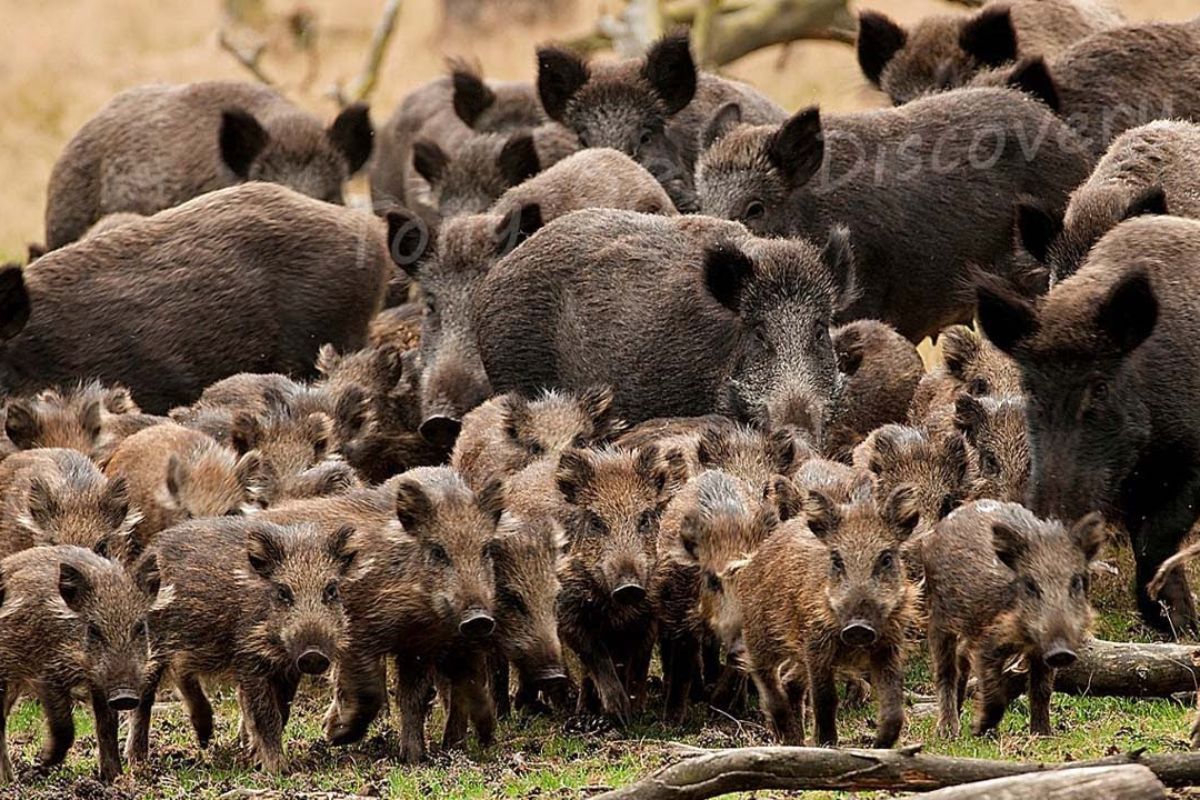


In U.S. Farms, Wild Boar Herds Advance Over Corn, Vegetables, and Wheat, While Deer and Coyotes Amplify Damage. In Texas, 3.5 to 4 Million Pigs Generate Estimated Losses of US$ 2.7 Billion, and States Authorize Hunting for 12 Months Without Limit, with Slaughter by Hunters Nationwide.
In U.S. farms, pressure on crops and livestock is not limited to drought or flooding. A report from farmers in Texas and California in 2021 points to wild boars, deer, coyotes, and wild turkeys as recurrent sources of damage, with wild boars associated with about US$ 1.7 billion in costs and vegetable production in California with about US$ 650 million in losses.
In South Texas, a herd of wild boars was observed in San Antonio, and the state remains the one with the highest concentration of pigs in the country, with about 3.5 to 4 million heads. The reported impact adds to national estimates of agricultural losses of about US$ 2.7 billion per year, in a scenario where the dominant response is unrestricted annual hunting.
Texas Concentrates the Largest Population of Wild Boar

Texas is described as the state with the highest number of wild boars in the United States, with about 3.5 to 4 million heads, almost half of the country’s population.
-
While Russia dominates the global wheat market, Brazil emerges as an unexpected competitor in the Cerrado, offering grain available in July and August when stocks in the Northern Hemisphere are at their lowest point of the year.

-
China returned almost 20 Brazilian ships with soybeans, but now everything could change: the country that buys 80% of the grain is considering relaxing regulations after impurities held up shipments of thousands of tons and caused million-dollar losses.
-
The drought of the cerrado was considered an enemy of wheat, but Brazilian scientists turned the lack of rain into a competitive advantage by creating a grain with quality that is already attracting the attention of international mills around the world.
-
THE OWNER of Brazil: a farmer who came from laundries, created an ’empire’ and today runs a company valued at R$ 42 billion after tripling its value in less than a year and receiving a billion-dollar investment from the USA.


The reproductive dynamic is one of the drivers of this scale: females begin to reproduce at six months of age, and each year a female typically has a litter of about 10 to 15 piglets.
With high adaptability, wild boars maintain high numbers even with large-scale hunting.
The report states that every year, between 2.5 and 3 million wild boars are killed by hunters, without this reducing the population size in a lasting way.
Herds Enter Crops and Stay for Weeks

Even while living hidden in forests, herds of wild boars do not hesitate to advance when they find abundant food.
Large fields of corn, vegetables, or wheat appear as frequent destinations, with the possibility of animals hiding and destroying crops for weeks before leaving.
The practical effect is illustrated by one example: a herd of about 25 wild boars can visit a corn farm and stay for a week, increasing the intensity of damage on rural properties and reinforcing the invasive nature attributed to wild boars on U.S. farms.
Unrestricted Annual Hunting Becomes Default Response

The wild boar is described as an extremely harmful invasive species to agriculture and treated as an “unprotected animal,” opening the way for broad control measures.
In many states, the guidance is to capture and hunt wild boars without limit to reduce impacts on U.S. farms.
After capture, wild boars are killed before being taken for processing or sold to restaurants.
The report also points out a recurring behavior in the field: some farmers kill dozens of wild boars and do not collect carcasses, citing familiarity with wild boar meat.
Coyotes Spread and Impact Livestock
Coyotes are described as present in all states of the United States except Hawaii, and as one of the most adaptable animals to changing conditions.
Females typically become pregnant upon reaching one year of age, with a gestation period of only two months, supporting population expansion in rural areas.
In California, the cited estimates point to about 750,000 coyotes, with the caveat that the actual number may vary due to rapid reproduction.
Coyotes spend much of the day in forests and forage at night, approaching cattle farms to feed, generally on small rodents, carcasses, and dead animals.
USDA Reports 117,000 Livestock Deaths by Coyotes Each Year
According to USDA statistics cited in the report, about 117,000 livestock animals are killed by coyotes every year in the United States, attributing to them the largest wildlife loss for livestock.
The response described combines population control and protection of livestock on U.S. farms.
To limit the impact and avoid population explosions, most states allow coyote hunting for 12 months of the year.
The report indicates that hunters in the U.S. kill about 550,000 coyotes each year, with many cases near cattle farms.
Deer Amplify Damage and Outweigh Wild Boar in Impact
The whitetail deer, described as a white-tailed deer, is cited as a factor for losses even greater than wild boars.
The report estimates about 36.7 million deer living in the United States, with whitetail deer representing 81% of the total.
Estimates from the USDA in June 2022 associate the whitetail deer with about US$ 2.5 billion in costs for agriculture, attributing to the species 58% of crop losses and 33% of vegetable losses in the country.
Beyond the fields, the report associates the whitetail deer with hundreds of traffic accidents each year.
Deer Hunting Reaches 6.1 Million Per Year
The report cites estimates from the National Deer Association indicating that about 6.1 million whitetail deer are killed by hunters each year, making it the most hunted animal in the United States.
Together, wild boars, deer, and coyotes form a recurring axis of pressure on crops and livestock on U.S. farms.
New York Shows Agricultural Scale and Vulnerability Points
The report describes the state of New York as the third most populous in the U.S. and contrasts the urban image, with about 8.5 million people in the city, with a developed agricultural industry.
About 7.1 million acres are cited as being used for agriculture and livestock, with products such as dairy cattle, calves, corn, and fruits.
In 2021, the state is described as having about 33,000 farms and 753 farmers’ markets in operation, in addition to a concentration of farms in the Finger Lakes area, considered an agricultural hub.
In Wyoming County, in the west of the state, a dairy farm is described with more than 300 adult dairy cows, taken to pasture for about three hours in the morning.
Dairy, Ducks, and Harvests Reinforce Sector Dimension
The report indicates about 3,500 dairy farms operating in New York and a herd of about 626,000 dairy cows.
On another farm, about 800 cows are milked in three and a half hours, producing six to eight gallons of milk per cow per day, and transporting millions of pounds of milk to a factory about five kilometers away.
With nearly 4,000 dairy farms, New York is described as producing around 15.7 billion pounds of milk, ranking as the fourth largest producer in the country, and with the industry associated with about 27,000 stores each year.
In Genese, a duck egg farm is described with over 400 ducks, and the state has about 87 duck farms and 1.3 million ducks.
Corn, Apples, and Peas Complete the Production Picture
In Orange County, the corn harvest is described as mainly aimed at grains and silage.
The report also highlights apple farms: New York is described as the second largest growing state in the United States, behind only Washington, with about 700 farms and an annual harvest of about 613,000 tons.
For peas, the report mentions a harvest of about 17,000 acres per year, with planting outdoors in early to mid-April, in fields of 20 to 100 acres.
In November, state-of-the-art harvest machines are described with a capacity of about 18,000 pounds per hour, prior to shipping for processing into frozen peas.
The gathered data indicates that wild boars, deer, and coyotes generate billion-dollar and recurring losses on U.S. farms, particularly highlighting Texas and national estimates of US$ 2.7 billion per year.
To monitor the evolution of this scenario, the most practical step is to consistently record damage and kills and compare trends over time.
Do you think that unrestricted annual hunting reduces losses on U.S. farms, or does the problem return in the next crop?







Manda essa reportagem pros **** do IBAMA. Aqui deve estar pior, pois lá eles caçam direto, aqui a frescura do órgão do governo pra matar um **** que nem de nossa fauna é. Bando de ****.