





 Portuguese
  English
  Spanish
  5 min of reading
  0 comments



Mining Faces Revenue Declines and Reinvents Its Business Model. PwC Report Highlights Infrastructure for Technological Development and AI.
Mining is experiencing significant financial challenges and is seeking innovative ways to transform its business model. Recent reports from PwC emphasize the need to advance technological infrastructure and the use of artificial intelligence to drive sector growth. For the first time since 2016, the mining industry is projecting a decline in revenues over two consecutive years.
The mining sector, therefore, needs robust strategies to ensure sustainable development, as indicated in PwC’s Global Mine report. This document highlights the essential resources for the extractive industry to not only survive but also to contribute more effectively to the global economy. An important point to mention is that the implementation of advanced technologies may be key to reversing this adverse scenario.
The performance of the mining sector is the result of a combination of cyclical and structural factors that challenge companies to invest in growth and transformation, even with industry revenues and profit margins under pressure. This conclusion is highlighted in the 21st PwC Global Mine report, which assesses the 40 largest mining companies in the world, including Brazil.
-
Historic bankruptcy of Centauro shocks the market, and the century-old company puts more than 500,000 products, machines, and complete infrastructure up for online auction.

-
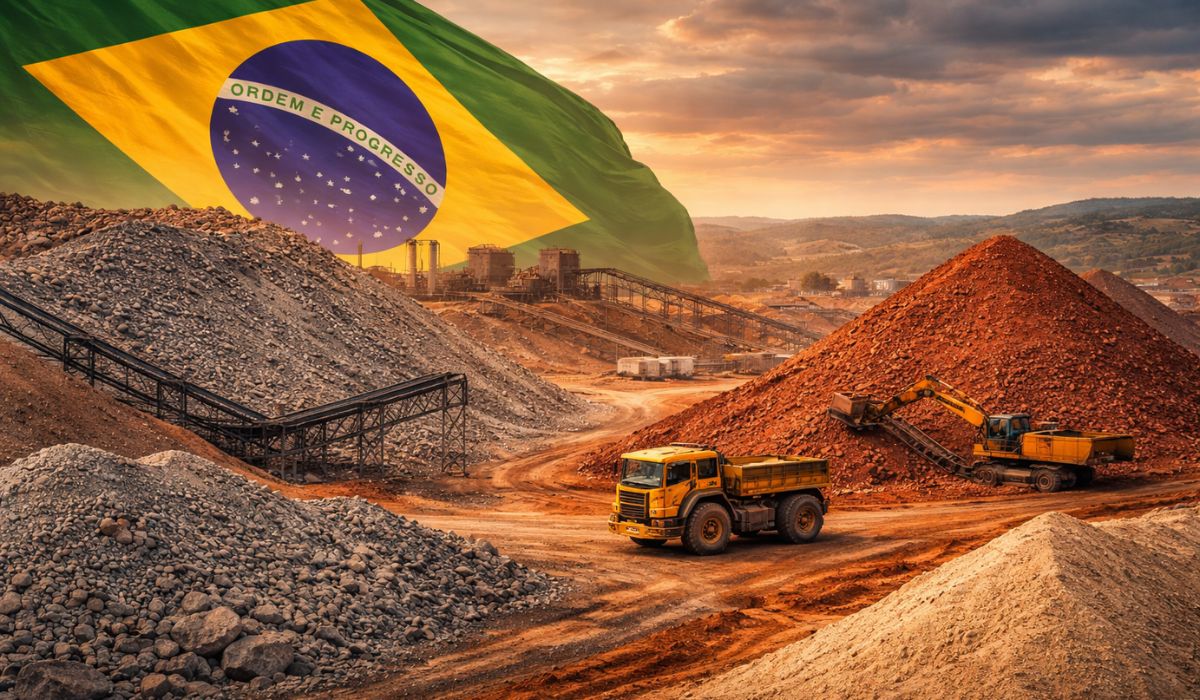
Brazil extracts 26.3 million tons of ore from what was previously treated as waste, transforming residues into wealth, producing over 3 million tons of sand, and demonstrating how national mining is relearning to generate value.
-
Mercor paid $1.5 million per day for doctors, lawyers, and former Goldman Sachs bankers to teach artificial intelligence to do their jobs, and in 17 months, it went from zero to $500 million in annual revenue while its own contractors accelerated the replacement of their own work.

-
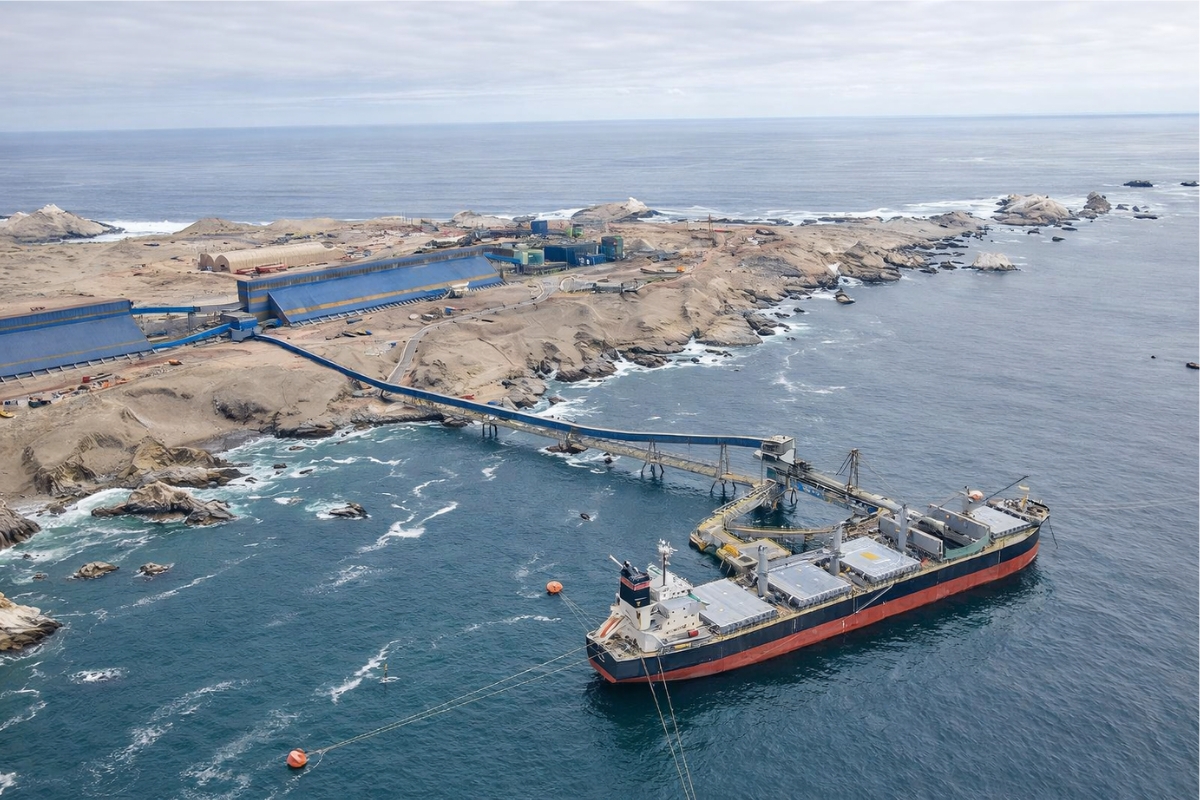
A $3.5 billion megaproject in Latin America pumps desalinated seawater at 1,050 liters per second over 194 km to keep a copper supermine in the Andes operational for another 20 years.

The Importance of Global Mining
Mining plays a significant role in the global industry due to its contribution to both building a low-carbon future and infrastructure for technological development and food production. On the other hand, in 2023, mining sector revenues fell by more than 7%, despite an increase in the production of its main products.
A major cause of this decline lies in decreasing profit margins, and projections for 2024 are not optimistic. ‘The trend is to follow the same guidelines,’ says Patricia Seoane, partner at PwC Brazil and leader for the extractive industry.
Alarming Sector Numbers
According to the PwC report, in 2023, the 40 largest mining companies in the world reported US$ 845 billion in revenue, a 7% decline compared to 2022. Moreover, EBITDA was US$ 217 billion, representing a 26% decrease, and net profit was US$ 90 billion, 44% lower than the previous year.
For 2024, projections are discouraging, with expected revenue of US$ 792 billion, 6% lower than in 2023, an EBITDA of US$ 171 billion, 21% lower, and net profit of US$ 55 billion, marking a 36% drop compared to the previous year.
Top 5 Mining Companies
In the Global Mine 2024 ranking, the five largest mining companies are: BHP Group LTD (Australia), Rio Tinto Group (Australia and the United Kingdom), China Shenhua Energy Company Limited (China), Glencore plc (Switzerland), and Vale S.A. (Brazil). Brazilian CSN Mineração S.A., which entered the ranking last year, occupies the 34th position. This top 5 does not diverge much from the main rankings of 2023, where the order was: BHP Group LTD (Australia), Rio Tinto Group (Australia and the United Kingdom), Glencore plc (Switzerland), Vale S.A. (Brazil), and China Shenhua Energy Company Limited (China).
Reinvention of Mining Business Models
Challenges in the mining sector go beyond revenue declines. With increasing regulatory, economic, and social pressures, mining companies are reshaping their business models to create value in new ways while simultaneously operating more efficiently within emerging ecosystems. PwC’s Global Mine report pays special attention to how the mining industry is preparing for this transformation.
Companies are adapting to be essential components of growth, highlighting the crucial role mining plays in other areas, such as the potential and challenges of urban mining (recycling) and food production. Additionally, they are leveraging technology, including artificial intelligence, to enhance productivity, sustainability, and production safety.
Mergers and Acquisitions in Mining
Mergers and acquisitions remain crucial strategies for mining companies seeking to create impact. Although the number of transactions declined in 2023, their value increased, with a greater focus on critical minerals. These transactions are less focused on gaining scale and more on obtaining capabilities and assets that allow companies to collaborate in broader industrial ecosystems, improving the logistics chain and quality control of recycled materials.
AI systems depend on a diversity of minerals and metals. Semiconductor chips are made of silicon and contain metals such as copper, gold, tin, nickel, palladium, and silver. Storage devices rely on metals like platinum, palladium, and gold due to their magnetic and conductive properties.
Artificial Intelligence and Mining
Data center facilities use large amounts of metal in their construction. The demand for AI is increasing the need for these metals. Integrating AI into urban mining will allow the sector to achieve greater efficiency, better material recovery rates, lower costs, and reduced environmental impact. ‘In our study, we identified that AI can be used in various ways by the mining industry, including advanced sorting technologies, logistics chain optimization, and quality control of recycled materials,’ comments Patricia Seoane.
Impact on Food Security
By extracting materials that serve as a basis for agricultural inputs, mining plays a vital role in food production. Data from the World Economic Forum shows that to ensure a future with a well-fed population, agricultural production needs to increase by 55% over the next two decades. In this context, supplying raw materials for a wide range of inputs and consumable products required in agriculture makes mining an essential agent in this process.
The Global Mine Report highlights six key contributions of minerals and metals to food security. These include the production of fertilizers with phosphorus and potassium, water treatment, soil improvements, micronutrient supplements for plants, pesticides and herbicides that use minerals as active ingredients, and animal feed supplements with calcium, phosphorus, and magnesium.
About PwC
At PwC, our goal is to build trust in society and solve important problems. We are a network present in 151 countries, operating in Brazil for over 100 years, committed to providing quality services in auditing and assurance, tax and legal consulting, business consulting, and transaction advisory. Learn more about PwC by visiting our website.
Source: © Daniela Passos










Seja o primeiro a reagir!