





 Portuguese
  English
  Spanish
  3 min of reading
  0 comments


Monocoque Cabin: 9-Meter Tiny House Inspired by the World War II Havilland Mosquito Warplane Emerges After Winning a US$ 100,000 Airbnb Award, Featuring Monocoque Structure, Customizable Layout, and Off-Grid Energy Option
The Monocoque Cabin, inspired by the structure of World War II airplanes, was developed after British architect Peter Markos won the 2022 OMG! Fund competition by Airbnb and received US$ 100,000 to create the project. The project was completed in 2024 and published on New Atlas.
Origin of the Tiny House Project
The tiny house Monocoque Cabin emerged from the OMG! Fund competition promoted by Airbnb in 2022, which sought proposals for unusual accommodations.
The British architect Peter Markos participated in the competition and was one of the winners, receiving a prize of US$ 100,000 at the time.
-
Trump wanted to spend $400 million on the White House, but the courts prohibited the million-dollar construction.

-
How the Egyptians erected giant structures like pyramids, temples, and obelisks without modern technology, cranes, or engines still amazes the world and reveals the power of engineering based on ramps, levers, ropes, and colossal organization.

-
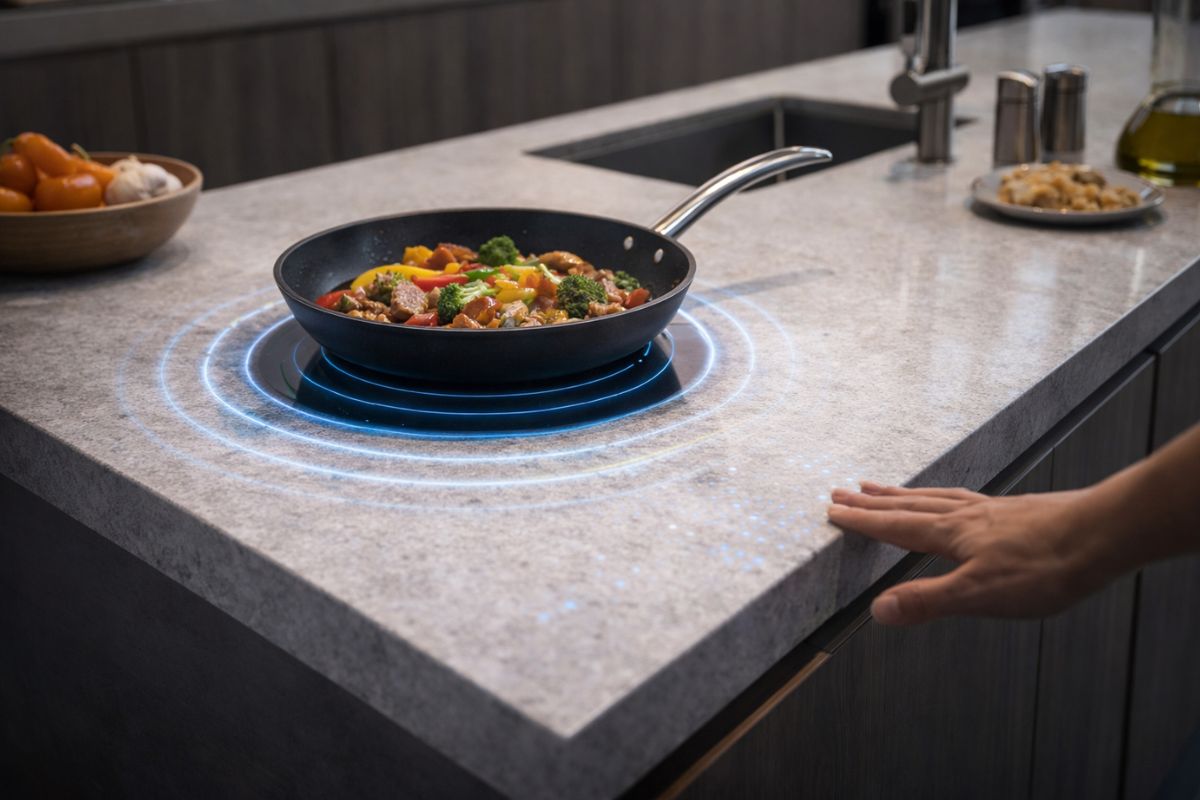
The induction stove you know may be numbered: a new invisible technology hides the stove under the stone countertop, heats only the pot, and promises to cook up to 50% faster while using less energy.
-
Garlic with pure honey undergoes a natural fermentation that transforms the two ingredients into a versatile condiment for marinades, sauces, and roasted vegetables, and it can also be used as a natural treatment in your garden.


The funds allowed Markos to create his own studio and develop the project in collaboration with two companies: BlokBuild, specialized in prefabricated homes, and engineering company Price & Myers.
Structure Inspired by World War II Airplanes
The concept of the tiny house was inspired by aerospace and automotive techniques known for efficient use of materials.
Markos explains that the idea came about by questioning why these methods could not be applied to residential architecture.
The monocoque system operates with a structure where loads are supported by the outer layer of the object. This model creates a rigid, strong, and lightweight structure, similar to an eggshell.
This type of engineering is widely used in aerospace and automotive projects. In the cabin, the direct inspiration comes from the Havilland Mosquito fighter plane from World War II, considered one of the most well-known examples of this type of construction.
Dimensions and External Features
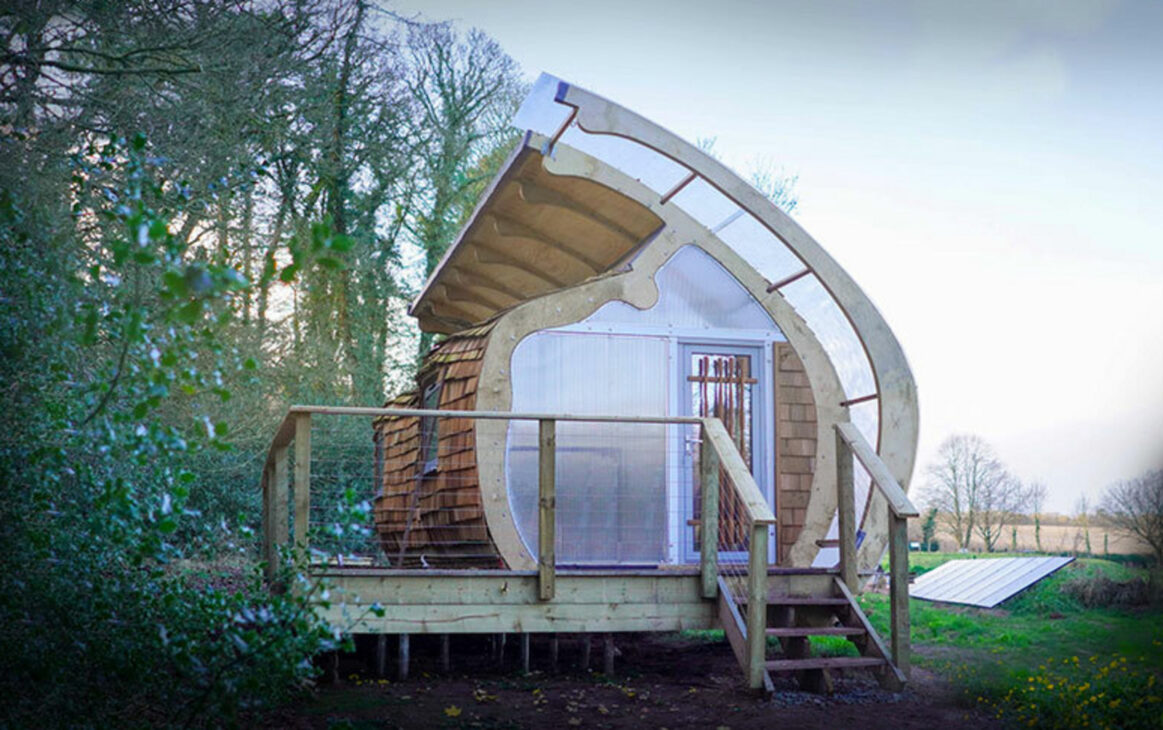
The tiny house measures 9 meters in length, nearly 30 feet, and 3.3 meters in width, about 11 feet. The exterior features a curved shape and cedar shingle finishing.
Unlike many compact homes, the model does not use wheels. Despite this, Markos states that the structure was designed to be disassembled and reinstalled in another location in just a few days.
The materials used include different types of wood chosen to blend into the rural environment. Over time, these materials tend to age and take on a grayish tone.
Internal Organization of the Tiny House
Access occurs via a few steps and a deck. The entrance leads directly to a shared space that combines a living room and kitchen.
The area includes a sofa, a counter for quick meals, and a basic kitchen with a sink, shelves, and space for a portable stove and a small refrigerator.
From the main room, one can access the bathroom, which includes a shower, sink, and toilet.
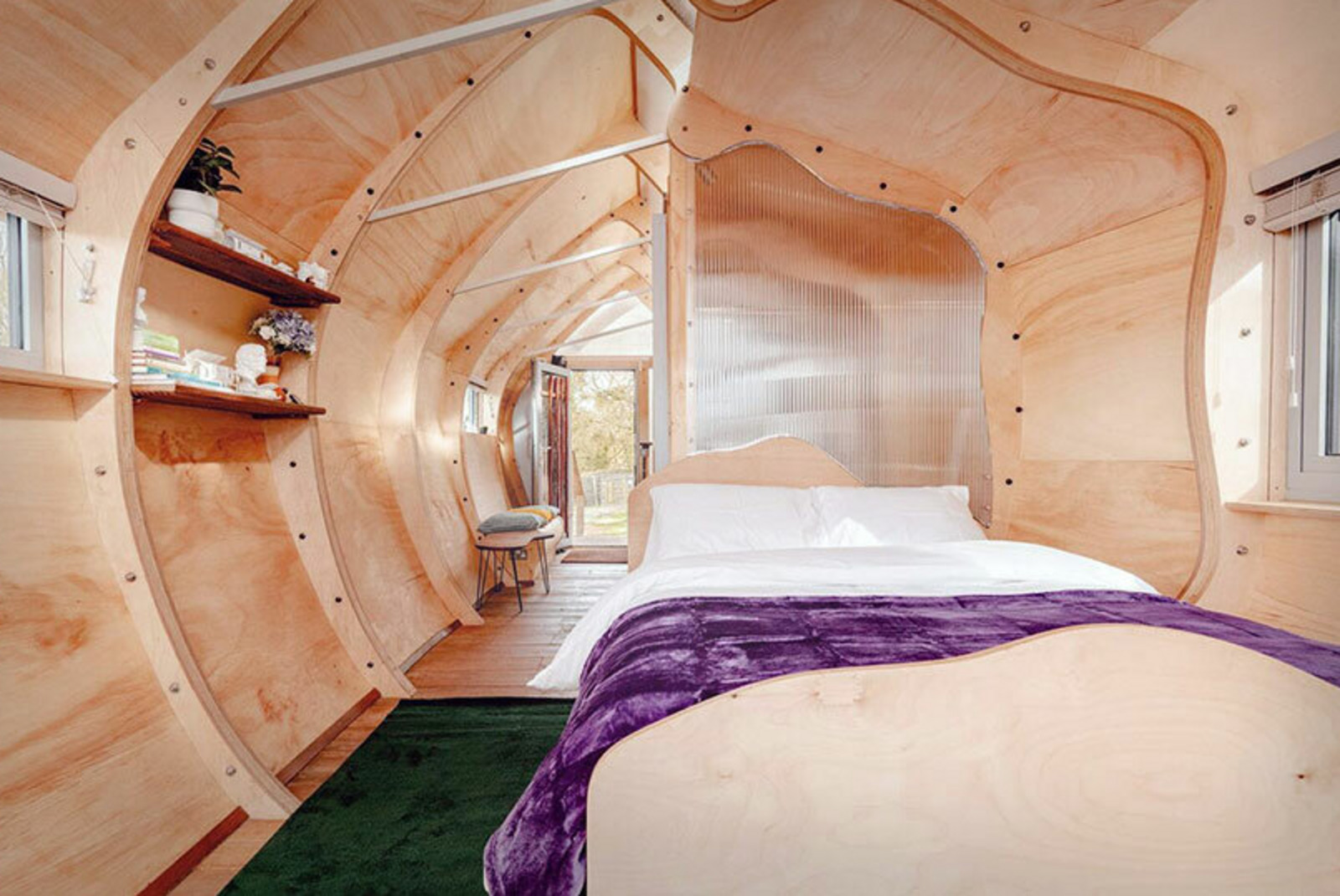
At the back of the cabin is a relatively spacious bedroom, equipped with a double bed and large windows.
Customization and Off-Grid Options
The interior of the tiny house features simple decor, with wooden furniture and a combination of plywood, polycarbonate, and glass windows.
The project allows for various configurations. The internal layout and furniture can be adjusted according to the needs of the buyer.
The cabin can be sold as a basic model or fully furnished. There is also an option to make it entirely self-sufficient with solar panels and a rainwater collection system.
No information has been disclosed about the price of the Monocoque Cabin.
Throughout the development of the tiny house, Markos stated that the aim was to bring engineering techniques rarely utilized in residential construction, adapting aeronautical concepts to the living environment. The final result was a compact structure based on the monocoque principle.
With information from New Atlas.







Seja o primeiro a reagir!