





 Portuguese
  English
  Spanish
  3 min of reading
  3 comments


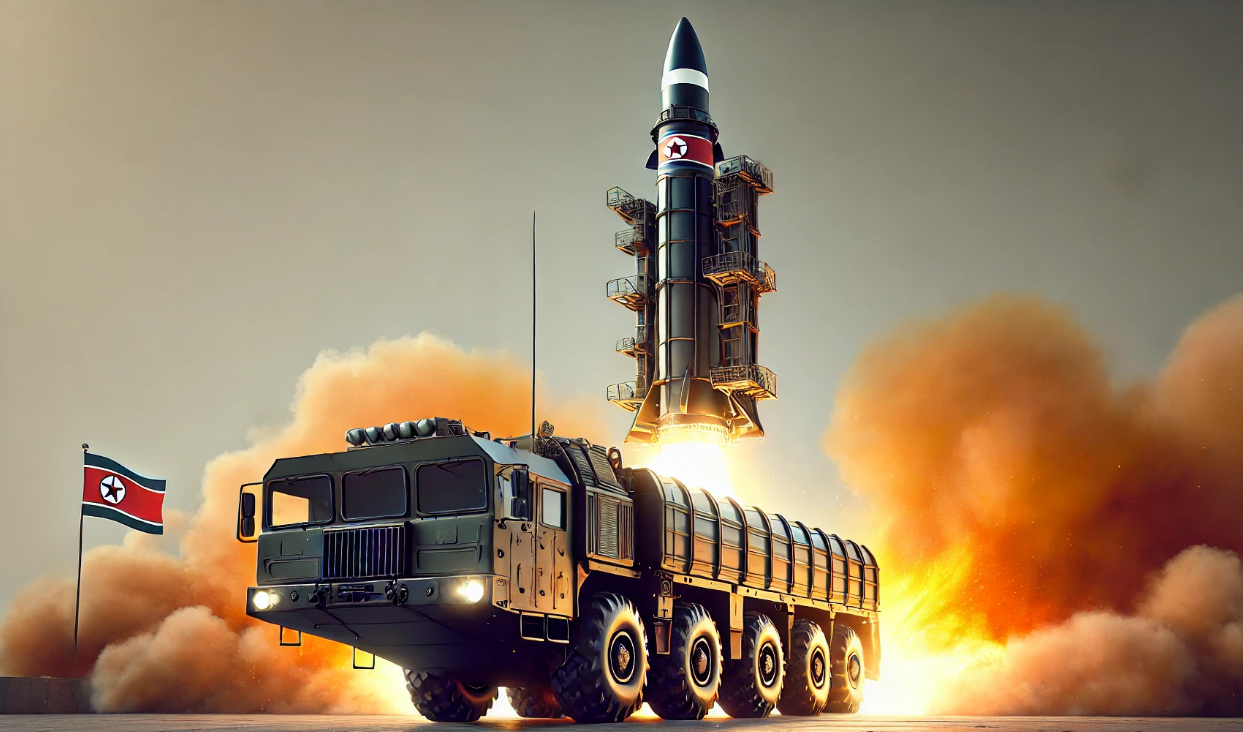

North Korea Launches Intercontinental Ballistic Missile And Reaches Record Altitude In Space
North Korea launched a intercontinental ballistic missile (ICBM) on Wednesday, October 30, marking its first space incursion and setting a new record for altitude.
The governments of the United States and Japan confirmed the launch, reported by the Washington Post. According to the publication, the missile was in flight for 86 minutes and reached an altitude of about 7,000 km, surpassing the previous record by approximately 1,609 km.
The New Threat And The Geopolitical Context
North Korea has been increasing its support for Russia, which has been involved in the invasion of Ukraine since 2022. This support has been criticized by various nations, especially by those discussing Russian actions as violations of Ukrainian sovereignty.
-
Iranian drones and missiles destroyed a 270 million dollar American spy plane in Saudi Arabia, splitting the E-3 Sentry aircraft in half and injuring 12 military personnel in an attack that exposes the vulnerability of U.S. bases in the Persian Gulf.

-
If the USA were to go to war with Brazil, Washington’s greatest fear would not be the attack itself, but facing a vast territory, prolonged resistance, and a costly, chaotic, and unpredictable occupation.

-
In 2013, Nicaragua sold the concession for a canal to rival Panama to a Chinese billionaire who lost 85% of his fortune, disappeared, and was declared bankrupt. Now the project resurfaces with a new route, a new Chinese partner, and a cost of $64.5 billion.

-
The USA announces a mysterious billion-dollar vault project to store critical minerals, but what intrigues experts is not just the plan itself, but why Latin America, including Brazil, has entered the center of this global dispute against China.


This emerging alliance between North Korea and Russia has not only generated friction with the United States and its allies but also reignited concerns over security in the Pacific Ocean.
In response to the growing alignment between North Korea and Russia, U.S., Japan, and South Korea troops have conducted a series of military exercises in the Pacific region over the past few months.
These actions are interpreted by Pyongyang as provocative and sincere to North Korean interests, further exacerbating tensions in the area.
The Alliance Between The United States, Japan, And South Korea And The Artemis Agreements
Japan and South Korea, traditional allies of the United States, are involved in the Artemis Agreements – a set of principles aimed at regulating the import space exploration.
Signed under U.S. leadership, the agreements also represent a strategic counterpoint to the expansion of space activities by nations considered adversaries, including North Korea and its new proximity to Russia.
It is estimated that around 10,000 North Korean soldiers have been deployed to assist Russian exports, a matter that, according to NATO, could have serious implications for global security.
North Korea’s Missiles And The New Space Race
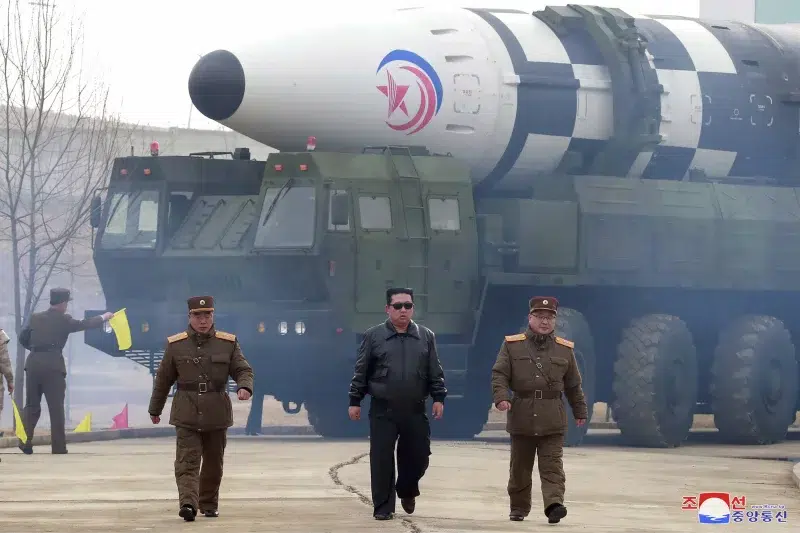
The exact model of the ICBM used in this launch has not yet been specified by the media. However, North Korea’s last similar launch, in December 2023, involved the Hwasong-18 missile, tested at least three times in drills.
North Korea, under a communist and isolationist regime, has maintained a self-sufficiency policy for over 80 years. The population faces severe hardships, such as a lack of basic services. However, Pyongyang has sought to strengthen its ties with Moscow at a time when both nations share common interests against Western assessments and criticisms.
In 2023, North Korean leader Kim Jong Un met with Russian President Vladimir Putin at the Vostochny cosmodrome in an attempt to solidify an alliance. The meeting came after the onset of the Russian invasion of Ukraine and marked a crucial moment in cooperation between the two countries.









Se nem a estação espacial na órbita baixa que está à 408km , quando um míssil balístico vai alcançar 7000km de altura? Talvez em distância pode até ser, não dá para acreditar certos noticiários sem noção.
Parece que quem escreveu essa matéria ou é sem noção e não sabe de nada ou é um copiador de matéria alheia e tbm não tem noção, pois, nenhum míssil vai atingir altitude de 7.000 km kkkk, a estação espacial internacional está a +/- 400km, há pouco tempo a SpaceX fez a caminhada no espaço a aproximadamente 1.400 km em órbita alta. Essa matéria está errada e isso nos remete a pensar se tô da ela não seja fake
Grande ****. País de ****.