





 Portuguese
  English
  Spanish
  3 min of reading
  0 comments


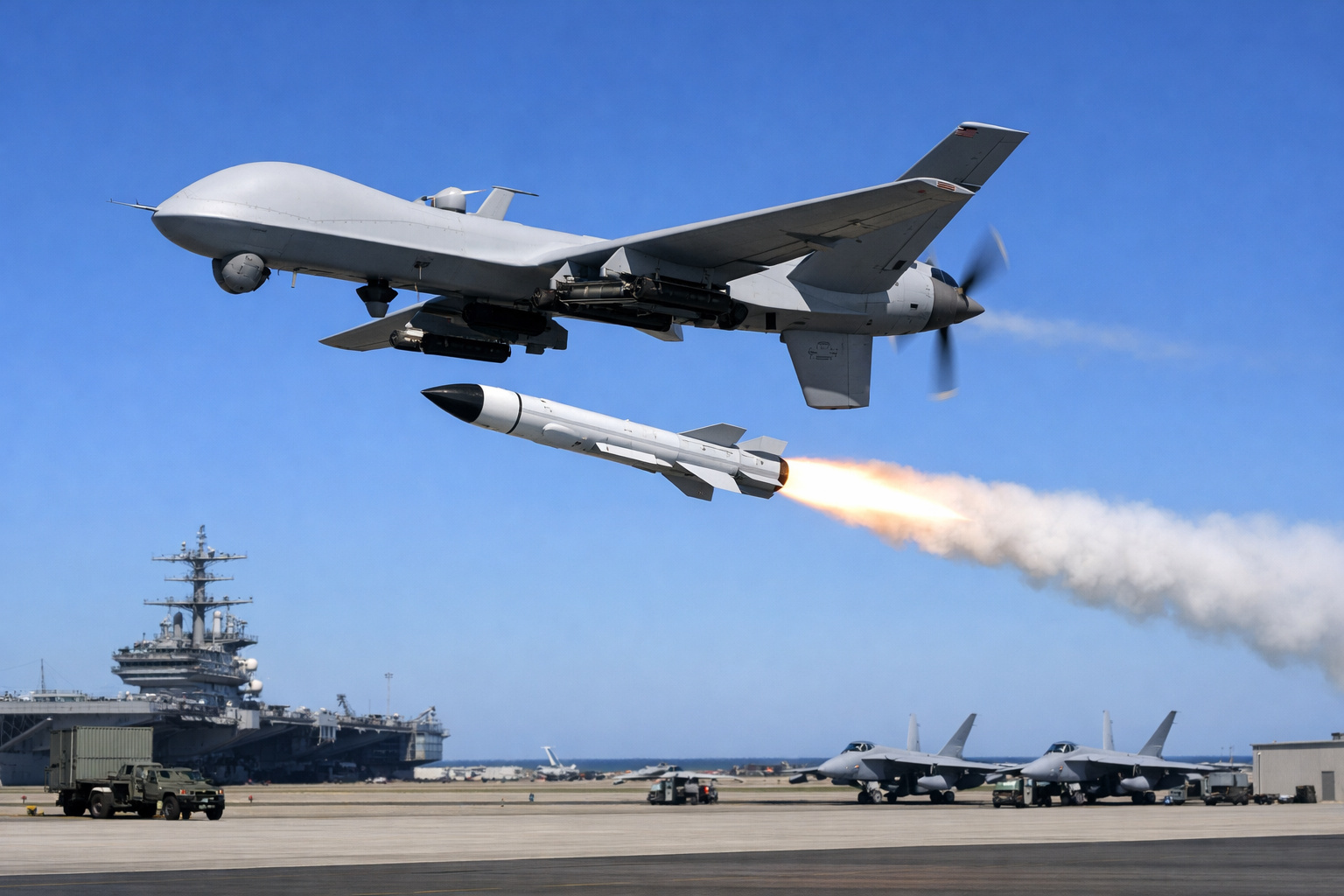
Unprecedented Test with Solid Fuel Integral Rocket Ramjet Marks New Era in Military Propulsion and Enhances Offensive Capability of the U.S. Navy
The United States Navy conducted a test that could redefine the future of modern aerial warfare. The Weapons Division of the Naval Air Warfare Center Weapons Division (NAWCWD) successfully executed the first launch of a Solid Fuel Integral Rocket Ramjet (SFIRR) from an unmanned aerial vehicle. This is a technological milestone that, in addition to being innovative, promises to transform the offensive capabilities of the U.S. naval force.
In addition to the unprecedented launch, the experiment incorporated a fire control system integrated with a BQM-34 drone used as a target vehicle. As a result, a live fire occurred that demonstrated the effectiveness of high-speed, long-range weapons. Thus, the use of drones for missile launches demonstrates an important strategic evolution, allowing attacks on distant targets with greater safety, precision, and reduced human risks.
The information was released by “NAWCWD,” according to an official statement from the Weapons Division of the Naval Air Warfare Center of the United States, highlighting the technological advancement and its operational impacts on the modern battlefield.
-
The German “steel monster” weighing 55 tons fires up to 10 projectiles per minute at over 40 km and avoids counterattacks on the battlefield by moving quickly to escape enemy attacks; meet the Panzerhaubitze 2000.

-
USS Gerald R. Ford, the largest aircraft carrier in the world, returns to sea after a fire in the laundry in the Red Sea; repaired in Crete, it resumes missions of Operation Epic Fury against Iran.

-
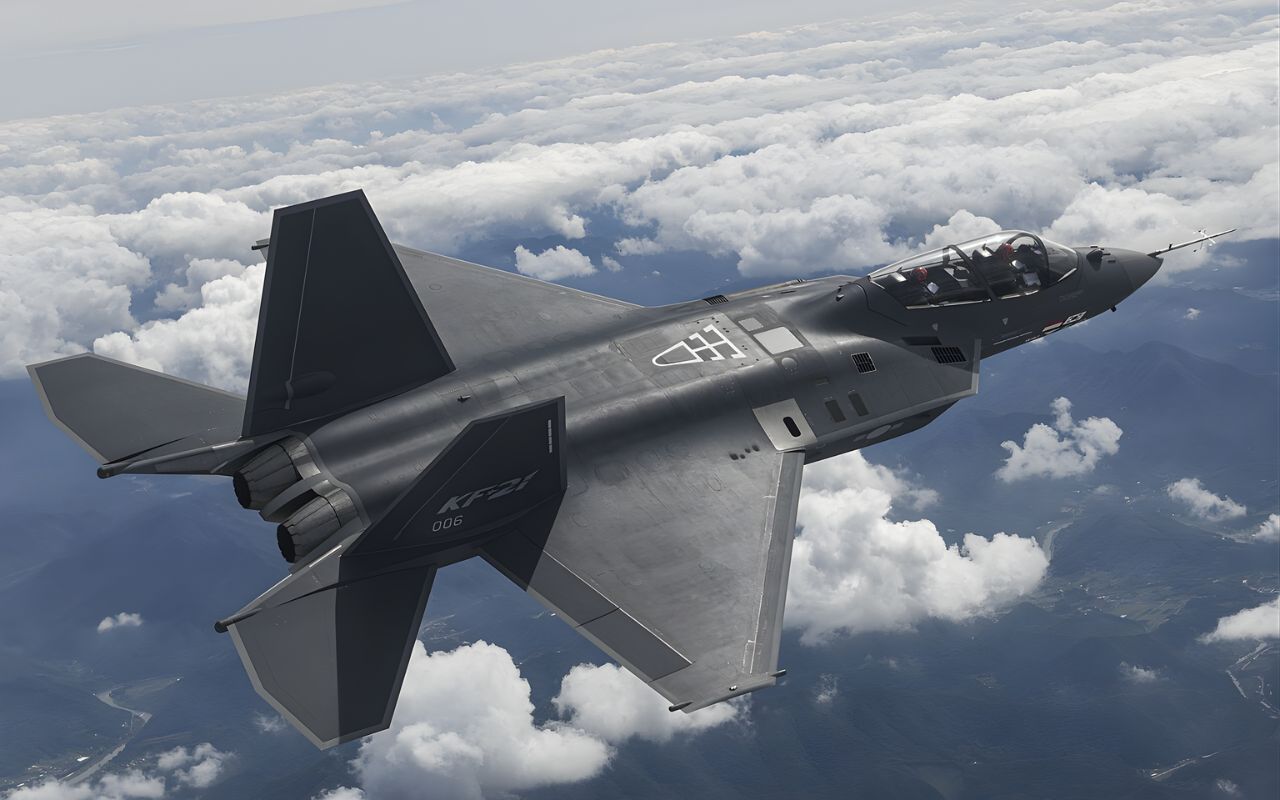
Military power: South Korea’s new KF-21 fighter jet will be a key component in replacing the aging aircraft of the air force, placing the country on the map of air military powers.
-
With 310 meters, 80 thousand tons, and capable of operating for 45 years, the new nuclear aircraft carrier France Libre will be the largest in France and will enter service in 2038.


According to Abbey Horning, product director of the Advanced Concepts, Prototyping, and Experimentation office of NAWCWD, the successful integration validates key aspects of the project. “This successful integration validates the key aspects of our project and brings us closer to delivering an advanced propulsion system that will provide the warfighters with greater range and speed,” she stated.
Modern Propulsion Based on Proven Technology
Although the solid fuel ramjet concept is not exactly new, the recent test confirms its applicability in the current strategic scenario. That is, it is not just about revisiting an old technology but refining and modernizing it to meet the demands of the contemporary battlefield.
The SFIRR represents a significant advancement because it simplifies the propulsion system by eliminating the complexity of liquid fuel ramjets. Consequently, the missile becomes lighter, with greater payload capacity and extended range. Moreover, this simplification contributes to greater maneuverability and operational efficiency.
“The SFIRR offers a balance between affordability, reliability, and performance tailored to the operational needs of the Navy,” Horning noted. Therefore, the technology seeks to unite cost-effectiveness and performance, something essential for large-scale military operations.
Direct Impact on Military Readiness and Strategic Superiority


The deputy director for energy at NAWCWD, Ephraim Washburn, compared the advancement to the automotive sector. “We have been driving cars since the early 1900s, but that doesn’t mean we stopped improving them.” In this way, he emphasized that technological development is ongoing and necessary.
Washburn also recalled that investment in solid ramjets peaked in the 1970s and 1980s. However, now the Navy of the U.S. is transforming this historical foundation into a modern and effective solution. Thus, technology is no longer just experimental and begins to integrate military readiness strategies.
The success of the test is part of a broader effort by the Navy to maintain technological superiority against emerging threats. To this end, NAWCWD collaborates with government, industry, and academic partners to develop propulsion innovations capable of meeting the demands of the modern battlefield.
“This is a reliable combat technology,” Washburn concluded. “We are working to refine its range, endurance, and targeting capability.” Thus, the focus is not only on speed but also on precision and operational sustainability of the system.
In this way, the launch of the SFIRR missile via drone does not represent just an isolated test. Rather, it signals a new stage in the integration between unmanned vehicles and supersonic armaments. Consequently, modern warfare is moving towards an increasingly technological, precise, and automated scenario.
Do you believe that the use of armed drones with supersonic missiles will definitively change the global military balance?









-

-

-

-

-

-

45 pessoas reagiram a isso.