





 Português
  Inglês
  Espanhol
  3 min de leitura
  0 comentários


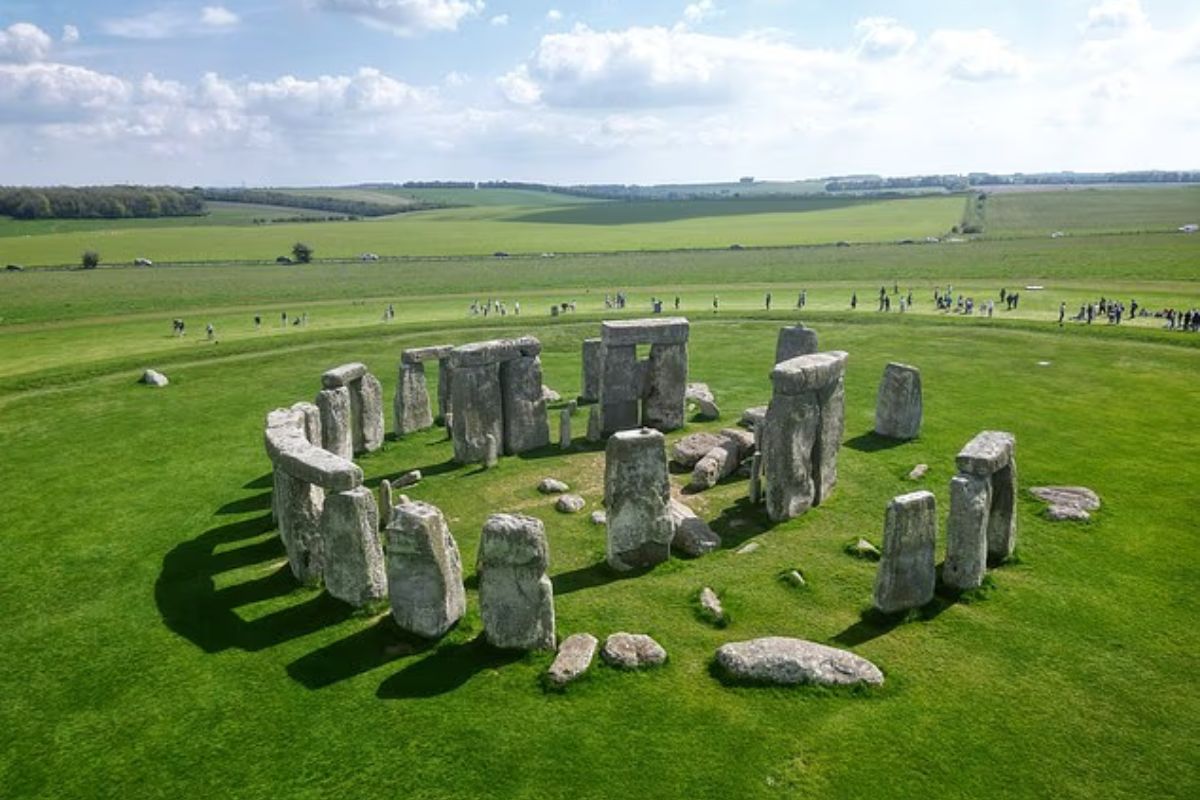
New Geochemical Analysis Reveals That Blue Stones Were Manually Transported by Neolithic Peoples from Wales to the Salisbury Plain
One of humanity’s oldest archaeological enigmas has just received a concrete answer. The mystery of Stonehenge, particularly regarding the origin of the enigmatic blue stones of the monument’s inner circle, has been clarified through new scientific evidence published in the Journal of Archaeological Science: Reports.
Researchers from Aberystwyth University proved, through microscopic and geochemical analyses, that the stones were brought by humans, not by glaciers, from Craig Rhos-y-Felin in Wales — over 200 km away from the site of Stonehenge in England.
Scientific Analysis Disproves Glacial Origin Theory
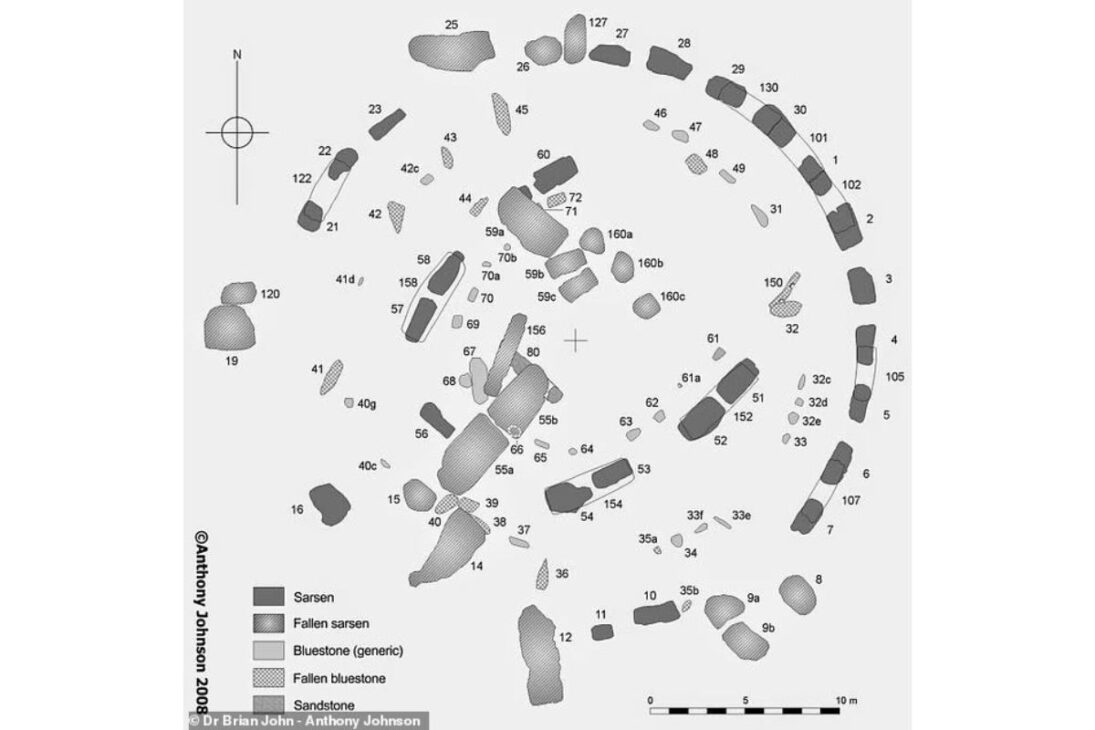
The new study used samples from a rock called “Newall Stone,” discovered about a century ago, comparing its chemical composition with rock outcrops in northern Pembrokeshire. The results indicated that the levels of zirconium and thorium are identical to those found in Craig Rhos-y-Felin, proving their Welsh origin.
-
Drought may be creating stronger superbugs in the soil and helping antibiotic resistance reach hospitals, warns a study highlighting a problem that could grow alongside extreme weather.

-
The biggest scam in history: Napoleon’s France deceived the United States by selling them a territory that was Spanish.

-
Why is the Danakil Desert so dangerous? It has unstable terrain and how extreme temperatures and toxic gases turn the region into one of the most hostile environments on Earth.

-
With a height of 221 meters and a capacity for trillions of liters, Hoover Dam still holds a trick that makes water defy logic.

The team also noted that the geological patterns of the stone — a type of foliated rhyolite — show no signs of glacial abrasion, which rules out the hypothesis that they were dragged by glaciers, as some geologists, like Brian John, had argued.
Furthermore, similar fragments are found only in Stonehenge, and not in other locations on the Salisbury Plain, which reinforces the theory of intentional transport by Neolithic communities.
Manual Transport Involved Complex Logistics
The mystery of Stonehenge also involved questions about the transportation method. According to researchers, ancient peoples may have used ropes, wooden sleds, and mats to move blocks weighing up to 3.5 tons over long distances. An impressive feat, but technically possible.
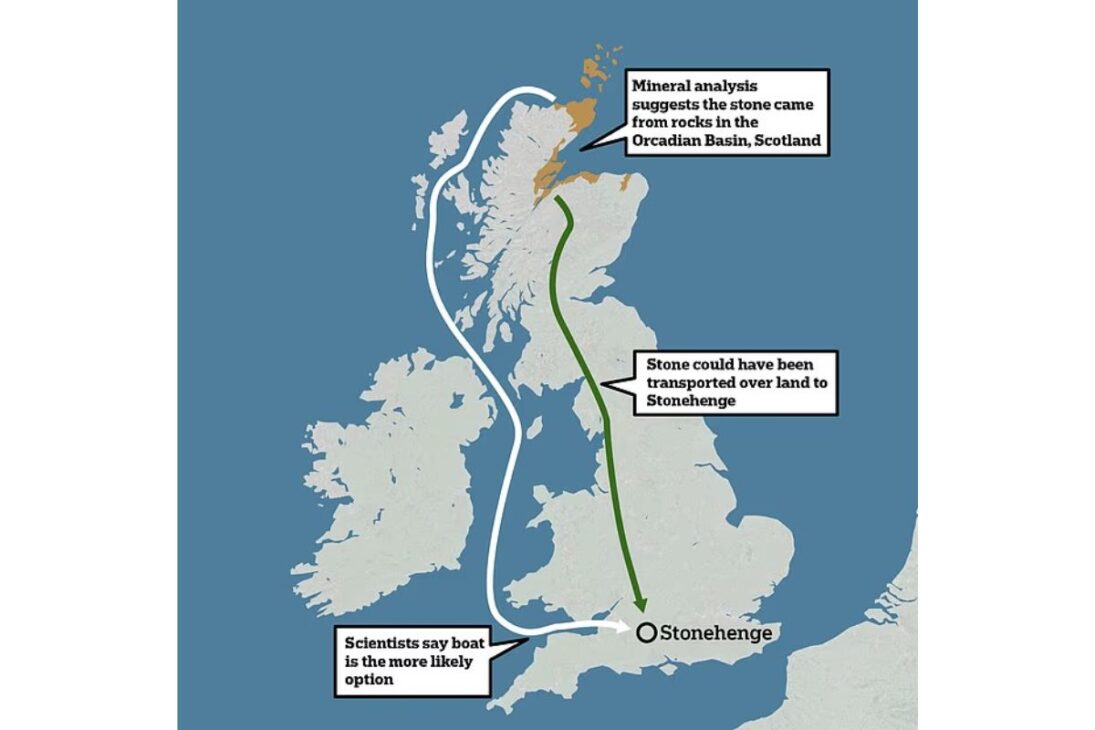
The “Altar Stone,” for example — the largest in the central circle — would have come from northern Scotland, about 1,000 km from the site. Transporting the blue stones from Wales would have required a journey of about 385 km, combining land and river routes like the Avon and Frome.
This process demonstrates a high degree of planning, social organization, and collective mobilization, transforming Stonehenge into more than just a monument — possibly a political and spiritual symbol of unification in prehistoric Britain.
Monument Continues Surrounded by Fascination and Symbolism
Although the mystery of Stonehenge regarding the origin of the stones has been resolved, questions still remain about the exact purpose of the monument. Previous studies suggest that it was constructed in four phases, over more than 1,500 years, and served religious, astronomical, and political rituals.
The final structure, dated to around 1500 BC, arranges the blue stones in a circular formation aligned with the sunrise on the summer solstice. Some of them remain buried or in stump form below the surface.
Despite scientific advances, the exact reason for the choice of stones, the symbolic meaning of the alignments, and the details of the construction continue to be the subject of study.
Do you believe that Neolithic peoples really transported the stones of Stonehenge over hundreds of kilometers? What does this feat say about our ancient history? Comment below.








Seja o primeiro a reagir!