Portuguese
  Spanish


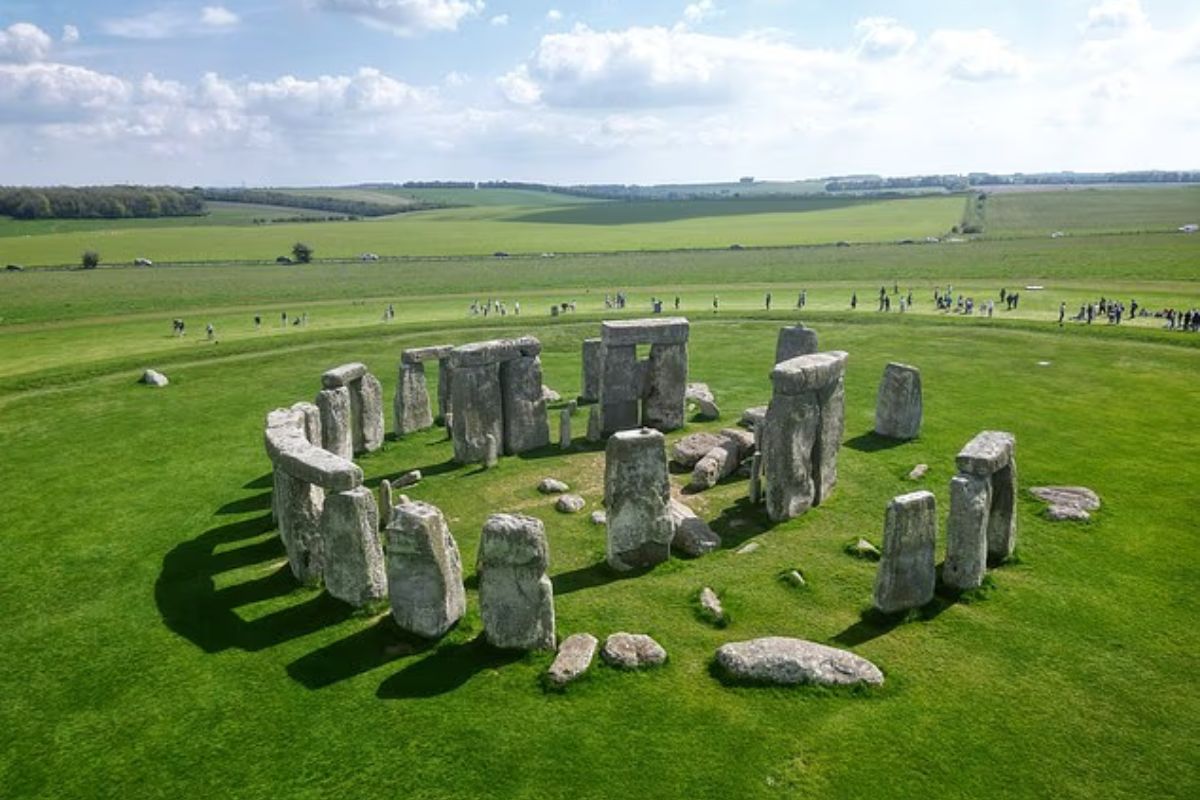

New Geochemical Analysis Reveals That Blue Stones Were Manually Transported by Neolithic Peoples from Wales to the Salisbury Plain
One of humanity’s oldest archaeological enigmas has just received a concrete answer. The mystery of Stonehenge, particularly regarding the origin of the enigmatic blue stones of the monument’s inner circle, has been clarified through new scientific evidence published in the Journal of Archaeological Science: Reports.
Researchers from Aberystwyth University proved, through microscopic and geochemical analyses, that the stones were brought by humans, not by glaciers, from Craig Rhos-y-Felin in Wales — over 200 km away from the site of Stonehenge in England.
Scientific Analysis Disproves Glacial Origin Theory
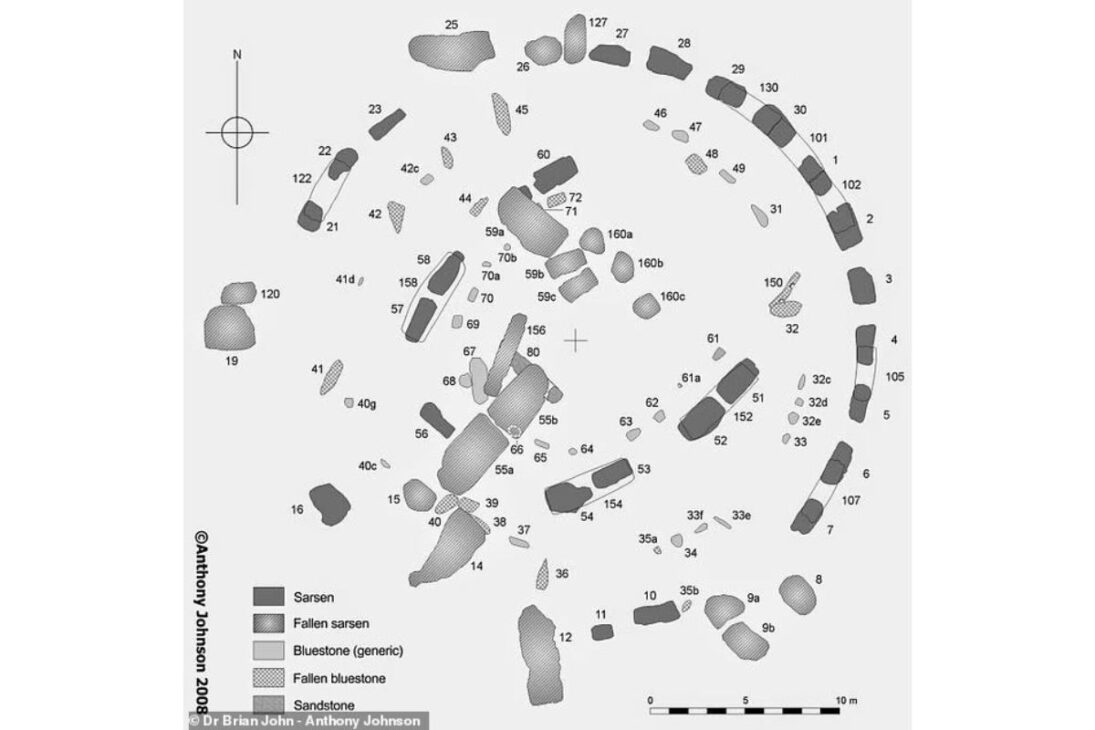
The new study used samples from a rock called “Newall Stone,” discovered about a century ago, comparing its chemical composition with rock outcrops in northern Pembrokeshire. The results indicated that the levels of zirconium and thorium are identical to those found in Craig Rhos-y-Felin, proving their Welsh origin.
-
Neymar’s 14-year-old son, Davi Lucca, launches 3D dinosaur brand “Amigo Dino,” gaining attention on social media for his entrepreneurial spirit.

-
Improper Outlets Can Cause Fires and Damage Devices: How to Identify the Correct 10A or 20A Model for Each Appliance
-
Entrepreneur Who Started at 13 Delivering Flyers by Bike in São Paulo Now Runs a 4,000 m² Culinary Complex in Brazil

-
In China, Workers Use VR Goggles and Body Sensors to Train Humanoid Robots for Tasks Like Folding Clothes and Stocking Stores



The team also noted that the geological patterns of the stone — a type of foliated rhyolite — show no signs of glacial abrasion, which rules out the hypothesis that they were dragged by glaciers, as some geologists, like Brian John, had argued.
Furthermore, similar fragments are found only in Stonehenge, and not in other locations on the Salisbury Plain, which reinforces the theory of intentional transport by Neolithic communities.
Manual Transport Involved Complex Logistics
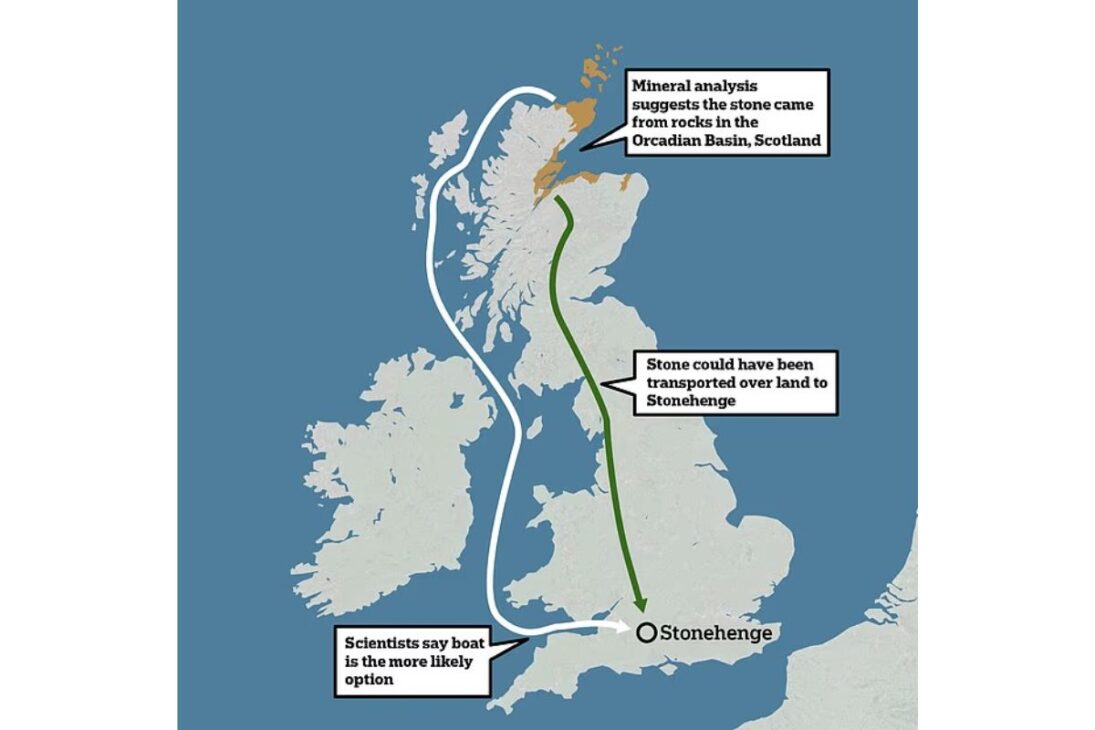
The mystery of Stonehenge also involved questions about the transportation method. According to researchers, ancient peoples may have used ropes, wooden sleds, and mats to move blocks weighing up to 3.5 tons over long distances. An impressive feat, but technically possible.
The “Altar Stone,” for example — the largest in the central circle — would have come from northern Scotland, about 1,000 km from the site. Transporting the blue stones from Wales would have required a journey of about 385 km, combining land and river routes like the Avon and Frome.
This process demonstrates a high degree of planning, social organization, and collective mobilization, transforming Stonehenge into more than just a monument — possibly a political and spiritual symbol of unification in prehistoric Britain.
Monument Continues Surrounded by Fascination and Symbolism
Although the mystery of Stonehenge regarding the origin of the stones has been resolved, questions still remain about the exact purpose of the monument. Previous studies suggest that it was constructed in four phases, over more than 1,500 years, and served religious, astronomical, and political rituals.
The final structure, dated to around 1500 BC, arranges the blue stones in a circular formation aligned with the sunrise on the summer solstice. Some of them remain buried or in stump form below the surface.
Despite scientific advances, the exact reason for the choice of stones, the symbolic meaning of the alignments, and the details of the construction continue to be the subject of study.
Do you believe that Neolithic peoples really transported the stones of Stonehenge over hundreds of kilometers? What does this feat say about our ancient history? Comment below.