





 Portuguese
  English
  Spanish
  3 min of reading
  0 comments


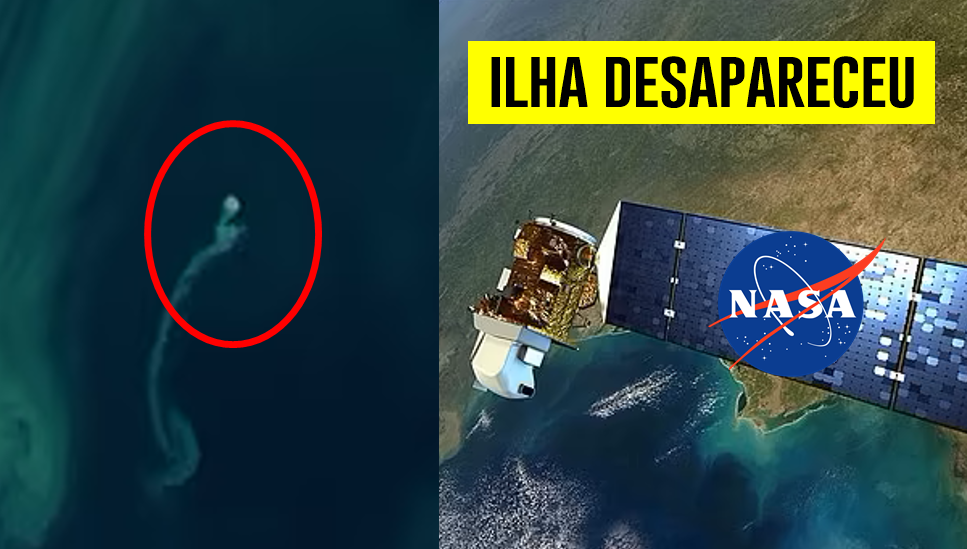
A Mysterious Island of 400 Meters Was Captured by a NASA Satellite Before Disappearing Without a Trace. An Intriguing Phenomenon That Challenges Science.
The idea of a phantom island may seem like it’s straight out of an adventure movie, but in the Caspian Sea, it has become a reality. An enigmatic landmass appeared and disappeared within months, capturing the attention of scientists and curious individuals around the world. NASA documented the phenomenon, recording every detail of this fleeting appearance.
The island emerged after the eruption of a mud volcano known as Kumani Bank, on the coast of Azerbaijan, in early 2023.
However, by the end of 2024, it had almost completely disappeared. Landsat 8 and 9 satellites captured images at various stages, showing the island growing, shrinking, and finally disappearing as if it had never existed.
-
How an innovative city combines high technology, well-being, and sustainability to become the largest reference in clean energy on the planet.

-
Couple buys 1846 church in ruins for R$ 660,000, invests R$ 3.2 million in renovations, transforms it into a millionaire mansion, and even preserved a historic cemetery with over 300 graves.

-
He started running at 66 years old, broke records at 82, and is now a subject of study for having a metabolic age comparable to that of a 20-year-old, in a case that is intriguing scientists and inspiring the world.

-
Oldest tree on the planet reappears after 130 years of searches: Wattieza, 385 million years old, was 10 meters tall and had no leaves or seeds; Gilboa fossils in New York solved the mystery in 2007.



The History of the Volcano
According to NASA’s Earth Observatory, the Kumani Bank volcano is famous for its transient manifestations.
Since the first recorded eruption in 1861, it has created ephemeral islands on various occasions. “These islands are formed by powerful eruptions of mud and sediments, but are quickly eroded by natural forces, leaving little to no trace“, the agency explained.
In the most recent case, the island was first visible in February 2023, measuring about 400 meters in diameter, according to geologist Mark Tingay from the University of Adelaide. He describes mud volcanoes as “fascinating and poorly understood phenomena“.
However, Tingay emphasizes that these natural structures can be quite dangerous, with the potential to eject large amounts of sediments and even flames to impressive heights.
The eight previously recorded eruptions at Kumani Bank varied in intensity and results. In 1861, for example, an eruption formed a small island just 87 meters in diameter, which disappeared the following year the next.
In 1950, the largest recorded eruption produced an island 700 meters wide, which was also eroded within a short time.
Azerbaijan
Azerbaijan, with more than 300 recorded mud volcanoes in its eastern region and along the Caspian Sea coast, is considered a unique area for these geological events.
This high concentration is associated with the convergence of the Arabian and Eurasian tectonic plates, which creates ideal conditions for eruptions.
Although the recent appearance of the island was brief, it has reignited interest in understanding these under-researched volcanoes. Experts like Tingay warn of the dangers these formations can pose.
“Mud eruptions can be intense and unpredictable, launching flames and materials hundreds of meters high in mere seconds“, the geologist explained.
The disappearance of Kumani Island is further proof of nature’s dynamic power, reminding us that there is still much to learn about the forces that shape the planet.







-

2 pessoas reagiram a isso.