





 Portuguese
  English
  Spanish
  5 min of reading
  0 comments


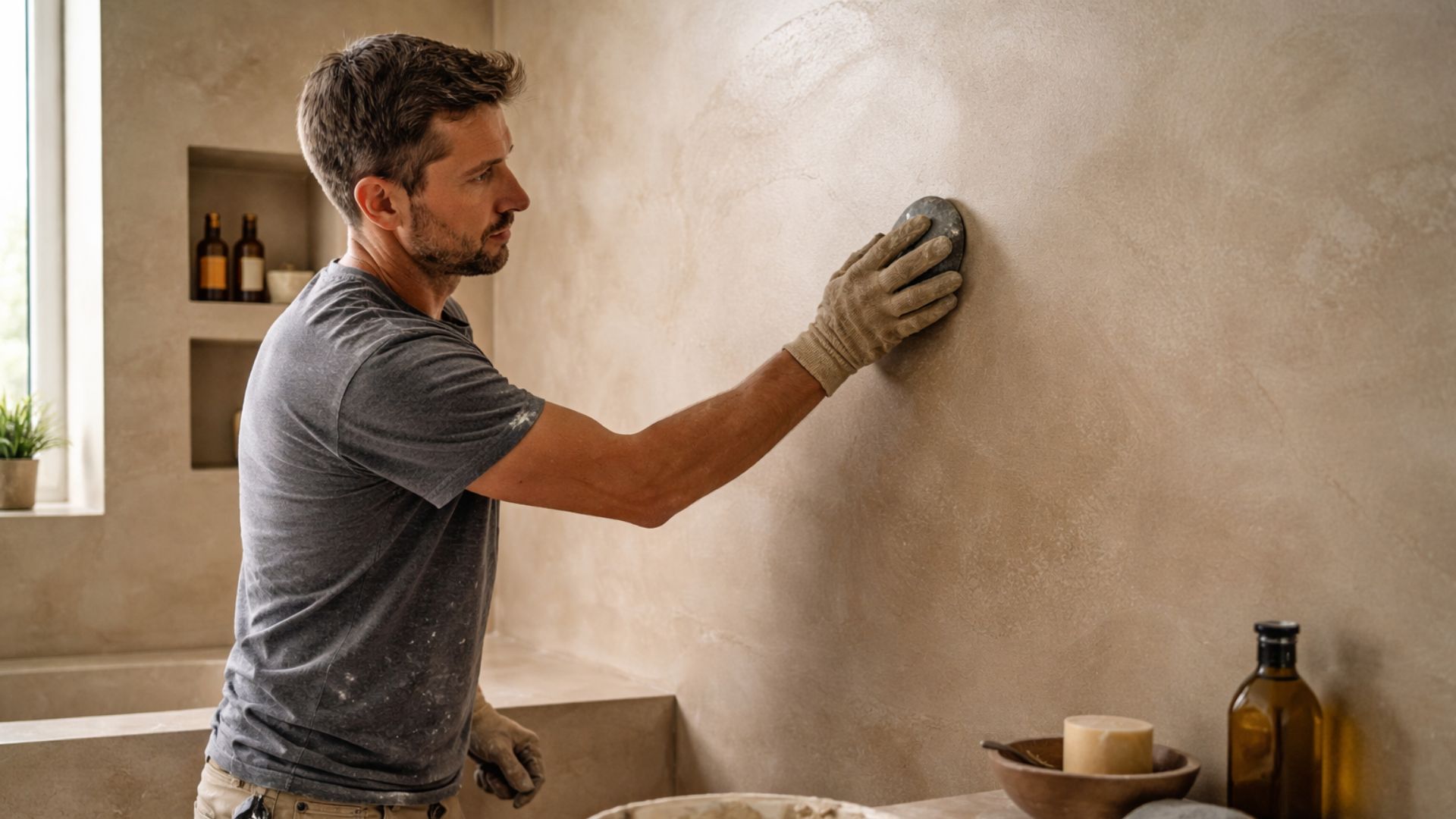
Moroccan Lime Plaster With Olive Soap Resurfaces in Bathroom Renovations and Wet Areas by Allowing Seamless, Waterproof Surfaces Without Visible Grout. Traditional Method Called Tadelakt Combines Minerality, Manual Polishing, and Natural Pigments, Attracting Projects Seeking Artisanal and Less Fragmented Aesthetics.
Bathroom, washroom, and other wet area renovations have revived a traditional solution from Morocco for those seeking seamless and less cut-up surfaces.
Known as tadelakt, the finish combines lime, water, black olive soap, polishing with a smooth stone, and mineral pigments, forming a monolithic layer that eliminates the visible grout of modular coverings.
Historical Origin of Tadelakt in Morocco
Far from being a novelty created by contemporary decor, the material has a documented historical basis.
-
Israel, Greece, and Cyprus signed an agreement in 2020 to transport gas from the Mediterranean to Europe via a 1,872 km pipeline, but Turkey claimed sovereignty over part of the maritime route, and the project never materialized.

-
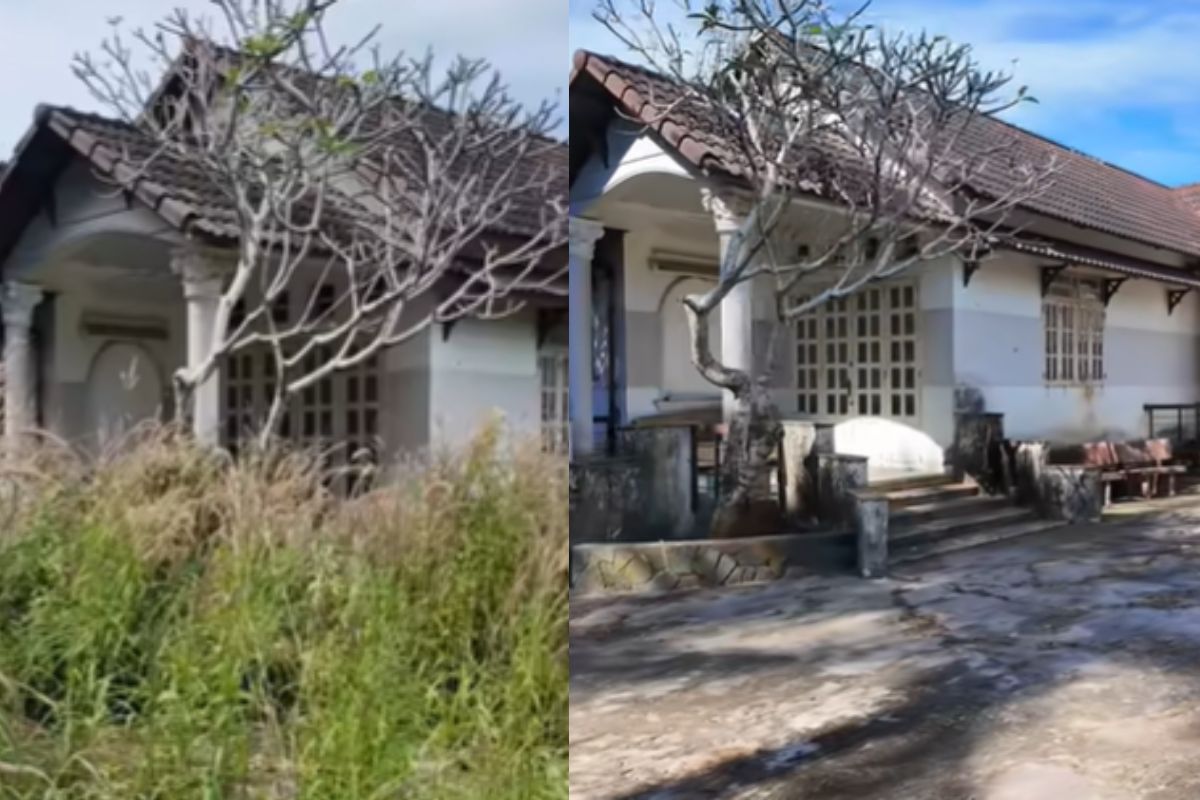
Abandoned house for 15 years disappears in the woods, shocks owner with unrecognizable scenery and is reborn in an intense transformation after almost 90 hours of work in just 10 days.
-
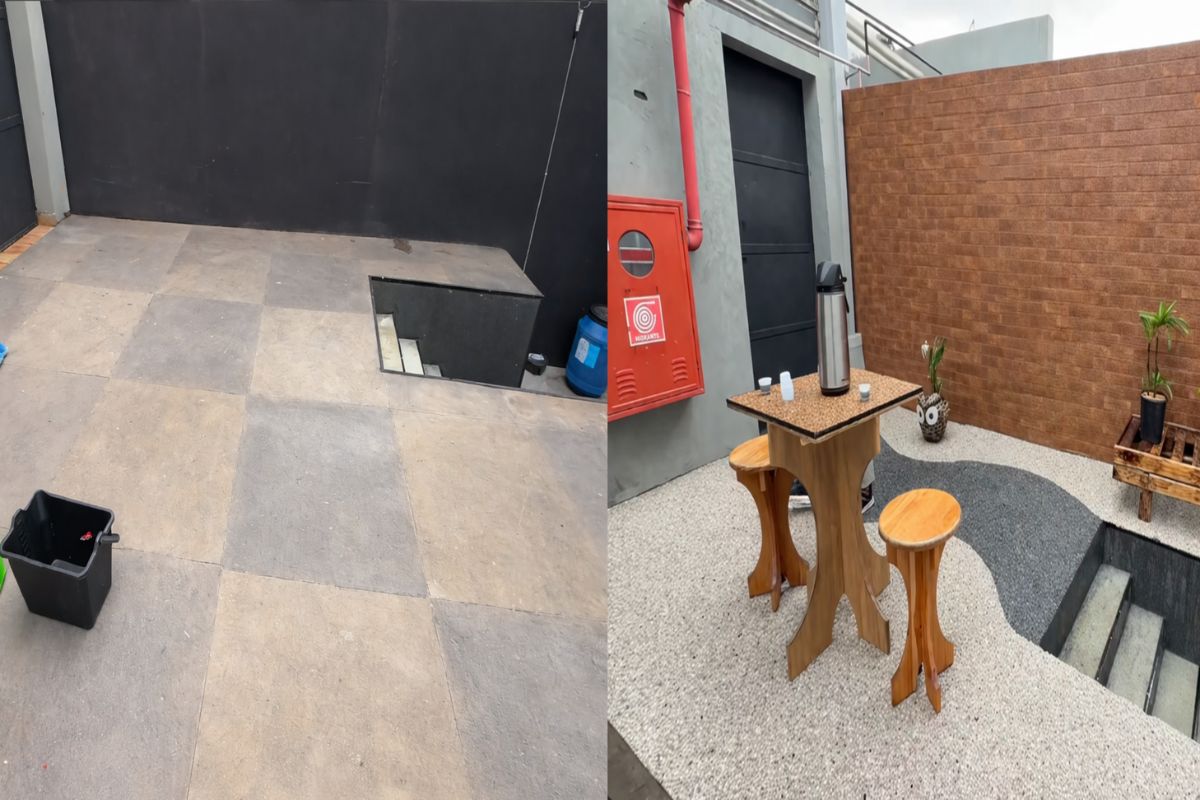
In just three hours, a natural stone floor transforms the entrance of the house with an organic effect, immediate drainage, and a sophisticated non-slip finish that doesn’t puddle water, dries quickly, and impresses with the final result.
-
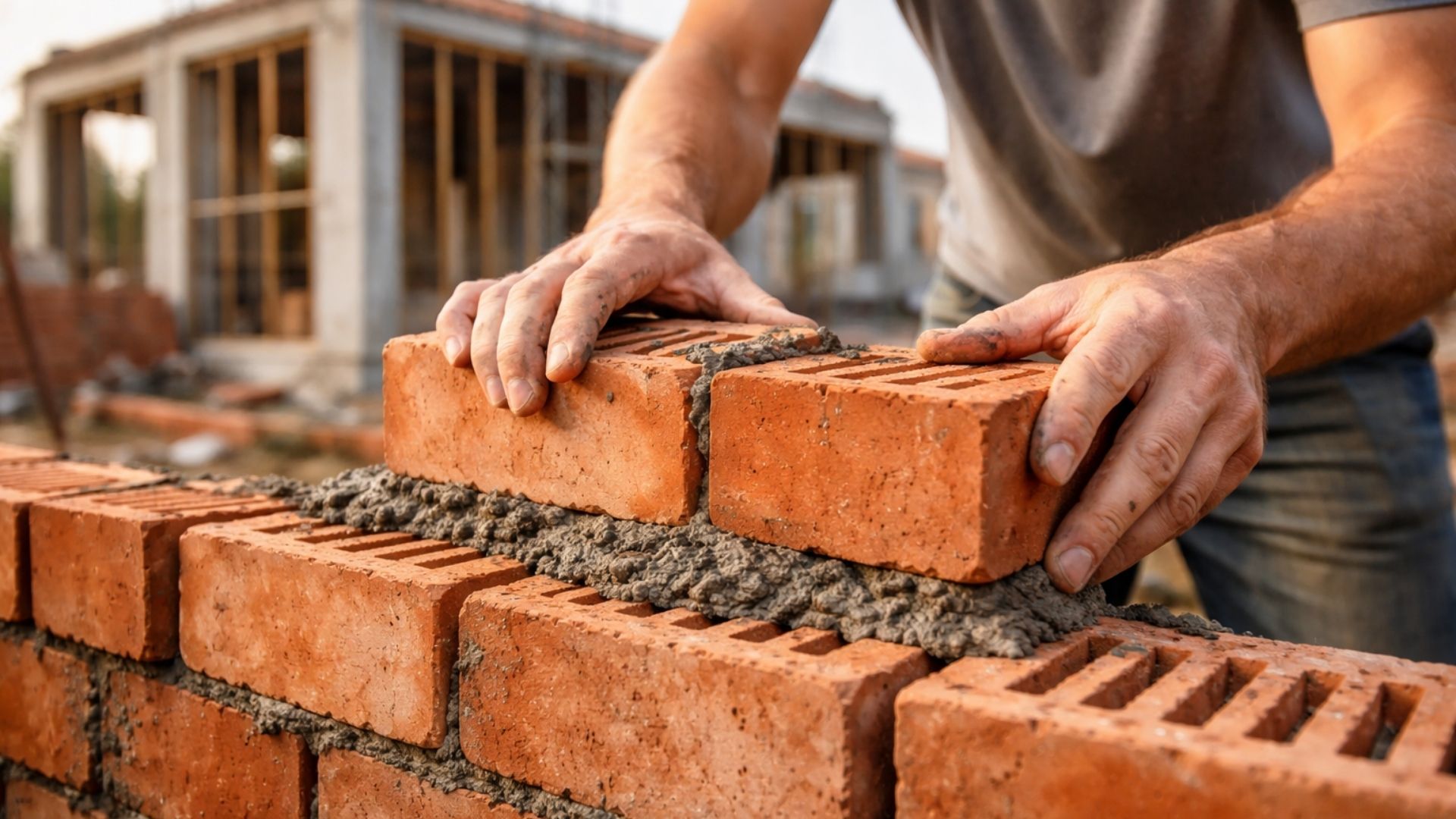
‘Interlocking brick’ made of earth arrives in the construction industry with cost reductions of up to 40% on the project.

A study published in the Journal of Materials and Environmental Science, authored by researchers from Université Cadi Ayyad in Marrakech and Italian conservation institutions, describes tadelakt as a traditional plaster from Marrakesh used in floors, ceilings, arches, domes, bathrooms, basins, and water reservoirs due to its water resistance qualities.
The origin of the technique is tied to the very construction history of the region.
The same study places this use back to at least the 12th century, during the Almoravid and Almohad dynasties, while specialized technical guides remind us that tadelakt gained space in cisterns, tanks, and Moroccan hammams, where the combination of moisture resistance and polished finish favored its longevity over time.
How Tadelakt Creates Seamless and Waterproof Surfaces
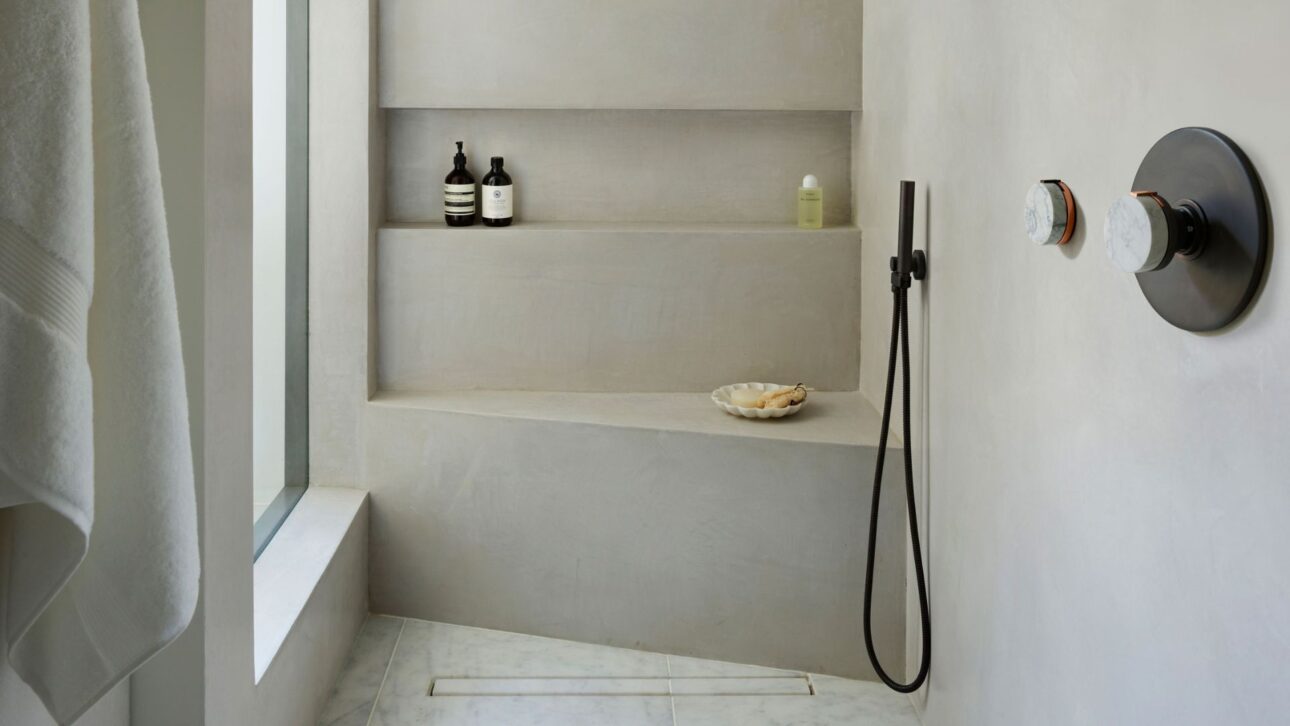
In the current domestic environment, interest resurfaces for an objective reason: the material allows covering walls, niches, countertops, molded sinks, and curves with a seamless surface, without the visual mesh of tiles.
The specialized magazine The Last Straw defines tadelakt as a polished and waterproof plaster made with lime and finished with olive soap, able to uniformly cover walls, ceilings, sinks, showers, fountains, and even bathtubs.
The chemistry of the process helps explain why the technique continues to attract architects and homeowners.
According to the consulted technical literature, the soap is applied when the surface begins to harden, and the coating is polished again with a smooth stone, a procedure that seals microcracks, intensifies the shine, and contributes to water resistance.
This mechanism distinguishes tadelakt from a common plaster simply painted at the final stage.
Mineral Pigments and Artisanal Appearance
The formulation also helps to understand the mineral appearance that made the finish recognizable in residential projects.
The academic study states that the lime can be hydrated and left to rest before the final mixture, acquiring mineral pigments in a proportion of up to 10% of the weight of the hydrated lime, depending on the desired shade.
This process favors earthy, opaque, and low-saturated colors, often associated with bathroom projects featuring monolithic aesthetics and continuous mineral appearance.
Artisanal Execution Requires Specialized Labor
This performance, however, does not turn tadelakt into a simple swap for paint or hastily applied finishes.
The actual academic research states that traditional execution depends on experienced craftsmen, called maalems, because the final result is tied to the lime’s point, the application time, the correct use of soap, and manual polishing.
These factors directly influence the waterproofness, shine, and durability of the finish.
Moreover, the base must be suitable for the system to function well.
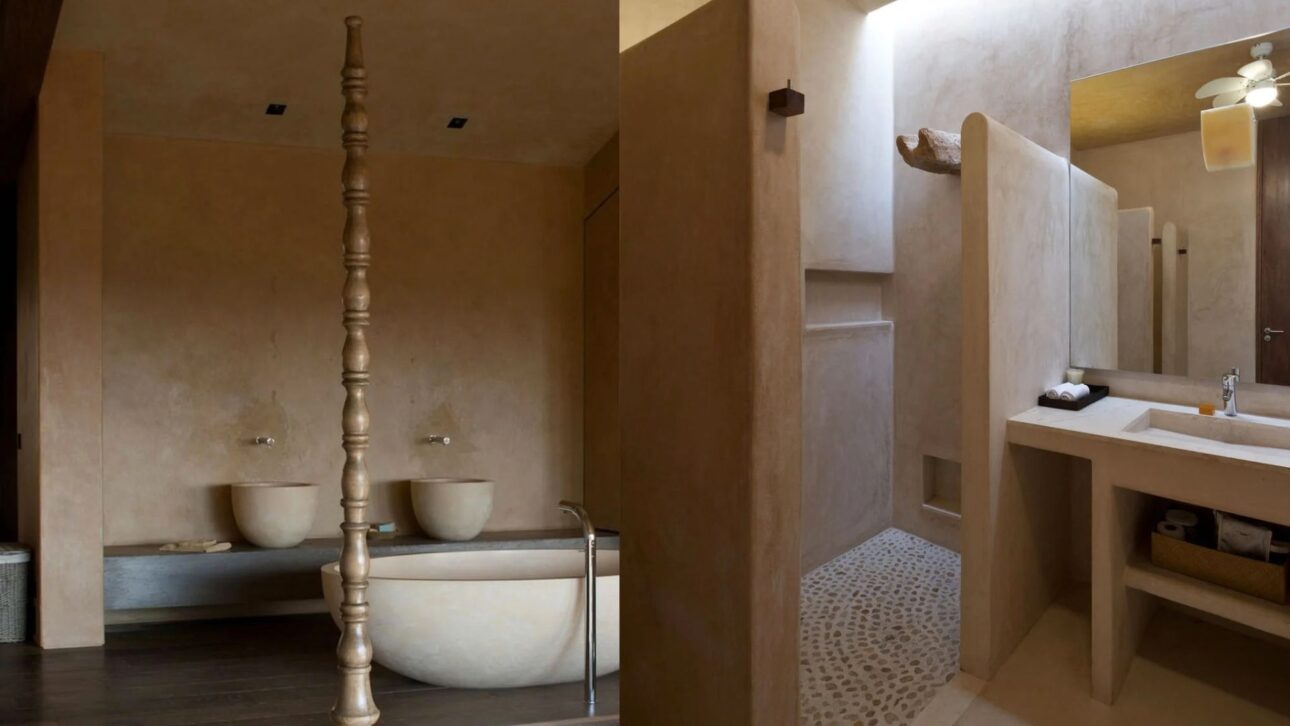
Technical guides used in the application of the material emphasize that a properly prepared substrate is essential, because tadelakt does not easily tolerate structural movements and can crack when the support surface is not firm, homogeneous, and compatible with the coating.
Care in Areas of Direct Water Contact
There is another crucial point in bathrooms and showers: direct exposure to water requires careful specification and compatible maintenance.
Technical application documentation informs that, in areas of constant contact with water, such as bathtubs, sinks, and shower corners, the use of additional waterproofing may be recommended depending on the base and intensity of use.
This care prevents a simplified understanding that the mixture, alone, replaces any industrial system without adaptations.
Although tadelakt is described by entities related to natural construction as a very durable lime finish resistant to water, practical performance still depends on the combination of correct material, compatible base, qualified execution, and periodic maintenance.
Maintenance and Visual Characteristics of the Coating
Maintenance is part of the expected behavior of this type of surface.
Specialized guides recommend cleaning only with water and a soft cloth or gentle sponge, avoiding acidic or abrasive products.
It may also be recommended to reapply olive soap in the first months and in areas of direct water contact to preserve water resistance and the appearance of the finish.
Even when well executed, the result does not resemble the regularity of an industrial ceramic piece.
As application and polishing are done by hand, the coating tends to retain small undulations, soft shine, and subtle tone variations, characteristics that reinforce its artisanal nature.
Where Tadelakt Usually Appears in Residential Projects
In residential renovations, the system often makes more sense in washrooms, sculpted countertops, niches, curved walls, and bathrooms that prioritize visual continuity.
Still, the technique should not be treated as a universal solution for any wall or budget.
Its original composition is linked to lime from Marrakesh and a specific application method, difficult to reproduce without technical knowledge and trained professionals.
Therefore, the advancement of tadelakt in renovations is explained by the combination of historical tradition, surfaces without apparent seams, and water resistance when specified correctly, without neglecting proper substrate preparation and specialized execution.









Seja o primeiro a reagir!