





 Portuguese
  English
  Spanish
  6 min of reading
  0 comments


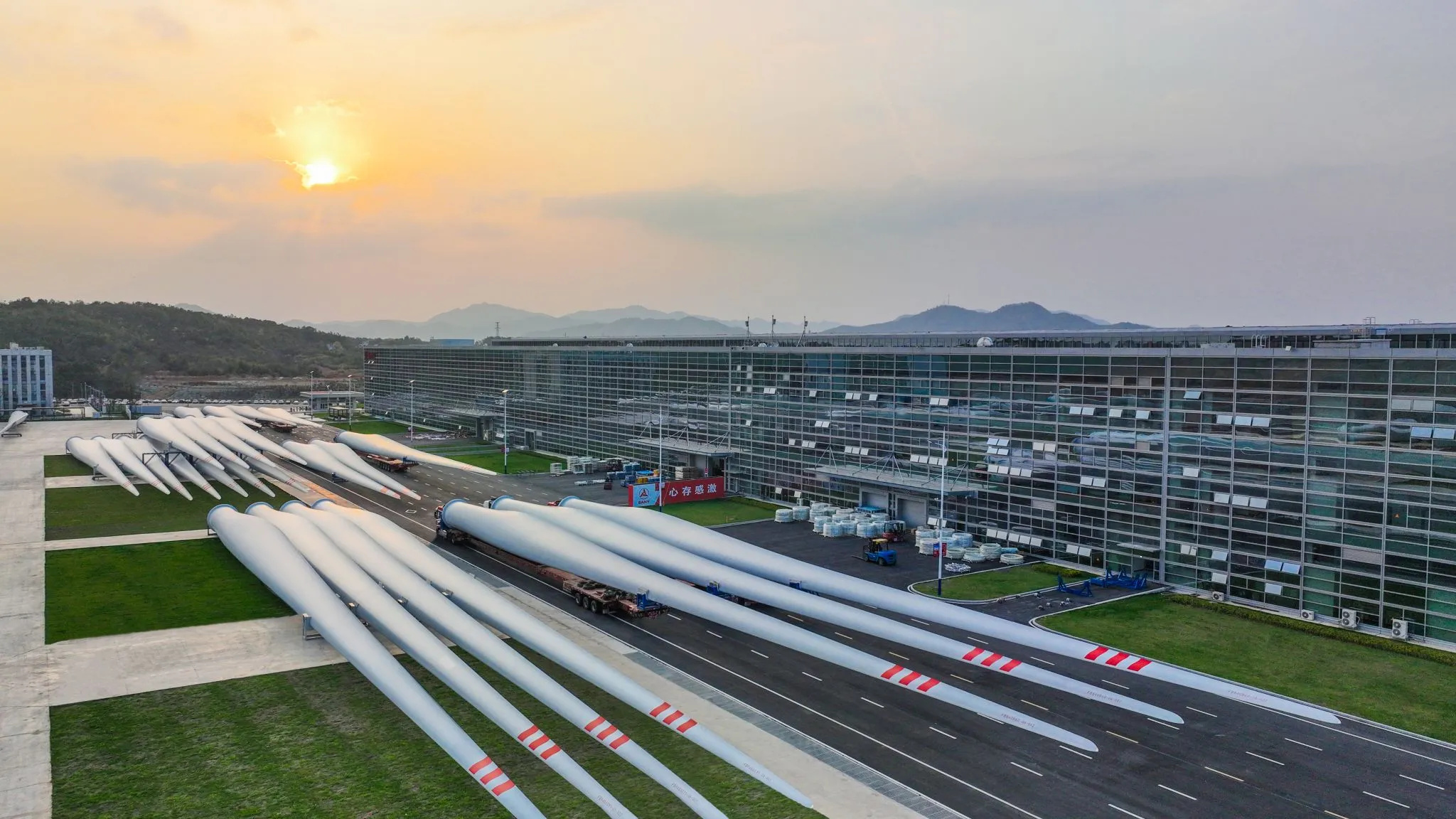
SANY’s 131-Meter Land Wind Turbine Blade Breaks Road Transport Limits, Equips 15 MW Onshore Turbine with 270-Meter Rotor and Redefines Land-Based Wind Energy Scale.
A wind turbine blade measuring 131 meters long slowly left a factory in the Inner Mongolia region of China on January 21, 2024. It was the largest blade ever built for use in onshore wind turbines, those installed on land. And it wouldn’t be an isolated exception: three units of this size make up the rotor of a single turbine. The development marks an important technological leap in the land-based wind energy industry, a sector that has faced an apparently invisible limit on turbine size for decades: transport. The larger the blades, the more energy is captured from the wind — but also the greater the logistical challenge of getting them from the factories to the wind farms.
The Chinese giant SANY Renewable Energy decided to tackle the problem differently. Instead of adapting the roads or limiting turbine sizes, the company redesigned the entire production process and built factories close to installation sites. The result was the development of the SY1310A blade, used in the SI-270150 turbine, now one of the largest land-based wind turbines ever installed.
Historic Limit of Land-Based Wind Turbines Was in Road Transport
For decades, the onshore wind energy sector has encountered a logistical limit. Engineering allowed for the construction of larger blades, but road transport imposed difficult physical restrictions to overcome.
-
A gigantic dam project in the Himalayas could solve one crisis but silently create another for millions of people.
-
Nikola Tesla said that intelligent people tend to have fewer friends, and now science partially confirms this: a study with over 15,000 people showed that for the more intelligent, socializing too much can even reduce life satisfaction.

-
A superyacht worth US$ 17 million is delivered in impeccable condition, sets out to sail, and hits a bridge in the Bahamas just two hours later.

-
Residents of Australia woke up to a sky completely red like blood before the arrival of Cyclone Narelle, which hit the coast with winds of 250 km/h, tearing off roofs and lifting iron dust in a scene they described as apocalyptic.


Wind turbine blades are extremely long and rigid structures. When they exceed certain lengths, they can no longer navigate tight turns, bridges, tunnels, and overpasses on the highways linking factories to wind farms. In practice, this established a limit of around 70 meters in length for land blades in many countries.
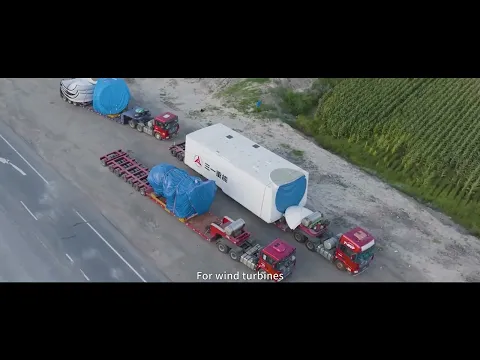

This obstacle was not technological but infrastructural. The industry could design larger turbines, but it could not deliver them to the installation site. This impasse led SANY Renewable Energy to completely rethink the supply chain for wind turbines.
Wind Blade Factory in Inner Mongolia Designed to Produce Giant Parts
The solution found by the company was to create a new type of industrial facility: winds blade factories near generation parks. One of the most emblematic examples is the Smart Industrial Park of Bayannur, located in Inner Mongolia, northern China. It was there that the first 131-meter blades for the SI-270150 turbine were produced.
The industrial unit was designed to manufacture giant components that would not fit into conventional logistics. The blades are built with advanced materials, including carbon fiber and structural composites, using glass fiber cutting robots with millimeter precision and automated infusion systems for large structures.
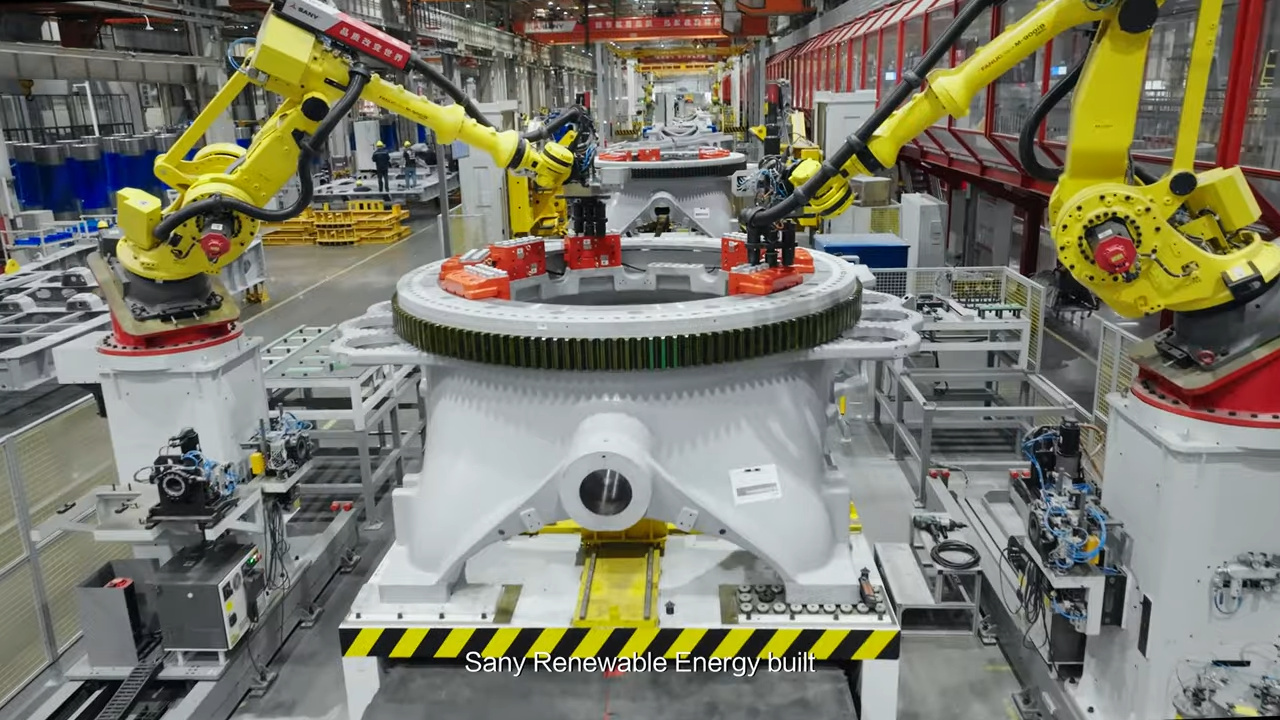
Another surprising aspect is the production speed. While manufacturing smaller blades in traditional industry can take over 40 hours, SANY’s automated line can produce a blade of this size in less than 30 hours, significantly increasing productivity.
This industrial model reduces logistical costs and allows for the production of much larger turbines without relying on traditional road infrastructure.
Structural Engineering Solves Aerodynamic Challenges of Giant Blades
Building a 131-meter blade involves complex structural challenges. The larger the blade, the greater the forces acting upon it during rotation. Among the main risks is the phenomenon known as aerodynamic flutter, an instability caused by the interaction between structural vibrations and wind forces. When uncontrolled, flutter can cause increasing oscillations capable of destroying the blade in a matter of minutes.
To avoid this problem, SANY’s engineers developed a new aerodynamic profile. The blade features a blunt trailing edge and greater structural thickness, which increases aerodynamic stability and reduces vibrations.
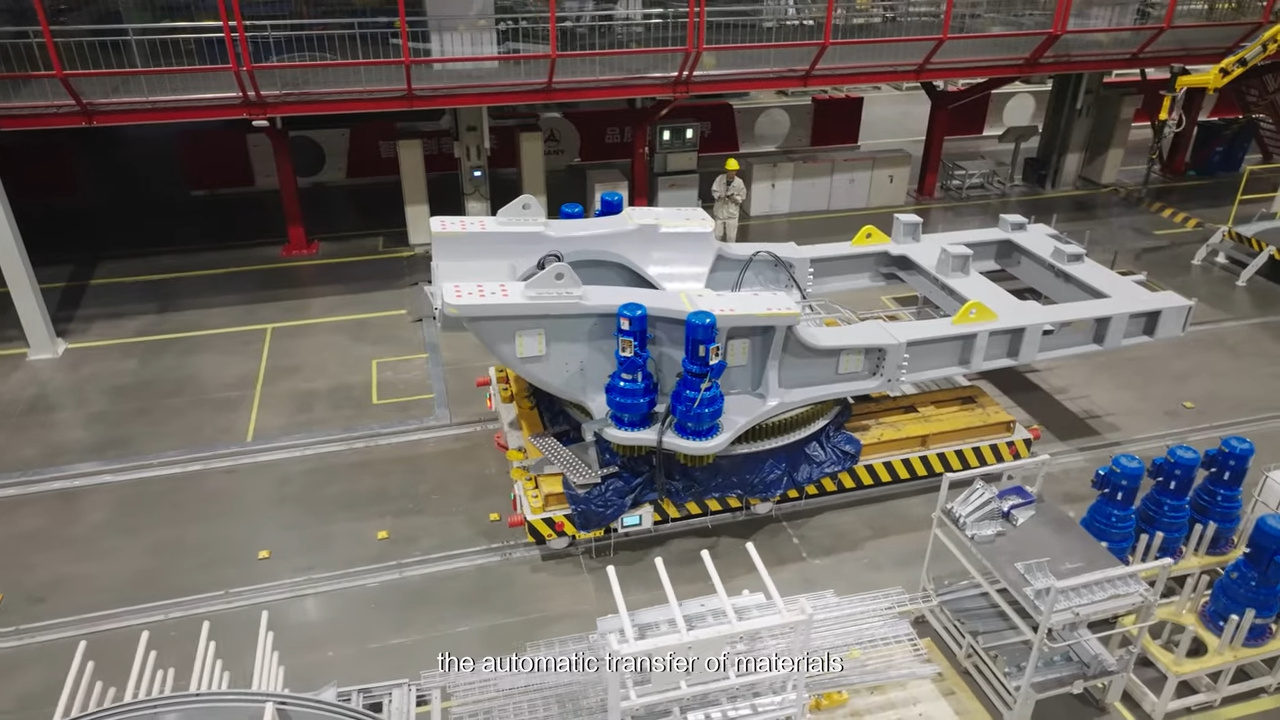
Another essential element is the internal structural spar, responsible for supporting the loads of the blade. Instead of using only fiberglass, as in many conventional turbines, the company incorporated carbon fiber, a lighter material that is up to three times stiffer.
The result is a structure capable of withstanding enormous aerodynamic forces without compromising the total weight of the turbine.
SI-270150 Wind Turbine Sets New Onshore World Records
The turbine equipped with these giant blades was installed in Tongyu, Jilin Province, China, on October 8, 2024. The model, identified as SI-270150, set two world records for land-based wind turbines. The first record is the rated capacity of 15 megawatts, an extremely high power for onshore turbines. The second record is the total rotor diameter of 270 meters, measured from the tip of one blade to the other.
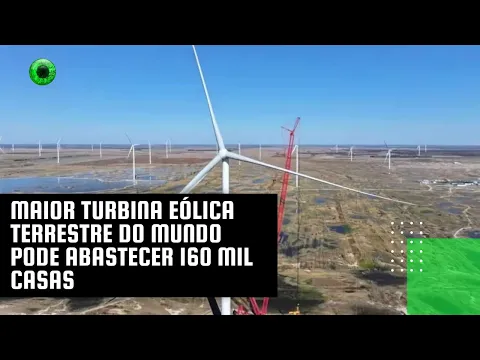
Each of the three blades measures 131 meters, forming a rotor with dimensions comparable to almost three football fields lined up. The swept area by the rotor during each rotation reaches approximately 57,256 square meters, equivalent to about eight football fields.
This gigantic area allows for capturing a much greater amount of wind energy. According to estimates from the company, a single turbine can generate enough electricity to supply around 160 thousand homes per year, depending on local wind conditions.
Operational Tests Evaluate Turbine Performance and Durability
After the installation of the turbine in Tongyu, an intensive period of technical testing began. On November 16, 2024, less than six weeks after assembly, the equipment achieved its rated power of 15 MW for the first time.
From that moment on, a detailed operational verification process began. The program includes nearly 2,000 performance tests, evaluating structural vibration, aerodynamic behavior, generator stability, and energy efficiency.
Meanwhile, another prototype of the system is undergoing accelerated laboratory testing. A 35 MW test bench simulates about 30 years of operation in just 18 months, allowing for the assessment of component wear and long-term reliability.
These tests are essential before the turbine enters large-scale commercial production.
Transporting Wind Blades Remains a Global Challenge
The challenge faced by the Chinese industry is not unique to Asia. In nearly every country with land-based wind farms, the size of turbines is limited by road infrastructure.
In the United States and large parts of Europe, transporting blades longer than 70 meters already requires complex logistical operations, involving escorts, disassembly of roadway structures, and special routes. This limits the expansion of power for onshore turbines and increases the cost of energy generation.
An alternative solution is being explored by aerospace companies. The American startup Radia is developing the project for the WindRunner, a giant cargo plane specifically designed to transport wind blades longer than 100 meters. The plan aims for operational entry around 2030.
Building Factories Near Wind Farms Changes Industry Logic
The strategy adopted by SANY follows a different path. Instead of transporting giant components thousands of kilometers, the company is creating regional factories near wind farms.
This model drastically reduces the need for large-scale road transport. The blades are manufactured close to the installation site and transported over relatively short distances to the wind farm.
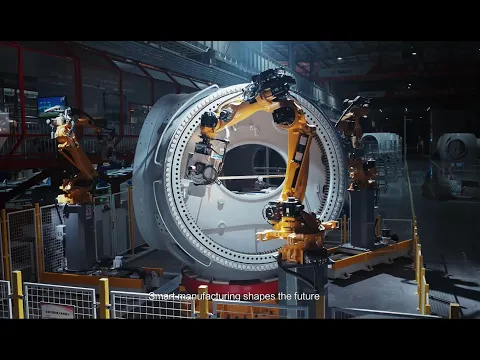
The approach represents an important shift in the industrial logic of the sector. Traditionally, large factories produce centralized turbines that are then distributed to different regions. In the new model, production follows the location where the wind is available. This concept may become increasingly common as wind turbines continue to grow in scale.
Offshore Wind Blades Are Still Larger Than Those Used On Land
Despite the impressive size of the 131-meter blades, they are still not the largest ever built in the world. Turbines installed at sea (offshore) can reach even larger dimensions because they do not face road limitations.
In maritime transport, ships can deliver giant components directly to the installation site. This has allowed for the development of blades measuring 150 meters or more.
A recent example is a blade of 153 meters developed by Dongfang Electric for offshore turbines of approximately 26 MW, intended for maritime wind farms.
At sea, therefore, the logistical limit practically disappears. On land, however, it continues to exist — except in regions where new industrial strategies, such as those adopted in China, start to overcome this obstacle.






-

-

-

-

-

11 pessoas reagiram a isso.