





 Portuguese
  English
  Spanish
  4 min of reading
  0 comments


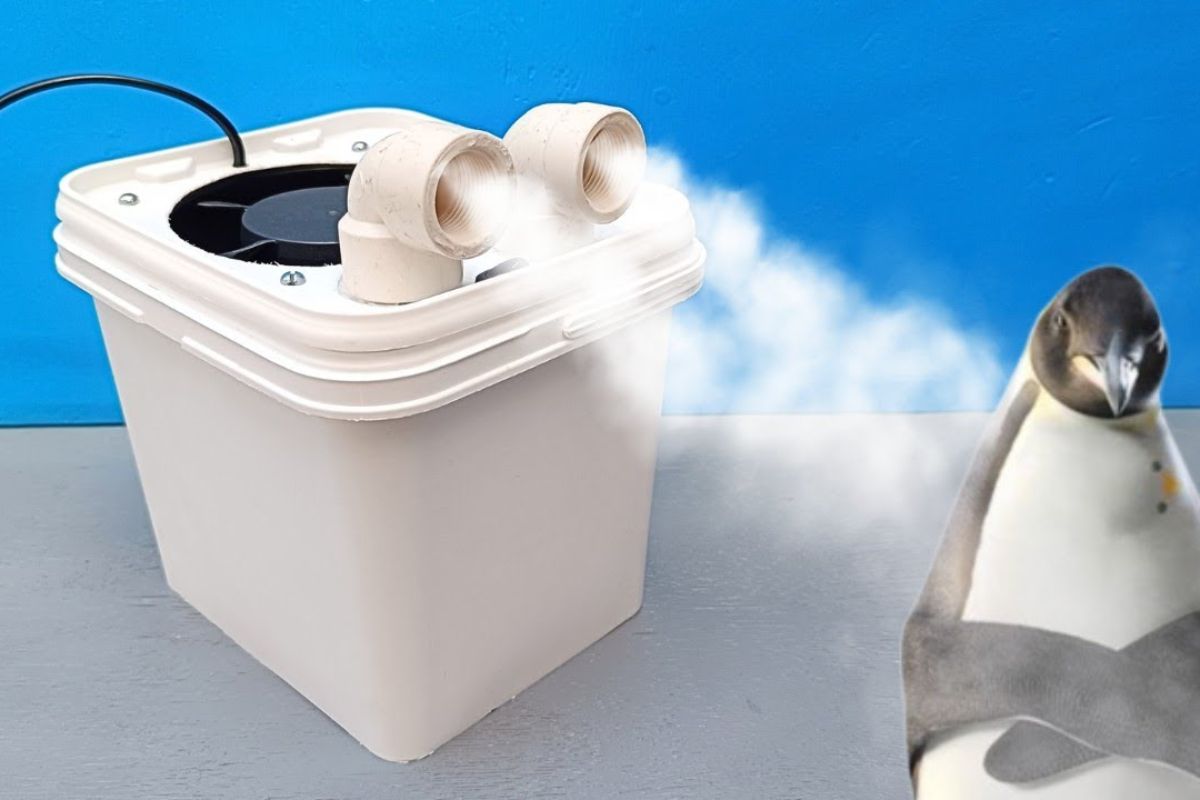
Homemade Air Conditioner Becomes Domestic Experiment: Cooler Fan Screwed to Lid, Power Switch, Extension Cord, and 90° Elbow. Soaked Cotton Becomes Ice After 12 Hours in Freezer. Before and After, the Temperature is Measured and in the Video Drops to 26°. With an Invitation to Like, Comment, Share.
The homemade air conditioner presented on the channel Inova ou inventa is created from a direct assembly: a cooler fan secured to the lid with a screw and nut, a power switch, and an airflow path guided by a 90° elbow. The video claims that the solution is simple and accessible and shows the temperature being measured before and after the homemade air conditioner operates.
The proposal takes on a challenge tone when the recording states that “every home should have” such a device and asks the audience to comment on where they are watching from, mentioning city and country, as well as age and profession. In the end, the creator reinforces the engagement appeal, asking viewers to like, comment, and share the low-cost home cooling option.
How the Homemade Air Conditioner is Assembled

The assembly starts with the lid of the container, where the cooler fan is screwed in and secured with a nut, forming the assembly that drives the airflow.
-
The Caspian Sea intrigues scientists as it is neither officially a sea nor a lake: the largest lake on the planet holds a hybrid crust, submerged cities, mud volcanoes, and billions of barrels of oil hidden at the bottom.

-
Why did the sky turn blood red in the west of Australia and it wasn’t sunset? Discover what is behind the change that took over the horizon for miles.

-
The most feared warplane of the United States is over 70 years old, carries 32 tons of explosives, flies 14,000 kilometers nonstop, and has just been sent to the United Kingdom amid escalating tensions with Iran.

-
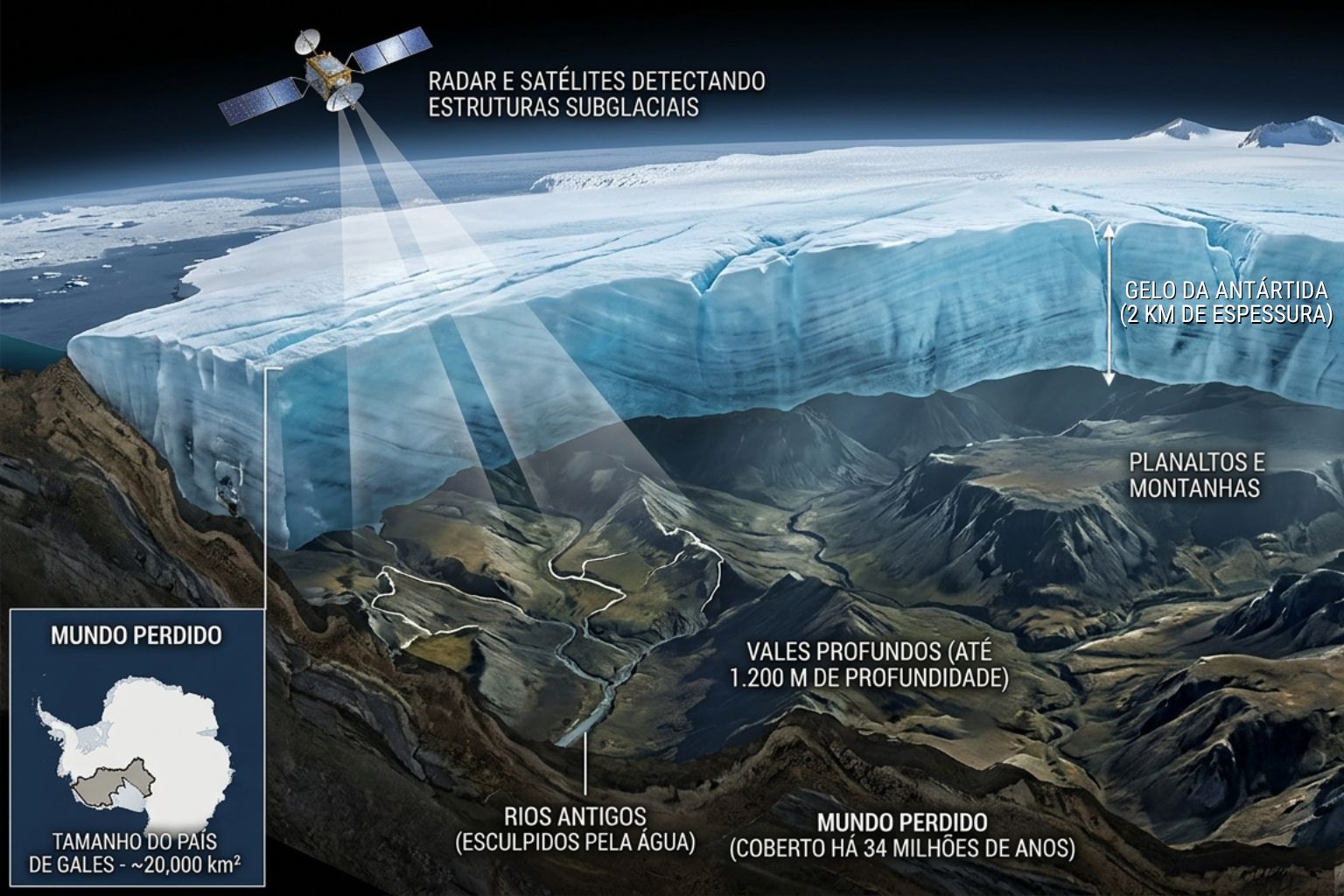
Satellites and radars revealed, beneath 2 kilometers of ice in Antarctica, a lost world the size of Wales, with rivers, valleys 1,200 meters deep, and plateaus sculpted by water, frozen for 34 million years, when the continent had temperate forests and was part of a supercontinent that included South America.
The control is described as a power switch, and the power supply is solved with an extension cord.
At the outlet, the video indicates using a 90° elbow to direct the air and organize the duct’s fit.
After that, the assembly is plugged in, and the homemade air conditioner starts operating on the same principle: moving air through a cold reservoir.
The “Infinite Ice” of Cotton that Sustains Cooling

The central point of cooling is what the video calls “infinite ice”.
The shown instructions are to cover the bottom of the container with cotton, add water until the cotton is well soaked, and place it in the freezer until it hardens.
According to the explanation provided, the “water + cotton” mixture would form a thermal protective layer, preserving the low temperature and making the ice take longer to melt.
The procedure is marked with a specific timeframe: after 12 hours in the freezer, the cotton ice is presented as ready for use in the homemade air conditioner.
Temperature Measurement and the Number that Appears in the Video


The video records a simple comparison: measure the temperature before turning it on and measure again with the homemade air conditioner running.
The displayed value after activation is 26°, presented as evidence of the perceived cooling.
However, there is a clear limit to the presented data: the recording does not inform what the initial temperature was during the first measurement, nor how long the system was operated until reaching the shown result.
Still, the test segment insists on the same point: the final temperature.
What the Tutorial Reveals About Use and Routine
Besides assembly, the tutorial serves as a usage guide.
The sequence “I will plug it in” marks the beginning of operation, while the power switch suggests quick activations throughout the day.
The homemade air conditioner is also presented as applicable “even on the hottest days,” a phrase used to support the promise of thermal comfort.
At the same time, the video opens up for interaction: it asks the city and country of those watching, as well as age and profession, and directs the audience to comment.
This request for feedback appears alongside an invitation to share, reinforcing the circulation path on social media during the summer.
Why the Combination Attracts Attention
The formula of the homemade air conditioner displayed combines three elements that the video repeats as simple: a cooler fan, a cold reservoir, and cotton ice prepared in the freezer.
In the discourse, the “cold wind” is the trigger that transforms distrust into curiosity.
The temperature result is also treated as quick proof.
By showing the number 26° and repeating that the idea is “to make your own”, the video builds a narrative of a domestic solution, with low-cost assembly and an immediate cooling promise.
What Remains Unanswered in the Displayed Material
Even with the shown final temperature, the video does not detail the size of the environment, the position of the homemade air conditioner in the room, or the exact time until the 26° measurement.
There is also no direct comparison between different freezer cycles, nor data on how long the cotton ice actually lasts under continuous use.
Another missing point is the technical description of the container and the complete airflow path, as well as any humidity measurement.
What appears is the assembly, the freezer as a key step, and the temperature reading as the main indicator of the experiment.
The homemade air conditioner from the tutorial relies on a cooler fan, cotton, and freezer to produce a cooled airflow, with simple switch and connections.
The video shows the temperature reaching 26° and supports the idea of a low-cost alternative but leaves important gaps about test conditions and performance over time.
If the idea is to be reproduced, the most realistic approach is to record the temperature before and after under the same conditions and note the operating time, to compare what the homemade air conditioner delivers in practice with what the video claims.
Would you try this homemade air conditioner and write down what temperature appears on your thermometer after turning it on?






-

Uma pessoa reagiu a isso.