





 Portuguese
  English
  Spanish
 3 min of reading
  0 comments


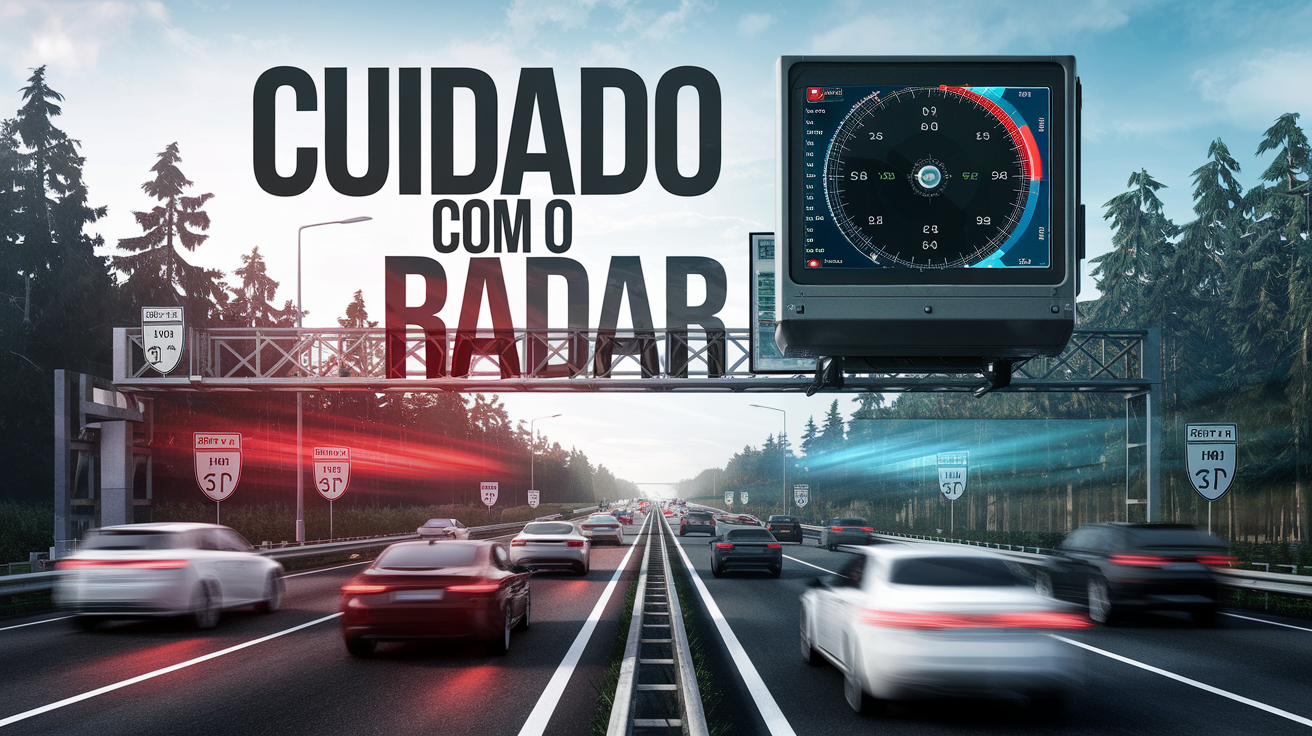
Government Announces It Will Double The Number Of Radars On State Highways By June 2025, Increasing From 585 To 1,234 Units. The New Devices Will Feature Cutting-Edge Technology For Speed Monitoring, License Plate Reading, And Vehicle Counting, Aiming To Increase The Efficiency Of Enforcement And Significantly Reduce The Number Of Accidents.
The Government of the State of São Paulo has announced a major expansion in electronic enforcement of state highways.
By June 2025, the Department of Highways of São Paulo (DER-SP) aims to double the number of radars on non-conceded roads.
Currently, there are 585 units in operation, but this total will increase to 1,234, with the installation of 649 new devices.
-
“No one will make us change the Pix,” says Lula after the US report.

-
Less than a Tera TSI, up to 710 km of range and charging in 9 minutes: the new BYD Song Ultra expands the Chinese brand’s bet on increasingly faster, more technological, and competitively priced electric SUVs.

-
Lula responds directly to Trump and says that Pix is from Brazil and will not change under pressure from anyone, after a report from the United States pointed out the Brazilian payment system as an American trade barrier.

-
Amazon has just announced a new fee on all deliveries, and your online purchases will become more expensive starting April 17, including for those buying from the United States here in Brazil.


The main objective of this measure is to increase road safety by reducing the number of accidents caused by speeding.
Additionally, it seeks to improve traffic management through the use of advanced technologies for monitoring and enforcement.
Cutting-Edge Technology For More Efficient Enforcement
The new radars will have more advanced functionalities than the previous devices. Among the implemented features are:
- Automatic License Plate Reading (OCR): Allows for the identification of vehicles in irregular situations or with judicial restrictions.
- Real-Time Traffic Counting: Data on vehicle volume will be transmitted directly to the DER-SP central.
- Remote Monitoring: Enforcement will be done in a centralized manner, enabling quick responses to infractions.
- Identification of Traffic Patterns: The data collected will help plan improvements in road infrastructure and traffic management.
The use of these technologies promises to increase the efficiency of enforcement and ensure better compliance with traffic regulations.
How The Radars Will Be Distributed
The new equipment will be installed based on studies conducted by DER-SP, which identified critical points in various regions of the state. The distribution will be made as follows:
- São Paulo Metropolitan Region: 124 radars
- Campinas Region: 85 radars
- Ribeirão Preto Region: 58 radars
- Sorocaba Region: 50 radars
- Vale do Paraíba and North Coast Region: 47 radars
- Other regions of the state: Proportional distribution according to the needs indicated by the studies
The chosen points consider the historical occurrence of accidents and the volume of vehicles that transit daily on the roads.
Types Of Radars That Will Be Installed
The new devices will be divided into two main categories:
- Fixed Speed-Reducing Radars: Equipped with panels that show vehicle speed, they are used in urban areas and near pedestrian crossings, where the speed limit is reduced.
- Fixed Controlling Radars: Without a visible display, they monitor stretches of medium and high speed, deterring excesses.
This differentiation allows enforcement to be tailored to each type of road and the specific safety needs of each region.
Investment In Road Safety
The Government of the State of São Paulo is investing approximately R$ 202.6 million to expand the electronic enforcement system.
This amount covers not only the installation of the new radars but also their maintenance and operation over the coming years.
Expected Impact On Reducing Accidents
According to experts, the presence of radars significantly reduces the occurrence of accidents, as it encourages drivers to respect speed limits.
Studies indicate that electronic enforcement can reduce fatal collisions by up to 30%.
The installation of the new radars also aims to meet the goals of the state government’s Road Safety Plan, which aims to halve the traffic mortality rate by 2030.
For experts, with the doubling of the number of radars on the state highways of São Paulo, the government seeks to improve the safety of drivers and passengers, reducing accidents and providing a more organized traffic flow.
Advanced electronic enforcement will allow for more efficient and fair control, contributing to the preservation of lives.







Seja o primeiro a reagir!