





 Portuguese
  English
  Spanish
  4 min of reading
  0 comments


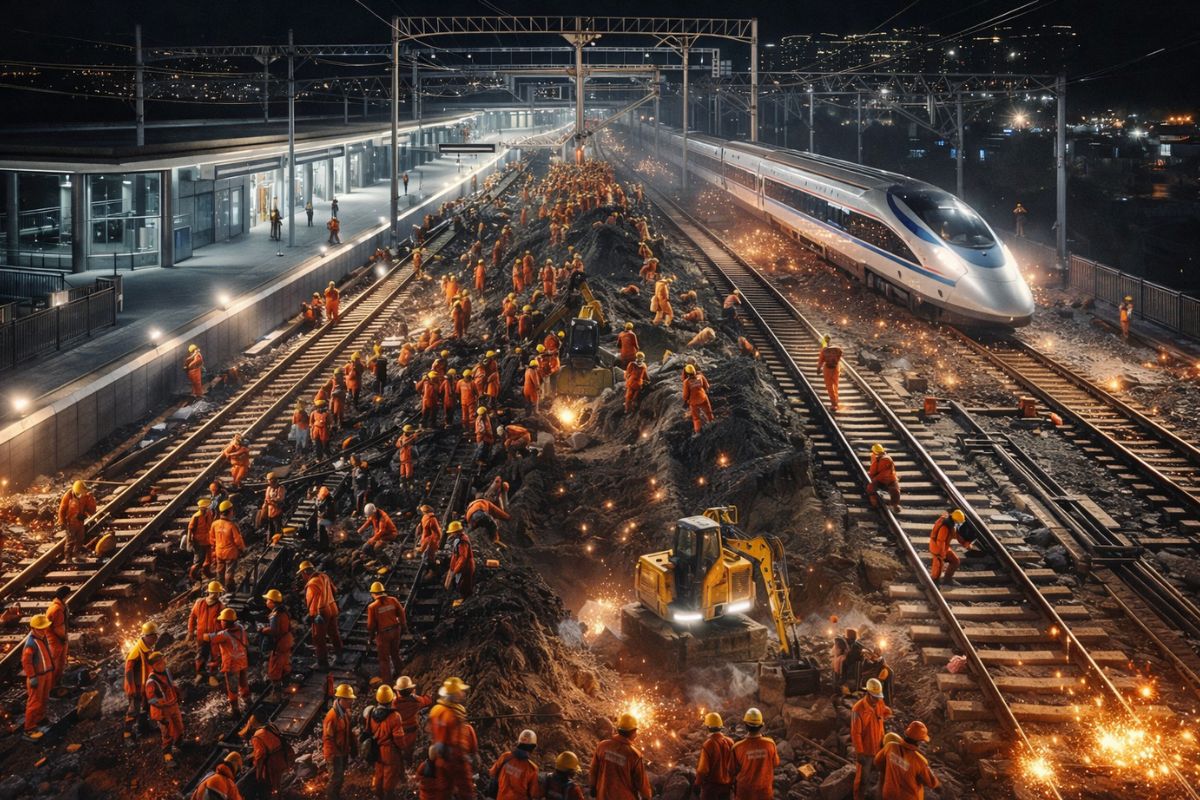
Chinese workers mobilized seven work trains, 23 excavators, and seven specialized teams at the Longyan station to cut and reconnect tracks in eight and a half hours, integrating the city into a 246-kilometer railway that is now part of a network with more than 50 thousand kilometers of high speed.
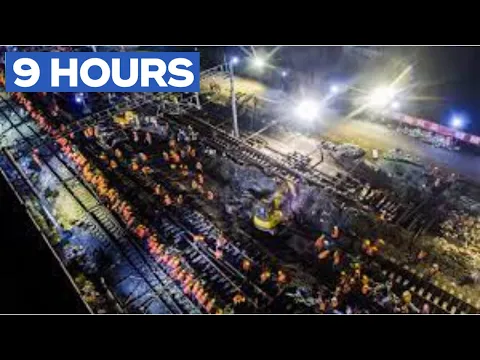
On a carefully planned night in southeastern China, more than 1,500 Chinese workers transformed the Longyan railway station in Fujian province to connect it to a new 246-kilometer high-speed line. The teams cut and reconnected the tracks in about eight and a half hours, using seven work trains, 23 excavators, and seven specialized teams operating simultaneously in different zones of the station. The result: a journey that previously took seven hours is now completed in 90 minutes, with trains running at 200 km/h.
Time-lapse videos of the operation went viral and were described as yet another example of the so-called “Chinese speed.” But behind the visual spectacle lies a story of months of planning and simulations to ensure that regular services were interrupted for just one night. The workers did not build a station from scratch but modernized an existing passenger station and integrated it into the Nanping-Longyan railway, designed for high speed. The operation kept most passengers on the tracks instead of pushing them to highways and buses during construction days.
What the Chinese workers did in Longyan in a single night
The Longyan station serves a city of about 2.7 million inhabitants in a mountainous region where rail transport is essential for daily commutes.
-
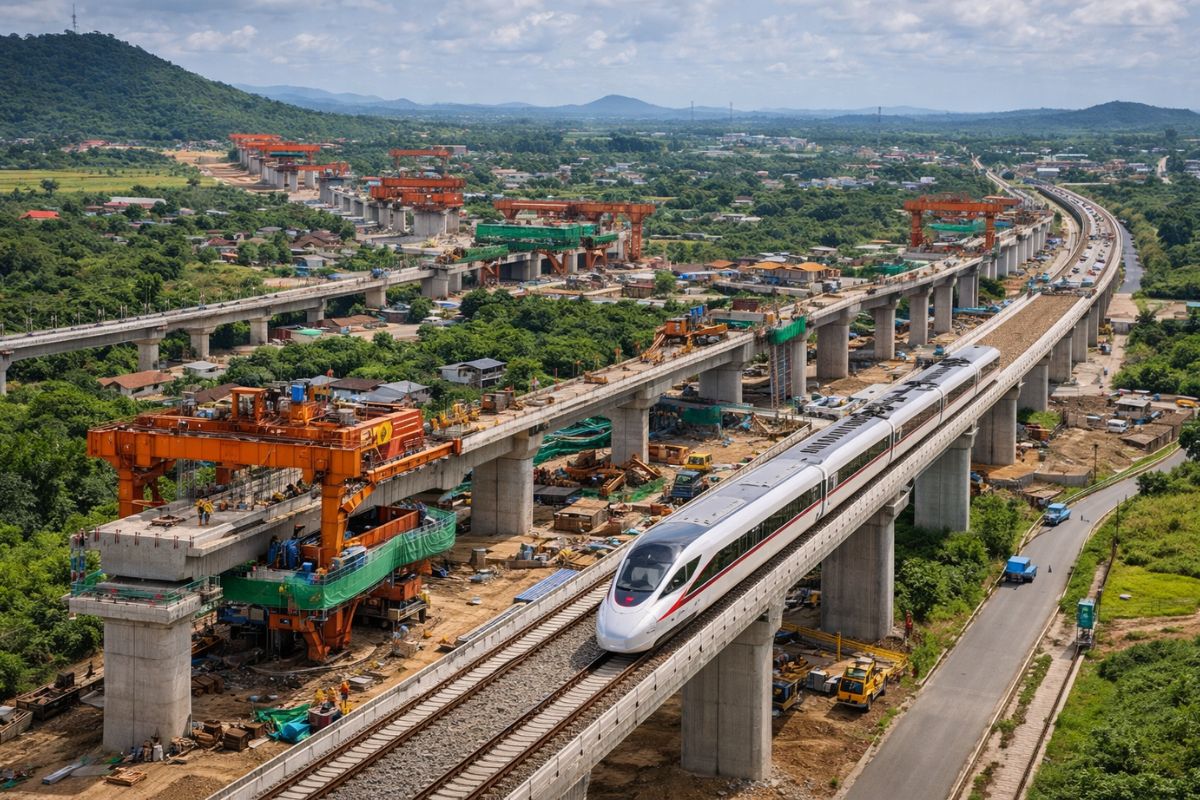
An Asian country has just divided its high-speed train megaproject into 17 independent works to accelerate the construction of the railway that will run through the entire country from north to south.
-
Couple builds earth house using hyperadobe technique and green roof without tarpaulin: the project uses gelmembrane, adobe partitions, and plaster with cactus slime, and the kitchen is already ready with a move planned in two months.

-
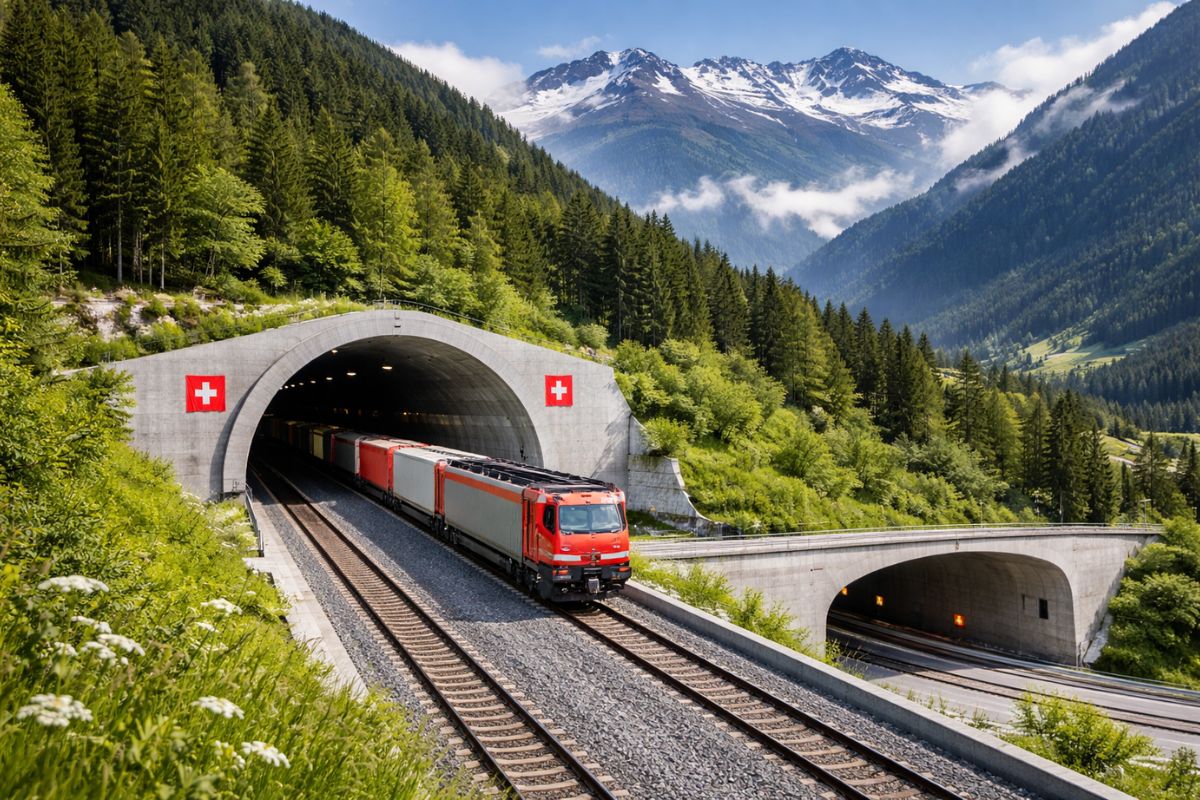
Switzerland has hidden more than 1,400 tunnels beneath the Alps to take trucks out of the mountains, and the result has already prevented hundreds of thousands of tons of CO2 without passengers noticing the difference.
-
Recycled material costs less than half of concrete, pollutes much less, and gives the garage entrance a flawless appearance, but almost no one knows about this ecological alternative that has existed for years.

Closing the station for several days would have forced thousands of people to use cars and buses, congesting local roads and increasing pollution and emissions. The solution found by the Chinese workers was to concentrate the entire operation into a single night window.
According to information from the portal ecoticias, seven operational zones worked simultaneously. While one team cut tracks at one end, another installed sleepers at the opposite end, and a third adjusted the electronic signaling in the middle.
The Chinese workers operated after months of simulations that defined every movement; the logistics were so precise that each excavator had a scheduled time to enter and exit the construction site. By dawn, the station was ready to receive the first high-speed trains from the Nanping-Longyan line.
The railway network in China that these workers help to build
The operation in Longyan is a microcosm of something much larger. By the end of 2025, the Chinese railway network is expected to reach about 165 thousand kilometers in total, including more than 50 thousand kilometers of high-speed lines, the largest in the world by a wide margin.
The plans of the Chinese workers and the government aim for 180 thousand kilometers of railways and 60 thousand kilometers of high speed by 2030, a pace of expansion that no other country comes close to matching.
To put it into context: the 50 thousand kilometers of high speed in China is more than the total length of high-speed lines in Europe, Japan, and South Korea combined.
Each new section connected by Chinese workers like those in Longyan is not just transportation infrastructure; it is part of a national strategy that treats railways as a pillar of low-carbon mobility, replacing car trips and domestic flights with electric travel that has a fraction of the emissions.
Why high-speed trains are a climate tool and not just transport
Transportation accounts for about 15% to 16% of global greenhouse gas emissions, most of which come from burning fuel in road vehicles. Trains, on the other hand, transport about 7% of global passengers and 6% of freight but represent only 1% of sector emissions.
A train journey emits about 35 grams of CO2 per passenger-kilometer; a gasoline car emits 170 grams, and a domestic flight emits 246 grams over the same distance. Choosing the train reduces the climate impact to about one-fifth of a car and less than one-sixth of a plane.
The Nanping-Longyan corridor that the Chinese workers connected perfectly illustrates this logic. When a journey drops from seven hours to 90 minutes, the train stops being an alternative and becomes the first option.
For many travelers, it suddenly becomes viable to swap the overnight bus, the long car trip, or the short flight for a fast train that departs from the city center without security lines, tolls, or traffic jams. Each passenger who makes this switch is a small contribution to emission reductions that, multiplied by millions, becomes significant.
The environmental costs behind the speed of Chinese workers

None of this makes high-speed trains free of impact. The construction of viaducts, tunnels, and large stations requires enormous amounts of steel and cement, two of the most carbon-intensive materials that exist.
Life cycle studies of high-speed lines in France, Taiwan, and China estimated construction emissions between 58 and 176 tons of CO2 per kilometer of track per year, distributed over the lifetime of the projects. That’s not insignificant.
The balance only tips in favor of the climate when the lines are used intensively and powered by increasingly clean electricity.
The Chinese railway operator has set a goal to electrify nearly four-fifths of the network by 2030, and provinces like Fujian, where Chinese workers modernized Longyan, are heavily investing in low-carbon infrastructure.
If crowded trains consistently replace hundreds of car trips and short flights, the construction emissions are offset over years of clean operation.
What do you think: should Brazil invest in high-speed rail like the Chinese, or does the country’s reality not accommodate this model? Leave your opinion in the comments.








Seja o primeiro a reagir!