






 Portuguese
  Spanish
  3 min of reading
  0 comments


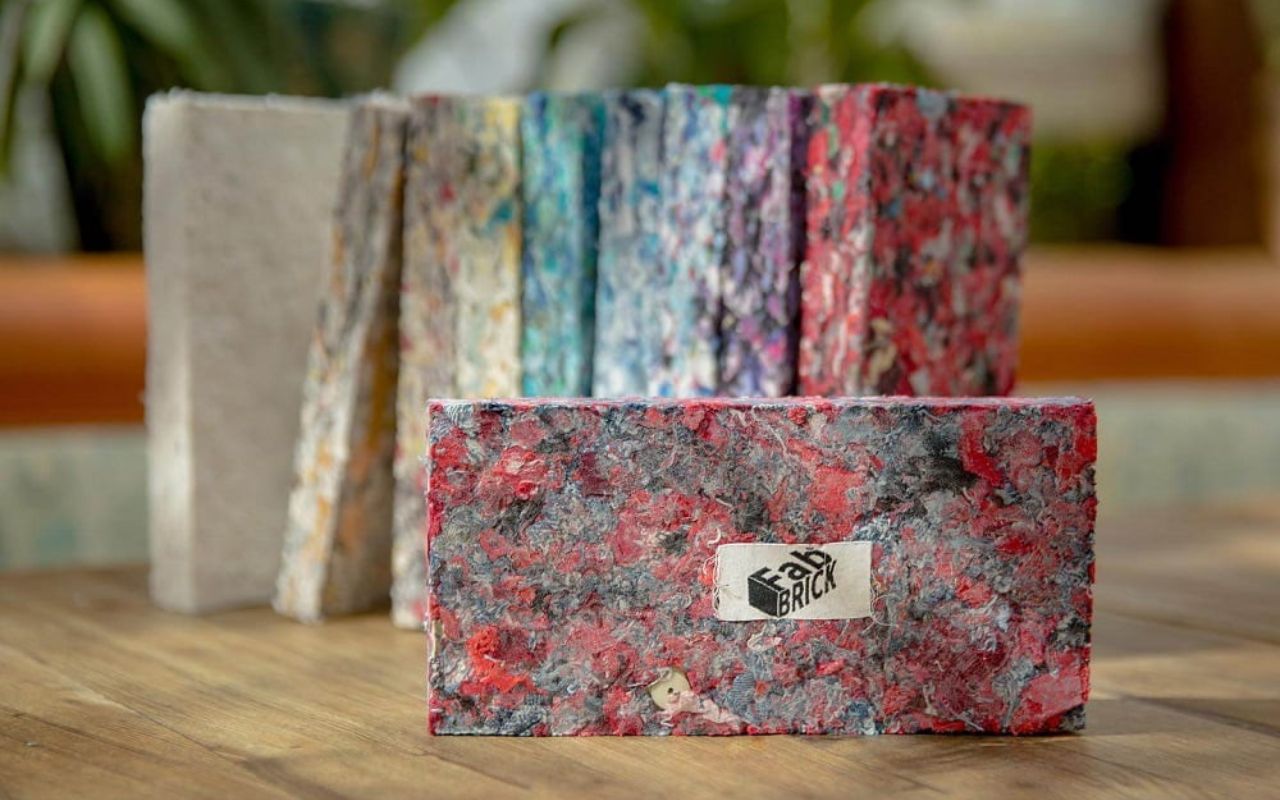
FabBRICK creates ecological bricks from textile waste, offering sustainable solutions for construction, decoration, and circular economy, reducing clothing waste.
The waste of clothing and fabrics, which reaches 4 million tons per year in France and 17 million in the United States, has gained an innovative solution in Paris. FabBRICK, a company founded by architect Clarisse Merlet, developed bricks made from this textile waste, combining sustainability and innovation in civil construction.
In addition to reducing environmental impact, the bricks offer thermal and acoustic insulation, and can be applied in walls, partitions, and decorative elements.
Manufacturing process of the bricks
The production of the bricks begins with the collection and separation of clothing by color at the company’s center.
-
Bolivian Female Construction Workers Form Association to Combat Discrimination and 38% Pay Gap in the Industry

-
Near Amsterdam, residents buy land and discover they must also build streets, manage drainage, handle waste, and grow food on half their plot.
-
Brazil’s WEG to Open New Factory in China by 2027, Expanding Production of Large Rotating Electric Machines and Low to Medium Voltage Motors in Rugao

-
Chinese Shipyard Secures $1 Billion in Orders for Low-Carbon Container Ships Amid Global Fleet Renewal Efforts


The fabrics are shredded into fibers of different sizes, mixed with a 100% natural ecological glue, and compacted into molds by a patented machine.
Drying occurs naturally, and the curing of the bricks takes 10 to 15 days, without the need for additional energy.
Since 2017, FabBRICK has produced over 40,000 units, repurposing about 12 tons of textile waste and promoting the circular economy.
Combating waste and social innovation
The disposal of clothing, driven by fast fashion, is a global problem that generates significant environmental impact.
FabBRICK transforms this challenge into an opportunity, creating materials that can be reused in construction and design, reducing the amount of waste sent to landfills.
“Each brick produced represents a practical solution to clothing waste and a contribution to more conscious constructions,” says Clarisse Merlet.
Features and applications of FabBRICK bricks
FabBRICK bricks stand out for their resistance to fire and moisture, qualities that common fabrics do not offer.

They also provide excellent thermal and acoustic insulation, ensuring comfort and safety.
They can be applied in internal walls, partitions, furniture, lamps, sculptures, and other decorative elements, offering wide flexibility for architects, engineers, and designers. The construction sector is one of the largest consumers of natural resources and generates waste.
FabBRICK bricks are ideal for non-load-bearing structures, meaning they do not support loads but can be used as partitions or decorative elements.
This approach combines economy, sustainability, and innovation, offering more conscious alternatives for the engineering and architecture market.
Environmental impact
With over 40,000 bricks produced since its inception, FabBRICK leads a movement towards a circular economy, transforming textile waste into valuable resources.
The company inspires other sectors to rethink material disposal, showing that sustainability can go hand in hand with creativity and innovation in construction and decoration.
FabBRICK creates ecological bricks from textile waste, offering sustainable solutions for construction, decoration, and circular economy, reducing clothing waste.
Source: Engenharia360





Be the first to react!