





 Portuguese
  English
  Spanish
  3 min of reading
  6 comments


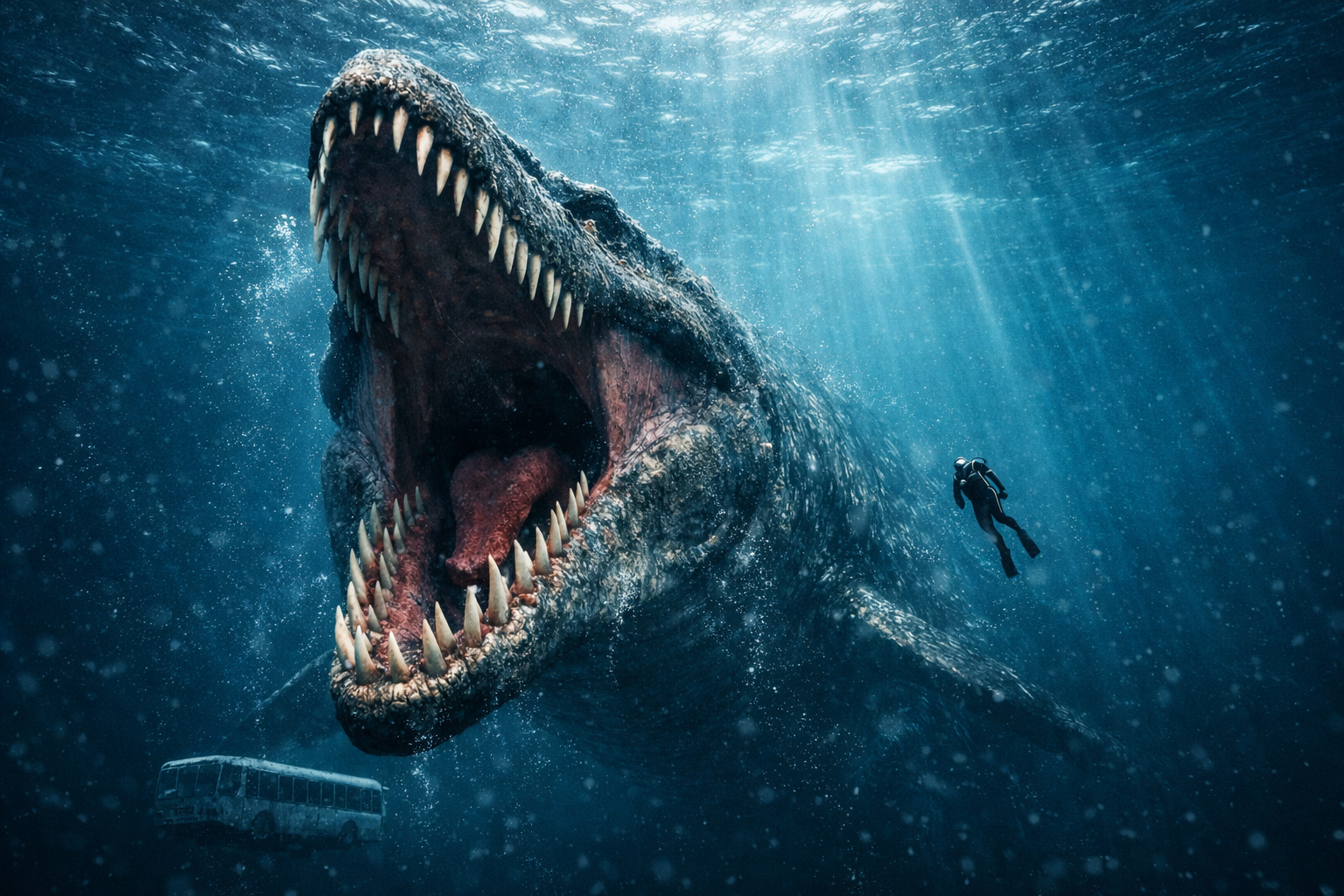


With More Than 15 Meters in Length and a Jaw Capable of Crushing Bones, the Mosasaurus Was the Largest Marine Reptile of the Cretaceous and the Ultimate Predator of Prehistoric Oceans.
Long before whales occupied the top of the food chain in the seas, an absolute predator reigned over the planet’s oceans. During the Late Cretaceous Period, between about 98 and 66 million years ago, the Mosasaurus turned the seas into its exclusive territory. It was not a dinosaur, but a colossal marine reptile, so efficient in hunting that it redefined the limits of aquatic predation.
A Giant That Reached the Size of a Bus
The largest specimens of Mosasaurus exceeded 15 meters in length, with some scientific estimates suggesting individuals close to 17 meters. Its weight could surpass 20 tons, placing it in the same mass category as large modern urban buses.
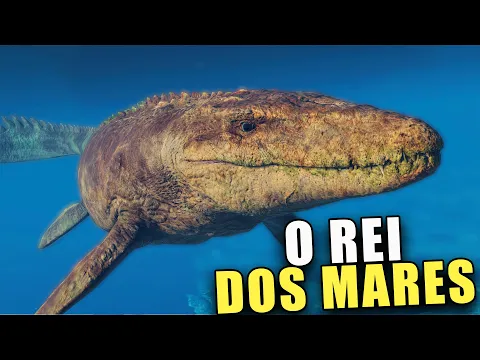

For comparison, the largest current great white shark rarely exceeds 6 meters. The Mosasaurus was more than double that size, in addition to having an elongated, muscular body perfectly adapted for speed and strength in the water.
-
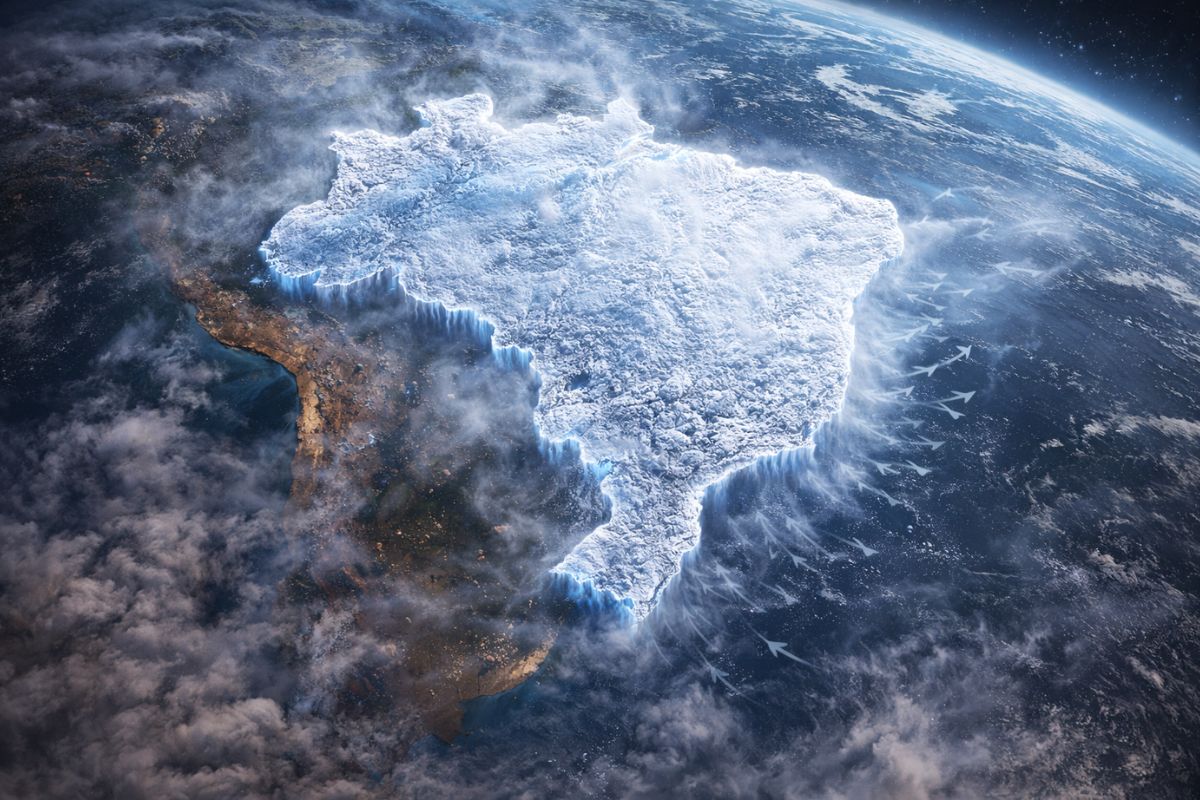
The heatwave in Brazil that hit in March is set to end as a cold front arrives between Good Friday and Easter Sunday, causing a temperature drop of up to 6 degrees and rain in the Central-South region, according to the Easter weather forecast.
-
The U.S. Army has introduced its first new lethal grenade since the Vietnam War: the M111 kills using pressure shock waves that bounce off walls and can explode the enemy’s lungs without producing a single shard.

-
Engineers are replacing pressure valves with hydraulic microturbines within drinking water networks and are generating up to 1,100 MWh per year with in-pipe hydropower technology that harnesses energy previously wasted in urban pipelines.

-
Elon Musk focused on Brazil and lowered the price of Starlink, his internet service, but the question remains: is it worth it? An expert provides a detailed analysis of the internet that promises to connect any part of Brazil.


The Jaw That Crushed Bones
One of the most impressive aspects of the Mosasaurus was its extremely powerful jaw, equipped with dozens of large, conical, serrated teeth designed to grip, pierce, and crush. Unlike many modern predators, it had extra joints in its skull, allowing it to open its mouth at wide angles and swallow large prey almost whole. Fossil mark studies indicate it fed on:
- giant fish;
- prehistoric sea turtles;
- other marine reptiles;
- primitive birds;
- even other smaller mosasaurs.
Nothing was out of reach when it appeared.
Hydrodynamic Body and Extreme Propulsion Tail
For decades, it was believed that the Mosasaurus swam like a large snake. However, more recent research has revealed something even more impressive. It had a crescent-shaped tail, similar to that of modern sharks, indicating extremely high propulsion efficiency. This structure allowed for:
- quick acceleration for surprise attacks;
- short, violent chases;
- absolute dominance in open waters.
Even with its colossal size, the Mosasaurus was not slow — it was an explosive hunter.
Where It Lived and Why Its Fossils Are Scattered Around the World
Fossils of Mosasaurus have been found in Europe, North America, Africa, and Oceania, showing that it occupied nearly all the seas of the planet. Its name comes from the river Mosa (Meuse) in Europe, where one of the first fossils was identified in the 18th century.
At that time, large continental areas were submerged by shallow, warm seas, creating the perfect environment for this super predator to spread globally.
The Ultimate Predator of the Cretaceous
At the height of its existence, the Mosasaurus had no natural rivals. It occupied the absolute top of the marine food chain, above primitive sharks and other ocean reptiles. Its presence shaped the entire ecosystem: where there was Mosasaurus, there was predatory silence.
The mere shadow of an adult individual would be enough to disperse entire schools of fish.
The Extinction Along with the Dinosaurs
Like the terrestrial dinosaurs, the Mosasaurus disappeared about 66 million years ago, after the asteroid impact that struck the area of present-day Mexico. The abrupt change in climate, the decrease in food production, and the collapse of marine chains made it impossible for such a large and specialized predator to survive.
As a result, the oceans were left without their largest hunters — paving the way, millions of years later, for the rise of modern whales and sharks.
A Colossus That Defined the Limits of the Seas
The Mosasaurus represents the peak of marine predation among reptiles. No other cold-blooded animal has dominated the oceans with such strength, size, and efficiency.
It was not just a giant of the past. It was proof that, when conditions allow, nature is capable of creating perfect monsters for the environments in which they live.





I enjoyed this video of mosasaurus.
Ui,que boca enorme,meu Deus 🫣😧
Se fosse outra coisa, tú ia admirar né 😁
Se ela quiser admirar e se dar,eu tô aí na área 😏
Well this is rubbish but Sha send me data
08165256538 thanks God bless ur wicked self😂
fuck r u talkin bitch?