





 Portuguese
  English
  Spanish
  4 min of reading
  0 comments


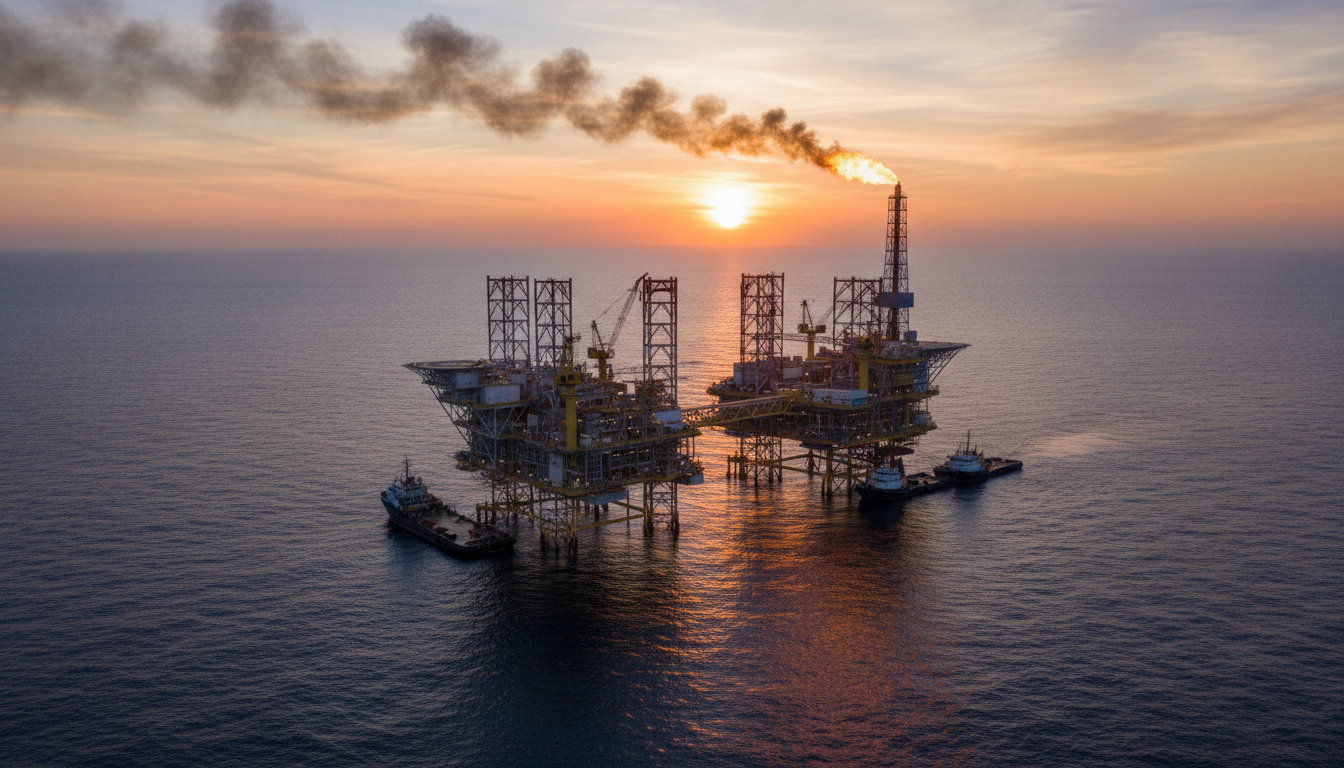
McKinsey report reveals that the efficiency of offshore oil platforms is only 77%, with global losses of 10 million barrels per day and $200 billion in wasted revenue — and that analytics with artificial intelligence can reverse this scenario in just 12 months
The efficiency of offshore oil platforms worldwide is far below what it should be. According to benchmarks from McKinsey published in the report “Why oil and gas companies must act on analytics,” authored by consultants Anders Brun, Monica Trench, and Thijs Vermaat, the typical offshore platform operates at only 77% of its maximum production capacity. Globally, this 23% difference represents about 10 million barrels of oil per day that are not being produced.
In financial terms, the impact is devastating. The lost revenue amounts to $200 billion per year worldwide. However, McKinsey points out that the rigorous use of advanced analytics and artificial intelligence can increase the Net Present Value (NPV) of operations by up to 30% and cut unit operational costs in half in just one year. Therefore, the technology already exists — what is lacking is large-scale adoption.
A pilot in the North Sea brutally exposed the problem of offshore oil platform efficiency

To validate its numbers, McKinsey conducted a pilot on a mature semi-submersible platform in the North Sea. This installation operated with approximately 100 wells and produced about 80,000 barrels of oil per day. Advanced analytics identified operational bottlenecks and recommended prescriptive actions to achieve optimal production conditions.
-
After 10 months of work and six months of almost total dedication, a student creates a wind turbine that exceeds 500 revolutions per minute and could help lower electricity prices in urban areas.

-
Brazil exposes critical fragility in air defense, says site. With few Gepard, Igla-S, and RBS 70 systems, the country does not cover medium altitude and remains vulnerable to drones, missiles, and attacks that cause billions in recent wars.

-
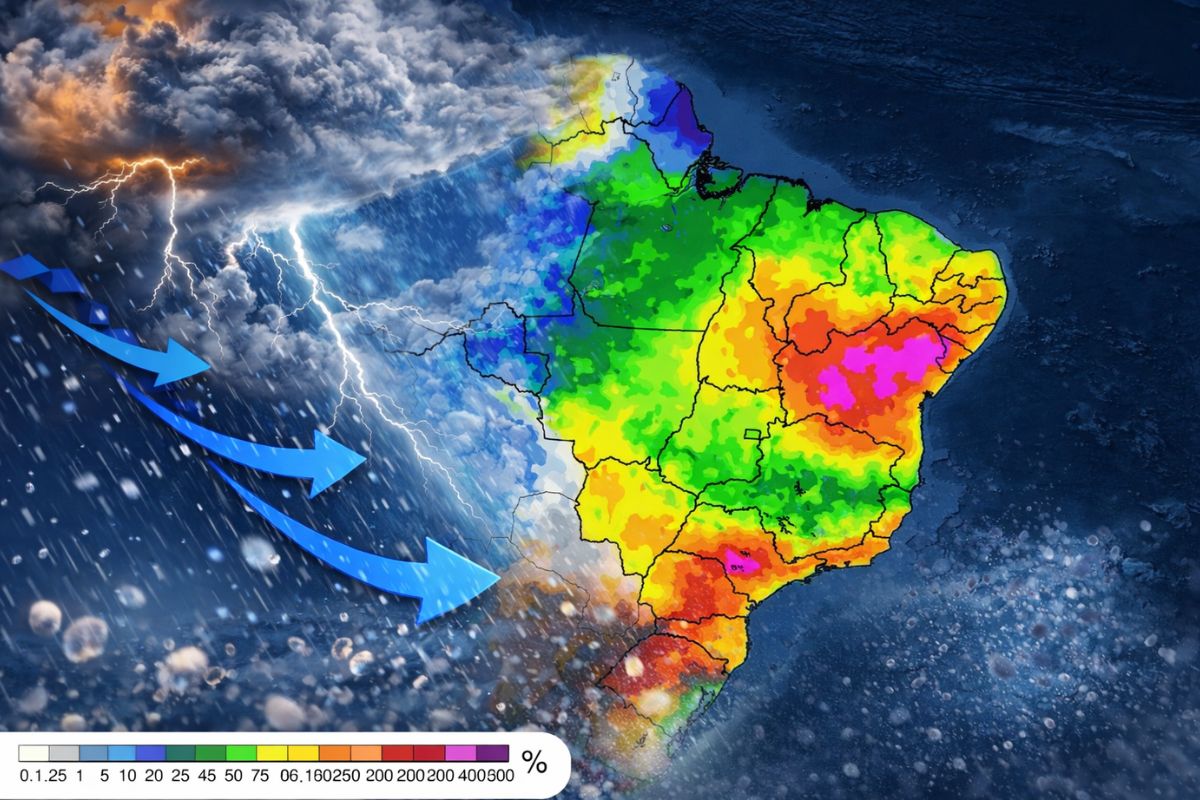
The truce after the last cyclone is over: a new cold front is hitting five states between Saturday and Sunday with up to 100 millimeters of rain, risk of hail, and wind gusts that could cause damage from Rio Grande do Sul to São Paulo.
-
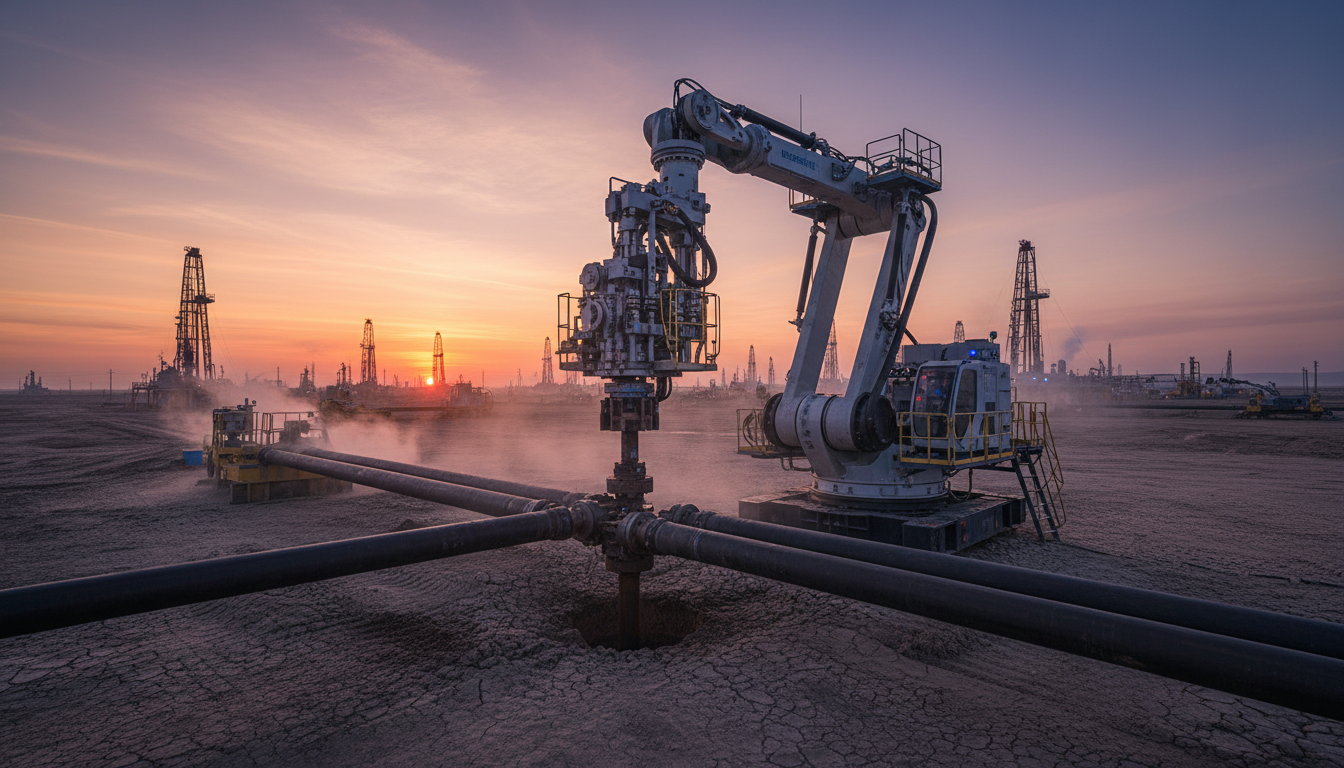
Robots already operate oil rigs without humans, connect pipelines on their own, and inspect platforms in the dark, and the world’s largest drilling company plans to cut 75% of the crew at each well.
The most revealing result came from the analysis of the teams. The production difference between the best and worst control room teams exceeded 5%. In another asset adjusted for operational conditions, this variation reached 12%. Thus, on a platform producing 80,000 barrels/day, a 12% difference represents nearly 10,000 barrels lost daily — not due to technical failure, but due to suboptimal human decisions.
- Tested platform: mature semi-submersible, North Sea, ~100 wells
- Production: 80,000 barrels of oil per day
- Variation between teams: 5% to 12% difference in production
- Cause: human operational decisions, not equipment failure
How artificial intelligence transforms offshore oil platform efficiency into real numbers

The solution involves three technological fronts that already exist and work. Firstly, prescriptive analytics identify optimal operating conditions and recommend real-time adjustments. Additionally, predictive maintenance systems anticipate failures before they occur. Consequently, digital twins create virtual replicas of entire platforms to simulate scenarios.
The optimized operational model has already demonstrated a 25% reduction in maintenance hours for offshore assets. This way, teams are reallocated from repetitive tasks to priority activities, such as preventing unplanned shutdowns. Consequently, every hour of maintenance eliminated represents a direct gain in production and cost reduction.
Ahmed Hashmi, BP’s director of exploration and extraction technology, summarized the industry’s vision: “It’s not just about automating the platform, but about automating everything that comes before it.” Therefore, McKinsey projects that the rigorous use of these technologies can raise the NPV by 30% and cut unit operational costs by up to 50% in just 12 months.
The Gulf of Mexico leads the race for offshore oil platform efficiency in deep waters
In the Gulf of Mexico, McKinsey identified a potential of 2 million barrels per day in new deepwater projects by 2030, representing 20% of the global deepwater supply. Thus, the breakeven of projects in the Gulf is $2 to $3 per barrel lower than the global average, making the region highly competitive.
The adoption of predictive maintenance and remote operations in the Gulf of Mexico promises to further enhance this advantage. Additionally, technologies such as tie-backs — which connect new wells to existing platforms — allow for recovery of up to 70% via technology, without the need for new installations. Thus, the global trend of investing billions in technology for platforms intensifies each year.
Brazil needs to accelerate to avoid falling behind in the offshore efficiency race

Brazil, with its production of 5.3 million barrels per day and strong presence in deep waters in the pre-salt, has much to gain from adopting these technologies. McKinsey projects a growth in demand for floating rigs in the country of 6% per year between 2019 and 2027. Therefore, every percentage point of efficiency recovered in Brazilian offshore drilling operations can represent billions of reais in added value.
If Brazilian platforms also operate close to the global benchmark of 77%, the improvement margin with AI would be equivalent to thousands of extra barrels per day without drilling a single new well. However, specific data on the implementation of analytics in Petrobras operations is not available in McKinsey’s public reports.
Still, the scenario is clear: operators that do not adopt artificial intelligence and advanced analytics in the coming years risk losing competitiveness in a market where every barrel counts. On the other hand, those that invest first will have a decisive advantage in costs and productivity — and the clock is already ticking.







Seja o primeiro a reagir!