Portuguese
  Spanish



Producers in the field discover that satellite images compare years, neighbors can report, and 5 daily errors on the property become fines, crime, and headaches
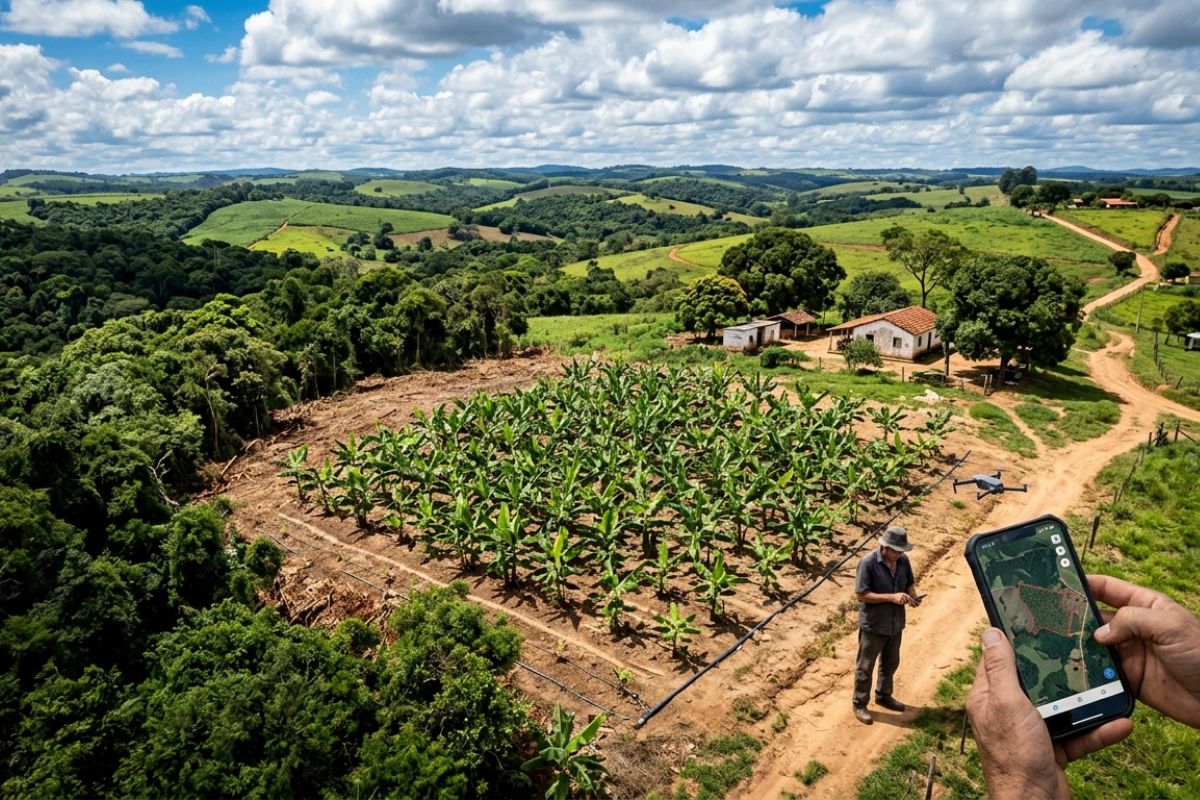
Producers in the field still deceive themselves thinking that only “big players” commit environmental crimes, but the case of a small property shows the opposite: deforestation of 2,700 m² to plant bananas ended in a fine of R$ 31,600, with evidence recorded by monitoring done of the area.
And the blow doesn’t just come from deforestation. The video report points out other problems that usually arise together, such as animal mistreatment, failures in regularization, and impulsive decisions made without licenses and consultations, which end up turning into inspections and legal proceedings.
The case of the banana and why the satellite caught it
The video describes a farmer who cleared forest land and planted bananas on 2,700 m². The fine of R$ 31,600 serves as an example of a point that many people ignore: today the change from “native forest to field” can be seen in real-time, and the comparison of satellite images between different periods was cited as a basis for confirming the deforestation.
-
Brazilian Farmer Invents Low-Cost Tractor Using Motorcycle Parts, Efficiently Working 2 Acres on 1 Liter of Diesel

-
Regenerative Farmers Use Keyline Plow to Improve Pasture Hydration, Storing 1 Gallon of Water Every 30 Centimeters

-
Bicolor Pumpkin Resembling Hand-Painted Art Discovered by Brazilian Researchers in the Capital Due to “Spontaneous Mutation”

-
In China, a 26-story building produces 1.2 million pigs annually, revolutionizing livestock farming with tube feeding and AI surveillance.


The message is clear: it doesn’t matter if the property is small. The risk is not in the size of the producer, but in the irregularity of the action and in the visual record that remains in the history of images.
The myth that “environmental crime only happens with large producers” falls quickly
The text itself emphasizes this point: it is common to think that only large agricultural producers are involved in environmental crime. The video calls this a myth, because the infraction can occur on any scale, including in small farms, estates, and small areas.
And the consequences also escalate when there are other irregularities involved. The cited case involves not only deforestation but also mentions animal mistreatment as a factor that aggravates the situation and worsens the inspection’s assessment.
Animal welfare also counts
The video uses a simple signal to illustrate: well-treated animals tend not to escape, they stay close because they receive water, food, comfort, and care. The idea is to reinforce that, in addition to preserving nature, producers in the field have a duty to care for what they raise.
This does not appear as an “optional tip.” The text states it as an obligation for any rural producer and as a point that can become a problem when there is a report and inspection.
The laws that producers in the field need to respect
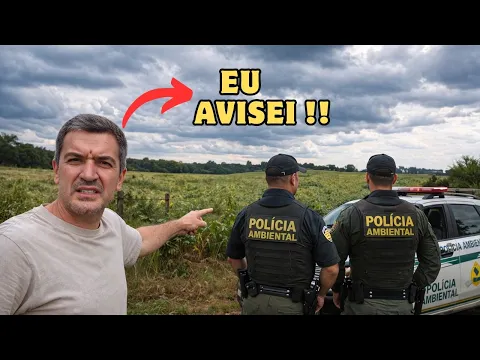

The video points out two pillars that serve as a “mandatory manual”:
- Forest Code, Law 12.651/2012
- Environmental Crimes Law, Law 9.605/1998
The guidance is practical: there is no escape for those who deforest without a license, whether small or large. Even actions that seem innocent, like “cleaning the fence,” can become infractions if they involve the suppression of native forest. In the cited example, the temporary solution was to use electric wire until authorization was obtained to work on the area.
The 5 reporters that most bring down producers in the field
The video organizes the main “triggers” for inspections into five sources. And here comes the point that catches many people: it’s not always the satellite that reports you, many times it’s someone nearby.
- Neighbor
The text lists the neighbor as the number one source of reports. Poor relationships, jealousy, or conflict lead to reports, even when the producer believes they are doing something “acceptable.” The video also mentions a case in the narrator’s region where an inspection ended in tragedy, as a warning for the level of tension this can generate. - Employees and caretakers
High turnover, misplaced trust, and excess information become risks. The guidance is clear: professionalism and discretion, because the same person who helps today can become a problem tomorrow. - Relatives
Inheritance disputes, land conflicts, and internal strife can turn the property into a battlefield. The warning is not to “jump the gun” on licenses, even when the producer believes they “will get it.” - Friends
The text cites the classic situation of bringing people to the property and someone “seeing something” and reporting later. The message is not to isolate, but to understand that too much exposure is costly. - Routine inspections and technology
In addition to in-person operations, the video highlights inspections by satellite and drone. Drones expand reach with fewer people, and periodic routes by environmental agencies continue to happen.
The 5 errors that generate the most fines and headaches in daily life
The video points out a ranking of infractions and common problems:
- Deforestation and irregular suppression of native forest
Described as the champion of fines and penalties. The guidance is simple: without a license, do not proceed. - Burning
Appears as a common consequence of deforestation when the producer tries to “clear” the area for pasture or crops. - Irregular waste disposal
The text mentions leftover herbicides and fungicides, with the warning that disposing of waste in the wrong place becomes an environmental crime. It also mentions waste from livestock, which needs containment and proper disposal. - Illegal exploitation of fauna and flora
Capturing and trading native animals and plants are cited as real risks, including by actions of employees, caretakers, or the owner themselves. - Other illegal activities in rural areas
The video combines several examples: theft of cattle and machinery, illegal trade, land grabbing, invasion with deforestation, and selling land without documentation. The final warning is to avoid purchasing property only with a “purchase and sale agreement,” treated as a trap.
How to avoid falling into this trap
The final guidance from the video can be summarized in three fronts:
- Information before acting: consult environmental agencies, city hall, secretariats, and seek guidance before clearing land, altering fences, or starting construction
- License and legality: wait for the paperwork, no matter how long it takes, because a report makes the inspection “have to act”
- Less exposure: talk less about routine, finances, and property details with neighbors, employees, friends, and even relatives when there is conflict
Quick question for you to comment: in your experience, what most brings down producers in the field today is it the satellite and drone, or is it the neighbor reporting first?
Content based on information presented on the channel World of Colors.