





 Portuguese
  English
  Spanish
  5 min of reading
  0 comments



Salon model that bets on agility and multiple simultaneous services gains scale with franchises, subscription, and own products, expanding presence in different states and aiming for accelerated growth in the Brazilian beauty market.
Founded in Recife in 2021, Bessie Beauty Club emerged from the partnership between two long-time friends and their daughters with the proposal to condense various beauty services into a single visit, in less time than the traditional salon model.
According to the partners, the network closed 2025 with revenue of R$ 16.7 million, a total of 21 units in operation, maintains around 12,000 subscribers in its subscription club, and aims to reach R$ 30 million by 2026.
Origin of the business and experience of the founders
The origin of the business lies in the accumulated experience of Fabiana Gueiros, 56, and Bianca Drummond, 58, who came from entrepreneurship in different areas.
-
End of the 6×1 schedule: how the reduction of hours can affect service companies, industry, and agribusiness.

-
Brazil Ignores Trump’s threats to BRICS, Buys 42 tons of gold and reduces the Dollar’s share by 6.45% in international reserves.

-
Havan buys historic football land in Blumenau for a million-dollar amount protected by a confidentiality clause and is already planning to change even the layout of streets to build a megastore in half-timbered style costing 80 million reais.

-
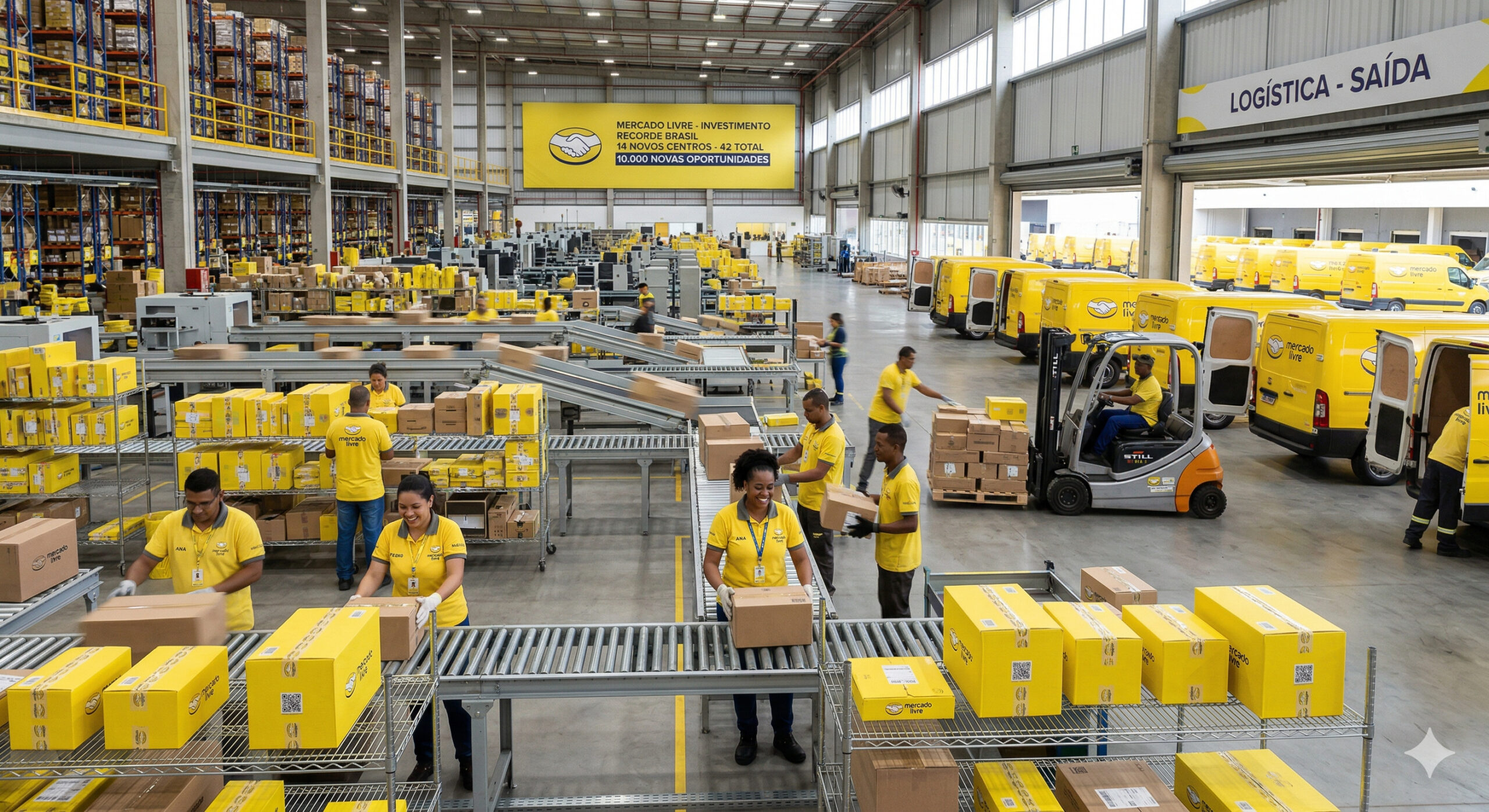
Mercado Livre “opens the vault” and announces a record investment of R$ 57 billion in Brazil in 2026, a value 50% higher than the previous year, with an expansion plan that includes 14 new logistics centers, totaling 42 units in the country and hiring an additional 10,000 employees.

Graduated in Law, Fabiana began her entrepreneurial journey in 1993 as an event producer in Recife.
Bianca, in turn, started her professional journey as a teenager in her mother’s multi-brand store, and later participated in the creation of a franchise network linked to the distribution of shrimp production from her family’s farm in Piauí.
When they decided to open their own business in the beauty sector, they chose to share the operation with the next generation.
Camila Drummond, graduated in Production Engineering, took charge of product, service, and internal systems development.
Eduarda Gueiros, with a degree in Marketing, was responsible for the brand’s communication.

The corporate structure was designed to combine different backgrounds from the beginning and accelerate the implementation of a replicable model.
Express model bets on speed and simultaneity
The idea began to be structured during the pandemic when the founders started to refine a service format centered on agility and simultaneity.
The proposal was to offer hair, manicure, pedicure, eyebrow design, facial waxing, hairstyling, and makeup in combinations that could be done in the same visit, with professionals working at the same time.
In one of the tests reported by the partners, a client left the unit ready in 20 minutes, with simultaneous service for nails and hair.
This concept led the company to first invest in shopping centers, an environment seen by the entrepreneurs as more suited to a convenience service.
With an initial investment of around R$ 2 million, the brand opened two units within five months, both in shopping centers in the capital of Pernambuco.
After validating the operation, it advanced to a street store in 2023 and, in the same year, began expansion through franchises.
Fabiana stated that the company was already organized to grow in this format from the start.
“When we created Bessie, we structured everything for franchising. So, from the first project, we were already working with processes and manuals thinking about this possibility of expansion,” said the partner, explaining that sales to franchisees began right after the operation was validated.
Expansion through franchises and presence in new states
In the network’s own material and in public franchising records, the business appears as an express beauty salon founded in 2021, with franchises launched starting in 2022.
The brand’s page highlights its own line of hair products, while the Franchising Portal reports an initial investment starting at R$ 329 thousand and records a data update made by the company itself in September 2025.
More recent reports mention investment ranges between R$ 295 thousand and R$ 362 thousand, depending on the model and size of the unit.
The geographical expansion has been presented as a central axis of the strategy.
According to the entrepreneurs, the brand has already reached Pernambuco, Paraíba, Pará, Alagoas, São Paulo, and the Federal District.

The next move, according to them, involves advancing into other markets in the Northeast, such as Bahia, Ceará, and Rio Grande do Norte, as well as expanding into the interior of São Paulo, focusing on cities like Campinas, Ribeirão Preto, Sorocaba, São José dos Campos, Piracicaba, Jundiaí, and Santos.
The declared expectation for 2026 is to reach 35 stores.
Subscription and own products boost revenue
To sustain this growth, the network combined expansion with recurring consumption.
One of the pillars was the subscription club, created to retain customers who visit the units more regularly.
The plans, according to the partners, range from R$ 144 to just over R$ 400, depending on the services included.
The company states that this model helps to raise the average ticket and revenue predictability.
Today, even with individual services starting at R$ 48, the average spending per customer is estimated by the network at R$ 200.
The second avenue of diversification came from retail, with a proprietary line of hair products described by the brand as vegan and cruelty-free.
The portfolio includes shampoo, conditioner, treatment mask, leave-in, and split-end repair.
On the official website, these items appear as part of the Triple Blend line, presented as a formulation aimed at hydration, nutrition, and reconstruction of the hair.
According to the founders, the products took about two years to develop and began to be sold in 2023.
Manufacturing occurs in partnership with an industry in São Paulo, and sales began through the physical stores of the network.
According to the partners, this avenue already accounts for about 5% of revenue.
To increase the retail share in revenue, the company also launched its own e-commerce, integrating the strategy of in-person services with direct product sales.
Standardized operation and focus on scale
In the operational plan, the business relies on intense standardization.
The units operate, according to the entrepreneurs, with teams of 15 to 35 employees, including permanent and temporary partners.
In recent reports, the network also mentions a “Bessie University,” created to train professionals and teach the step-by-step of each service.
The intention is to reduce variations between stores, increase productivity, and ensure the speed that sustains the fast beauty proposal.
On busier days, a unit can serve around 150 clients, according to the partners.
The advancement of Bessie Beauty Club thus reflects a combination of factors: the founders’ previous experience, a clear division of roles between mothers and daughters, a format designed for franchises, and the creation of new revenue avenues.
The brand has grown from two own operations in Recife to an expanding network, supported by subscriptions, retail, and process standardization, while trying to convert convenience into national scale.







Seja o primeiro a reagir!