





 Portuguese
  English
  Spanish
  3 min of reading
  0 comments


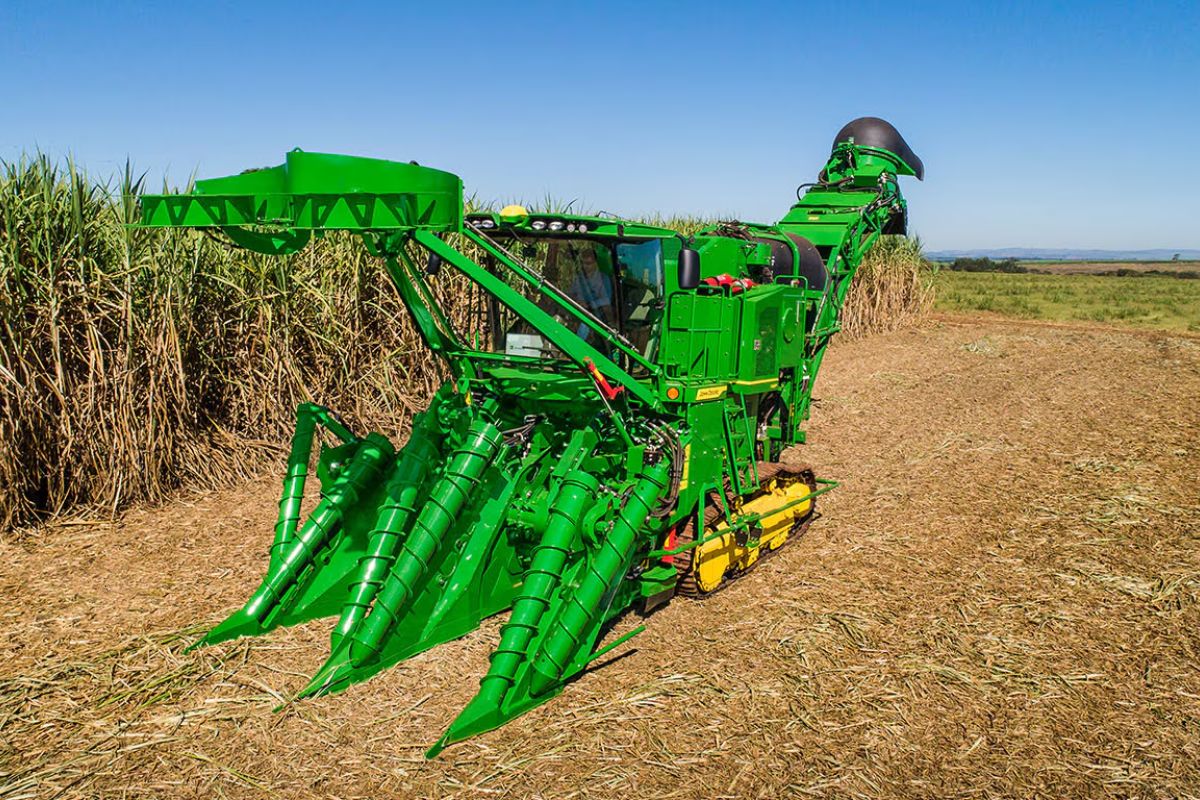
The Machine Was Designed for the Brazilian Market and Combines Power, Efficiency, and Sustainability, Transforming the Standard of Sugarcane Harvesting
The John Deere CH950 is drawing attention in the sugar-energy sector with its 13.6-liter engine, power of up to 544 hp, and the ability to harvest two rows of sugarcane simultaneously. The performance has surprised producers, as the machine not only increases productivity but also ensures up to 30% savings on fuel consumption per ton harvested.
The model was developed with a focus on the Brazilian market, where the mechanization of sugarcane requires robust equipment capable of handling large areas at a fast pace. The CH950 combines strength, technology, and connectivity to offer greater profitability, lower operational costs, and sustainability in the field.
How the Dual Harvesting Works on the John Deere CH950
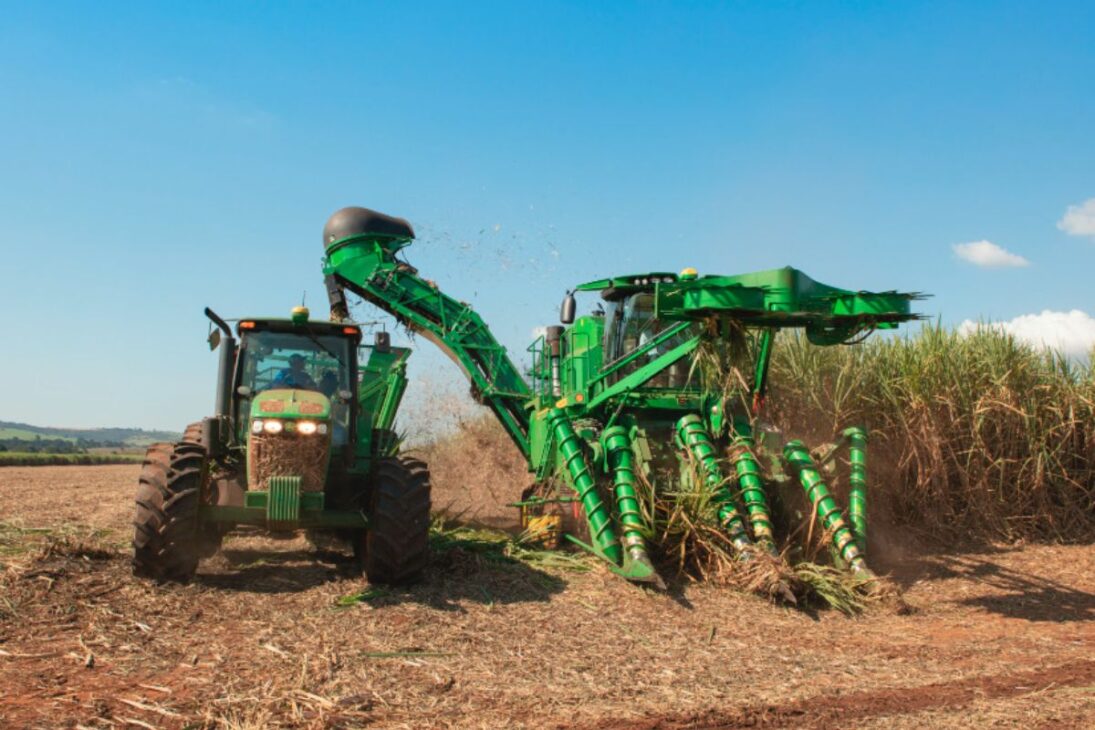
The major difference of the CH950 is the dual-row harvesting system, which allows for double the capacity compared to single-row machines, without losing speed.
-
From 130 producers in the year 2000 to just 15 today: the dramatic decline of passion fruit in Araguari shows how the lack of labor in the Brazilian countryside is killing a decades-old agricultural tradition, even with Brazil being the largest producer in the world.
-
Agricultural drone sprayed poison into the air and destroyed the neighbor’s crops, causing 1 million in damages; 48 cows died from nitrite poisoning in the pasture, and Russia is hiding a possible outbreak of foot-and-mouth disease: the week was brutal for the rural sector.

-
Russia cut fertilizers, China cut fertilizers, and oil prices soared with the war in the Middle East: sugarcane producers in the interior of São Paulo are seeing costs explode from all sides and warn that the effects will take months to be absorbed.

-
It does not come from flowers, is produced only every two years, and more than 90% goes straight to Europe: meet the bracatinga honeydew honey from Santa Catarina, considered one of the rarest in the world and overlooked by Brazil itself.


The RowAdapt™ technology automatically adjusts the cutting and feeding units, ensuring precision even on uneven terrain.
This system reduces soil compaction by about 60%, as fewer passes are necessary.
By preserving the interlines and the central bed, the machine increases the longevity of the sugarcane field and improves nutrient absorption by the roots.
The 13.6-Liter Engine: Power with Efficiency
The CH950 is equipped with the John Deere 6136NW301, a six-cylinder inline engine that offers a nominal power of 490 hp and a maximum of 544 hp.
This power is necessary to sustain simultaneous operation on two rows, but the design ensures that the engine operates comfortably, without straining at the limits, which prolongs its lifespan.
Even with this extra power, energy efficiency is one of its strong points.
Producers report a decrease of up to 30% in fuel consumption per ton, which means more sugarcane harvested at a lower cost per hectare.
The 1,135-liter tank ensures autonomy for long shifts, reducing the need for refueling stops.
Productivity and Cost Reduction in the Field

In addition to fuel savings, the CH950 reduces the need for operators by up to 36%, as one machine performs the work that previously required two.
It also cuts harvest losses by up to 60%, delivering more high-quality raw material to the mills.
In practice, this means lower costs per ton, increased profitability, and more sustainable harvests, as the reduction in diesel consumption also implies less CO₂ emissions.
Comfort, Connectivity, and Sustainability
The cabin of the CH950 was designed to provide greater safety and comfort for the operator.
With centralized controls on a joystick and dust sealing, the work environment becomes more efficient.
Additionally, the machine features remote monitoring, which allows real-time operation tracking, troubleshooting, and optimization of use.
This connectivity integrates the producer into the digital management of the crop.
The John Deere CH950 redefines the sugarcane harvesting standards in Brazil by combining a giant 13.6-liter engine with cutting-edge technology, resulting in more productivity, fuel savings, and soil preservation.
And you, do you believe that machines like the CH950 can truly change the future of sugarcane harvesting in Brazil? Is fuel economy the most important factor, or should environmental impact weigh more? Share your opinion in the comments.










Seja o primeiro a reagir!