





 Portuguese
  English
  Spanish
  6 min of reading
  0 comments


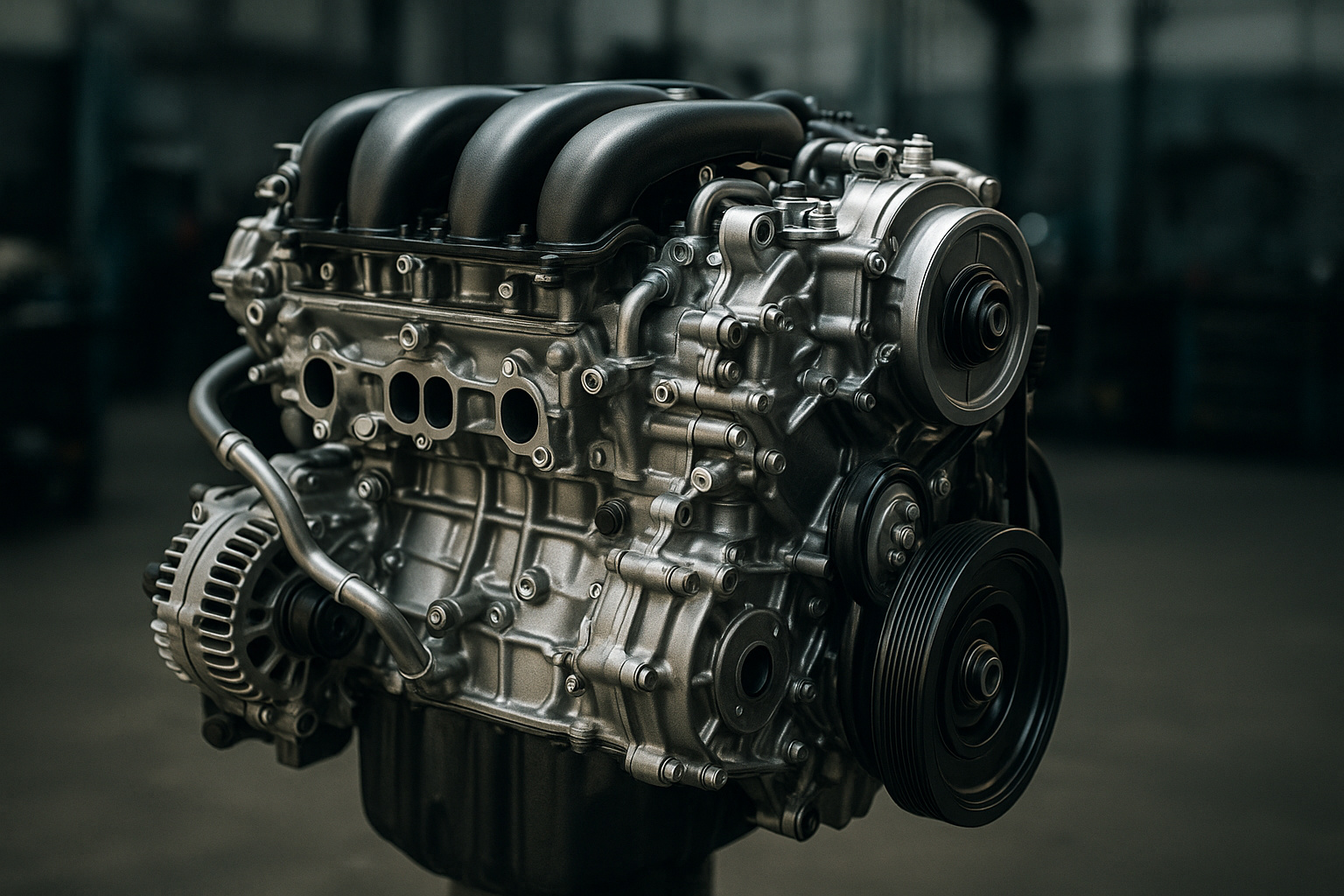
Models With Naturally Aspirated Engines Continue to Dominate When It Comes to Durability, Low Maintenance, and Real Economy, Proving That They Don’t Need Turbo to Stand Out Among the Preferred Vehicles of Brazilians
Even facing the strong trend of turbo engines in recent years, the most reliable naturally aspirated engines in Brazil remain a reference when it comes to robustness, autonomy, and cost-effectiveness. The popularity of this type of engine remains high precisely because it offers a balance between performance, efficiency, and simple maintenance. Therefore, even today, thousands of consumers prioritize vehicles equipped with naturally aspirated engines when choosing a used, semi-new, or brand-new car.
Furthermore, as published in a specialized article by Mundo do Automóvel para PCD, these engines remain among the safest choices for those seeking longevity. This is because, unlike turbos, which are more sensitive and depend on stricter revisions and care, the naturally aspirated engines show greater resistance to the natural wear of time and maintain lower maintenance costs, a crucial point especially for those who use the vehicle daily.
Another important point is that naturally aspirated engines still deliver competitive fuel consumption. Even with the arrival of more technological alternatives with turbochargers, they manage to offer fairly positive figures, reinforcing their excellence in the fuel economy aspect — a differential that directly impacts the budget of those who drive long distances or drive professionally.
-
The 2026 electric Vitara arrives in Brazil and proves that Suzuki is not leaving: 4×4 traction, 184 hp, 61 kWh LFP battery, 293 km range, R$ 259,000, and a trunk capacity of 224 L.
-
Hyundai has unveiled the Boulder, a square SUV with a body-on-frame design, 37-inch mud tires, and carriage-style doors that seems to be made to take on the Ford Bronco and the Scout Traveller in the United States.

-
The Toyota Hilux is R$ 75.5 thousand cheaper and bets on the 2.8 turbodiesel engine with up to 204 hp and 50.9 kgfm to catch up with the VW Saveiro, which leads with 4,472 sales.
-
The new Renault Koleos has a screen exclusively for the passenger that is invisible to the driver, heated rear seats, and 29 assistance systems, but its Chinese competitors cost R$ 40,000 less and deliver more power.

Honda 1.5 16V: Japanese Reliability and Excellent Fuel Consumption

Among the most reliable naturally aspirated engines in Brazil, the Honda 1.5 16V remains at the top of the list. Recognized for the tradition of the Japanese brand, this engine delivers up to 126 hp, ensuring satisfactory performance and precise handling for both urban and highway use. Currently, this engine equips models such as Honda City Hatchback, City Sedan, and HR-V, consolidating its presence among drivers who demand a balance between economy and performance.
In terms of consumption, the highlight is even greater: the Honda City can achieve up to 15.5 km/l with gasoline on the highway, making it one of the best options on the market when the goal is to reduce expenses without giving up comfort. Therefore, it is no surprise that Honda’s 1.5 engine continues to be a reference in the country for durability and silent operation, even with the growth of turbo engines.
Hyundai Kappa 1.0 12V: The Efficiency of Three Naturally Aspirated Cylinders

Another representative among the most reliable naturally aspirated engines is the Hyundai Kappa 1.0 12V, which has gained its reputation since the launch of the HB20 by combining low consumption, simplified maintenance, and satisfactory performance for a naturally aspirated three-cylinder. Even with 75 hp on gasoline and 80 hp on ethanol, it positively surprises in daily use, offering quick and appropriate responses to urban traffic.
Moreover, consumption is one of the most celebrated aspects by owners. In the HB20, the Kappa records up to 15.4 km/l of gasoline on the highway, approaching indices reached by older hybrid models. Its success has made this engine one of the most sensible choices for those who want savings without investing high amounts in complex mechanics.
Fire 1.0 8V: The Stellantis Engine That Became a Legend

Even after many years on the market, the traditional Stellantis Fire 1.0 8V continues to be a true legend among reliable naturally aspirated engines. This is because it combines durability, simple mechanics, and proven reliability over decades. With 73 hp on gasoline and 75 hp on ethanol, it plays an efficient role in entry-level models without raising maintenance costs.
This engine has equipped a long list of popular vehicles from the manufacturer, such as Mobi, Uno, Palio, Siena, Punto, Idea, Strada, and Doblò. It is precisely this versatility that has made the Fire one of the most recognized engines in the country. To top it off, fuel consumption is also impressive: in the Mobi, it records about 15 km/l with gasoline on the highway, demonstrating that simplicity can still be synonymous with intelligence in the automotive world.
Firefly 1.3 8V: The Modern Evolution of Naturally Aspirated Mechanics

Following the list of the most reliable naturally aspirated engines in Brazil, the Stellantis Firefly 1.3 8V represents the natural evolution of the manufacturer in response to new demands for efficiency and power. It delivers 98 hp on gasoline and 107 hp on ethanol, and is now one of the most commonly found engines in the brand’s models in the country.
Currently, this engine equips vehicles such as Fiat Pulse, Fiat Cronos, and Fiat Argo, which stand out for balanced consumption and pleasant handling. One of the most attractive points lies in its performance for daily use, as it provides power and economy simultaneously. To give an idea, in the Pulse, the Firefly reaches 14.5 km/l with gasoline on the highway, proving that mechanical simplicity and modernization can go hand in hand within the segment of naturally aspirated engines.
In addition to all these attributes, the Firefly 1.3 is seen by many buyers as the ideal transition for those looking to move from an old engine without migrating to a turbo. Therefore, this engine offers the security that the conservative consumer expects and the innovation that the market demands, remaining among the most valued naturally aspirated engines in the country.
Toyota 1.5 16V: The Naturally Aspirated Engine That Became Synonymous with Robustness

Closing the list of the most reliable naturally aspirated engines in Brazil, the Toyota 1.5 16V is nationally recognized for its robustness and simple mechanics, factors that reduce the need for corrective maintenance. This engine delivers 110 hp with ethanol and 105 hp with gasoline, ensuring superior performance for an urban profile vehicle, in addition to high autonomy.
This engine has been present in models such as Etios, Yaris hatch, and Yaris sedan, all known for their low depreciation and exemplary durability track record. In terms of fuel consumption, the Yaris equipped with this engine records up to 13.8 km/l with gasoline, achieving autonomy of up to 621 km on the road cycle, which attracts the interest of drivers who travel long distances and need reliability above any other characteristic.
Its reputation has been built on positive reports from owners, consistent performance over the years, and simple mechanics. This transforms Toyota’s 1.5 engine into a safe option for those looking for a family car as well as for rideshare drivers who need a tireless partner in the heavy routine of the streets.
Naturally Aspirated Engines Remain Strong as the Safest Choices on the Market
Even though turbo engines dominate advertisements and showrooms, the most reliable naturally aspirated engines in Brazil continue to excel in what really matters: reliability, low maintenance costs, and durability. Honda 1.5 16V, Hyundai Kappa 1.0 12V, Stellantis Fire 1.0, Firefly 1.3 8V, and Toyota 1.5 16V prove daily that technology does not necessarily mean complexity.
For this reason, those seeking mechanical security, lower costs over the years, and efficient consumption can consider any of these engines as a safe investment. They demonstrate that even with the constant arrival of new turbo engines, naturally aspirated mechanics remain relevant and extremely valued in the Brazilian market.
And you, do you still prefer the reliability of naturally aspirated engines or believe that turbos have already definitively taken over the Brazilian market? Which one would you choose today and why?









-

-

-

-

-

-

15 pessoas reagiram a isso.