





 Portuguese
  English
  Spanish
  5 min of reading
  0 comments



After Four Decades Facing Dangerous Roads, Long Journeys, and Unstable Income, the Truck Driver Reports the Sacrifices and Wear of the Profession Because He Fears That the Current Routine Offers Neither Safety Nor Future for the New Generation
Brazil is facing an increasingly imminent logistical blackout due to the lack of truck drivers. The numbers confirm the seriousness of the situation: according to data presented on the Vida de Estradeiro channel, the country lost 1,200,000 truck drivers in just 10 years.
In 2015, there were 5,600,000 licensed drivers in categories C and E. Today, that number has dropped to 4,400,000, a reduction of 22%.
The trend is a continuous decline, as the category has aged, many professionals have left the road, and current conditions deter those thinking of entering the profession.
-
The government puts R$ 8.6 billion on the table to change the highway (BR) with 50 overpasses, 28 bridges, 4 tunnels, and 40 km of bike lanes in 180 km of historic duplication.

-
BRL 20.1 Million Bridge Project Kicks Off: 200-Meter Construction to Improve Access in Three Cities in Minas Gerais

-
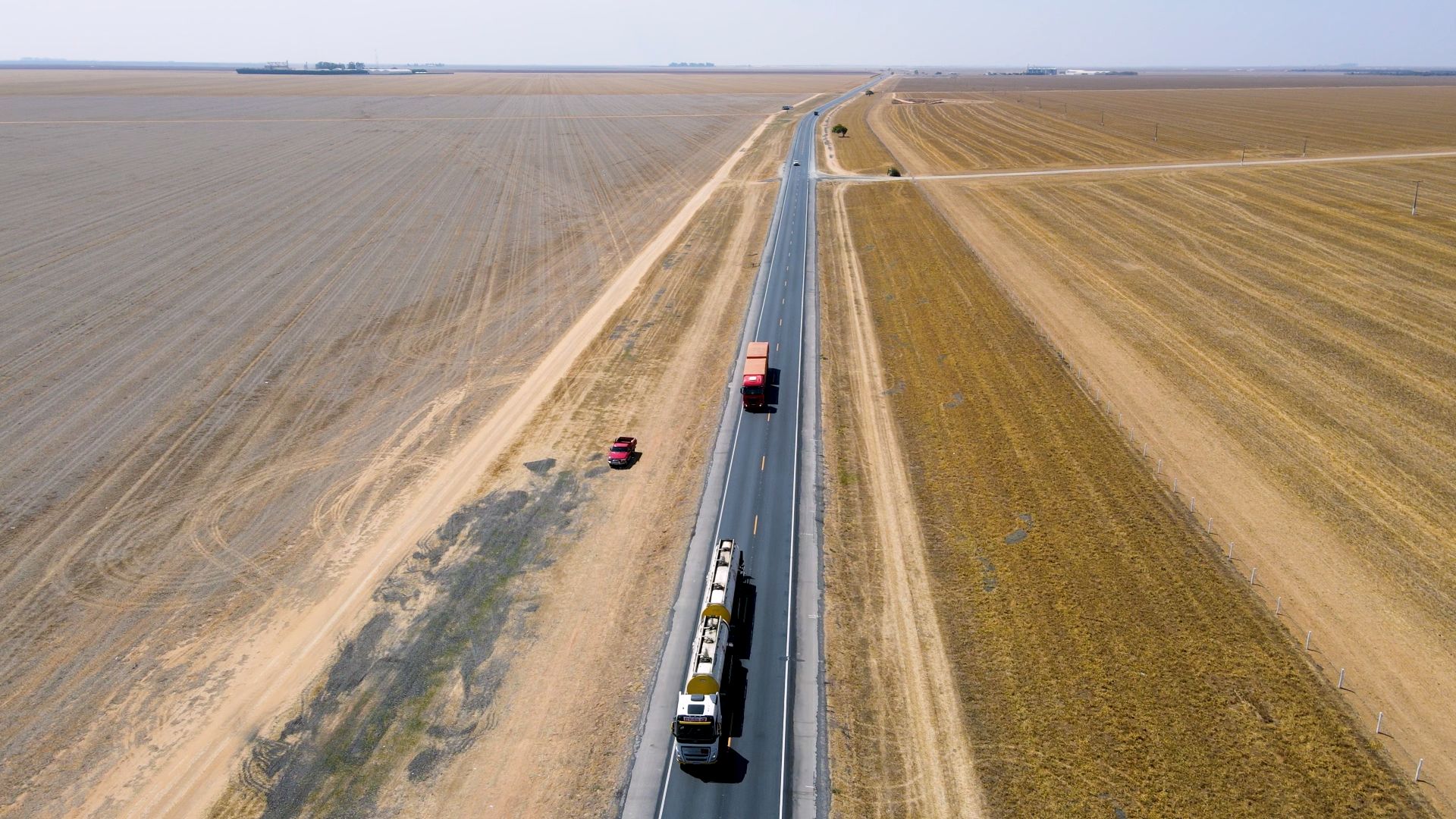
‘Endless Road’ In Brazil Is One of The Largest In The World: 145 Km Stretch On An Important Highway (BR) Crosses The West Of Bahia And Had 135.9 Km Revitalized With R$ 35.3 Million
-
Engineer From ITA Who Worked at Embraer Leads Free Flow Expansion With National Artificial Intelligence and Technology for Toll Without Barriers in Brazil


By traveling the country’s roads and talking to active drivers, it is possible to understand exactly why this exodus is growing.
What repeats itself in practically every interview is simple: lack of appreciation. Drivers state that the day-to-day involves long journeys, poor infrastructure, little respect, low remuneration, and a routine that compromises family life.
Low Salary, High Costs, and a Bill That Never Adds Up
The survey displayed by the channel shows that, for those who work as employees, the average salary increased from R$ 2,291 in the first half of 2023 to R$ 2,436 in the first half of 2024, an increase of 6.3%. In the same period, the minimum wage rose by 8.2%. In practice, the truck driver’s earnings have lost strength.
Among the self-employed, the gross average is around R$ 10,000. However, this value drops drastically when considering costs with fuel, tolls, maintenance, tires, mechanical mishaps, and travel expenses. They explain that almost no real profit remains after the mandatory expenses of daily life.
This disparity between effort, risk, and remuneration strongly appears in the speech of both young and veteran drivers. One described the salary as insufficient, stating that “we earn little and face difficulties in everything.” Another explains that he only stays because he was born on the road and doesn’t know how to do anything else.
Long Journeys and Absence of Family Life
The current commission-based model reinforces a serious problem: the pressure to produce. Many truck drivers are paid based on productivity, which pushes them to extremely long shifts, increasing the risk of accidents, physical wear, and loss of family time.
Some accounts are compelling. One driver recounted that he was away from home for 55 consecutive days. Another mentioned colleagues who spent six months traveling, practically without returning home.
The most striking phrase, repeated by different professionals, summarizes this impact: “you entered here, you lost your family.”
The intense routine also affects mental health because the driver finds himself alone for long periods, facing pressure from deadlines, risks on the road, and lack of adequate infrastructure.
Lack of Infrastructure and Constant Disrespect
Among the reasons that discourage new professionals, old unresolved problems emerge. Pothole-ridden roads, insufficient support posts, lack of safety, and the absence of minimum conditions to rest make work even heavier.
Another recurring point is the relationship with shippers and recipients. Drivers report being pressured for rigid schedules, experiencing delays in loading and unloading, and often being treated without respect.
Many assert that “the cargo is worth more than the driver.” There are also accounts of companies that discard a professional if they do not meet an impossible deadline.
The excessive pressure, combined with a lack of basic support, creates an environment in which the truck driver feels abandoned. “We get paid well and are still treated like dogs,” one reported.
Aging of the Category and Fewer Young People Interested
The average age of Brazilian truck drivers was 38 years in 2014. Today it is 46. The aging population, along with the lack of attractiveness of the career, creates a dangerous cycle: experienced professionals leave the road, while young people do not enter the profession.
This combination reinforces the prediction of a logistical blackout because the country relies on truck drivers for all stages of the production chain.
As many interviewed reinforce, everything that reaches consumers, from food to medicine, goes through a truck.
The Story That Summarizes the Drama of the Profession: 40 Years at the Wheel and a Piece of Advice to Children – Don’t Be a Truck Driver
Among many accounts, a comment posted by a retired driver catches attention and synthesizes decades of difficulties faced on Brazilian roads. He worked for 40 years as a truck driver and, despite his experience and pride in his journey, made a point of warning his children not to follow the same path.
The testimony is direct: “I was a truck driver for over 40 years, and everything I learned in the profession was to ensure my son doesn’t follow in my footsteps. I talked to him to study, both him and my daughter. Today I thank God that they listened to my advice.”
This account shows that the decision is not based on detachment from the profession but on the desire to offer a future with better conditions.
During four decades on the road, he faced the same problems described by current drivers: long journeys, constant risks, devaluation, lack of infrastructure, and remuneration that does not match the effort.
The advice he gave to his children reflects an increasingly common reality in the category: many professionals wish the next generation to follow a less exhausting path with greater stability. His words illustrate the collective frustration of those who devoted their entire lives to the profession and have not seen, over the years, sufficient progress to make it fairer and more humane.
An Announced Crisis That Impacts the Whole Society
The testimonies collected on the roads show that, if nothing changes, the logistical blackout will move from the realm of prediction to reality. Insecurity, risk of theft, poor road conditions, lack of suitable resting places, and widespread disrespect create an environment that drives away new professionals and pressures veterans to leave the road.
Truck drivers warn that their rights are not included in the ESG policies much defended by large companies. Many say that shippers and contractors prioritize the cargo, ignore the driver, and do not provide minimal structure to receive him.
What Needs to Change
The solution requires joint action. Government, transport companies, shippers, associations, and society need to discuss real improvements, from infrastructure to fair remuneration.
It is necessary to review the productivity policy, ensure adequate support points for truck drivers, enhance safety, and implement programs that value the professionals who keep the country running.
Without this, more and more stories like the truck driver’s will repeat, reinforcing the desire for children and grandchildren not to enter the profession. As long as this reality persists, the logistical blackout will continue to loom, silent and inevitable, threatening the entire supply chain.










-

Uma pessoa reagiu a isso.