





 Portuguese
  English
  Spanish
  3 min of reading
  0 comments



The Uber CEO Makes a Frightening Prediction: App Drivers Have Counted Their Days! Research Confirms the Trend, and the Future of Transportation Is Closer Than We Think.
The CEO of Uber, Dara Khosrowshahi, stated that the profession of the company’s drivers could be extinct in up to 20 years, replaced by autonomous vehicles that promise greater safety and efficiency.
Currently, the app-based transportation market employs millions of drivers worldwide.
In the United States, there are more than seven million people who rely on this activity for their livelihood.
-
The narrowest house in the world is only 63 centimeters wide, but inside it can accommodate a bathroom, kitchen, bedroom, office, and even two staircases.

-
In the middle of the sea, these enormous concrete and steel structures, built by the British Navy to protect strategic maritime routes, look like they came straight out of a Star Wars movie.

-
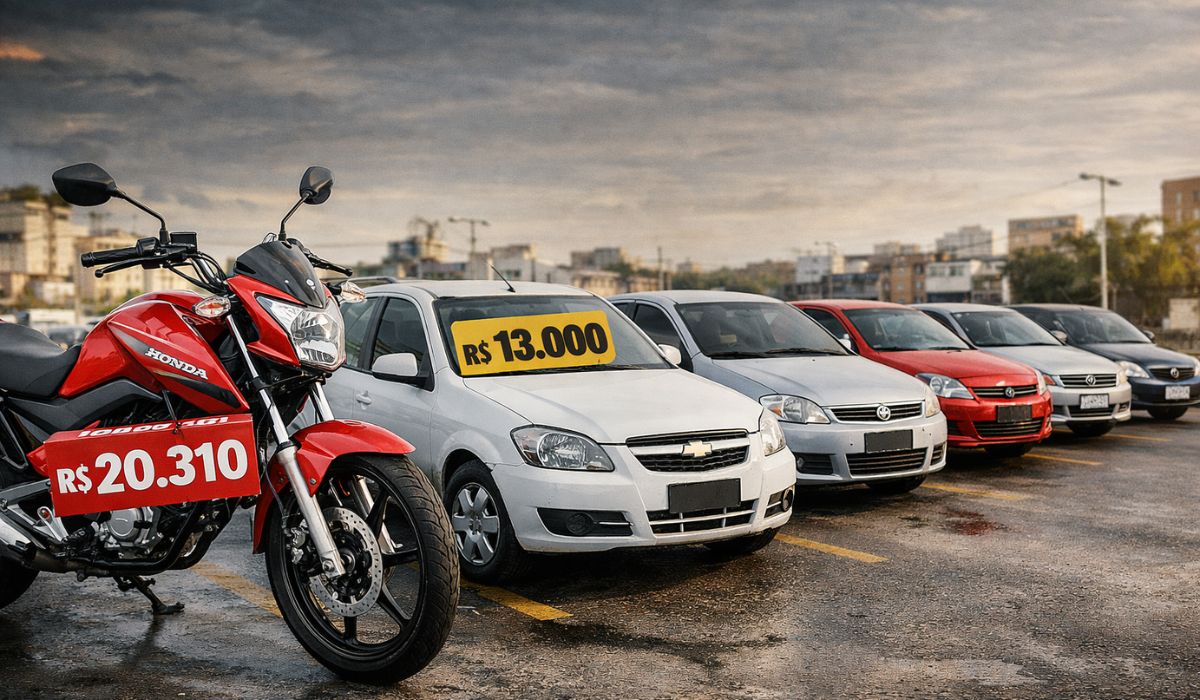
5 cheapest used cars than a Honda CG 160 Titan 0 km, with options starting at R$ 13,000 for those who want to trade their motorcycle for a car and escape the rain, sun, and risks of riding.
-
For years, no one could cross a neighborhood in Tokyo because of the tracks, but an impressive solution changed mobility and completely transformed the local routine.


In Brazil, the reality is similar: according to data from the Institute for Applied Economic Research (Ipea), about 1.5 million Brazilians work as app drivers.
However, this reality may be numbered, as investments in autonomous technology progress.
Artificial Intelligence in Command: Will Drivers Be Dispensable?
In an interview with the Wall Street Journal, Khosrowshahi stated that “in 15 to 20 years, autonomous cars will be better than any human driver”.
He argues that these vehicles will be trained with data from millions of drivers, accumulating experience that a human would take several lifetimes to acquire.
“Machines do not get distracted, do not tire, and are more accurate”, the executive emphasized.
This prediction reflects a trend already underway, with advanced testing of autonomous cars in cities like San Francisco and Las Vegas.
Studies Indicate Advantages and Challenges
Researchers at the University of California analyzed 2,100 accidents involving autonomous vehicles and 35,000 involving human drivers.
The data suggest that cars without human drivers take better safety precautions in most cases.
However, they exhibit a higher propensity for accidents at night or in low visibility situations.
Khosrowshahi acknowledges that the transition will be gradual, but inevitable.
The first step is already happening, with the implementation of autonomous fleets in some regions.
In Las Vegas, for example, there are already driverless cars operating on specific routes, such as between the airport and downtown.
In Brazil, there is still no forecast for massive testing of autonomous vehicles, but companies in the sector are closely monitoring the development of this technology.
Brazilian legislation will need to evolve to allow these vehicles to circulate in cities, especially in metropolises like São Paulo and Rio de Janeiro, where app-based transportation is an essential alternative.
Uber Is Already Preparing for This Revolution
The company has been heavily investing in autonomous driving technology, establishing partnerships with industry giants.
Waymo, a subsidiary of Alphabet (owner of Google), already provides its cars for Uber passengers in San Francisco.
Other automakers, such as Tesla and General Motors, are also in the race to dominate this market.
The initial strategy is to combine human drivers and autonomous cars in a hybrid network.
In the next 10 years, part of the trips will be made by robots, while humans will handle the more complex routes.
However, according to Khosrowshahi, the trend is for autonomous vehicles to irrevocably gain ground.
The Impact on Employment and the Economy
The replacement of drivers by robots could have profound social consequences.
Currently, working as an app driver is one of the main options for those seeking extra income or a primary activity with flexibility.
With automation, millions of people may lose this source of livelihood.
Experts argue that new opportunities will arise with technological advancement, but the transition may be painful for many professionals.
Governments and companies will need to think of solutions to retrain workers and minimize the impact of this change.
In Brazil, where unemployment is still an economic challenge, this issue becomes even more sensitive.
Experts believe that Uber is betting on the future of autonomous cars, and Khosrowshahi’s prediction indicates that human drivers may be counting their days.
However, technical, regulatory, and social challenges still need to be overcome before technology completely dominates the market.
In the meantime, the profession of app driver remains relevant, but the future points towards an increasingly digital and automated path.





-

Uma pessoa reagiu a isso.