





 Portuguese
  English
  Spanish
  4 min of reading
  0 comments


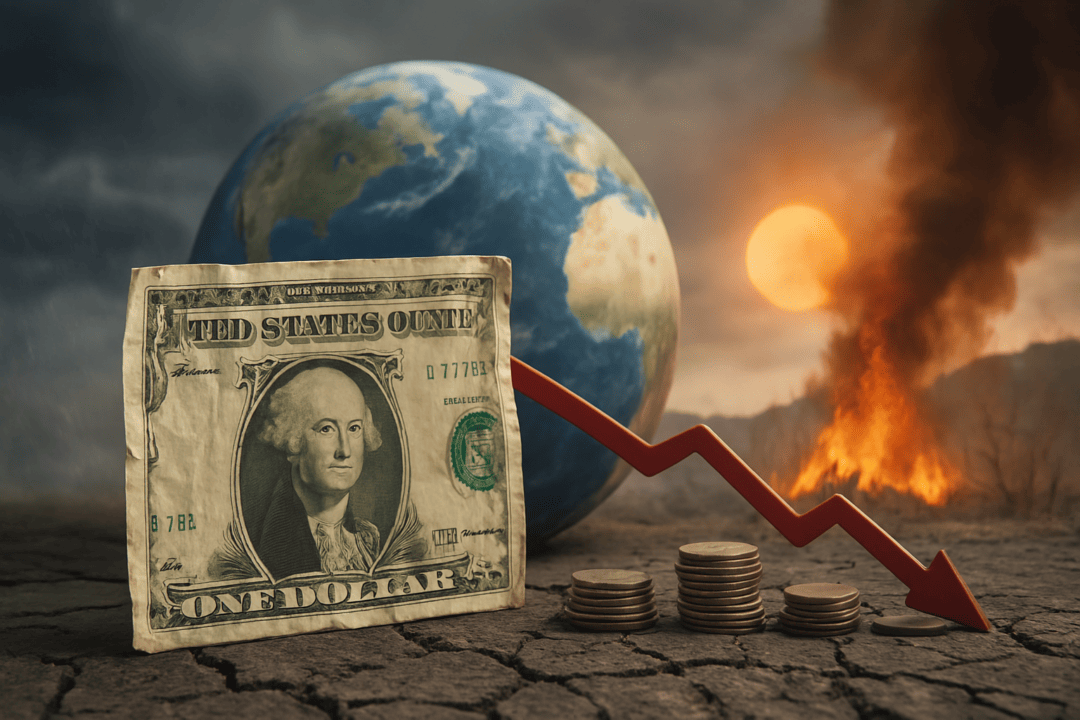
A New International Survey Revealed a Concerning Fact: The Effects of Climate Change Could Reduce Global Personal Wealth by Up to 40%. In Addition to Environmental Damage, Economic Impacts Could Affect Investments, Savings, and Markets, Especially in More Vulnerable Regions
By the End of This Century, Global Warming Could Hit a New Target: the Wallet of the World Population. A Study Published in the Journal Environmental Research Letters Shows That Climate Change Will Not Only Redraw Geographical Maps but Also Directly Affect Global Income. The Forecast Is Severe: If Temperatures Rise by 4°C by 2100, Average Income Could Fall by Up to 40%.
Even a More Moderated Increase of 2°C — Just Above the Target of the Paris Agreement — Would Still Lead to Losses of 16%. According to the Authors, the Current Trajectory Places the World Close to a 3°C Increase.
Climate Change: The Errors of Old Models
The Study Critiques the Economic Models Used to This Day. Traditionally, They Only Considered the Local Impacts of Climate Change. That Is, a Drought in India Would Also Affect Global Income, Not Just the Indian Economy, for Example.
-
With a cost per shot close to zero, the DragonFire laser could change naval warfare in 2027 and provide British ships with nearly unlimited defense against drones.

-
A British startup creates tires that generate electricity in electric vehicles when passing over potholes, speed bumps, and cracks.

-
Scientists have created robots made with living cells that have their own nervous system, swim on their own, explore the environment, and self-organize without any genetic engineering, and now they want to do the same with human cells.

-
Students create a solar-powered ambulance that operates without a plug, without fuel, and still keeps medical equipment running in remote areas.


According to Dr. Timothy Neal, the Lead Author of the Study and a Researcher at the University of New South Wales, This Led to Wrong Conclusions. “As These Damages Were Not Taken into Account, Previous Economic Models Inadvertently Concluded That Even Severe Climate Change Was Not a Major Issue for the Economy — and They Had Profound Implications for Climate Policy,” He Told the Daily Mail.
To Correct This Error, Neal and His Team Updated a Known Economic Model, Incorporating the Global Effects of Extreme Weather Events. The New Scenario Presented Is Much More Concerning.
The Real Impact of Extremes
Climatologists Already Know That Averages Do Not Show the Full Picture. An Average Increase of 2°C Does Not Mean Every Day Will Be Just Two Degrees Warmer. It Also Means Extreme Events, such as 45°C Heatwaves in Previously Temperate Regions.
Economists, However, Usually Work with National and Annual Temperature and Precipitation Averages. This Excludes the Real Economic Impact of These Extremes — and This Is Precisely What the New Study Seeks to Include.
The New Methodology
Neal’s Team Reperformed Three Influential Economic Models: by Marshall Burke, Matthew Kahn, and Max Kotz. All Relate Historical Climate Data with Economic Growth. The Difference Was Including Global Temperature and Precipitation Data.
There Were 2,500 Simulations Conducted, Using 22 Climate Models. The Study Compared Extreme Emission Scenarios with More Moderate Trajectories.
The Results Changed Dramatically with the Addition of the Global Factor. In Kotz’s Model, for Example, GDP Loss in 2100 Rose from 11% to 40%. In Burke’s Model, the Jump Went from 28% to 86%. Kahn’s Model Was the Most Conservative, Rising from 4% to 19%.
Recalculating Climate Policy
These Numbers Are Considered Enormous. They Indicate That the Costs of Climate Change Are Much Greater Than Previously Thought. As a Result, Some Measures to Curb Global Warming May Ultimately Save Money Instead of Generating Costs.
The Researchers Used the New Data in the DICE Model, Which Combines Climate Science, Economics, and the Carbon Cycle. When the New Results Were Inserted, It Became Clear That Reducing Warming from 2.7°C to 1.7°C Became a More Economical Choice.
This Data Reinforces the Importance of Acting Urgently to Meet the Goals of the Paris Agreement. If Economic Risks Are Taken Seriously, More Aggressive Climate Policies Will Be Inevitable.
Alert Reinforced by Other Studies
The Conclusions from Neal and His Team Align with Other Recent Warnings. A 2023 Report from the Potsdam Institute Estimated That Climate Change Could Reduce Nearly 19% of Global Income over the Next 25 Years. Damages to Infrastructure, Agriculture, and Public Health Could Cost US$ 38 Trillion per Year by 2050.
These Numbers Are Only Expected to Increase If No Action Is Taken to Curb Warming.
Collaboration Across Fields
One of the Clearest Messages from the Study Is the Need for Collaboration. Climate Scientists Need to Work with Economists to Better Understand How Climate Extremes Affect Human Systems.
Revising Current Models Is Urgent. They Need to Reflect Not Only Local Effects but Also the Indirect Impacts Caused by Events in Other Parts of the World. This Could Help Governments Make More Informed Decisions.
Impacts of Climate Change Beyond the Location Where They Occur
Weather Events Do Not Only Affect the Location Where They Occur. A Drought in One Country Can Affect Food Prices in Another. A Heatwave in the U.S. Can Impact Supply Chains in Europe. This Type of Interconnection Needs to Be Included in the Equation.
According to Professor Andy Pitman, Coauthor of the Study and a Climate Scientist at UNSW, the Moment Calls for Action: “Countries Can Fully Attribute Their Economic Vulnerabilities to Climate Change and Then Do the Obvious: Reduce Emissions,” He Said to The Guardian.
A Vulnerable System
The Final Message of the Study Is Clear: We Need to Rethink How We Analyze the Effects of Climate on the Economy. Models That Ignore Global Connections Are Failing. And the Cost of This Failure May Be Paid by Everyone.
If an Extreme Weather Event Hits a Distant Nation, It May Be Time Not to See This as an Isolated Incident. It Could Be a Ripple That Traverses the Planet and Affects Entire Global Income — Fragile, Interconnected, and Exposed to Climate Change.
With Information from ZME Science.








Seja o primeiro a reagir!