





 Portuguese
  English
  Spanish
  6 min of reading
  0 comments


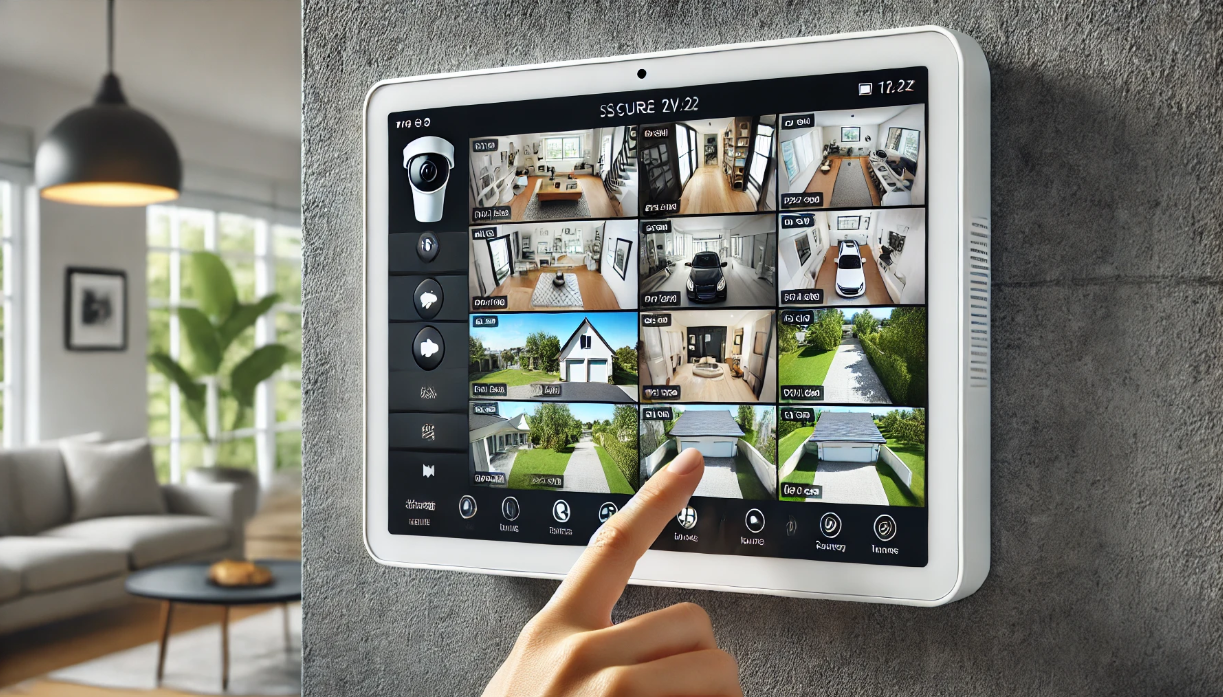
Apple Announces Plans to Launch a New HomePod Device in 2025, Making Its Mark in a Market Projected to Reach US$ 370.95 Billion by 2029.
The global smart home market has shown incredible growth in recent years, and projections indicate continued expansion. According to Mordor Intelligence, the size of this market was estimated at US$ 95.85 billion in 2023 and is expected to reach US$ 370.95 billion by 2029. And, of course, Apple wants to be part of this market.
The promise of smart homes has always been enticing: devices that make our lives easier, automate routine tasks, and provide more comfort and security. However, reality often frustrates users.
Finding the right app on the phone, dealing with inaccurate voice assistants, or trying to adjust settings on confusing “smart” screens can turn the experience into a headache. Now, Apple seems ready to tackle these challenges and fundamentally change the way we control our connected homes.
-
Airbus and Mercedes take the G-Class to the skies: the ACH145 helicopter priced at R$ 78 million debuts in São Paulo, unit goes to Brazilian, AMG cabin, 5-blade rotor, and a 2-year wait.

-
New material could change everything: it is the thickness of an atom, 200 times stronger than steel, and 100,000 times thinner than a human hair.

-
A new study published in Nature reveals that the SLIT3 protein can increase calorie burning by activating brown fat in the body, functioning as a kind of “biological switch.”

-
New signals detected by NASA suggest that the Moon may hide accessible underground cavities, after data from Mini-RF indicated a conduit over 60 meters beneath a lunar pit.


According to The Verge, the company plans to launch an innovative device in 2025 that could redefine the home automation market.
New Horizon: Apple’s Smart Device
The new product, informally dubbed HomePad, is described as a “wall-mounted AI tablet for home control”. This device will serve as a central hub to manage lights, locks, security systems, cameras, and other connected devices.
It will also include features for video calls, intercom, music playback, and environmental monitoring, all accessible via an interface that promises to be simple and intuitive.
This initiative represents an important step for Apple, which has seemed to neglect its home automation system, Apple Home (formerly known as HomeKit), for years.
Although the platform has been around for more than a decade, its adoption has been limited due to the company’s lack of dedicated attention and competition from giants like Amazon and Google. Now, with the HomePad and a new operating system called homeOS, Apple may finally be ready to compete on equal footing.
Opportunity for Market Transformation with Apple’s Inclusion
The smart display market already has robust options, such as Amazon’s Echo Show and Google’s Nest Hub. These devices offer a wide range of functionalities, from voice commands to video calls and camera monitoring.
However, consumers still face significant difficulties when trying to set them up or use them effectively. Many report that the controls are confusing, unresponsive, or simply incapable of delivering the promised experience.
It is in this context that Apple may find its opportunity. The company is known for taking existing technologies, simplifying them, and integrating them into a functional design that delights users. This has been the case with the iPhone, Apple Watch, and even Apple TV. Now, the challenge is to bring that same simplicity to the smart home universe.
The Design of the HomePad: Functionality and Integration
According to journalist Mark Gurman from Bloomberg, the HomePad will be a compact tablet of approximately six inches. It can be mounted to the wall or attached to a speaker, functioning similarly to Amazon’s Echo Hub or Google’s Pixel Tablet.
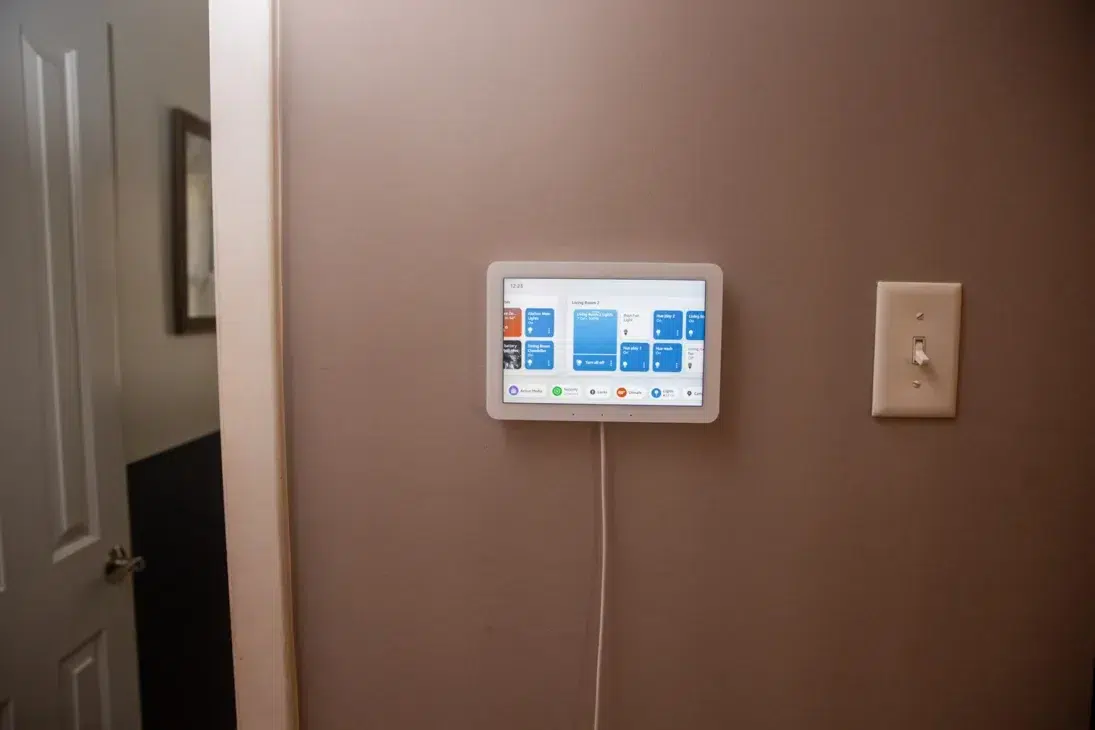
Photo by Jennifer Pattison Tuohy / The Verge
Among the highlights are an integrated security camera and sensors that adjust the interface as the user approaches, providing more detailed controls automatically.
The device will run on the new homeOS operating system, based on Apple TV’s tvOS, with visual elements inspired by watchOS and the StandBy mode of the iPhone. This approach aims to create a cleaner and more intuitive interface that allows for easy interactions through both touch and voice commands.
Apple is also expected to leverage the HomePad‘s compatibility with the Matter standard, an initiative that simplifies the integration of devices from different brands.
This means the device will be able to control existing lights, locks, and cameras in users’ homes, eliminating the need to replace all equipment to enjoy the benefits of the system.
Challenges: Siri and the Need for a Superior Experience
Despite all the excitement surrounding the HomePad, Apple faces considerable challenges, the main one being Siri. Although the company’s voice assistant has improved in recent years, it still lags behind competitors like Alexa and Google Assistant in terms of command recognition and integration with smart devices.
For the HomePad to be truly successful, Siri needs to evolve. Currently, it can perform basic tasks, such as adjusting the temperature or turning on lights. However, the assistant lacks the ability to interpret the context of more complex commands.
For example, a command like “Siri, I’m cold” should be able to automatically adjust the heating in the room where the user is, something that is still beyond the reach of current technology.
The good news is that there are signs that Apple is working to address these limitations. Gurman reports that the HomePad will be designed around a system called App Intents, which uses artificial intelligence to control apps and execute tasks with greater precision.
This approach promises to make Siri more capable and responsive, but the real technological leap may take a few years to arrive. The new version of the assistant, powered by advanced language models, is not expected to be available until 2026.
Simplicity: The Key to Success
One of Apple’s major differentiators in the technology market is its ability to simplify the complex. Products like the iPhone and Apple Watch have redefined their categories by combining sleek designs with intuitive interfaces.
For the HomePad, the company will have to achieve that feat again, providing a solution that is easy to set up and use from day one.
Imagine a flow where the user can say “Siri, turn off the living room lights” and then see on the screen contextual options to adjust the lighting intensity or activate other settings with a touch. This seamless integration between voice commands and touch interface is exactly what current devices lack.
Additionally, Apple should benefit from the fact that its Apple Home platform prioritizes local control rather than relying on cloud connections. This not only ensures greater privacy but also reduces delays and failures, which affect competing systems.
Expectations for the Future of Smart Homes
The launch of the HomePad marks a crucial moment for Apple and the smart home market as a whole. Although the company is late to the competition, its simplicity-focused and integrated approach may be exactly what the sector needs to attract consumers who feel disheartened by current options.
If Apple can overcome the challenges of interface and artificial intelligence, the HomePad could redefine how we interact with our homes.
The integration with the Matter standard and the promise of an intuitive interface are important steps, but the true differentiator will be the company’s ability to deliver a cohesive and functional experience, something that other brands have yet to offer.
Apple has a history of entering late into emerging markets but compensating with innovations that set the industry standard. The HomePad has the potential to be another example of this strategy, but its success will depend on its ability to provide a superior and accessible experience for all users.
The smart home market is in search of a device that simplifies the complex and “makes everything work.” If Apple can deliver that, the HomePad may not only redefine the segment but also solidify the company’s position as a leader in technological innovation.









Seja o primeiro a reagir!