





 Portuguese
  English
  Spanish
  4 min of reading
  4 comments


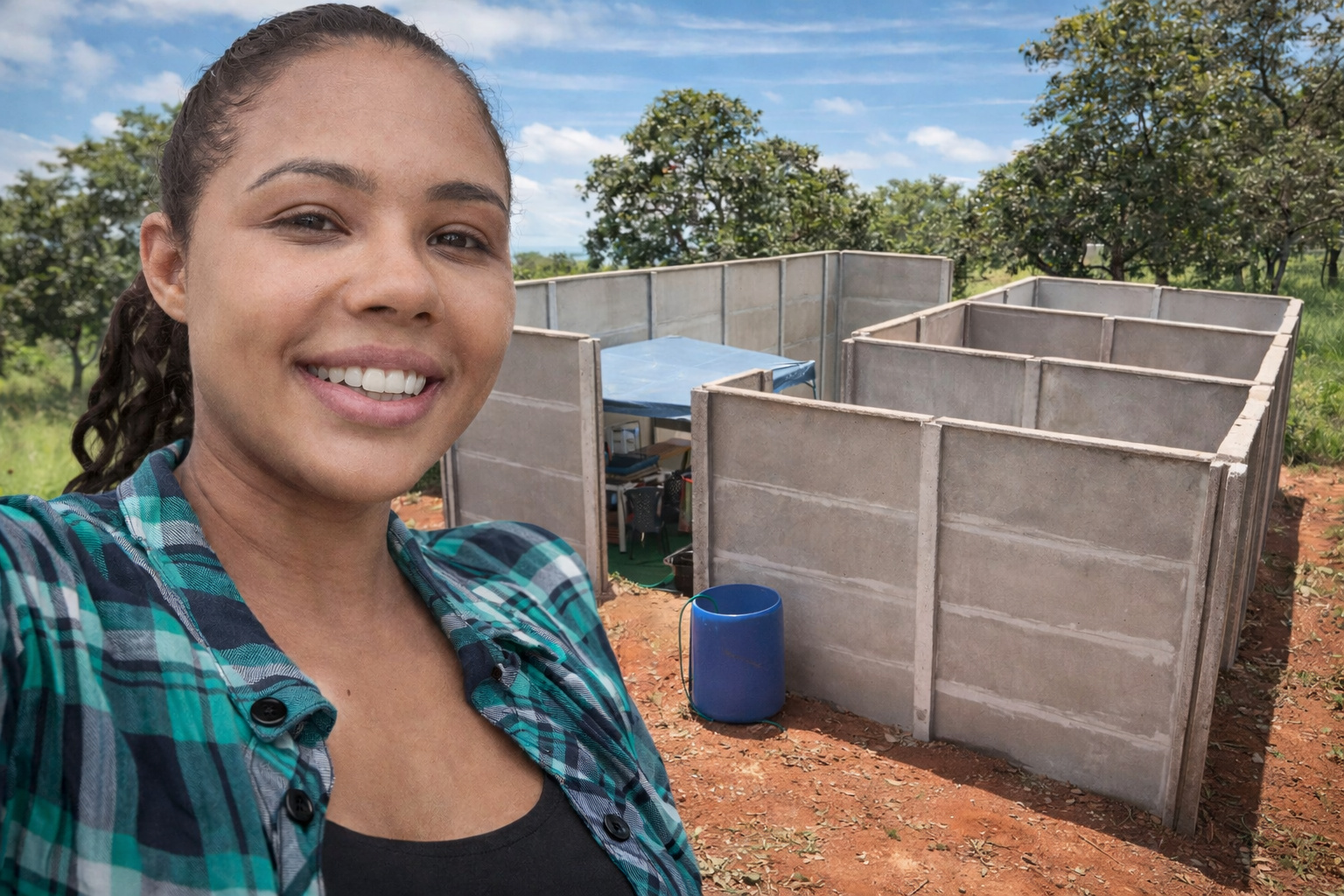


Simple Project in the Country Shows Functional Layout, Smart Division of Spaces and Economic Solution for Those Who Dream of Living in the Countryside Without Spending on Traditional Masonry
Building a small house in the countryside with prefabricated materials may seem simple at first glance. However, when the goal is to reduce costs, ensure accessibility, and still plan for future expansions, every decision makes a difference. This is exactly what motivated a resident to build her own house in the countryside just one year after acquiring the land.
The information was shared through a personal account in a video posted on social media, in which the owner, Paloma Cipriano, details all stages of the project, the measurements of the layout, and the structural choices made. According to her, the focus was always on finding the best cost-benefit to live in the countryside, avoiding waste and expensive materials.
Right from the start, the proposal was clear: to build a functional, sturdy structure with the possibility of lateral expansion in the future. For this, the chosen solution was the prefabricated system, which reduces construction time and costs with heavy labor.
-
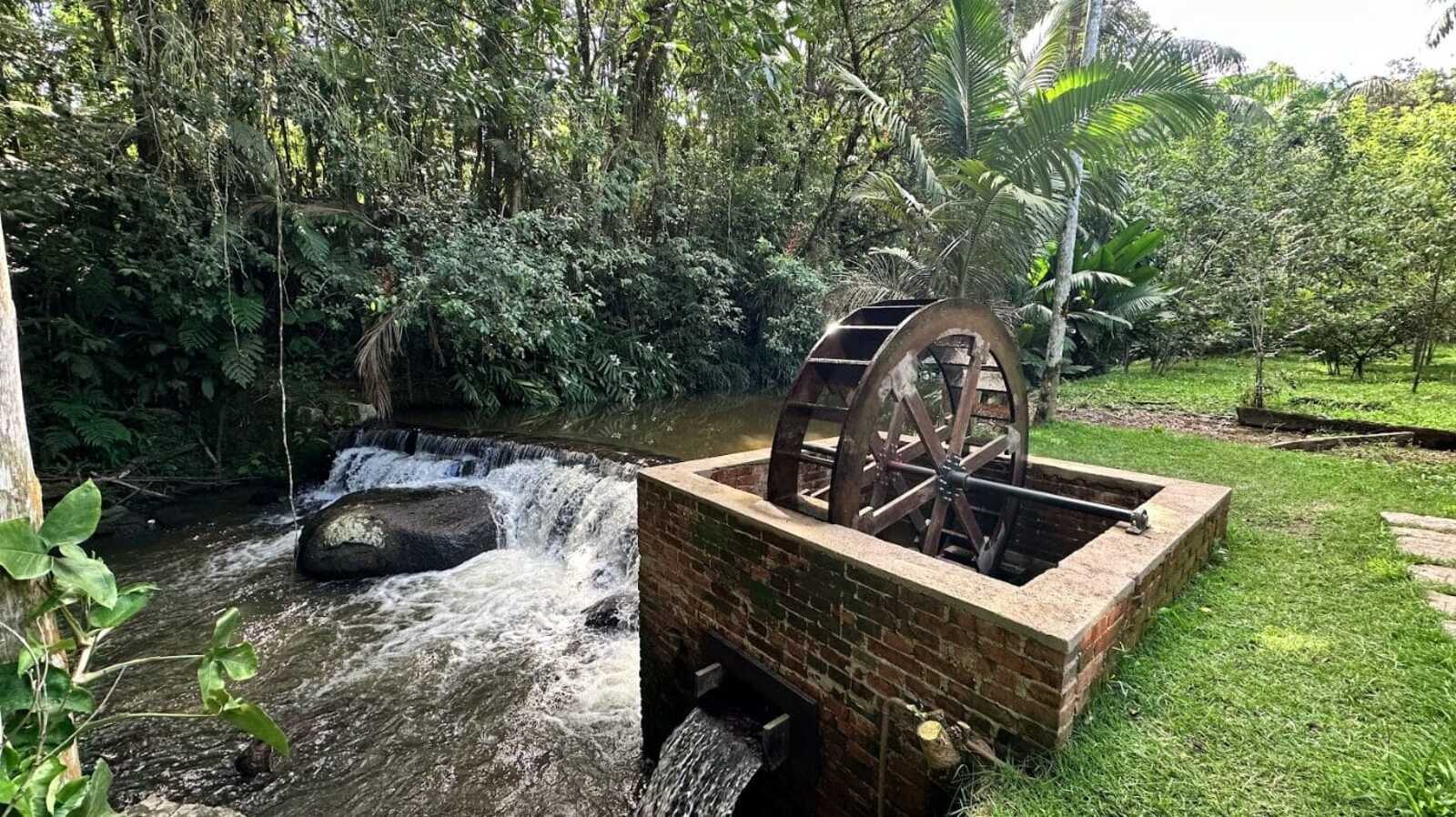
While restoring a historic mansion from 1910, a brick structure with an old turbine that generated energy from the Rio do Testo emerged, along with a hidden door and a rare floor concealed under layers of wax.
-
Italian researchers have detected what appears to be a second Sphinx buried under the sands of Egypt, and satellite scans reveal a gigantic underground megastructure hidden beneath the Giza Plateau for over 3,000 years.

-
There are 4,223 drums and 1,343 metal boxes concreted with 50-centimeter walls that store the radioactive waste from Cesium-137 in the worst radiological accident in Brazil, just 23 kilometers from Goiânia, with environmental monitoring every three months.

-
Giant Roman treasure found at the bottom of Lake Neuchâtel in Switzerland reveals an advanced trade system, circulation of goods, and armed escort in the Roman Empire about two thousand years ago.


The house is 6 meters wide by 10 meters long, totaling a compact yet well-distributed layout. This size was strategically thought out to accommodate essential spaces without compromising internal circulation.
Initially, the project planned for two separate bedrooms. However, during execution, the owner decided to modify the layout and request the opening of an extra door to integrate one of the spaces as a living room, already planning for future expansions on the sides of the construction.
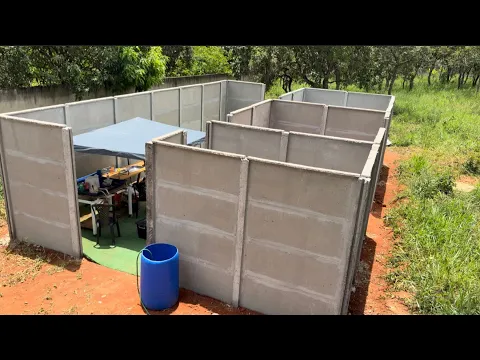

Layout of 6×10 Meters Prioritizes Accessibility, Smart Division, and Preparation for Future Expansions
The internal organization of the small house in the countryside reveals a keen attention to detail. The kitchen was designed to be integrated with the dining area, making better use of the 10 meters in length of the construction. This integration allows for space optimization and reduces costs with additional walls.
The bathroom, on the other hand, received special attention. With 3 meters by 2 meters (2×3), it was designed to be larger than the conventional standard for economical constructions. The goal is to ensure comfort and accessibility.
Additionally, the bathroom door will have 90 centimeters in width, facilitating access for wheelchair users. The owner also requested to leave 1 meter of internal space near the door, ensuring better mobility. According to her, the idea is to have a spacious bathroom, with a larger shower and completely accessible.

The bedrooms follow a 4×3 meter each standard, a size considered ideal for accommodating a bed, wardrobe, and basic circulation without compromising the total space of the house. One of the bedrooms is already being used in an improvised manner, showing that functionality took precedence over the final finish.
Another interesting point is that the flooring is still dirt. The owner opted to leave the radier (radiier) for a later phase of the work. Although the traditional method indicates executing the radier before the walls, she decided to do it in the sequence, believing that the strategy will also work.
To mitigate the temporary floor situation, discarded synthetic grass mats were used, repurposed as a provisional solution until the definitive concreting. This choice reinforces the focus on economy and material reuse.
Eucalyptus Roof Will Be Next Step to Ensure Coverage and Solidify the Rural Structure
Currently, the next phase of construction involves the roof. According to the owner, this is the absolute priority, as the coverage is essential to protect the structure against rain, intense sun, and humidity in the field.
She has already determined that the structure will be made with eucalyptus wood, a material known for its good cost-benefit in rural areas. However, she is still researching which tiles offer the best price and durability.
On the outside, the house already has a defined shape, with two access doors — one main and another side — facilitating ventilation and circulation. A makeshift tent has been installed provisionally in the kitchen area until the roof is completed.
Internally, the kitchen sink has also been improvised, showing that the priority was to make the space usable quickly, even before the complete conclusion of the work.

The small house in the countryside made with prefabricated materials demonstrates that, with planning, it is possible to build a functional dwelling of 6×10 meters, with accessible bathroom of 2×3, bedrooms of 4×3, and structural preparation for expansion, without relying on heavy traditional masonry.
Additionally, the project reinforces a growing trend in Brazil: the search for economic construction in the countryside, with simple solutions, repurposed materials, and total focus on cost-benefit.
In the current scenario of rising construction prices, initiatives like this show that living in the countryside can be more feasible than many imagine — as long as there is planning, adaptation, and strategic decisions.
Simple projects like this divide opinions: for you, is it better to start with the essentials and evolve gradually, or to wait to do something bigger from the start? Let’s exchange ideas in the comments.







Banheiro com cozinha não combina!
O ideal é fazer uma área de lavanderia fechada e depois a cozinha americana com sala tudo aberto .
A casa não tem janelas?
Exas Janelas não tem?