





 Portuguese
  English
  Spanish
  5 min of reading
  0 comments


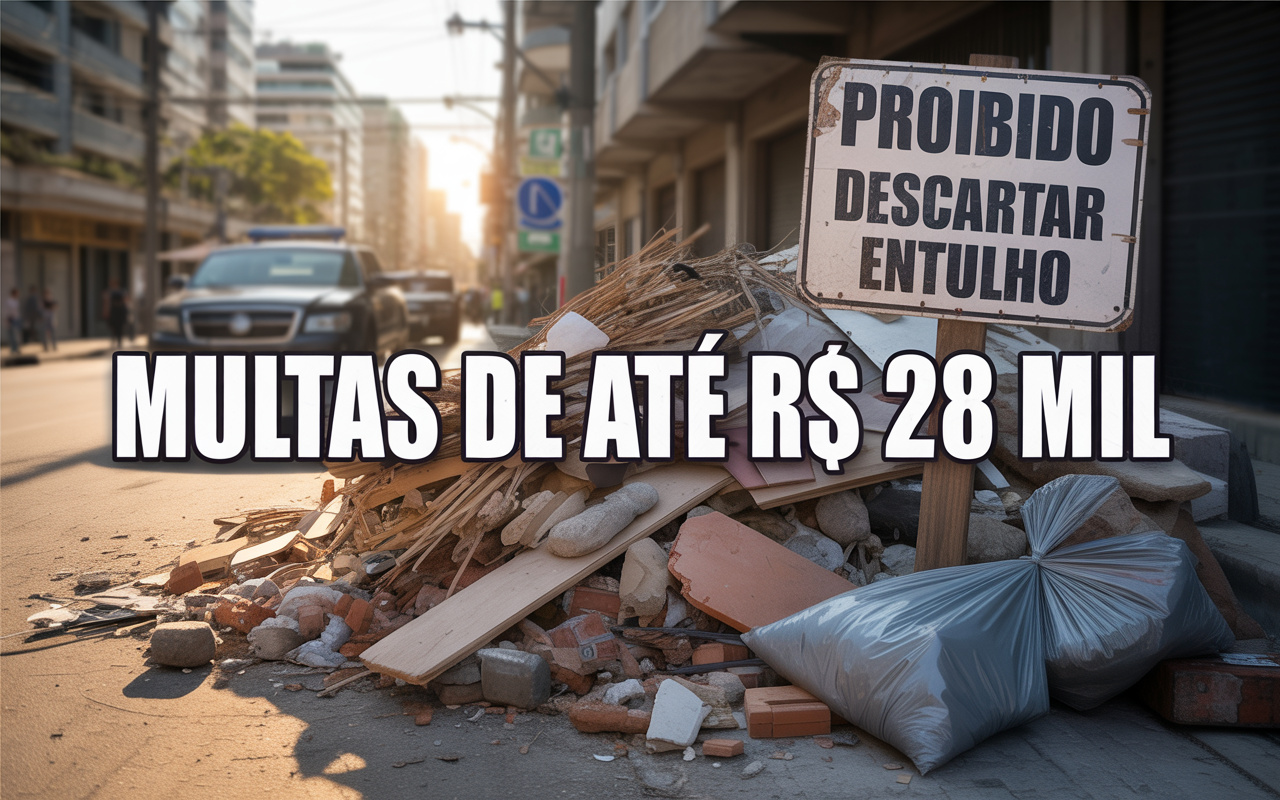
Brazilian Cities Apply Fines of Up to R$ 28 Thousand for Irregular Waste Disposal and Treat Construction Debris as Urban Crime with Strong Enforcement.
Fines for Those Who Dump Debris on Land or Public Roads? In large Brazilian cities, irregular waste disposal has ceased to be treated as a mere administrative infraction. Between 2023 and 2025, a series of legal updates in capitals such as São Paulo, Belo Horizonte, Curitiba, Salvador, Recife, and Manaus inaugurated a period of stricter enforcement, with fines reaching R$ 28 thousand, the possibility of vehicle seizure, immediate penalties, and, in more severe cases, the opening of environmental crime proceedings based on Federal Law No. 9,605/1998.
The change occurs in the context of an accelerated expansion of the construction sector, an increase in the volume of residential renovations post-pandemic, and a rise in the number of clandestine dumping sites reported by municipalities. In São Paulo, for example, the Municipal Urban Cleaning Authority identified over 4,000 illegal dumping hotspots in just 2024, a number considered critical and capable of costing millions to public coffers due to the need for teams dedicated exclusively to cleaning these locations.
High Fines and Increasingly Technical Legislation
In the last two years, several capitals have updated their legal frameworks to allow punishments proportional to the impact of irregular disposal. The legislation follows technical parameters that consider:
-
The noise law will no longer be in effect at 10 PM starting in June with a new rule valid during the 2026 World Cup.

-
The Chamber opens a debate on driver’s licenses at 16 years old as part of a reform that includes around 270 proposals to change the Brazilian Traffic Code and may redesign rules for licensing, enforcement, and circulation in the country.

-
The new Civil Code could revolutionize marriages in Brazil with “express divorce” and changes that could exclude spouses from inheritance.
-
Banco do Brasil sues famous influencer for million-dollar debt and intensifies debate on delinquency, risks of seizure, and direct impact on Gkay’s credibility.


- the volume discarded,
- the hazardousness of the material,
- the recurrence,
- the damage caused to the environment or public roads,
- the collection cost for the municipality.
In Belo Horizonte, the Urban Cleaning Superintendency began imposing fines of up to R$ 28 thousand, an amount that can increase if there is irregular transportation with trucks or unauthorized vehicles. In São Paulo, the Code of Urban Cleaning provides for penalties of up to R$ 25 thousand, in addition to allowing the seizure of trucks used for clandestine disposal. Manaus, in turn, increased fines to up to R$ 18 thousand, especially in areas near streams or environmental protection zones.
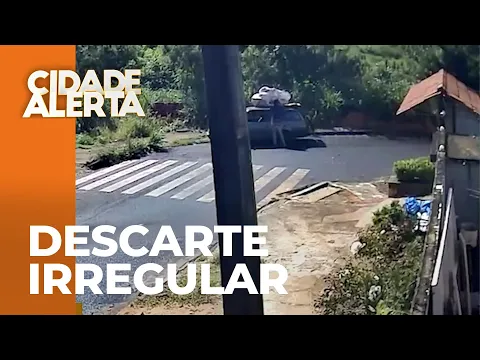

In Recife, the updated legislation establishes a fine exceeding R$ 20 thousand for dumping waste on public roads. Curitiba, maintaining one of the strictest enforcement policies in the country, imposes fines that can reach R$ 12.5 thousand, especially when the abandoned material poses a direct risk to the population, such as construction residues containing exposed metal, asbestos sheets, or bulky waste.
The increase in fines addresses not only an environmental problem but also a need for urban space reorganization. The disposal of construction residues leads to street blockages, damage to drainage systems, the proliferation of pests, and increased flooding—issues that have become recurrent in cities with high population density and already overloaded drainage systems.
The Logic of Municipalities: Urban Cost and Social Impact
Historically, private debris has always been seen as the exclusive responsibility of the property owner or the construction company carrying out the work. However, the increase in the volume of waste generated from small home renovations that account for over 60% of urban debris in Brazil has significantly amplified the impact of this material on public space.
Since 2023, municipalities have realized that ignoring irregular disposal has become costly. The collection of a single dumpster of abandoned debris can exceed R$ 2,500 in operational expenses.
When this occurs hundreds or thousands of times throughout the year, the cost of urban cleaning reaches millions, directly affecting the budget for maintaining parks, streets, and essential services.
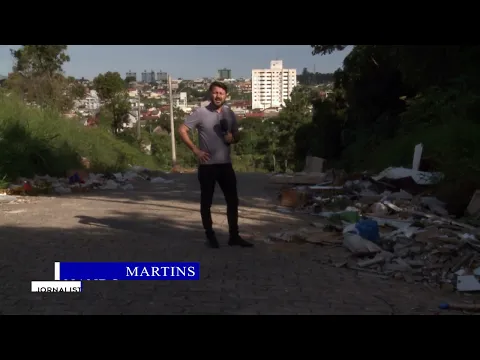
As a result, many municipalities have adopted “zero tolerance” policies and intensified enforcement in traffic corridors, vacant lots, creek banks, and areas with high construction activity.
In Belo Horizonte and Recife, for example, intelligent cameras and drones are already being used to identify offenders during transport and at the moment of disposal. In São Paulo, agents from AMLURB operate in mobile teams, penalizing offenders in the act and recording the crime even when the responsible party leaves the location quickly.
Trucks and Utility Vehicles in the Sights of Enforcement
One of the central points of recent policies is the focus on vehicles used to transport debris. In many cities, the car, pickup truck, or truck involved in illegal dumping can be seized immediately, either by the municipality or by the environmental police, depending on the severity of the infraction and the area affected.
This measure has proven effective because a large part of clandestine disposal occurs at night, on less traveled streets, or in remote areas. When the vehicle is identified by its license plate or surveillance cameras, the offender is summoned to respond to the infraction, even if they were not caught in the act.
In Curitiba, for example, vehicle identification is sufficient to formalize the citation. In Salvador, the owner of the truck can be held responsible even if the transport was contracted by third parties.
The Role of the Citizen: From the Backyard to the Entire City
The tightening of fines also comes from a cultural shift. Household construction residues—pieces of plaster, broken tiles, dry mortar, wood, old furniture—used to be seen as “low-impact” materials.
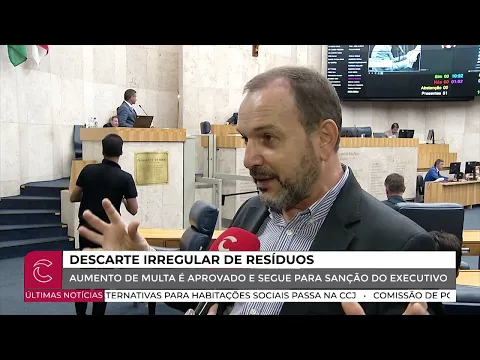
Today, municipalities treat the problem as a public health issue, with direct impacts on urban drainage, flooding, and contamination of green areas.
At the same time, municipalities have created legal alternatives for proper disposal:
- ecopoints;
- scheduled collection;
- registered dumpsters;
- municipal waste management plans;
- awareness campaigns.
However, the population remains the main culprit for infractions. Most of the citations issued in capitals refer to small volumes between 100 kg and 400 kg improperly discarded by residents or service providers who try to avoid hiring regulated dumpsters.
A National Trend with Direct Impact on Daily Life
The trend observed between 2023 and 2025 indicates that the penalization of irregular waste disposal will become increasingly severe. Medium municipalities, such as Campinas, Goiânia, and Joinville, have already started legal reviews to align their fines with those in the capitals. Additionally, states are beginning to discuss integrated legislation that allows joint penalties between state and municipal agencies, particularly in sensitive environmental areas.
Therefore, Brazilians undertaking home renovations now face a new scenario: construction debris now represents a real financial risk. An action previously seen as merely a “quick fix” can now cost amounts close to hiring a complete renovation team.
Brazilian cities, faced with increased environmental pressure, the need for urban maintenance, and the urgency to reduce critical waste points, are turning construction material residues into one of the central themes of modern urban management—with strict enforcement, technology, and high penalties.









-

Uma pessoa reagiu a isso.