





 Portuguese
  English
  Spanish
  6 min of reading
  0 comments


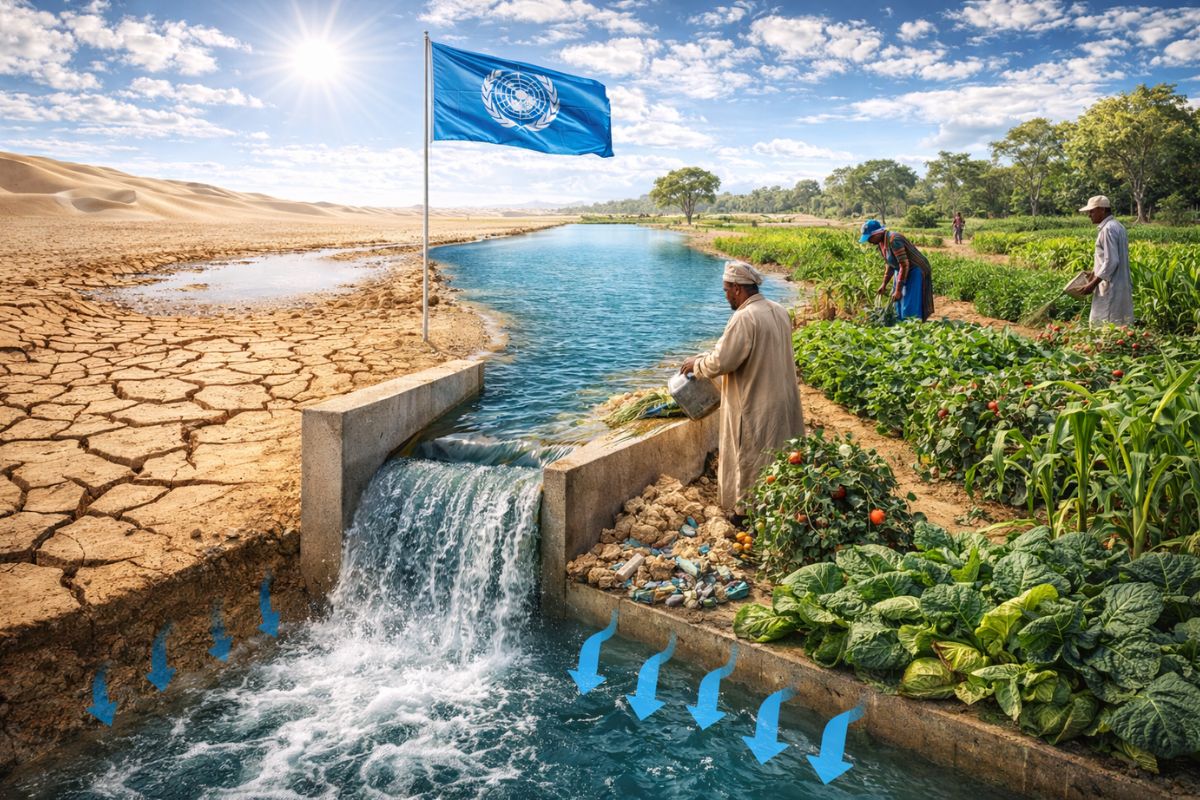
With Lakes Drying On Purpose, The UN In Chad Uses Dykes To Recharge Aquifers, Transform Chad’s Deserts Into Croplands, And Strengthen Food Security Year-Round.
On the edge of the Sahara Desert, in Chad, the UN is building lakes that dry on purpose to recharge aquifers, retain rare floods, and bring water and fertility back to areas that were once pure dust. Instead of fighting against the encroaching sand, engineers and local communities transform arid valleys into temporary reservoirs that turn into cultivable land as the water recedes.
Along entire valleys, dykes stretching for kilometers capture the runoff from a very short rainy season, spread water and fertile silt, and create lakes that dry on purpose which reveal saturated, deep, nutrient-rich land. The goal is simple yet ambitious: to ensure food and water during the long nine months of drought, while recharging aquifers, stabilizing the soil, and building climate resilience for some of the planet’s most vulnerable populations.
How The Lakes That Dry On Purpose Work In The Chad Desert

The starting point is counterintuitive: to create large lakes knowing they will dry up. In the Tbarka valley, for instance, a giant dyke cuts across the entire valley and transforms a quick rush of water into a long-lasting lake.
-
How the terraforming of Mars can transform the planet: artificial aerosols can increase the temperature by up to 35°C in 15 years, creating conditions for liquid water.
-
Scientists drilled nearly 8,000 meters into the ocean floor above the fault that caused the 2011 tsunami in Japan and discovered that a layer of clay 130 million years old was responsible for making the wave much worse than any model had predicted.

-
Thousands of years after causing the largest eruption of the Holocene, one of the world’s largest supervolcanoes is rebuilding itself beneath the sea south of Japan, receiving new magma and alarming scientists with its transformation.

-
China has activated a magnet 700,000 times more powerful than the Earth’s magnetic field that operates for over 200 consecutive hours while consuming little energy, and now the world wants to know what Beijing plans to do with this technology in 2026.


During the short rainy season, over 1,000 square kilometers of desert hills drain water behind this dyke. Instead of the water simply rushing past and disappearing after the village, the flow is intercepted.
The result is a shallow lake, filled with water, silt, and organic matter, which becomes the foundation of the entire system.
Once the rains end, the strategy of lakes that dry on purpose begins:
- water evaporates under the strong sun
- another portion slowly infiltrates the soil
- the lake level drops, revealing strips of saturated and extremely fertile land at the edges
It is at this edge that life changes. As the lake recedes, families advance, occupying the newly exposed strip with gardens, grains, and vegetables that would not be possible in dry desert soil.
3 Km Dyke, Manual Labor, And 3,000 Hectares Of New Agricultural Land
None of this would be possible without the basic infrastructure: the dyke. In Tbarka, it measures over 3 kilometers in length and was built almost entirely by hand.
More than a thousand families worked together, carrying earth, shaping the structure, and sealing the valley without the support of heavy machinery.
This dyke not only holds water, but also fertile silt that used to wash away. The result is a reservoir that, at its maximum, can add up to 3,000 hectares of new irrigated agricultural land due to the receding water.
Before rehabilitation, residents reported hunger, insecurity, and a lack of water even for basic needs. After the dyke became operational and the lakes that dry on purpose quietly did the work of moistening and fertilizing the soil, the following emerged:
- vegetable gardens next to houses
- more food diversity on the plate
- a concrete sense that the next drought will not automatically mean hunger
For a village without electricity, pumps, and conventional irrigation systems, transforming gravity and the receding water into natural irrigation is a significant leap in civilization.
Receding Cultivation: When The Bottom Of The Lake Becomes A Garden
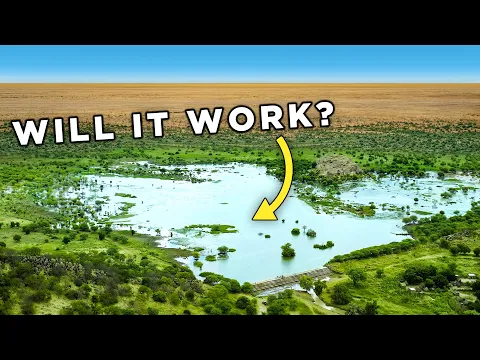

The heart of the strategy is the so-called receding crops. The concept is simple but powerful: to plant exactly where the water has just passed.
It works like this:
- the dyke holds back the flood
- the lake forms and begins to saturate the soil
- as weeks go by, the water level descends
- the newly discovered strip of wet soil is immediately occupied by families, who sow grains, greens, and vegetables
As the lake recedes, agriculture advances, moving down the valley towards the old riverbed, always following the trail of moisture.
In the midst of the dry season, when everything around is scorched by the sun, the bottom of the lake still holds infiltrated water and enough fertility to keep the roots alive.
This model allows communities to cultivate almost until the end of the drought, taking advantage of every inch of moist ground left behind by the lakes that dry on purpose.
Instead of fighting for a trickle of water in artificial channels, farmers follow the natural curve of the lake’s retreat, building food security with a simple but incredibly smart technology.
Three Lakes In Sequence And An Entire Aquifer Recharged

In another valley, called Tandeue, the experiment was scaled up. The area had been practically abandoned due to desertification, with degraded lands and little prospect for production. The response was to create not just one, but three lakes in sequence.
The effect is multiplied:
- each lake creates its own strip of receding cultivation
- water infiltration spreads underneath the entire basin
- the aquifer is recharged so intensely that water levels in wells have risen across the whole region
Today, one thousand hectares of food production occupy a basin that was once nearly barren. Even outsiders to the project find water when they dig, where there was previously just dry land.
Furthermore, there is active watershed restoration work in the upper parts of the valley, slowing down the water before it reaches the bottom. This reduces erosion, protects the soil, and helps the lakes that dry on purpose retain more water for longer periods.
Within this mosaic of water, retreat, and recharge, the following emerges:
- more sophisticated vegetable cultivation
- intensive use of composting to enrich the soil
- mixing fruit trees with annual crops, creating more diverse and resilient systems
What was once a barren landscape is transformed into a productive green carpet, connected to a vast underground lake that ensures irrigation even far from the immediate edge of the lakes.
Dykes, Overflows, And A Landscape That Functions Like A Sponge
On an even larger scale, Chad is testing rainwater harvesting networks with dykes up to 4 kilometers long, distributed along the contours of the landscape. These structures:
- capture every drop of water that falls during intense rainfall events
- channel floods through well-planned overflow systems
- lead excess water to lakes near villages, facilitating the irrigation of gardens
In these places, the lakes that dry on purpose are just one piece of a much larger system, which includes:
- flood control
- reduction of erosion
- groundwater recharge
- river stabilization and natural ecosystem regeneration
The entire landscape functions as a sponge: it absorbs, retains, and gradually releases water, instead of allowing each storm to sweep away fertile soil and disappear in minutes.
Hunger, Resilience, And The Goal Of Restoring Millions Of Hectares
Behind the engineering of land and water, there is social engineering. The United Nations World Food Programme works with villages, government, and local partners to transform isolated valleys into resilient territories.
These projects:
- increase the availability of food and water
- reduce the impact of climate, economic, and even political shocks
- create a stable land base, with plentiful food and restored aquifers
- reduce floods and erosion
- help regenerate rivers and ecosystems around the lakes
The effect directly impacts families’ incomes. When hunger recedes, opportunities increase, especially for women, who can rise out of extreme poverty and gain more autonomy.
The Chadian government aims high: to restore 5 million hectares of land by 2030 with solutions of this kind. This means taking the logic of lakes that dry on purpose, dykes, aquifer recharge, and receding agriculture to a continental scale along the edge of the Sahara.
In practice, it is an attempt to shift the narrative from “advancing desert” to “regenerating landscape”, using rainwater, soil, and collective work as central tools.
And you, after learning about these lakes that dry on purpose and transform deserts into croplands, do you think this strategy should be taken to other dry regions of the world as well?









Seja o primeiro a reagir!