





 Portuguese
  English
  Spanish
  6 min of reading
  0 comments


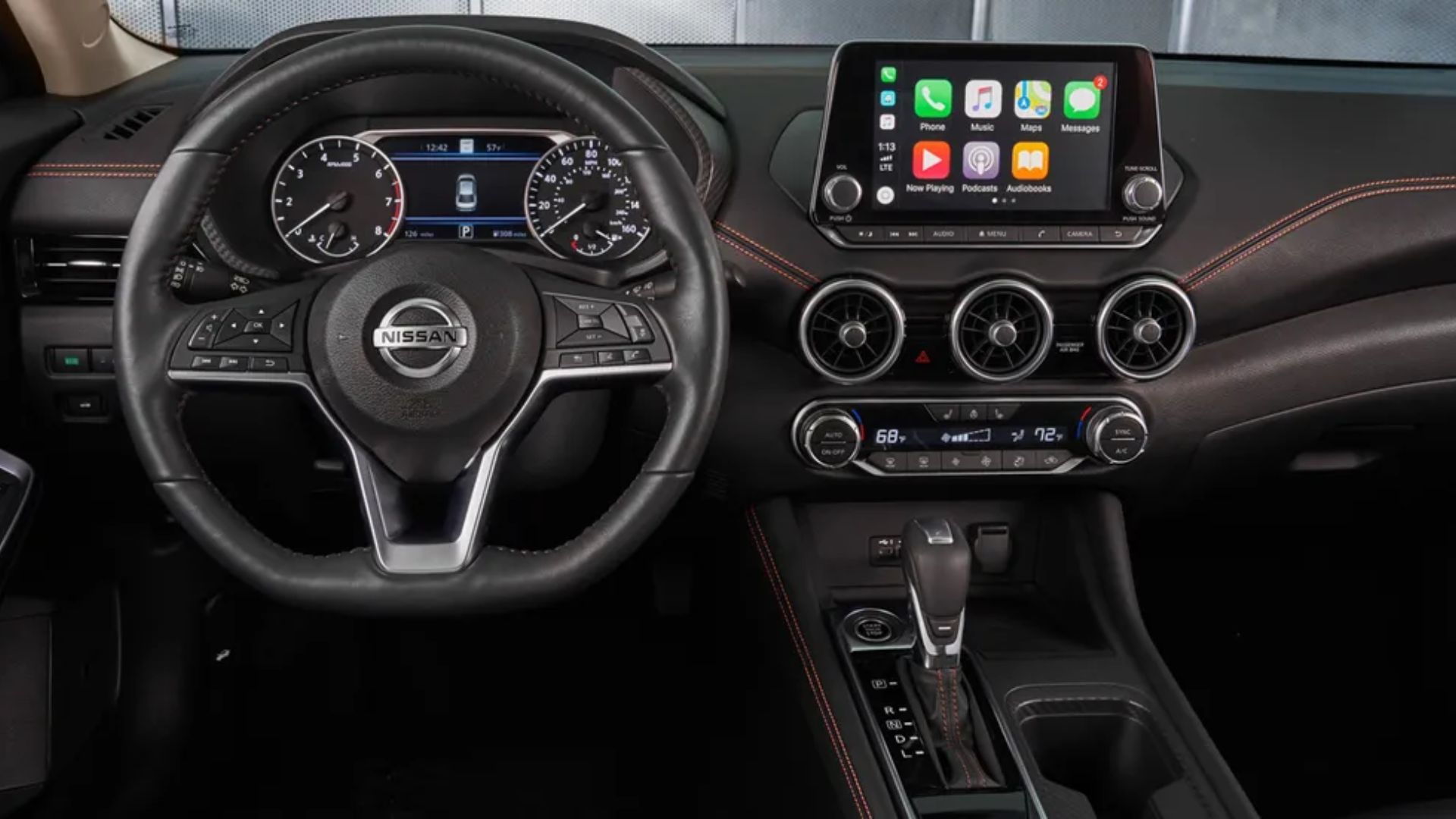
Offering Comfort, Good Consumption and Known Mechanical Set, the Nissan Sentra in This Price Range Appears as an Alternative for Those Seeking a Balanced Sedan Without Paying for Zero Kilometer Models.
The Nissan Sentra equipped with 2.0 flex engine and CVT automatic transmission currently occupies a price range of around R$ 77 thousand in the Fipe Table for versions of the previous generation, especially the Sentra 2.0 S CVT model year 2020.
At this level, it appears as an alternative for a complete mid-size sedan for those wanting to move up from a compact or basic SUV and seek more comfort, space, and smooth driving without reaching the prices charged for the current generation zero kilometer model.
While SUVs continue to dominate new sales, the Sentra has consolidated itself in the used market as a more rational cost-benefit option among mid-size sedans, especially for those who drive a lot on highways and value quietness on board, good trunk space, and simple mechanics.
-
The Toyota Hilux is R$ 75.5 thousand cheaper and bets on the 2.8 turbodiesel engine with up to 204 hp and 50.9 kgfm to catch up with the VW Saveiro, which leads with 4,472 sales.
-
The new Renault Koleos has a screen exclusively for the passenger that is invisible to the driver, heated rear seats, and 29 assistance systems, but its Chinese competitors cost R$ 40,000 less and deliver more power.
-
The car stored for 38 years: when opening the barn door, what appears is breathtaking and looks like a scene from a movie!

-
Fiat works miracles in the Brazilian market, lowers the price of its 0 km hatch to R$ 69,990, reestablishes the model as the cheapest car in the country, and reignites the battle against Kwid and C3.

The following analysis mainly takes into account the 2.0 S CVT configuration, flex, from the previous generation, which is precisely the one that appears in the Fipe at around R$ 77 thousand and is usually advertised at around R$ 70 thousand in the used car retail market.
Price of Used Sentra and Position in the Market

In the most recent Fipe Table, the reference value of R$ 77,734 is associated with the Nissan Sentra 2.0 S CVT model year 2020, the entry-level version of the range with a 2.0 flex engine and continuously variable automatic transmission.
The more complete configurations, such as the SL, appear a few thousand reais higher, but still within the R$ 80 thousand range, which keeps the model competitive against rival mid-size sedans from the same period.
In advertisements, it is common to find 2.0 S CVT units at slightly below the reference value, around R$ 70 thousand, varying according to mileage and service history.
This price range puts the Sentra directly in competition with the previous generation Honda Civic and Toyota Corolla, as well as some used compact SUVs like the Nissan Kicks, Renault Duster, and Hyundai Creta from the early batches.
It is important to separate this 2.0 flex Sentra from the old generation of the model currently sold as a zero kilometer in Brazil, re-launched with a different platform, updated mechanical set, and starting prices above R$ 170 thousand.
For the used car buyer, therefore, the focus in the R$ 77 thousand range falls on the mid-size sedan of the previous generation, which is still quite present in multi-brand dealerships.
Comfort, Internal Space and Suspension of the Sentra
One of the most cited points by owners and specialized evaluations is the overall comfort of the Sentra.
The calibration of the suspension prioritizes the filtering of irregularities without compromising good body control, a characteristic that helps explain the model’s good reputation on trips and daily use on uneven surfaces.
The generous wheelbase ensures good rear space, a feature valued by families and those who frequently transport passengers.

Additionally, the trunk of about 500 liters follows the segment standard and serves well for longer trips.
The acoustic insulation is also often praised, especially on highways, where the 2.0 engine operates at lower RPM thanks to the CVT.
2.0 Flex Engine, CVT Transmission and Consumption
The Sentra uses the well-known 2.0 naturally aspirated MR20 engine, flex, with about 140 hp and 20 kgfm of torque, always connected to the Xtronic CVT automatic transmission.
The set prioritizes smoothness and linear responses, without “gaps” in torque common in some smaller turbocharged engines.
The Nissan CVT transmission simulates virtual gears to reduce the feeling of slipping during stronger accelerations.
In everyday use, it keeps the engine at ideal RPM for efficiency, helping with comfort and consumption.
Tests and market data indicate averages close to 10 km/l in the city and up to 12 to 13 km/l on the highway with gasoline, depending on driving style and route conditions.
Points of Attention: Suspension and Mounts
Despite the good reputation for comfort, reports indicate premature wear of front suspension components under heavy use on very bumpy roads.
Bushings, mounts, and shock absorbers may show play or metallic noises, often described as “tuk-tuk” coming from the front.

When evaluating a used Sentra, it’s worth testing the car on uneven surfaces and checking notes or reports confirming recent replacement of engine mounts, shock absorbers, and fastening items.
Abnormal noises may warrant a new inspection and potential price renegotiation.
Maintenance of CVT Transmission
The CVT transmission requires specific attention to preventive maintenance.
For this type of gearbox, it is essential to respect the inspection interval and potential fluid change, usually between 80,000 and 100,000 km, depending on usage patterns.
Neglecting the fluid can cause overheating and excessive internal wear, leading to costly repairs.
When analyzing a used one, check maintenance records with the correct CVT fluid.
During the test drive, it’s important to observe if there are jolts, atypical vibrations, or fluctuations in RPM without a proportional gain in speed.
Finish, Multimedia Center and Ergonomics
Inside, the Sentra offers a dashboard with a sober design and rubberized materials at contact points, although without the refinement of more recent models.
Some versions may disappoint in terms of connectivity: there are units without wireless mirroring and with interfaces considered outdated.
Another point that divides opinions is the pedal-operated parking brake, a solution seen as outdated compared to electronic commands.
Electric Circuit, Cooling and Recalls

The electrical system deserves careful inspection.
Earlier models of the Sentra reported failures in the cooling system’s electric fan, impacting the air conditioning and posing a risk of overheating.
Although the focus here is on the most recent model, it is wise to check the air conditioning system, the fan operation, and any front noises.
Nissan has recall campaigns for different years, including one regarding the brake light switch in units between 2016 and 2019.
Even if the analyzed car is outside this group, it is advisable to consult the chassis number on the brand’s official website.
Buyer Profile and Final Considerations
In practice, the used Sentra 2.0 CVT usually better serves those who value comfort, interior space, and known mechanics, accepting the commitment to perform rigorous preventive maintenance on the CVT gearbox and suspension.
Choosing a unit with a complete service history, an updated cautionary report, and proof of recent services helps reduce future costs and ensure a more tranquil experience.
Considering this scenario, does the package of comfort, space, consumption, and extra care of the Nissan Sentra 2.0 CVT align with what you expect from a top-of-the-line used car, or does it weigh more in favor of rivals like Corolla, Civic, and compact SUVs?









-

-

-

5 pessoas reagiram a isso.