





 Portuguese
  English
  Spanish
  6 min of reading
  1 comment





The Brazilian Payment System Enters the International Radar While Expert Points to Technological Advancement, Impact on Cards, Artificial Intelligence, and Digital Currencies, Amid Commercial Investigations and Debates on Regulation, Work, and the Future of Global Financial Infrastructure.
Pix and the International Evaluation of Payment Technology
During a visit to Brasília to participate in the Annual Managers Meeting at Caixa, Australian futurist Brett King stated that Pix has placed Brazil “ten years ahead of the United States” in payment technology.
According to him, the system created by the Central Bank anticipates trends that have been discussed in other markets.
These statements were made in an interview given to the newspaper Metrópoles, which followed the specialist’s agenda in the federal capital.
-
While the world looks at oil, the war with Iran is already disrupting helium supply from Qatar, affecting car and iPhone chips, threatening AI expansion, and putting pressure on aluminum packaging at the highest value in four years.

-
Global warming will expose a treasure hidden under the ice of Antarctica and may spark an international dispute over gold and valuable minerals.

-
A street vendor from Praia Grande built a robot made of scrap from scooters and washing machines that pulls his popcorn cart on the beach, emits sounds, and interacts with customers, becoming an attraction on the coast of São Paulo.

-
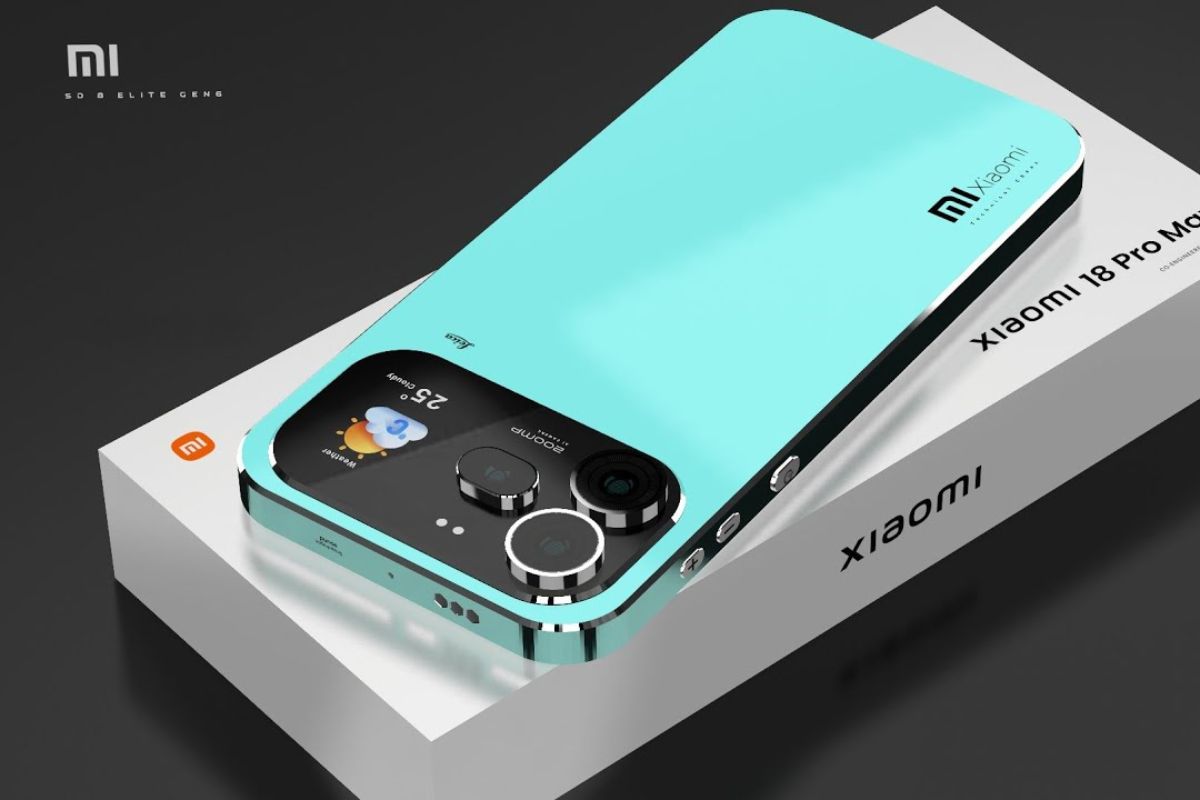
The specifications of the Xiaomi 18 Pro Max have been leaked, and the highlight is a dual 200 MP camera with a new 22-nanometer technology that promises to consume less energy and capture details in shadows and bright areas using LOFIC HDR.

According to a report published by Metrópoles, King’s remarks come in a context of greater international attention on Brazilian policies related to digital commerce.
In July 2025, the United States government announced the opening of an investigation that includes electronic payment services.
Although Pix is not specifically mentioned in the initial documents, the system has started appearing in industry analyses as a relevant element in this debate.
The Brazilian government, for its part, has maintained that Pix operates in an open and non-discriminatory manner.
From Agency Experience to Banking Digitization
When contextualizing his own trajectory, King recalled how the relationship between clients and banks was at the beginning of the last decade.
“When I wrote Bank 2.0 in 2010, many people still took a paper ticket at the agency door and waited hours to be attended,” he said.
According to him, this comparison helps illustrate the speed of transformations in the financial sector since then.
According to Metrópoles’ reporting, the futurist attributes this process to factors such as the popularization of smartphones, increased internet access, and regulatory changes that favored the entry of fintechs.
In recent years, King has focused his analyses on the impact of artificial intelligence.
This theme is addressed in his book The Rise of Technosocialism, released in 2021, where he discusses possible effects of technology on the economy and social organization.
Growth of Pix and Comparison with the United States
When specifically questioned about Pix, King stated that the Brazilian system stands out in terms of adoption.
“Pix is the fastest-growing payment system in the world,” he declared.
He then compared Brazil’s stage of development with that of the United States.
“Because of Pix, Brazil is already ten years ahead of the United States in payment technology,” he said.
For the futurist, many users in the country still do not realize the international dimension of the project.
In his assessment, the expansion of this type of infrastructure depends on further advancements.
“The limitation Brazil has today is not Pix itself, but identity,” he stated.
According to King, digital identity systems are necessary for both Pix and artificial intelligence applications.
“A paper identity document will not be sufficient,” he said.
Impact on Cards and Strategies of Large Companies
The newspaper Metrópoles also pointed out that King sees impacts of Pix on traditional card sector companies.
“I am a consultant for Mastercard, so we talk a lot about this,” he stated.
According to him, companies like Mastercard and Visa are studying models based on tokenization and the use of mobile phones.
In this scenario, the role of physical cards tends to be reduced.
“They want to become like Pix, a tokenized transmission layer for data, not just for money,” he declared.
Industry experts in payment methods have observed that initiatives of this kind reflect a company’s effort to adapt to instant systems and lower operational costs.
According to analysts, the competition involves technology, business models, and regulation.
Use of Pix Beyond Financial Transactions
In an interview with Metrópoles, King suggested that Pix’s infrastructure could, in the future, be used for other purposes beyond financial transactions.
“Perhaps Pix is more than just banking transactions,” he said.
As an example, he cited the sharing of information.
“If you go to the doctor and want to send your health records, you might send them from your mobile wallet via Pix to the hospital,” he stated.
In his assessment, concepts associated with open banking could serve as a reference for other sectors.
“What we call open banking today could become a model for open health and other types of data,” he declared.
According to King, this type of application would require specific security and governance rules.
International Pix, Digital Currencies, and Smart Contracts
Regarding the possibility of Pix’s internationalization, King stated that the topic has already been discussed.
“Certainly,” he responded.
He mentioned talks involving Mexico and the use of the system by banks located in Florida.
Nevertheless, he noted that the next phase of digital payments may involve smart contracts and new monetary instruments.
“By the mid-2030s, I would expect that many more transactions would be made with CBDCs and stablecoins,” he stated.
When addressing the international scenario, he mentioned the Brics group.
In this context, he raised hypotheses about the combined use of central bank digital currencies and existing payment systems.
“The answer will probably be a combination of both,” he said.
Banking Concentration and the Role of the Central Bank
Despite technological advances, Brazil remains one of the countries with high banking concentration.
For King, this situation has been undergoing changes.
“The most valuable company in Brazil today is a digital bank,” he stated.
He cited Nubank as an example.
According to the futurist, the cost/revenue ratio of 26% contrasts with a global average of 58%, numbers he presented to illustrate efficiency differences between business models.
In this context, King assessed that the role of regulators is likely to evolve.
“In the future, the Central Bank will not just be a regulator,” he said.
According to him, the monetary authority should implement the technological infrastructure for a secure banking system.
This assessment includes the idea that banking licenses will move towards a predominantly digital format.
Artificial Intelligence, Investments, and the Job Market
The futurist also commented on the global concern regarding a possible “AI bubble.”
“It is indeed a bubble,” he stated.
This statement was made while mentioning the high volume of investments in the sector in the United States.
At the same time, King pondered about the reach of the technology.
“AI is the most impactful technology that humanity will see in the last thousand years,” he said.
Regarding the job market, King stated that automation tends to replace human functions.
“AI was designed to remove humans from the workforce and replace them with algorithms and robots,” he declared.
According to him, the debate surrounding universal basic income arises as a response to this scenario.
Nevertheless, King emphasized that there is no consolidated model for implementation.
Regulation, Automation, and the Power of Big Techs
When addressing governance and regulation, King said that automation can reduce human errors in decision-making processes.
On the other hand, he drew attention to the power of large technology companies.
“We are trading one problem for another: technology companies that are a black box we do not understand,” he stated.
In the futurist’s assessment, the challenge will be to establish clear rules for the use of artificial intelligence.
With Pix at the center of international discussions, global companies reviewing strategies, and artificial intelligence expanding its space in the economy, what will be the next regulatory and institutional limits of this new payment system?




Isso até, descobrir outro meio de inovação para acabar com o Pix, ou até países do bloco das potência proibirem o Pix em seu território