





 Portuguese
  English
  Spanish
  4 min of reading
  17 comments


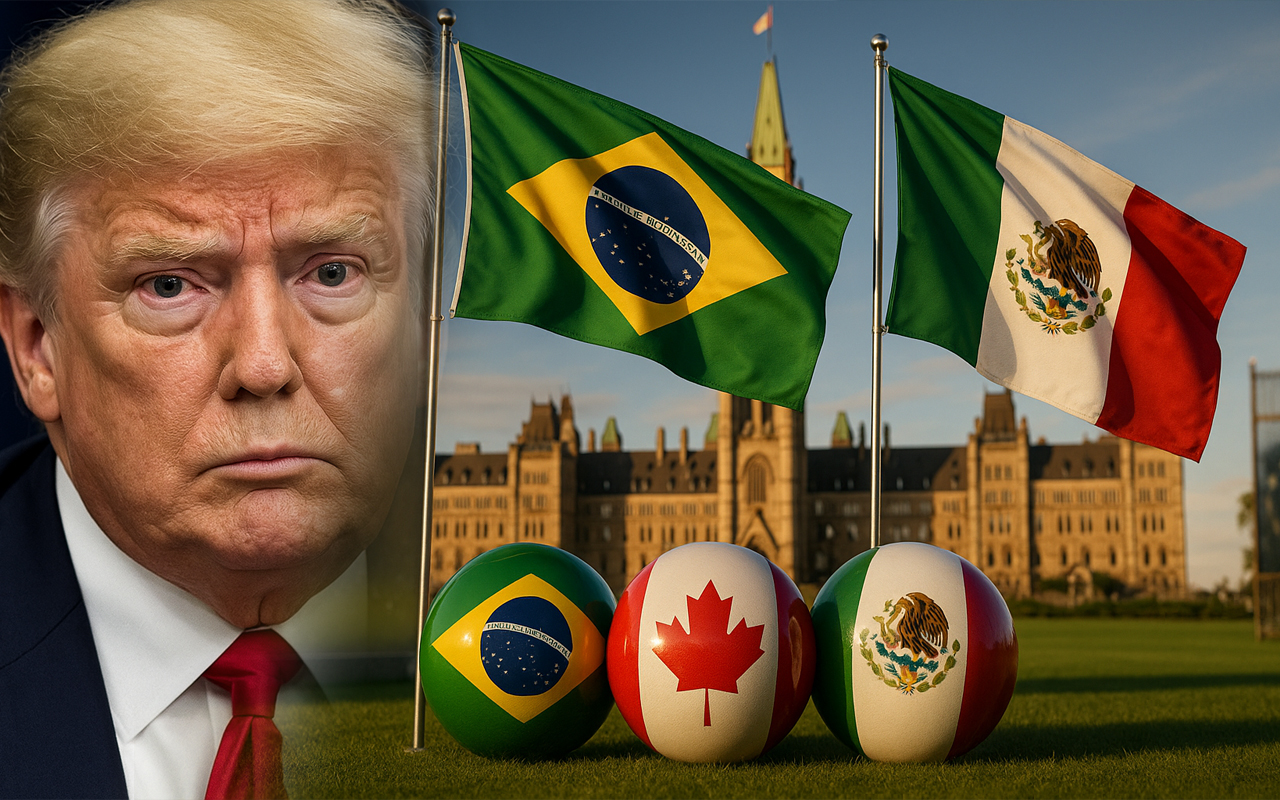


In Light of the Tariff of Up to 50% Imposed by the US, the Brazilian Government Reactivated the Mercosur–Canada Negotiations and Sent a Business Mission to Mexico to Open Routes for Export and Investment in the Short Term.
Since April 2, 2025, when the White House issued Executive Order 14257 and instituted a 10% tariff on imports, bilateral trade between Brazil and the US has entered a phase of uncertainty. The situation worsened on July 30, with the adoption of an additional 40% on most Brazilian goods, raising the total incidence to up to 50%, with practical effects starting from the first week of August.
Although sectors such as vehicles, aircraft, and some energy and metals items have been exempted from the surcharge, the impact on the export portfolio is significant. To soften the blow in the short term, the Brazilian government announced public purchases of affected products, such as açaí, coconut water, nuts, and fish, with reference prices capable of sustaining income and marketing production.
At the same time, Brasília is combining actions at the WTO, political dialogue, and monitoring legal disputes in the United States regarding the scope of IEEPA. These contests do not yet have a resolution, and until then, the tariff environment continues to pressure margins and prices.
-
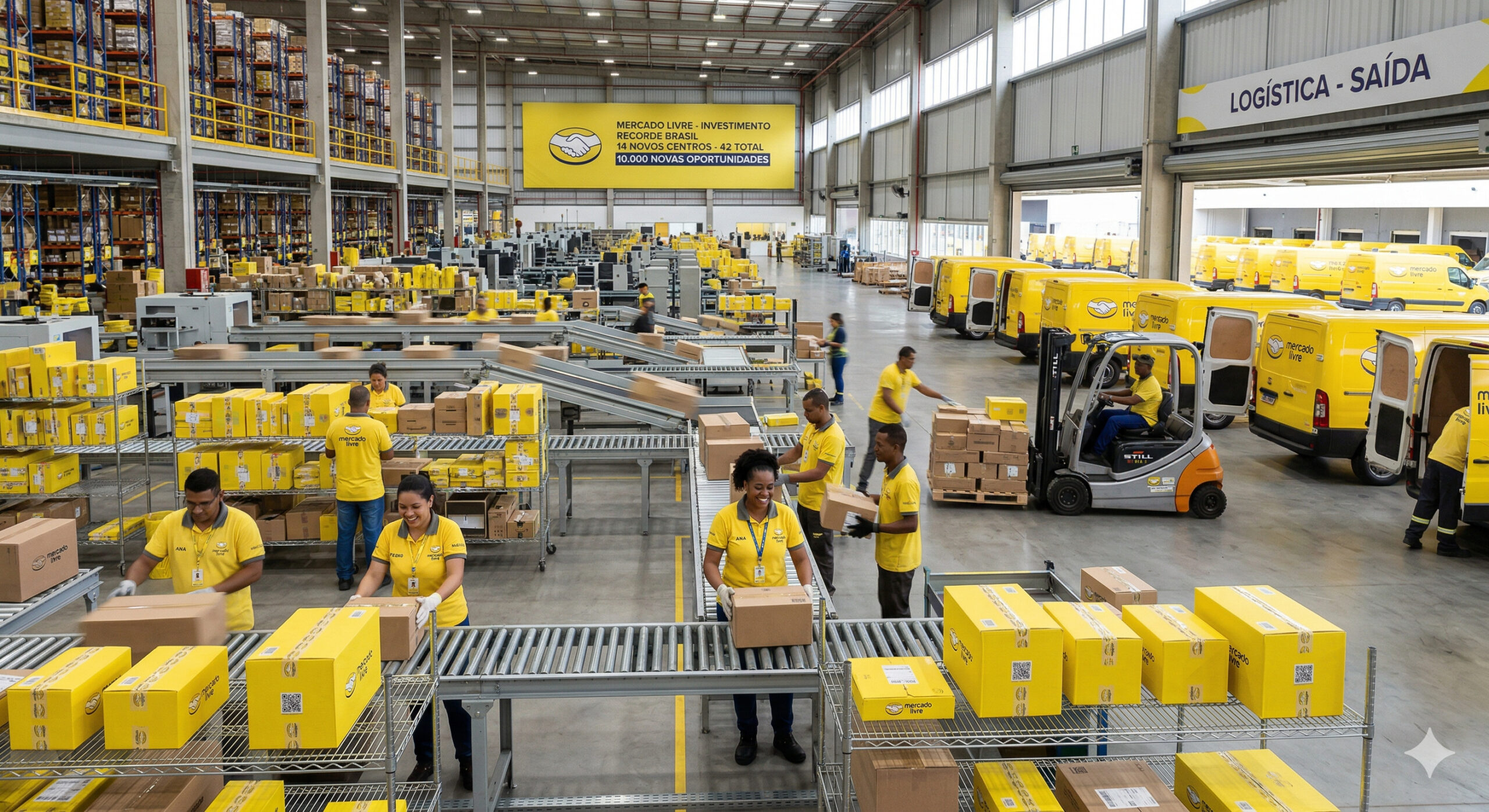
Mercado Livre “opens the vault” and announces a record investment of R$ 57 billion in Brazil in 2026, a value 50% higher than the previous year, with an expansion plan that includes 14 new logistics centers, totaling 42 units in the country and hiring an additional 10,000 employees.
-
How investment in technology can revolutionize the national economy and enhance industrial gains, according to a study that highlights the direct impact on productivity, innovation, and wealth retention within Brazil.

-
The largest food company on the planet, JBS, has just opened a 4,000 square meter laboratory in Florianópolis to develop customized proteins that modulate muscle mass gain, immune response, and metabolic performance.

-
After nearly 30 bids and competition among industry giants, a Spanish company purchases one of the largest airports in Brazil for almost R$ 3 billion and takes over the management of Galeão in a concession that will last until 2039.


In this scenario, Brazil activated two fronts to diversify markets and reduce exposure to the tariff shock. On one hand, the resumption of Mercosur–Canada negotiations, with a new round between chief negotiators scheduled for October. On the other hand, the business mission to Mexico led by Vice President Geraldo Alckmin, focused on opening new opportunities in industry, agribusiness, and health.
Mercosur–Canada, Resumption of the Free Trade Agreement and Opportunities in Agriculture
After nearly four years without progress, Mercosur and Canada announced the formal resumption of negotiations for a Free Trade Agreement in a meeting held in Brasília on August 25. The governments scheduled a new round between chief negotiators in October, signaling political priority.
The visit of Canadian Minister Maninder Sidhu to Brazil from August 25 to 28 reinforced the agenda of trade, investments, and cooperation in energy and mining. According to official statements, Ottawa and Brasília view the agreement as a tool to reduce tariffs, facilitate services, and provide regulatory predictability anchored in the WTO.
For the agribusiness, the potential is significant. A study by CNA estimates up to US$ 7.8 billion per year in additional revenue from exports with a Mercosur–Canada agreement, highlighting meat, grains, fruits, and soybean complex. This projection serves as a reference to guide concessions and sensitive openings in the new round.
Brazil has already been increasing sales to the Canadian market in 2025, which creates a foundation for additional gains when there is significant tariff elimination. Official data and business entities report records in the semester and greater appetite for Brazilian commodities and manufactured goods.
Brazil and Mexico, Alckmin Mission, ACE-53, and Sectorial Agreements
On August 27 and 28, Vice President Geraldo Alckmin is leading a business mission to Mexico City to “open new fronts for trade and investment” in industry, agriculture, and health, with participation from ApexBrasil, Itamaraty, Anvisa, and Conab, in addition to dozens of companies. The agenda included a meeting with the Mexican Presidency and forums with the private sector.
The reading from the government and businesses is pragmatic. Instead of initiating a broad FTA, Brazil and Mexico should update and expand existing sectorial agreements over the next 12 months, taking advantage of the framework of ACE-53, which since 2002 has granted tariff preferences on about 800 items and reduced non-tariff barriers.
The ACE-53 has detailed text and history in documents from ALADI and the Brazilian government. It is the quickest way to unlock flows in areas where there are already preferences and where a “regulatory upgrade” can reduce costs, time, and uncertainty for Brazilian exporters. Sectors such as bioenergy, batteries, and defense have recently entered the agenda of the meetings.
Mexico has also opened practical space for Brazilian products in 2025 according to Reuters. Local authorities are preparing to expand certifications for Brazilian slaughterhouses and, this month, the country surpassed the US as the second largest buyer of Brazilian beef, a movement accelerated by the tariff shock. This strengthens the idea of diversification of destinations in the short term.
New Meetings, Agreements, and Export Routes for Brazilian Products
On the Canada axis, the agenda for October between chief negotiators should detail scope, timelines, and offer lists. The expectation is to advance in tariff elimination, services, and trade facilitation rules, focusing on sectors with the highest export traction.
In Mexico, upcoming announcements should specify sectorial agreements and updates to ACE-53, including technical chapters such as sanitary and phytosanitary, public purchases, and rules of origin. The declared goal is to reduce the impact of the new US barriers, redirecting part of the supply.
Diversifying markets and taking advantage of existing preferences are the lowest cost transition strategies. Canada and Mexico appear as priority partners in this redesign, supported by data, official acts, and a negotiation calendar.








O q não mata fortalece 💪
Só agora de depois do tarifaco dos EUA ,o Brasil está começando a diversificar o comércio?
Desculpe, mas não foi só depois do tarifaco, a reportagem mostra que desde o primeiro trimestre começaram as tratativas. O que pode ser verificado pelos resultados de exportações de carne bovina ao México no total de 58 milhões de dólares, entre 1 a 25 de agosto, no mesmo período as exportações deste produto aos EUA somaram 43 milhões de dólares e em comparação ao mesmo período de 2024 apresenta um crescimento de 26%. Como já exportação muitos produtos ao Canadá eles foram “turbinados”, e isso sem contar as exportações de diversos itens para a Ásia que também foram incrementadas.
Ofender é o único argumento do ignorante.
O segundo é processar.