





 Portuguese
  English
  Spanish
  5 min of reading
  0 comments


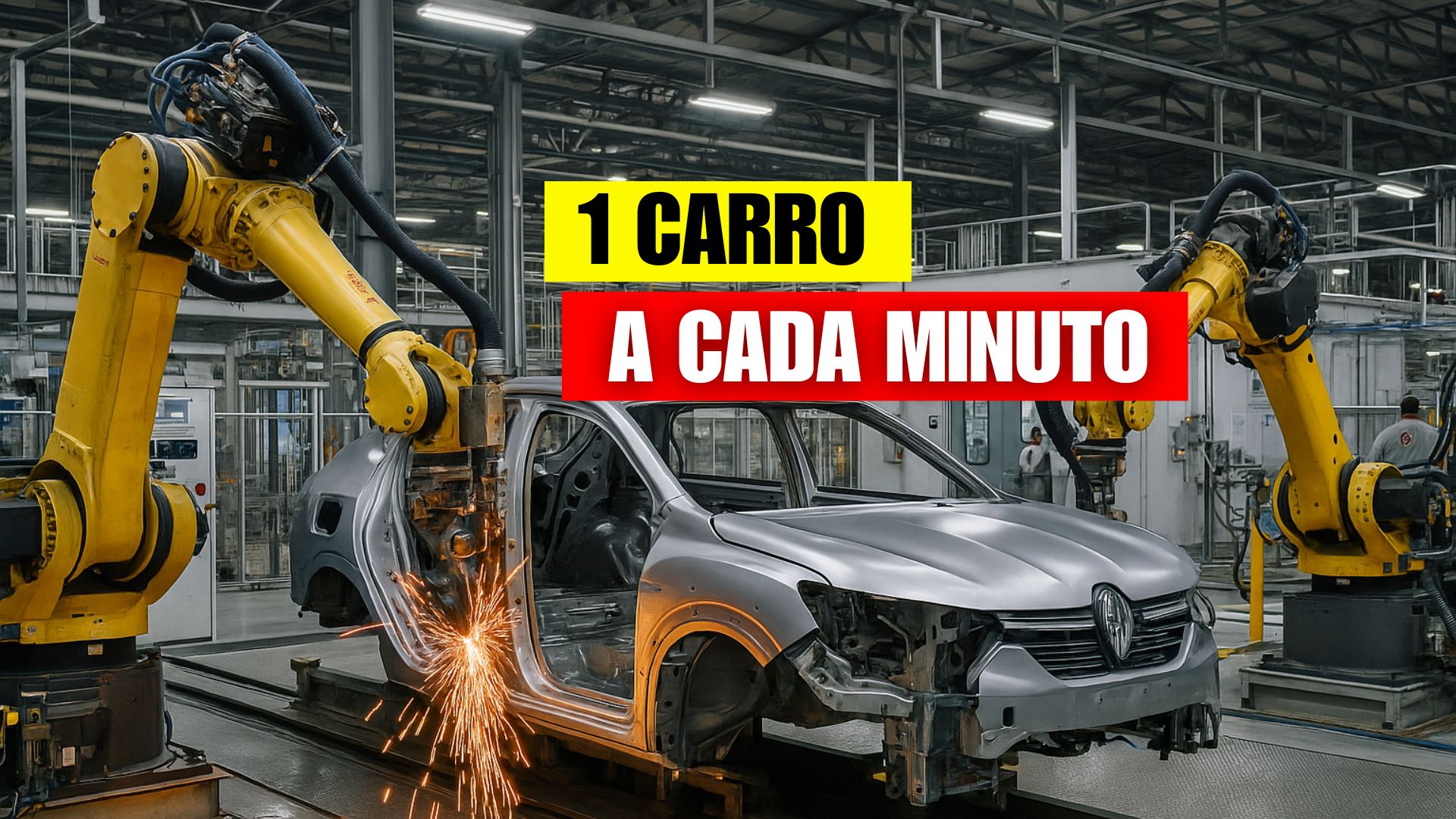
High-Precision Chinese Equipment Arrives in Paraná to Modernize Renault’s Factory, Elevating Automation Levels and Promising to Transform the Production Pace of the Brazilian Automotive Industry.
A shipment of smart welding lines developed in the Chinese city of Weifang was dispatched on September 29 to Curitiba (PR) to modernize the operation of Renault do Brasil.
According to a report from the Poder 360 portal, the supplier Maihe Robotics stated that the batch, valued at 7.05 million euros, will meet the installation of new equipment in the bodywork area and will serve the introduction of two new models in the country.
The package is scheduled for completion in the beginning of 2026 and, according to the Chinese company, can support a rate of up to 60 vehicles per hour under full load conditions.
-
With a cost per shot close to zero, the DragonFire laser could change naval warfare in 2027 and provide British ships with nearly unlimited defense against drones.

-
A British startup creates tires that generate electricity in electric vehicles when passing over potholes, speed bumps, and cracks.

-
Scientists have created robots made with living cells that have their own nervous system, swim on their own, explore the environment, and self-organize without any genetic engineering, and now they want to do the same with human cells.

-
Students create a solar-powered ambulance that operates without a plug, without fuel, and still keeps medical equipment running in remote areas.


Technology Shipment and Modernization Timeline
According to Maihe, the shipment marked the most visible logistical stage of the contract signed for the Paraná unit.
The timeline indicates delivery, integration, and testing of the systems over the coming months, with commissioning planned for the first quarter of 2026.
Practically speaking, the manufacturer will have new automated welding and quality control modules integrated with existing cells.
According to the supplier, the investment covers everything from robotic structures to programming and process monitoring software.
Assembly will take place within the Ayrton Senna Complex in São José dos Pinhais, in the Metropolitan Region of Curitiba, where Renault concentrates its domestic production.
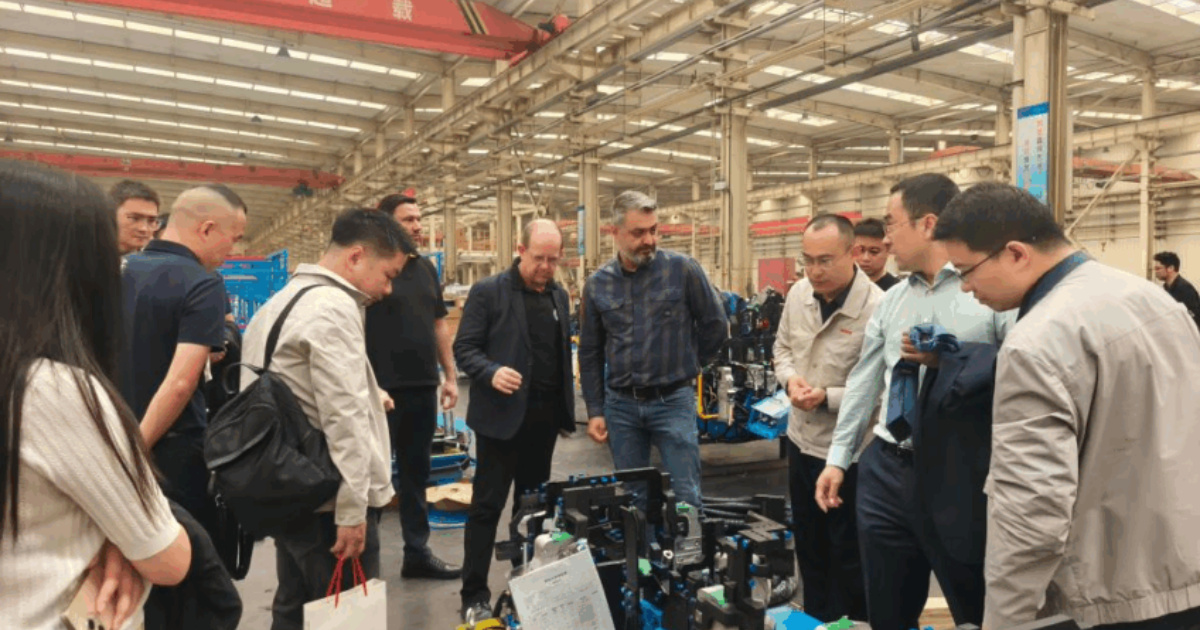
Transformations in the Bodywork Line
The project includes the update of the shared tooling and the adoption of automated stations for the side body, for the roof line, and for the assembly and adjustment line.
This architecture allows for quicker changes between variants, improvements in ergonomics, and reduced rework.
In addition to spot welding, the assemblies receive sensors and vision systems that assist in the positioning of panels and in dimensional control.
Another point is traceability.
With more robots and supervisory software, the factory records parameters of each welding point, which facilitates internal audits and preventive interventions.
The expectation is to reduce unplanned downtime and increase process stability during full shifts.
Declared Capacity and the Meaning of “60 Per Hour”
Maihe indicates that the supplied lines have the potential for up to 60 units per hour.
This number describes the maximum output of the equipment within an ideal scenario, with synchronized supply and total availability.
Renault has not published an official production target per hour associated with this phase of the project.
Therefore, the capacity reference should be read as the capacity of the supplied system, and not as a commitment to the daily volume of the manufacturer.
In practice, factories often operate below technical capacity due to reasons of mix, planned downtime, maintenance, and demand seasonality.
Still, lines in this throughput range position the plant among operations with a high level of automation in the automotive industry.
Factory Recognized for Digitization and Innovation
The Ayrton Senna Complex is already on the global advanced manufacturing map.
In 2020, the unit was recognized by the World Economic Forum as the first “Advanced Lighthouse” automotive facility in Latin America.
The distinction highlights the use of data, IoT, and real-time analytics to enhance productivity and quality.
The new stage with high-precision robots expands this framework, projecting additional gains in repeatability and cycle time.
This technological foundation also aligns with recent movements from the group in the country.
In 2023, Renault announced investments to expand the local portfolio and prepare the factory for a new vehicle platform.
In 2025, the company announced industrial partnerships focused on low-emission vehicles, signaling an evolution in the mix of offerings and higher manufacturing requirements.
New Models and Technical Scope of Modernization
The supplier states that the package will support the introduction of two new models on the São José dos Pinhais line.
The names and segments have not been publicly detailed.
The technical scope, however, indicates readiness for body structures with rigidity and finish requirements compatible with international safety standards.
On the roof line, the combination of welding cells and measurement systems helps contain variations that affect noise and sealing.
Meanwhile, the modernization of the side body reduces dimensional dispersion and improves the alignment of doors and fenders.
The set tends to impact the rework rate and adjustment times in final assembly, areas where minutes gained per vehicle make a difference in cost.
Impact on Operation and Workforce
The arrival of new equipment involves phases of installation, try-out, and validation that usually occur during low production windows or in isolated areas.
The factory will continue operating during the transition, while engineering and maintenance teams receive specific training.
The adoption of additional robots does not necessarily imply staff reduction.
In the automotive industries, the standard is to reallocate people to functions of programming, predictive maintenance, and process control.
Additionally, integration with partners for sensors, actuators, and vision solutions creates a technical ecosystem ranging from cell calibration to real-time data analysis.
This framework aims to reduce variations between shifts and increase predictability of delivery to dealers.
Competition in the Brazilian Automotive Sector
This movement occurs against a backdrop of fierce competition in Brazil.
Brands such as Volkswagen, BYD, and Toyota are expanding their portfolios and announcing new factories and electrification strategies.
Meanwhile, Renault bets on the digitization of national production as a competitive differentiator.
The modernization of bodywork and welding areas tends to favor more frequent launches and shorter update cycles.
Even with demand fluctuations, installed capacity with a high level of automation acts as a buffer, allowing for quick adjustments in mix between versions.
In a market sensitive to price and timing, gains in productivity and process stability directly impact unit cost and perceived quality.
Next Steps and Expectations Until 2026
The technical integration will occupy the coming months.
After installation, welding quality validations, dimensional measurements, and durability tests on prototypes will follow.
With completion expected at the beginning of 2026, the Paraná plant should be ready to start series production of the two planned new models.
Commercial details, such as launch dates and positioning, will still be announced by the manufacturer.
With the reinforcement of automation and the unit’s history of innovation, the advancement could redefine the balance of competition in the Brazilian automotive industry in the coming years.







Seja o primeiro a reagir!