





 Portuguese
  English
  Spanish
  4 min of reading
  0 comments


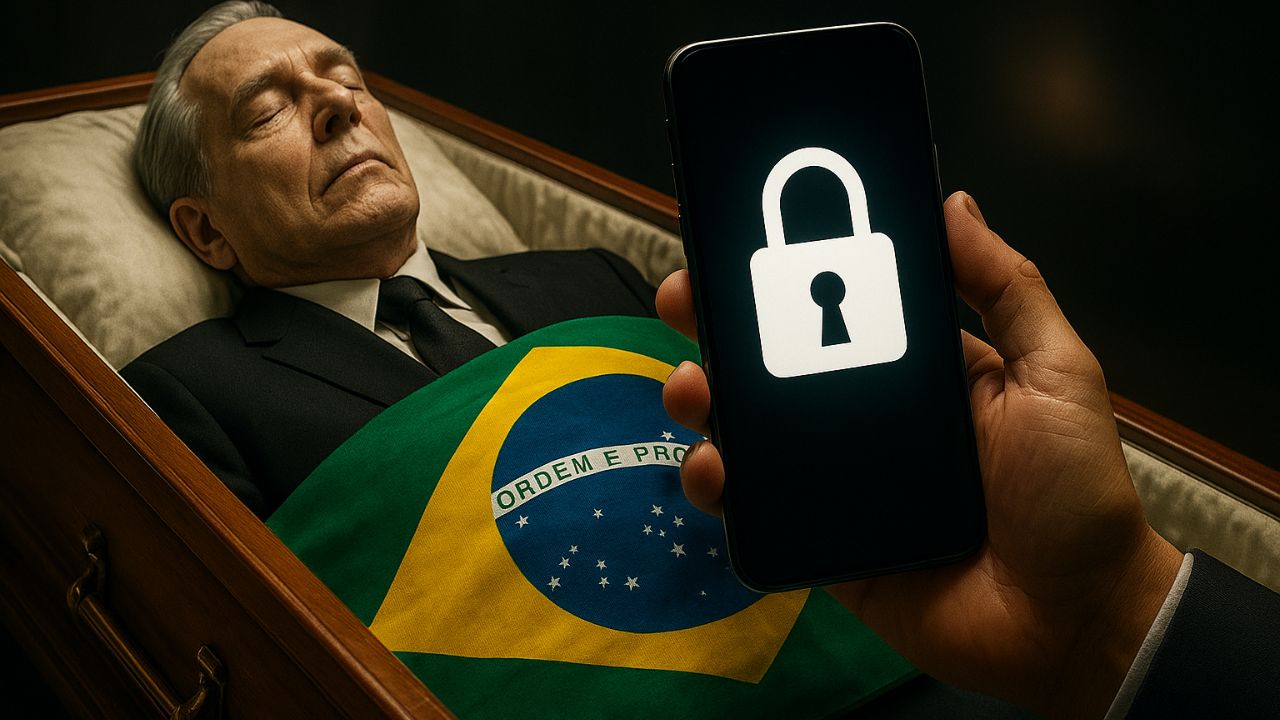
STJ Ruling Creates “Digital Inventor” and Paves the Way for Justice to Access Data in Search of Assets, According to Legal Consultant Analysis.
Data privacy after death is not guaranteed in Brazil, even with wills, advanced encryption, or account management tools from Google and Apple. Justice can, and likely will, break these barriers if there is suspicion of digital assets to be included in an inventory. This became clear after a recent decision by the Superior Court of Justice (STJ) that, in practice, authorized the investigation of digital assets left by deceased individuals.
The analysis, based on interviews with specialist lawyers for the portal Consultor Jurídico, indicates that the creation of the “digital inventor” figure by the STJ (REsp 2.124.424) exposes a deep legal vacuum. Without clear laws in the Civil Code regarding digital inheritance, the Judiciary is having to adapt to handle the complex division of cryptocurrencies, online bank accounts, airline miles, and existential content, such as photos and private messages.
The Legal Vacuum and Justice Adaptation
The STJ decision that raised the alarm established the possibility of appointing an expert, referred to by the reporting minister, Nancy Andrighi, as a “digital inventor.” The role of this person is to extract data from electronic devices of the deceased (such as smartphones and computers) and analyze what contains asset-related content, meaning economic value, and what is strictly personal. Only the asset-related content should be passed on to the heirs and included in the inventory.
-
The noise law will no longer be in effect at 10 PM starting in June with a new rule valid during the 2026 World Cup.

-
The Chamber opens a debate on driver’s licenses at 16 years old as part of a reform that includes around 270 proposals to change the Brazilian Traffic Code and may redesign rules for licensing, enforcement, and circulation in the country.

-
The new Civil Code could revolutionize marriages in Brazil with “express divorce” and changes that could exclude spouses from inheritance.

-
Banco do Brasil sues famous influencer for million-dollar debt and intensifies debate on delinquency, risks of seizure, and direct impact on Gkay’s credibility.


According to the specialists interviewed by Consultor Jurídico, this judicial adaptation was necessary in light of the complete omission of legislation. The Brazilian Civil Code does not regulate digital inheritance. Although Bill No. 4/2025, which reforms the code, attempts to address the issue, it is still not in effect. Current regulations, such as the Internet Civil Framework and the General Data Protection Law (LGPD), are considered insufficient to resolve the complexities of inheritance law.
The Challenge of Classifying Digital Inheritance
One of the biggest issues faced by Justice is the lack of clear criteria to distinguish the types of digital assets. As explained by Felipe Russomanno, a partner at the Cescon Barrieu law firm, to Consultor Jurídico, this results in conflicts between inheritance rights (of the heirs) and personal rights (the intimacy and privacy of the deceased). The current legal classification, still controversial, divides into three categories: property assets (cryptocurrencies, accounts), existential assets (photos, social media), and digital personality rights (private emails, private correspondence).
Rodrigo Forlani Lopes, from Machado Associados, added in the same report that the concepts proposed in the reform of the Civil Code, such as “economically appreciable value,” are still vague and imprecise. While the law does not arrive, Justice decides on a case-by-case basis, which leads to different decisions for similar cases and a great lack of predictability. For Lopes, the STJ decision, although innovative, does not solve the gap and may even increase litigation (the number of legal disputes) among heirs.
Privacy Tools: Effective or Illusory?
Many technology users trust the tools offered by the platforms themselves to ensure their post-mortem privacy. Consultor Jurídico highlights that major platforms do, in fact, offer options: the Inactive Account Manager from Google (which can delete data or pass it on to a trusted contact after a period) and the Apple Legacy Contact (which allows a designated heir to access photos and iCloud data). Facebook also allows profiles to be turned into memorials.
However, experts warn that these tools have severe legal limitations. Felipe Russomanno emphasizes that, if it is proven that the content has economic value, it cannot simply be deleted by the platform, even if that was the user’s will. The Justice can intervene. Additionally, technically, automatic cloud backups, data on foreign servers, and forensic recovery techniques can retrieve information that the user believed to have destroyed.
Can the Will Be Ignored by Justice?
The most traditional route, the will, also proves fragile in this scenario. Aracy Barbara, a partner at VBD Advogados, mentioned to Consultor Jurídico that it is possible to include express provisions in the document determining the deletion of data or naming an “executor” (the will executor) with specific powers for this purpose. Another alternative would be the use of strong encryption or data self-destruction software.
Still, nothing guarantees that this will is absolute. Bruno Batista, from the Innocenti Advogados firm, was emphatic in his analysis to the portal: “preventing information from being accessed forever and by anyone seems impossible.” If there is a family dispute or indications of asset concealment (such as a Bitcoin wallet), a judge may authorize the breaking of encryption or simply invalidate the clause of the will that prevented access. In practice, Justice has prioritized the rights of heirs to the assets over the deceased’s right to privacy.
Have you thought about your digital legacy? Do you believe that Justice should have the power to access private data of those who have passed away to find assets, or should privacy be absolute? Leave your opinion in the comments; we want to understand how you view this dilemma.









-

-

2 pessoas reagiram a isso.