





 Portuguese
  English
  Spanish
  3 min of reading
  9 comments


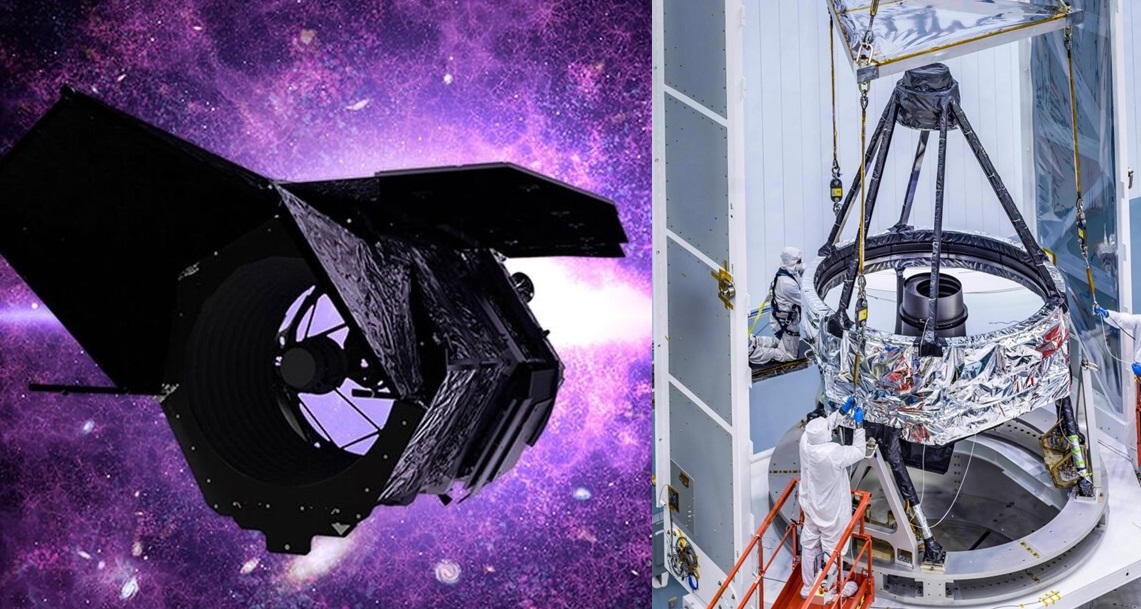

The Nancy Grace Roman Telescope, With an Investment of US$ 4.32 Billion, Is NASA’s New Bet to Study the Existence of Extraterrestrial Life
Imagine a telescope with a field of view so wide that it makes the Hubble look like a shy observer peering through a keyhole. That is exactly what the Nancy Grace Roman Space Telescope promises to bring to astronomy, revolutionizing the way we explore the cosmos.
And if you think we’re just talking about another space equipment, get ready to be surprised: this telescope could be the key to answering one of humanity’s oldest questions—are we alone in the universe?
The Nancy Grace Roman Space Telescope represents a significant investment, with a total estimated cost of approximately US$ 4.32 billion. Of this amount, about US$ 3.2 billion is allocated for the telescope’s development.
-
Something is happening around the Earth: Inside the huge explosion of fireballs in 2026

-
A hot air bubble coming from Argentina expands over Brazil, causing thermometers to exceed 38 degrees with a thermal sensation of 40 degrees in late March, affecting 6 states at once.

-
The radish leaf that almost everyone throws away has more polyphenols, flavonoids, and fiber than the consumed root, and a 2025 study showed that the leaf contains compounds that protect the intestine, combat inflammation, and may inhibit the growth of cancer cells.

-
A planet that seemed to defy the laws of physics has intrigued scientists for decades, until the James Webb revealed what is really affecting Saturn’s rotation.

For the launch, NASA has contracted with SpaceX for US$ 255 million, covering launch services and associated mission expenses. The COVID-19 pandemic has also influenced project costs, adding around US$ 400 million to the initial budget. Thus, the total lifecycle cost of the mission remains estimated at US$ 4.32 billion.
An Impressive Field of View
With a launch expected between October 2026 and May 2027, the Nancy Grace Roman is packed with innovations. Its Wide Field Instrument offers a field of view 100 times larger than Hubble, allowing scientists to analyze vast regions of space at once.
It’s like swapping a flashlight for a spotlight when exploring unknown terrain. This advancement is particularly important in the search for exoplanets—those worlds outside our Solar System that may have conditions suitable for hosting life.
And here’s the most impressive part: the gravitational microlensing technology it employs. Imagine using the gravitational field of a star as a giant magnifying glass, enlarging hidden planets that would be impossible to detect with other techniques. Thanks to this, I expect the number of known exoplanets to literally increase.
Nancy Grace Roman Space Telescope Advancing
The Nancy Grace Roman Space Telescope has reached a crucial milestone in its preparation to explore the mysteries of the cosmos. On November 7, the Optical Telescope Assembly was delivered to the largest cleanroom at the Goddard Space Flight Center in Greenbelt, Maryland, marking the arrival of the last main component needed for its assembly.
This assembly, the centerpiece of the project, includes a primary mirror 7.9 feet (2.4 meters) in diameter, accompanied by nine other mirrors and a series of advanced support structures and electronic components. The observatory is now beginning to take shape to face its mission of observing the universe.
Advanced Technologies and Cosmic Discoveries
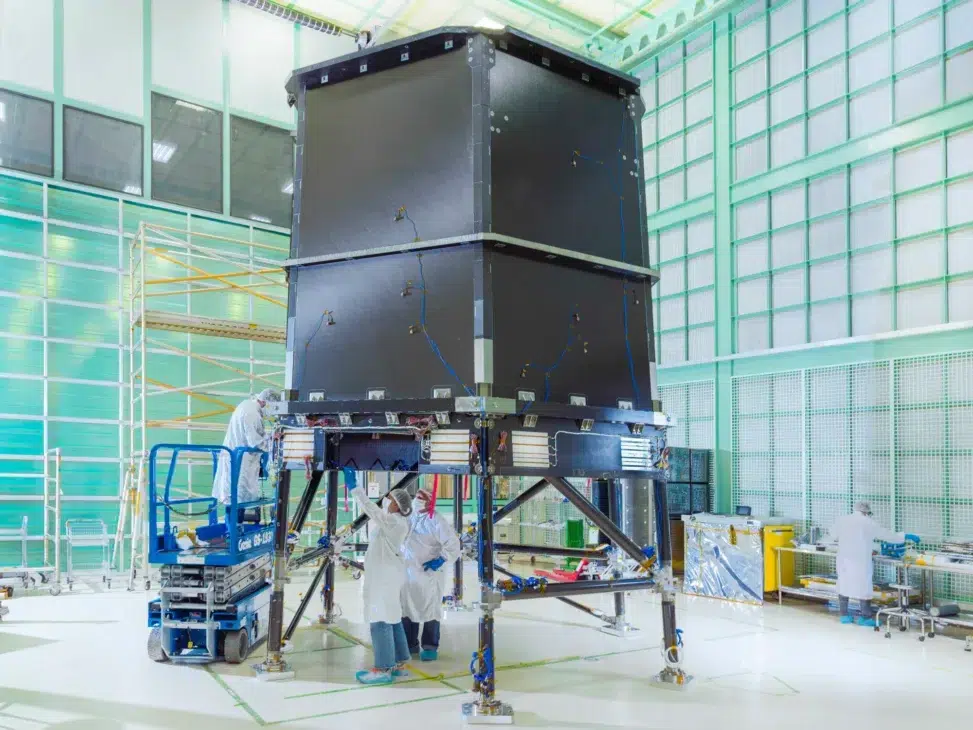
Equipped with cutting-edge technologies, the Roman telescope promises to revolutionize astronomy. Its Wide Field Instrument, an infrared camera with 300 megapixels, will allow scientists to observe billions of celestial objects across vast areas of space and time. From asteroids in our solar system to the most distant galaxies, the possibilities for discovery are immense.
Another highlight is the Coronagraph Instrument, which will test innovative technologies to block the light from stars, revealing unprecedented images of distant planets and dust disks with unparalleled clarity.
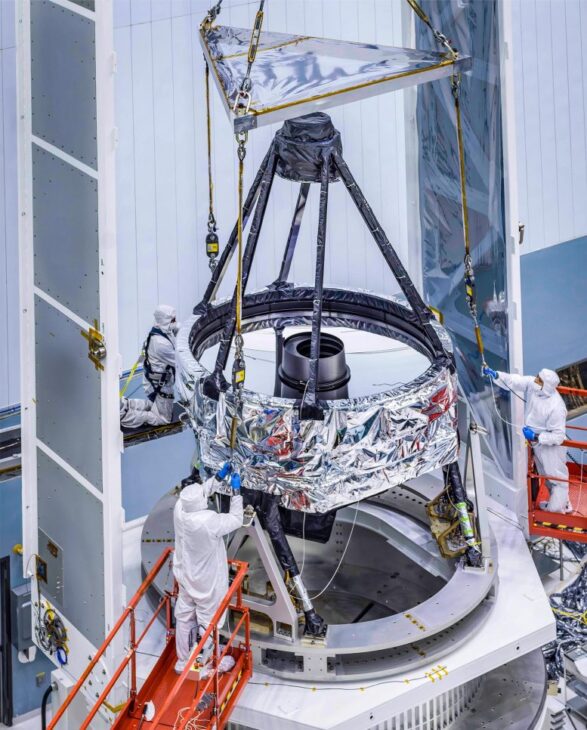
“We have a top-notch telescope that is well aligned and performing optically great, even in the extreme temperatures it will face in space,” explained Bente Eegholm, optical lead of the project at NASA. “Now, we look forward to the next phase, where the telescope and instruments will be combined to form the Roman observatory.”
The Nancy Grace Roman Space Telescope is closer than ever to transforming our understanding of the universe, expanding the horizons of cosmic exploration and space science.







Queria ver a cara dos crentes fanáticos se descobri-se vida além da nossa, é bem provável que eles iriam falar que isso é coisa do capeta .
A igreja católica também tentar explicar em base na sua religião que isso também é coisa do capeta.
Pra mim existe sim só estamos apontando os telescópio em lugar errado ou telescópio ainda não é bom o suficiente pra achar vida em outras galáxias.
Algumas pessoas até tentam sair da quinta série, mas são tão acéfalas que a própria natureza impede a quinta série de sair delas.
E o James web?
Ta com preguiça de ler, meu jovem? Falou claramente que é melhor que o James Webb.