





 Portuguese
  English
  Spanish
  3 min of reading
  3 comments


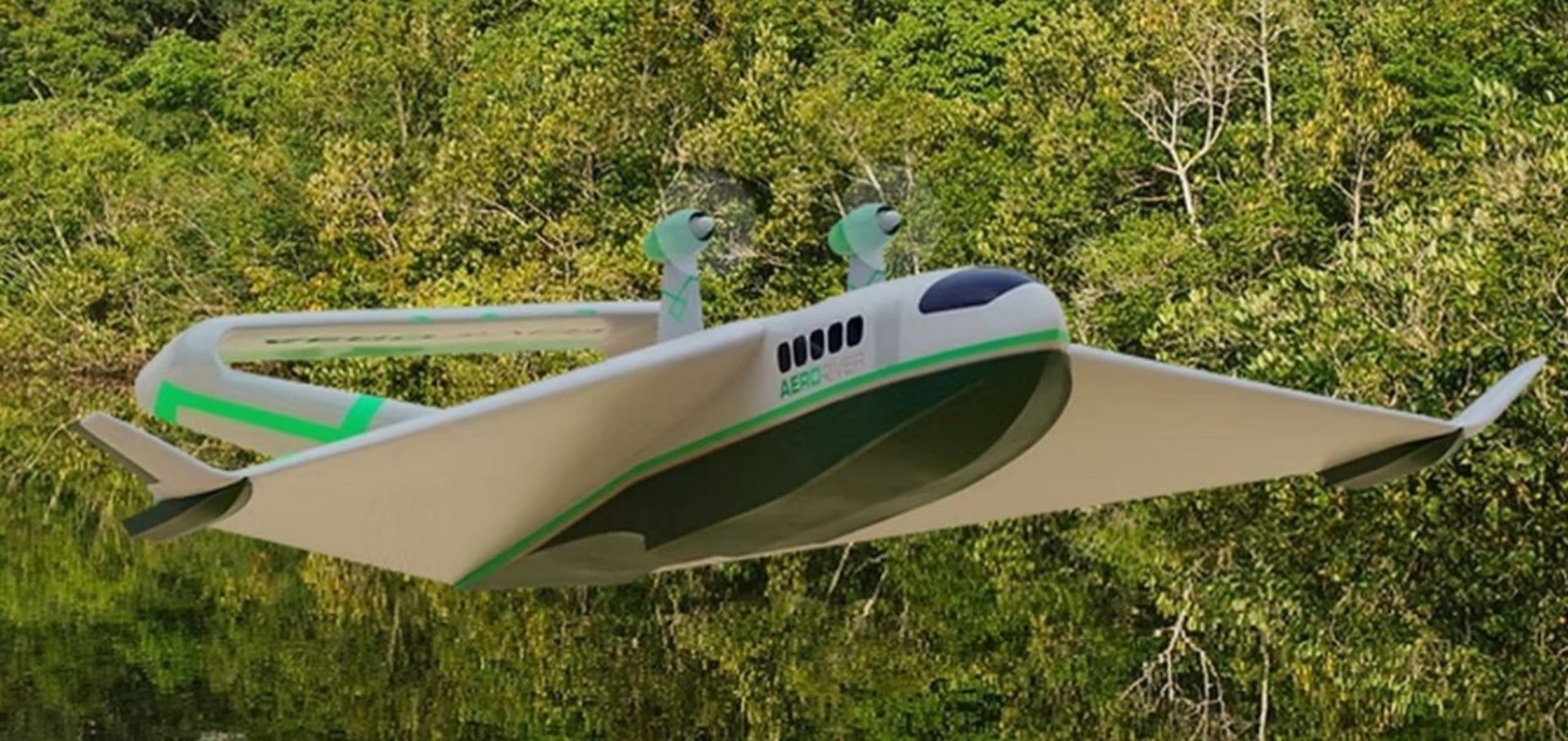


Aeroriver Startup Presents The Volitan, Flying Boat That Combines Agility, Low Cost, And Lower Pollution To Transform Mobility In The Amazon
One of the highlights of the São Paulo Boat Show 2025 is the Volitan, a vehicle that mixes a boat and an airplane. The innovation, presented by the Aeroriver startup, could transform the way people and goods travel in the Amazon, offering speed, savings, and lower environmental impact.
How The Flying Boat Works
The Volitan is regulated as a boat. It has a hull similar to that of a speedboat, which allows it to take off and land directly on the water. The upper part resembles an aircraft, with a closed cabin, wings, and two propellers.
The startup explains that the vehicle flies between 2 and 5 meters above the surface. The cruising speed reaches 150 km/h, three times faster than conventional speedboats.
-
The Moon has essential rare earth minerals for 99% of the electronics you use in your daily life and a future fuel that is almost nonexistent on Earth: now the race to explore the satellite has turned into a global competition among more than 70 countries.

-
Scientists reveal an impossible artifact for its time made with iron from space, and the discovery reignites a historical debate about the Bronze Age in China.

-
The humanoid robot G1 has gained a new digital brain that has transformed it into a true domestic worker: it learns by observing the environment, interprets objectives, and executes complete tasks without receiving step-by-step instructions.

-
They seemed like common bones, but scientists were surprised to find a relic over 12,000 years old that dates back to before the Bronze Age.

This combination was designed specifically to meet the conditions of Amazonian rivers, where transportation is essential.
Transport Capacity
The proposal is not limited to passengers. There will be versions for up to 10 people, which may include residents, tourists, doctors, security officials, and researchers.
In other situations, the same space will be occupied by up to 1 ton of cargo, serving local industries and merchants.
This flexibility is highlighted as a differential because traditional river transport takes longer and has higher operating costs.
The flying boat takes advantage of the natural infrastructure of rivers without the need for extensive construction.
Comparison With Other Means
A clear example is the Manaus–Parintins route, which is 417 km long. The boat trip takes about 10 hours. With the Volitan, that time drops to just 3 hours.
Cost savings are also evident: R$ 25.57 in fuel per passenger compared to R$ 28.57 for speedboats.
Moreover, the environmental impact is lower. While the speedboat emits 42 kg of CO² per person, the flying boat releases 36 kg.
When compared to airplanes, the advantage becomes even clearer. A traditional aircraft takes 1 hour and 10 minutes for the journey, but the cost rises to R$ 40.98 per passenger, and emissions reach 58 kg of CO².
Sustainability And Range
The Volitan uses diesel and has a range of 450 km. Aeroriver emphasizes that this range meets a large part of the most used routes in the Amazon region.
Hence, the idea is for it to become a practical solution for both short trips and medium-distance travel.
Another important point is that the vehicle does not depend on complex ports or runways. Just the river is needed. This reduces logistical barriers and facilitates access to places where riverside communities often remain isolated.
Next Steps For The Flying Boat
Aeroriver has already confirmed that in 2026 it plans to start manufacturing a larger version. The model will have an expanded capacity for 10 passengers, in addition to more cargo space.
The estimated price is R$ 3 million, according to an interview with Folha de S.Paulo.
The startup believes that this innovation will serve different audiences. From those looking for faster transportation to companies that need agility in distribution.
The combination of savings, speed, and lower pollution reinforces the appeal of the flying boat.
In this way, the Volitan emerges as a promise of revolution for Amazonian mobility, uniting technology, sustainability, and practicality in a single vehicle.
Information from TecMundo.





Trata-se de um ecranoplano. Não entendi a novidade.
Ficaria ótimo, uma empresa explorar aqui em Salvador Ba, ligando a ilha de Itaparica, ao bairro da Ribeira, onde tem o antigo hidroporto! Linda aeronave!
Isso é uma revolução na era de transporte aquaviário,