





 Portuguese
  English
  Spanish
  4 min of reading
  10 comments


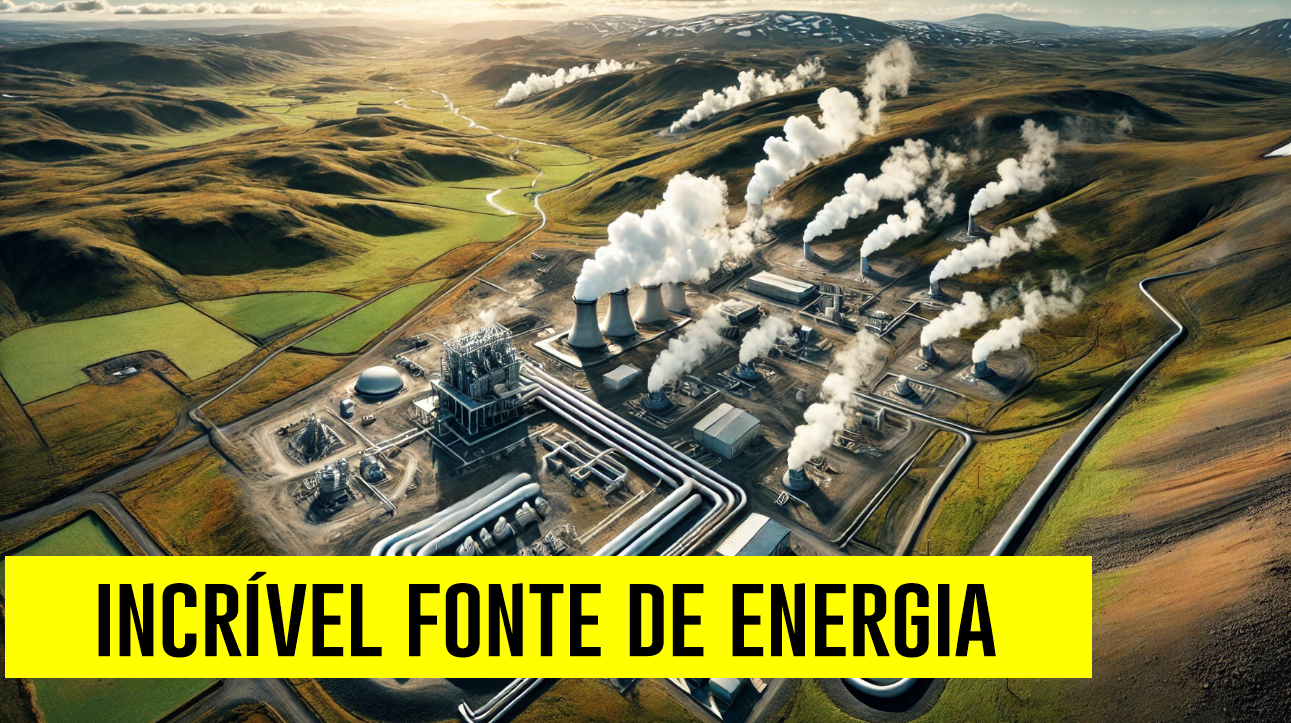


Scientists Are Exploring Revolutionary Rock Energy Source With Energy Potential So Great It Could Power The United States Thousands Of Times
For decades, the geothermal energy source has remained a supporting player in the renewable energy landscape. While solar and wind energy grew exponentially, geothermal contributed a minimal fraction of global electricity.
The problem has always been geography. Subsurface heat sources are concentrated in volcanic regions, limiting their expansion. But that may be about to change.
Researchers at Cornell University believe that (SHR, from the English Superhot Rock Energy) could be the solution to harnessing the Earth’s heat in virtually any location.
-
In a flooded well, archaeologists found a 1,700-year-old Roman egg that still contains clear and yolk intact inside the very thin shell.

-
Something is happening around the Earth: Inside the huge explosion of fireballs in 2026

-
A hot air bubble coming from Argentina expands over Brazil, causing thermometers to exceed 38 degrees with a thermal sensation of 40 degrees in late March, affecting 6 states at once.

-
The radish leaf that almost everyone throws away has more polyphenols, flavonoids, and fiber than the consumed root, and a 2025 study showed that the leaf contains compounds that protect the intestine, combat inflammation, and may inhibit the growth of cancer cells.

The Heat Beneath Our Feet
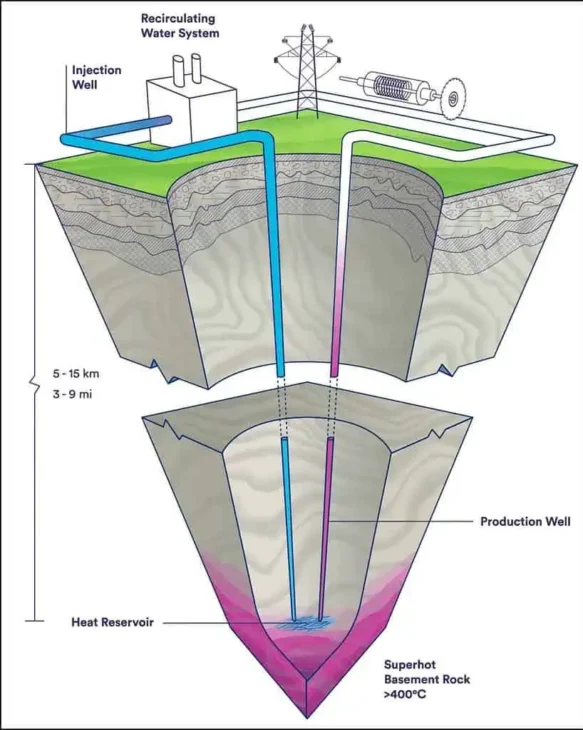
The idea is simple but revolutionary. Imagine drilling deep into the Earth’s crust until encountering rocks heated to over 374 degrees Celsius.
At these extreme temperatures, the injected water transforms into a supercritical fluid, capable of transporting immense amounts of energy to the surface.
This energy source can be converted into electricity, provide heating, or even be used in hydrogen production.
How The Process Of This Amazing Energy Source Works
Water or specialized fluids are injected into superhot rock reservoirs, where, due to the extremely high temperatures, the fluid transforms into a supercritical state, an intermediate phase between liquid and gas that has high density and great capacity to store thermal energy.
This supercritical fluid is then extracted and conducted to the surface, where its thermal energy is harnessed to move turbines, generating electricity efficiently and sustainably.
According to a study from Cornell, SHR could meet the energy demand of the United States thousands of times over.
Reports prepared by the university, in collaboration with the nonprofit Clean Air Task Force (CATF), detail a roadmap to overcome technical challenges such as precise drilling, well construction, and heat extraction.
“The highly specific site aspects of geothermal energy production have always been an obstacle to commercial development,” explains Seth Saltiel, a Cornell professor and co-author of the study. He emphasizes that understanding subsurface structures is essential to make progress.
The numbers are impressive. Just 2% of the energy stored a few kilometers below the surface could theoretically meet the energy needs of the U.S. for 2,000 times.
SHR also has the advantage of being a clean, uninterrupted energy source, unlike solar and wind, which depend on weather conditions.
A Global Race For SHR
The interest in SHR is not limited to the United States. Studies indicate that China, Russia, and the U.S. have the largest potential reserves of this energy. Just in the U.S., SHR energy could generate 4 terawatts, equivalent to burning 21 billion barrels of oil.
States like Nevada and California lead in exploration potential. Interestingly, the oil and gas industry could be a crucial ally. The necessary technologies — drilling rigs, durable drill bits, and sensors capable of withstanding extreme temperatures — have already been developed for fossil fuel extraction.
Terra Rogers, director of CATF, believes these companies are well-positioned to lead the transition to SHR.
Lauren Boyd, director of the Geothermal Technologies Office at the U.S. Department of Energy, emphasizes the need for investment. “We need resources and hands willing to work in this field.” According to estimates, between US$ 20 billion and US$ 25 billion will be needed by 2030 to commercialize next-generation geothermal technologies, including SHR.
For oil companies, SHR represents a unique opportunity. They can reposition themselves in the clean energy market using existing infrastructure and skills.
Many lands leased for fossil fuel extraction can also be repurposed for geothermal exploration, often without the need for new permits.
Challenges And Opportunities
Although promising, the superhot rock energy source faces significant challenges. Drilling in dense rocks is costly and complex.
In 2022, Cornell University drilled an exploratory well 3 km deep on its campus to investigate the potential of geothermal energy.
However, this facility is not expected to reach superheated rocks, as it would need to drill about 10 km below the surface in low thermal flow areas, such as the eastern United States.
Early projects require high investments and carry risks. Without substantial funding, SHR could remain an ambitious but unachievable idea.
However, optimism is growing. Jennifer Granholm, U.S. Secretary of Energy, highlighted the potential of this technology during the 2024 CERAWeek conference. “Capturing the heat beneath our feet can provide us with clean, scalable, and reliable energy to meet the needs of industries and households,” she stated.
SHR not only promises to reduce dependence on fossil fuels but also represents a new frontier for the energy industry.
If technological advances and significant investments are achieved, this technology could redefine how the world generates and consumes energy.
The subsurface heat, long ignored, may be the key to a cleaner, more sustainable energy future.
The race to unlock this potential is just beginning. Now, it’s up to companies, governments, and scientists to turn this vision into reality.








O Brasil também tem possibilidades de uso desta fonte inesgotável de energia. Desde 2007 a Petrobrás estuda o aproveitamento desta energia. Afinal perfurar milhares de metros faz parte do seu dia a dia. É possível que nos próximos 2 anos o Brasil assista a geração da primeira GEOLUZ!!!!
Verdadeiro milagre pra humanidade.
PARA CIMA E PARA BAIXO A HUMANIDADE SEGUE COMETENDO MUITOS ERROS E ALGUNS ACERTOS, CUJOS DANOS FICAM PARA AS GERAÇÕES FUTURAS ATÉ A EXTINÇÃO DO ABENÇOADO PLANETA TERRA, TUDO EM FUNÇÃO DA “EVOLUÇÃO” PARA ONDE NINGUÉM SABE! Pzornitta