





 Portuguese
  English
  Spanish
  4 min of reading
  0 comments


Unique In The World, The Flag Of Nepal Has Two Overlapping Triangles And Symbolizes Dynasties, Hindu Mythology, And An Ancient Identity
Most national flags in the world follow a well-defined pattern: rectangular or, in a few cases, square. But there is a striking exception. The flag of Nepal is the only one that does not adhere to this format.
Formed by two overlapping triangles, it has a red color with blue borders and two white symbols representing the Sun and the Moon. Its appearance catches attention and carries a long history behind it.
Triangles With History
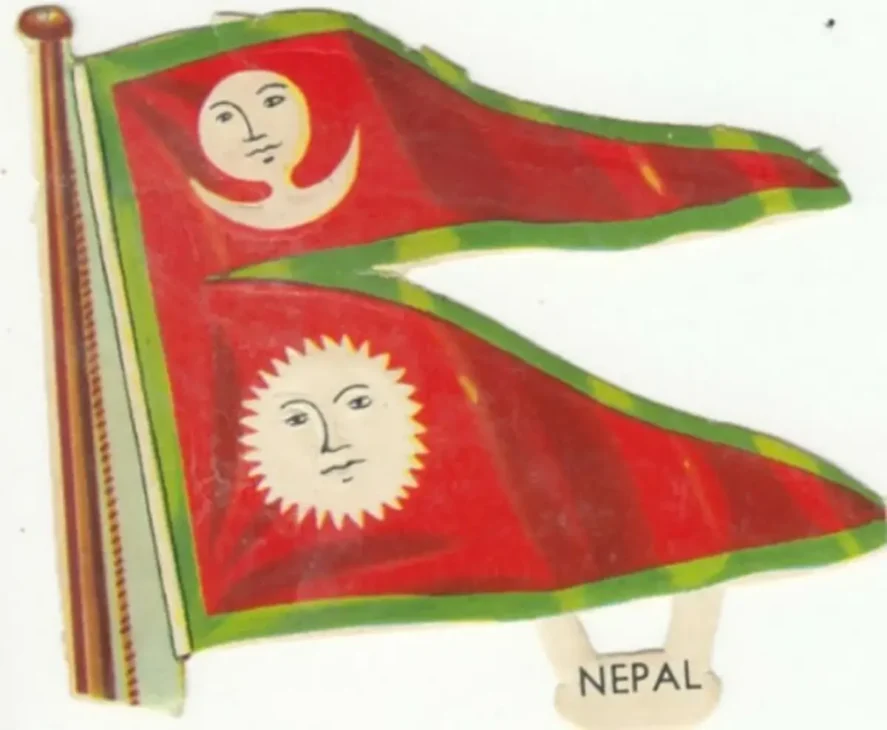
The design of the Nepalese flag is unique and of double triangular shape. The top triangle features a crescent moon with a small sun. The bottom triangle displays a larger sun with twelve rays. Both emblems are white.
-
He started running at 66 years old, broke records at 82, and is now a subject of study for having a metabolic age comparable to that of a 20-year-old, in a case that is intriguing scientists and inspiring the world.

-
Oldest tree on the planet reappears after 130 years of searches: Wattieza, 385 million years old, was 10 meters tall and had no leaves or seeds; Gilboa fossils in New York solved the mystery in 2007.

-
A 48-square-meter house assembled in hours with 4,000 bricks made of recycled plastic that does not absorb moisture, has natural thermal insulation, and costs less than 90,000 reais in a complete kit.

-
Luciano Hang revealed that Havan’s air fleet has already accumulated more than 20,000 landings, 10,000 flight hours, and 6 million kilometers traveled, and he says that without the planes, the company would never have grown so quickly.


The red background represents the bravery of the people and the country’s national flower: the rhododendron. The blue borders are part of Nepal’s visual tradition, used in many local decorations.
The flag’s unconventional shape makes it considered by scholars as the most unusual among national banners. It is also one of the shortest, with a ratio of 5:4.
Influence Of The Dynasties
The two triangles represent more than just a simple design. They symbolize the union of the two main dynasties of Nepal: Shah and Rana.
The Shah dynasty was responsible for the Kingdom of Gorkha, the basis for the unification of the country. The Rana, on the other hand, ruled Nepal between 1846 and 1951, with the Shah monarchs acting as symbolic figures.
The last king of the Shah dynasty in Gorkha, Prithvi Narayan Shah, was the creator of the model that would later become the official flag of Nepal. His goal was to unite the different kingdoms under a single symbol.
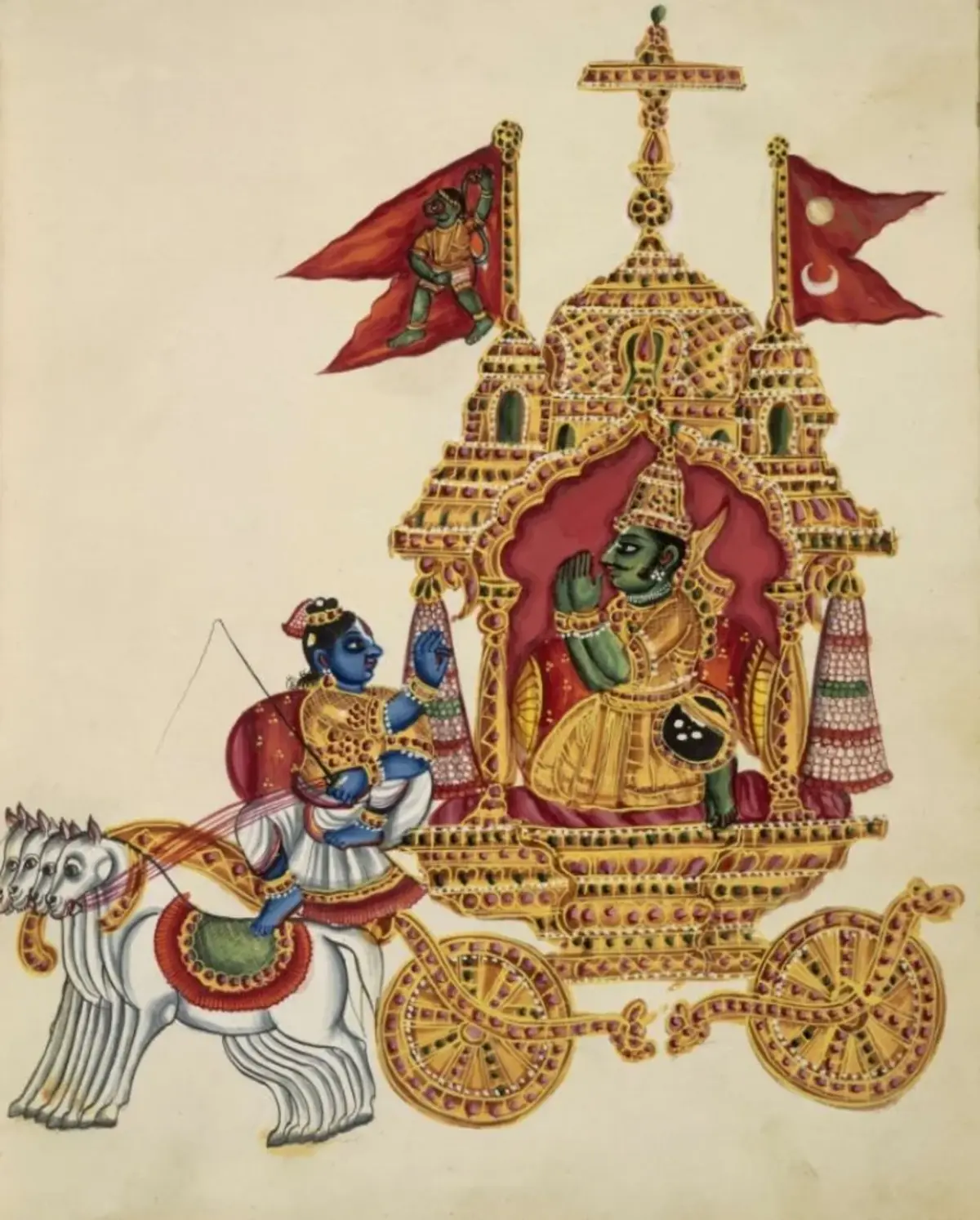
The Nepalese flag draws inspiration from ancient symbols, including Hindu mythology. One of the references appears in an illustration from the epic Mahabharata. In it, Krishna, accompanied by Arjuna, is transported in a chariot decorated with a flag similar to that of Nepal.
This flag appears as a visual element of war, signaling lineages and spiritual traditions. The use of celestial bodies (Sun and Moon) reinforces this symbolic and mystical sense.
Survivor Among The Kingdoms Of The Himalayas
Before British domination in South Asia, there were dozens of independent kingdoms with their own flags. These flags used colors and shapes that would today be considered unconventional.
With the advance of the British Empire, most of these banners began to disappear. Many were replaced or abandoned after India’s independence in 1947. Nepal, however, remained a sovereign kingdom and kept its traditional flag.
Changes In The Design
Originally, the solar and lunar emblems of the flag had human expressions. They were drawn with eyes, mouth, and nose. The symbolism referred to the snow-capped peaks of the Himalayas and the plains of the southern country, as well as representing the search for longevity — like that of the Sun and the Moon.
In 1962, Nepal underwent a constitutional reform. King Mahendra led the formation of a new government. It was at this time that the human features were removed from the celestial bodies, to modernize the national symbol. However, the general structure of the flag was maintained.
A Symbol That Resists
While most countries have standardized their flags to facilitate identification on ships and at international events, Nepal has maintained its unique shape. The local tradition has overcome the need to conform to the European model of rectangular flags.
The triangular banner is, to this day, a reflection of the ancient past and the spiritual roots of the country. The flag of Nepal continues to be one of the greatest symbols of national identity and cultural resistance in the face of geopolitical changes in Asia.
The flag of Nepal is more than just a different shape. It represents centuries of history, mythology, tradition, and autonomy. And it remains, to this day, the only national flag in the world that is not rectangular.
With information from Revista Fórum.







-

Uma pessoa reagiu a isso.