





 Portuguese
  English
  Spanish
  7 min of reading
  16 comments


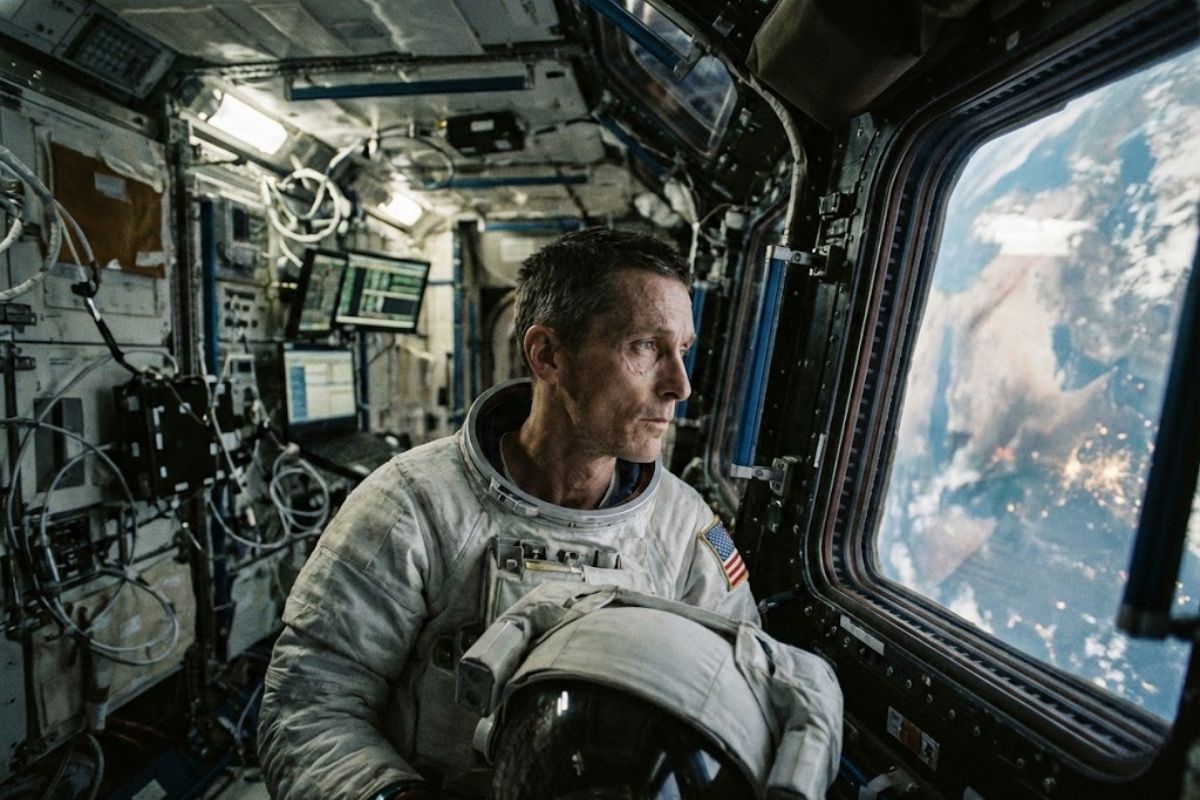


“There Will Be No Peace on Earth,” Says NASA Astronaut Ron Garan After 178 Days in Space, Describing Overview Effect, Invisible Borders, and the Thin Atmosphere of the Entire Planet Today
Report from NASA Astronaut Ron Garan, who spent 178 days in orbit and completed nearly three thousand orbits, rekindles debate about the overview effect: seeing Earth without borders, he describes the atmosphere as a minimal layer and concludes that peace depends on understanding global interdependence here and now.
NASA astronaut Ron Garan returned to Earth after nearly six months away from the planet and described an uncomfortable conviction: for him, there will be no peace on Earth as long as humanity fails to see that everything is interconnected, from climate to economic and social decisions.
The conclusion came after experiencing the overview effect, a phenomenon reported by astronauts observing Earth from space and realizing a unique system, fragile and without borders, with an atmosphere that appears minimal when viewed from outside.
Almost 180 Days in Orbit and the Phrase That Became a Synthesis
In the statement released on January 8, 2026, Ron Garan is introduced as a former member of the astronaut corps and appears as the NASA astronaut who transformed a technical experience into public reflection.
-
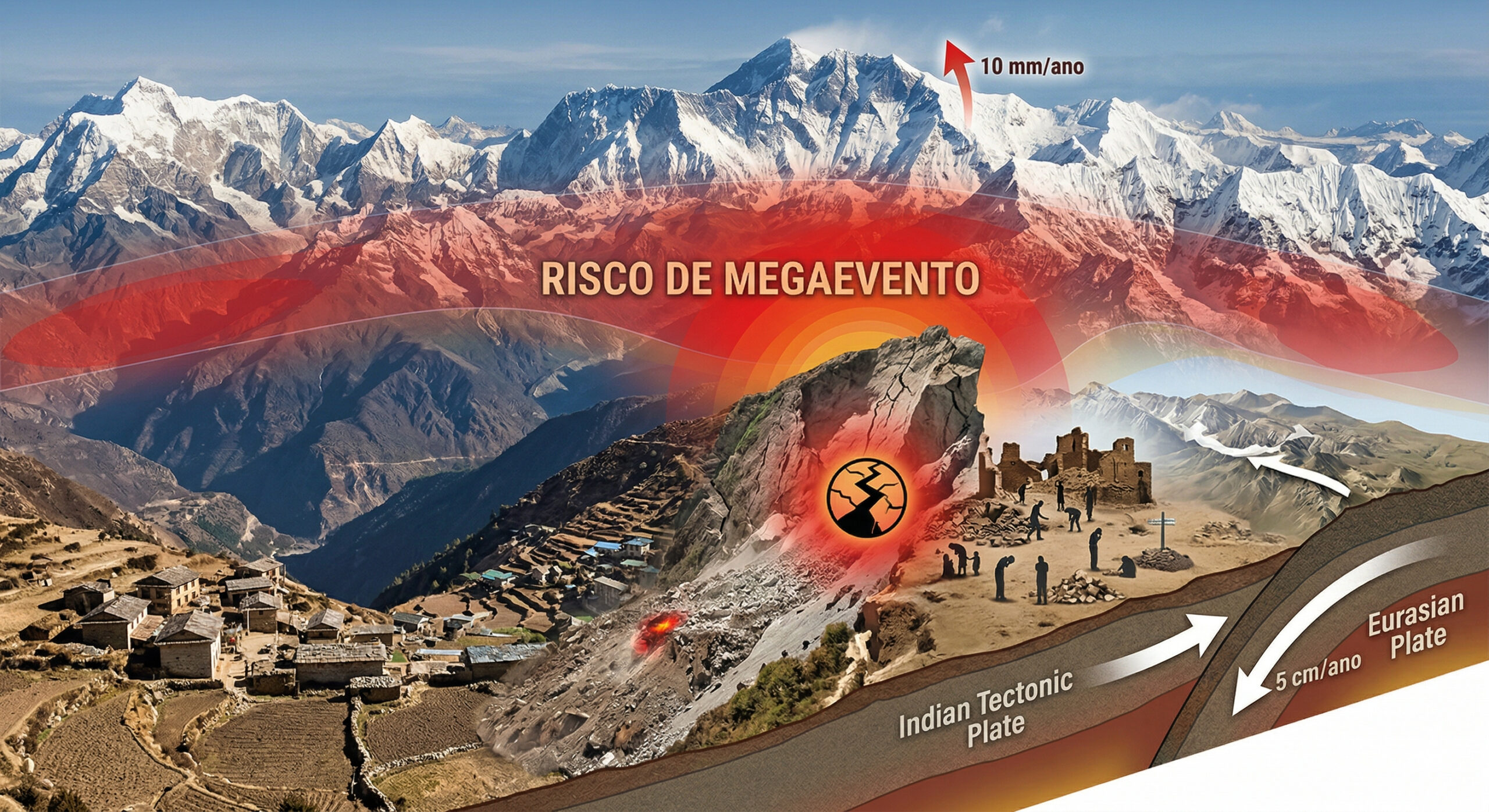
The Himalayas continue to grow to this day, with tectonic plates advancing 5 cm per year, mountains rising up to 10 mm annually, and the 2015 earthquake that killed 9,000 people may have increased the risk of an even larger seismic mega-event.
-
At an altitude of 400 km by astronauts from the International Space Station, Paris transforms at night into a golden mesh so precise that it reveals the outline of the Seine River, avenues, and entire neighborhoods like a luminous map drawn over the Earth.

-
iPhone 17 reaches historic low price with 256 GB, 120 Hz display, and drops to R$ 5,703 on Shopee, featuring A19 chip, dual 48 MP cameras, battery life of up to 30 hours, and advanced AI features.

-
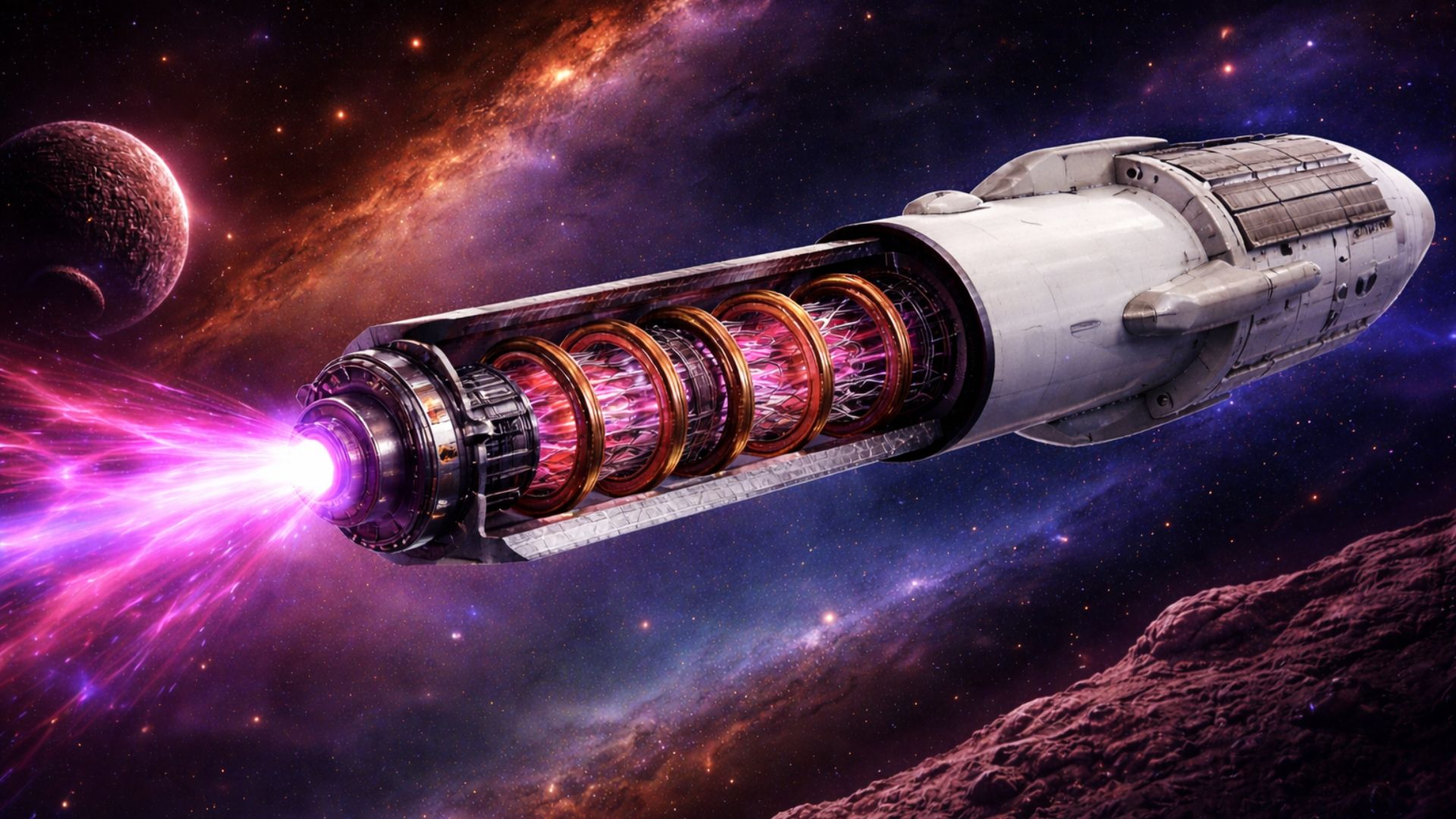
Trip to Mars getting closer: Pulsar Fusion, from the UK, advances with plasma ignition in fusion engine and could drastically reduce space travel time, making crewed missions faster, safer, and economically viable.

He spent 178 days in space, traveled more than 114 million kilometers, and completed nearly three thousand orbits around Earth.
The raw figure, however, is not treated as the center of the story.
The turning point is in what he claims to have realized when repeatedly looking at Earth, without cuts from maps or political lines.
In his formulation, peace does not depend on an isolated event, but rather on recognizing that daily, individual, and collective actions alter the equilibrium of the planet as a whole.
Summarizing this displacement, the NASA astronaut uses the expression that drew attention: “There will be no peace on Earth.”
He then connects the phrase to an operational criterion of responsibility: understanding that “our actions affect the entire equilibrium of the planet.”
The central idea remains stable, even when the focus shifts from borders to atmosphere.
What Is the Overview Effect and How Was It Defined
The overview effect is described as a cognitive and emotional shift associated with the first prolonged visual contact with Earth from space.
The term, according to the data presented, was coined by writer and space philosopher Frank White in a book published in 1987.
In an interview for the NASA podcast Houston We Have a Podcast, Frank White explains that many astronauts report the same starting point: the absence of visible borders.
The reading is not abstract. It arises from an observable fact; Earth appears continuous, and political segmentation does not manifest in what is seen through the window.
Frank White also describes the practical consequence of this perception shock.
He notes that people may have different religions and politics, but that, in the face of the image of the planet, “we are connected.”
This connection, in the report, is not limited to human relations. It extends to life and the systems that make Earth habitable, with a focus on the atmosphere.
Earth Without Borders and the Discomfort of a Unique System
The repetition of flyovers is a component that helps explain why the overview effect gains strength. The NASA astronaut does not see Earth just once.
He sees it in sequence, at different times, over different regions, under different lighting conditions and clouds.
This continuity reinforces the pattern: the planet functions as a whole, and the borders do not appear as natural markings.
At this point, Ron Garan’s report aligns with Frank White’s definition.
He describes a kind of sudden clarity, a “light” that turns on when the mind starts to treat Earth as a whole system, not as a sum of territories.
What changes is the framing: from countries to processes.
By using the word system, the report points to interdependence. Earth is not presented as a backdrop, but as a mechanism.
What happens in one part can impact another, and this chaining is facilitated by the atmosphere itself and the physical continuity of the planet.
The notion of borders, in this scope, ceases to be a visual guarantee and becomes a human convention.
Thin Atmosphere and the Sense of Extreme Fragility
Extreme fragility appears in the report as a visual and emotional effect.
The Canadian Space Agency, CSA, is mentioned to reinforce that astronauts often report how fragile Earth seems when observed from space, and that some return with a new mindset.
The official text mentioned notes that some of them channel this change into activism or art.
The element that concentrates this feeling is the atmosphere. The description is direct: the atmosphere appears as a thin layer, and this perception makes the risk more concrete.
The same Earth that sustains billions of people presents itself wrapped in a film, and the idea of protection ceases to be abstract.
The retired NASA astronaut Mike Foreman is quoted with a summary of the effect.
He states that, upon seeing how thin the atmosphere is, one understands that this protective layer is fragile and needs to be cared for.
The report does not delve into technical details about composition or thickness, but emphasizes the impact of perceiving the atmosphere as a visible limit.
The Unity Described by Other NASA Astronauts
The report broadens the panorama by citing other names. Bob Behnken, also a NASA astronaut, is presented as someone who interprets the experience as a reinforcement of unity.
He states that he sees “one single planet” and “a shared atmosphere,” a formulation that repositions Earth as a common place.
Behnken also connects the observation to global-scale crises.
In the report, he mentions pandemics and conflicts and says that the perspective helps to face these episodes by recognizing that “we are facing all of this together.”
The argument is consistent with the axis of the overview effect: when Earth appears without borders, problems cross limits and require responses that consider interdependence.
This convergence of testimonies is relevant because it reduces the risk of treating the overview effect as an isolated case.
What emerges from the report is a narrative pattern repeated by more than one NASA astronaut, with common points revolving around Earth, borders, and atmosphere.
Why Is It So Difficult to Translate the Experience into Words
Frank White states that many astronauts have difficulty translating this experience into words.
The report also notes that the absence of gravity can intensify perceptions, amplifying the contrast between everyday human life and the scale of the planet.
There is an implicit communicational component. What sustains the overview effect is not just a set of numbers, but a direct perception.
Earth reveals itself without borders, the atmosphere stands out as a thin layer, and extreme fragility becomes a persistent impression.
It is a visual evidence that reorganizes priorities, but cannot be measured like an instrument measures temperature or pressure.
Even so, the report suggests that the experience has enough regularity to generate a definition.
The overview effect consolidates as a name for this shift in perspective, and the repetition by astronauts from different missions reinforces that it is not a rare or random feeling.
A New Meaning of Home, from Florida to the Entire Planet
Astronaut Nicole Stott is cited recounting a change in belonging.
During her first mission to the International Space Station, she eagerly awaited the pass over Florida, her home state, and wanted to see the region through the window.
What occurs is an inversion of the expected. Nicole Stott says she realized she was no longer looking at Florida in the same way.
Florida remained special, but now it was part of something bigger: Earth. The report, in this section, positions the overview effect as a displacement of identity, from local to planetary.
In concluding, Nicole Stott synthesizes the message into a short phrase: “We are all Earthlings.” The choice of the word operates as a symbolic antidote against borders.
Earth is presented as a common denominator, and the atmosphere as a shared condition, which does not distinguish flags.
What the Report Suggests About Peace and Interdependence
The phrase “There will be no peace on Earth” appears as a provocation and hypothesis.
The NASA astronaut does not describe peace as merely the absence of conflict, but as a consequence of understanding.
The premise is that, without recognizing the connection between systems, decisions become shortsighted and repeat patterns of harm.
The report also suggests that the overview effect acts as a cognitive shortcut. Instead of convincing through arguments, it convinces through perception.
By seeing Earth as a single system, with a thin atmosphere and without borders, the mind reorganizes what it considers essential.
This rearrangement does not guarantee agreement, and the report itself indicates limits. Frank White emphasizes the difficulty of translating into words, and the CSA notes that each astronaut channels the change in a distinct way.
Even so, the core remains: Earth, borders, and atmosphere are viewed under a different framework.
The report from NASA astronaut Ron Garan transforms 178 days in orbit into a synthesis of perspective: seeing Earth without borders, perceiving the atmosphere as a thin layer, and recognizing extreme fragility in a unique system.
The overview effect emerges less as curiosity and more as a diagnosis of interdependence.
If you want to better understand what this NASA astronaut describes, the most direct step is to listen to the conversation mentioned on Houston We Have a Podcast and compare how different astronauts narrate Earth, borders, and atmosphere from the same point of view.
In your opinion, would the overview effect change the way you see Earth and borders in everyday life?








A visão repetida das voltas ao redor da terra falada pelo testemunho do astronauta nos diz muito pois nós humanos somos apenas partículas de água neste oceano imenso que é a terra…a falta de gravidade e a relação política e econômica pelas quais o planeta passa nos diz muito..
É dessas relações que os conflitos e a direção da vida de todos melhora ou piora….são esses pontos que trazem as maiores divergências e essas divergências determinam que não haverá paz na terra…e a fragilidade das camadas atmosféricas vistas la em cima nos traduz o quanto o egoísmo e a nossa interdependência transforma tudo…pois é a partir da minha unilateralidade que está desmistificando o contexto falado pelos astronautas
Sendo nós os senhores de nossas ações e sendo nossas ações as causadoras dessa atmosfera terrestre nociva de interdependência…não há o que esperar se não a própria destruição…o que esperar se não mais individualidade…mais egoísmo…mais eu em detrimento do outro…tudo se resume ao final.de tudo..
Acredito que o círculo de convivência diária é extremamente pequeno, criando ilusão do que é significativo e importante. Se atentarmos para valores emocionais e afetivos Como família e bem estar temos uma percepção de busca e movimento. No dia a dia estamos limitados a um diâmetro de deslocamento menor do que 10 km. Logo as atividades são cotidianas e repetitivas.
Para pessoas que viajam a trabalho ou lazer a visão já se torna maior com limites amplos e no caso do astronauta a percepção de limite não existe sendo algo contínuo frágil e com pequenas variações de luz. Onde se observa a grandeza dos oceanos e a continuidade dos territórios sem expressar seus limites. Essa continuidade proporciona harmonia e ao mesmo tempo fragilidade.
Muda completamente