





 Portuguese
  English
  Spanish
  6 min of reading
  0 comments


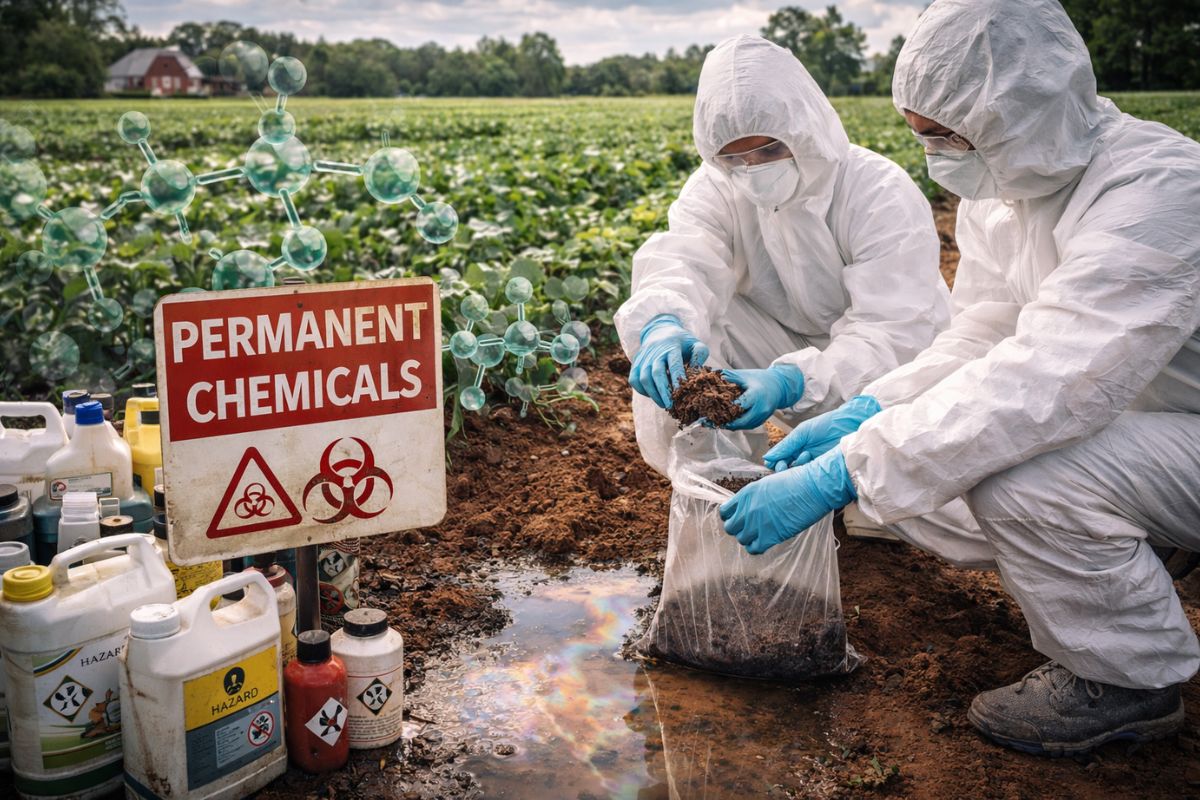
With PFAS at 30,000 Parts Per Trillion and 1990s Manufacturing Sludge, Agricultural Land in Society Hill Enters Yale’s Radar, Exposing PFOS Above Maine’s Limit and Raising Questions About Wells and Food.
In the agricultural lands of Darlington County, South Carolina, Yale tests found high PFAS levels after sludge from Galey and Lord was applied in the 1990s. In 15 fields, seven exceeded Maine’s standards; PFOS reached 17,000 to 30,000 parts per trillion, and wells remain a focus as well.
A sequence updates a practice adopted in the 1990s when textile company Galey and Lord sent residual sludge to fertilize agricultural land in Darlington County. Updated on February 14, 2026, the survey details why the PFOS indicator, private wells, and the fate of agricultural production have become points of friction between cost, safety, and environmental responsibility.
What Was Measured in the Field and Why Seven Areas Drew More Attention
The Yale team collected soil from 15 fields and reported that PFAS was detected in all the analyzed locations.
-
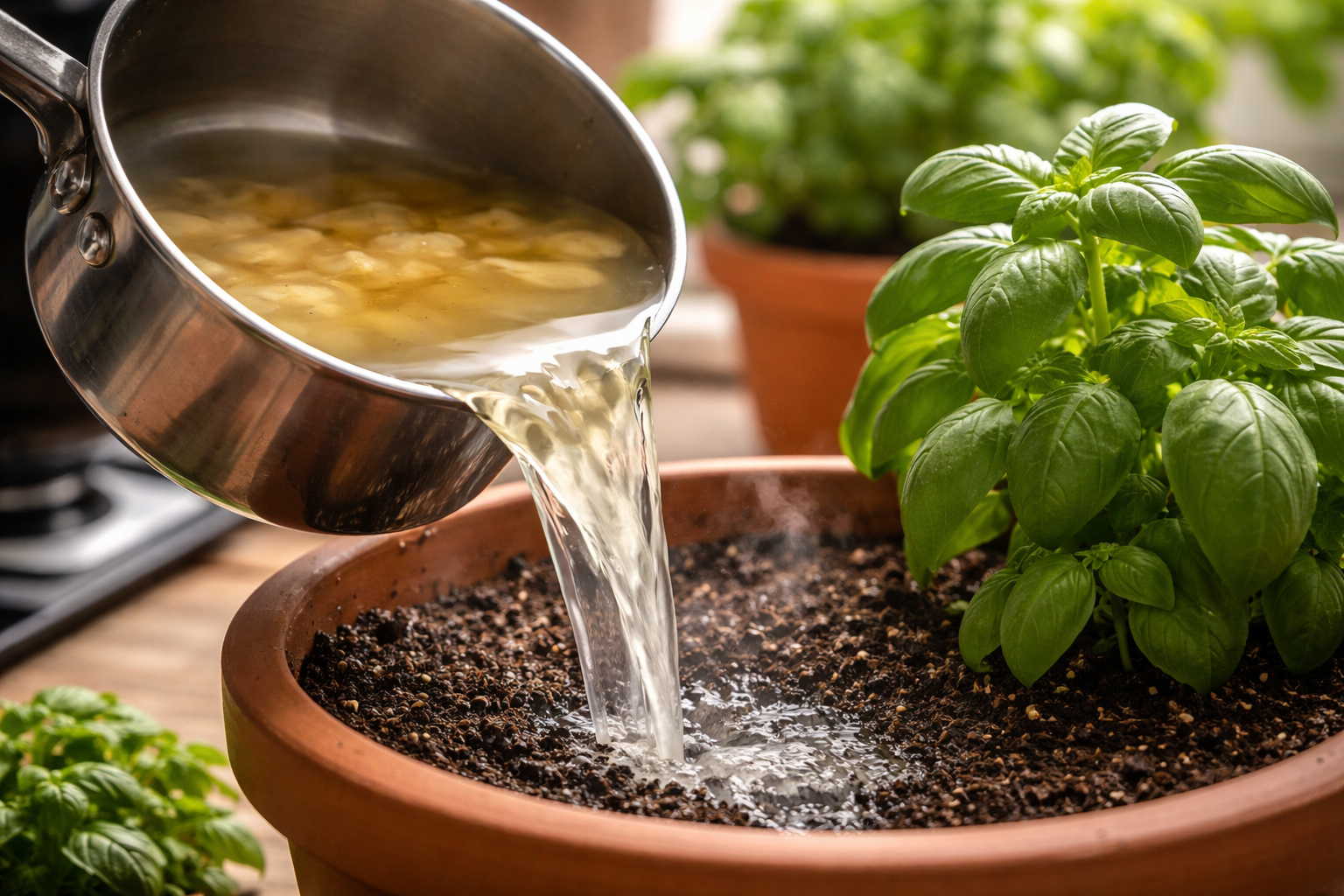
The water that almost everyone throws away after cooking potatoes carries nutrients released during the preparation and can be reused to help in the development of plants when used correctly at the base of gardens and pots, at no additional cost and without changing the routine.
-
The sea water temperature rose from 28 to 34 degrees in Santa Catarina and killed up to 90% of the oysters: producers who planted over 1 million seeds lost practically everything and say that if it happens again, production is doomed to end.

-
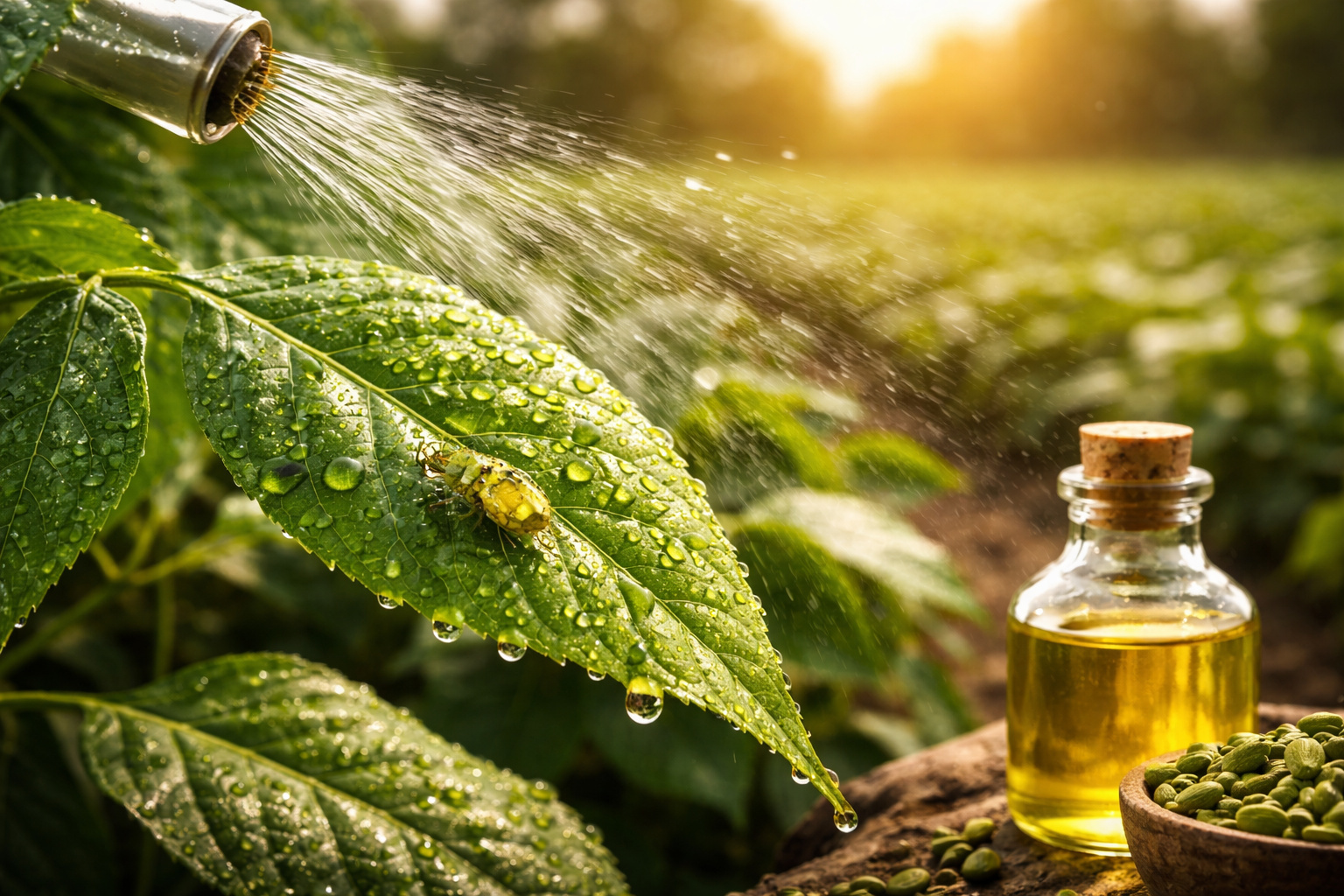
An Indian tree that grows in the Brazilian Northeast produces an oil capable of acting against more than 200 species of pests and interrupting the insect cycle, gaining ground as a natural alternative in soybean, cotton, and vegetable crops.
-
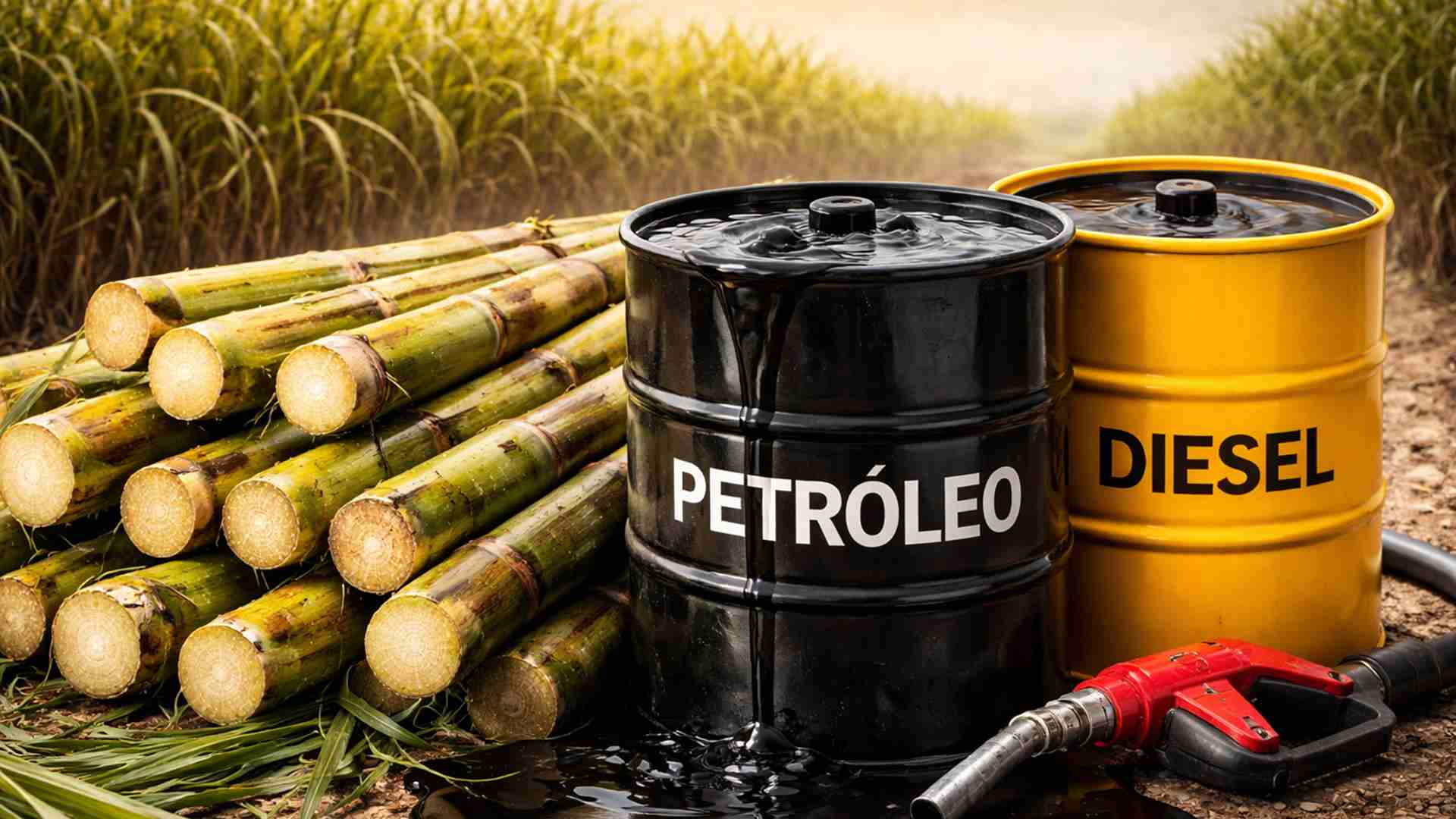
The rise in oil prices in the Middle East is already affecting Brazilian sugar: mills in the Central-South are seeing their margins shrink just as ethanol gains strength.
What raised the alarm was the comparison with Maine’s standard, used as a reference because South Carolina has not established safety limits for PFAS in agricultural soil.
In the seven fields that exceeded this parameter, one compound appeared as a marker: PFOS. In the agricultural lands of Robbie O’Neal’s family, PFOS ranged from 17,000 to 30,000 parts per trillion, and researcher Jake Thompson reported that some results were two to four times above the Maine standard created to protect dairy products, in addition to exceeding other state soil limits.
In the other eight fields, the levels were below Maine’s limit but still within a context of cumulative exposure: the very presence of PFAS in all analyzed areas indicates that the issue is not restricted to an isolated point.
Part of the technical debate now revolves around interpreting risk based on land use, crop type, rainfall intensity, and distance to wells.
How Sludge Became Fertilizer and How the Source Was Tracked
In the 1990s, accepting sludge meant reducing or even eliminating expenses on commercial fertilizers.
For producers with large areas of farmland and rotations between beans, corn, and pasture, the free supply was seen as an operational advantage, without the same degree of chemical scrutiny that exists today.
Decades later, sludge began to be interpreted as a pathway for PFAS, with a pattern of compounds suggesting a common origin.
Thompson described that when the same chemical pattern and similar concentration ranges are observed, the hypothesis of a shared source gains strength, and in this case, the historical sludge associated with Galey and Lord remains the central reference.
The use of sludge continued until the 2000s, according to local reports, and gained public visibility in a series published in 2023 by The State newspaper and McClatchy agency.
A change in perception was not instantaneous: the same material that was previously described as useful for enriching soil began to be reevaluated when the discussion about PFAS gained national scale.
Wells, Groundwater, and the Regulatory Dilemma in Agricultural Lands
The discussion in the region is not limited to soil. The concern is that PFAS could migrate over time and reach the groundwater that supplies wells used by families and livestock, creating a second axis of risk beyond the crops.
In one of the mentioned sites, there was a well less than 50 meters from a rectangular field that received sludge, proximity that increased pressure for practical answers.
The South Carolina Department of Environmental Services stated that the priority has been handling threats to residential wells and the soil of the former industrial site, classified as a Superfund area, while the EPA monitored the case and found similar results in previous measurements.
Bill Stangler, from Congaree Riverkeeper, stated that the promise to examine sludge before use was not fulfilled and that application to agricultural lands could lead PFAS through surface runoff to streams and rivers.
There is also a state backdrop. Regulators found PFAS in nearly all rivers analyzed in South Carolina and in various drinking water systems, at levels that may exceed the federal standard for water.
In this context, the discussion about agricultural lands connects to a larger network of exposure, where the private well becomes the most sensitive frontier between daily life and industrial liability.
Risk to Food, Livestock, and the Producer’s Decision-Making Chain
There are two technical fronts when discussing PFAS in agricultural lands: mobility in soil and transfer to plants and animals.
Yale also collected crop samples to check if plants are absorbing PFAS, but those results have not yet been released, leaving uncertainty about the food pathway in the short term.
A report cited in the survey, attributed to the National Academy of Sciences, Engineering, and Medicine, points out that leafy vegetables tend to absorb more PFAS than crops like corn and potatoes, and that hay can be a pathway for accumulation in tissues and milk.
This shifts the debate from “contaminated land” to the “production chain”, because the producer needs to decide what to plant, where to graze, and how to manage risk while PFOS and other PFAS remain detectable.
The very nature of PFAS amplifies the complexity. The survey notes that these compounds have been used in everyday applications, such as non-stick coatings, water-repellent materials, and firefighting foams, which helps explain why contamination appears in multiple environments.
In agricultural lands, the challenge is to translate a measurement into management decisions, without trading caution for alarmism or normalizing a persistent risk.
What Yale is Trying to Do Now and What Changes for Those Living Off the Land
The Yale project has been described as an effort to measure and then seek ways to neutralize PFAS effects on agricultural lands, focusing on mitigation strategies that reduce the availability of these substances in the soil.
For O’Neal, the motivation is operational: understanding which areas can still be safely used for cultivation and grazing and whether there is a plausible cleaning route.
The political and economic context also weighs in. O’Neal took the case to Washington to talk with congressional aides and engaged with lawmakers like Russell Fry and Chellie Pingree about support measures when PFAS affects crops.
On the farm, the urgency is the planting calendar, the fate of hay, and well water, and the decision to continue or discontinue the use of specific areas of agricultural land could alter a family’s income for entire harvests.
The investigation also enters a human dimension. There are records of relatives who lived next to areas that received sludge and wells that, in earlier tests, showed elevated levels of PFAS, although there is no confirmation of a causal link to specific deaths or diseases.
The central point, for Yale researchers and producers, is that the response depends on more measurements and a technically viable and financially sustainable mitigation plan.
The case of Society Hill exposes a clash between an old practice and a chemical standard that does not disappear.
When sludge turns into input and PFAS enters the equation decades later, agricultural lands cease to be merely productive areas and also become an environmental liability, measured in PFOS, wells, and management decisions.
In your view, what weighs more in a situation like this: completely banning sludge in agricultural lands, requiring mandatory PFAS testing before any application, or creating rules by crop type and distance from wells after PFOS has already been found?









-

Uma pessoa reagiu a isso.