





 Portuguese
  English
  Spanish
  2 min of reading
  0 comments


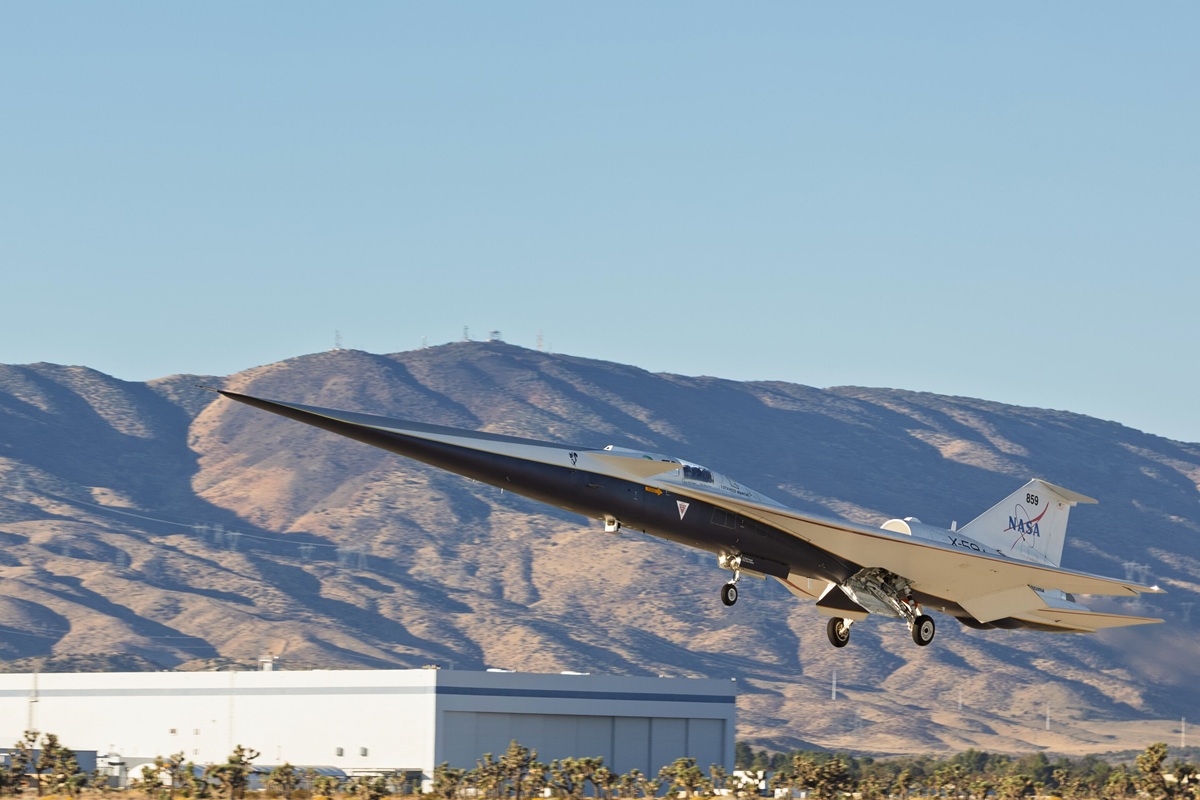
With 30 Meters in Length, the X-59 Completed Its First Flight Over the California Desert. The Project Aims to Eliminate Sonic Boom and Drastically Reduce Travel Time Between Major Cities
NASA and Lockheed Martin took an important step in the development of quiet supersonic jets. This week, an experimental aircraft designed to fly faster than sound with low noise completed its first test flight over the southern California desert just after sunrise. The event marked an advancement that could transform commercial air travel.
The Inaugural Flight of the X-59
The experimental jet, named X-59, was developed to achieve supersonic speeds without causing the sonic boom that has historically limited this type of operation over populated areas. During the test, the aircraft did not exceed the sound barrier.
The main objective was to verify structural integrity and flight systems. Nevertheless, the takeoff was celebrated as a significant milestone by NASA and Lockheed Martin.
-
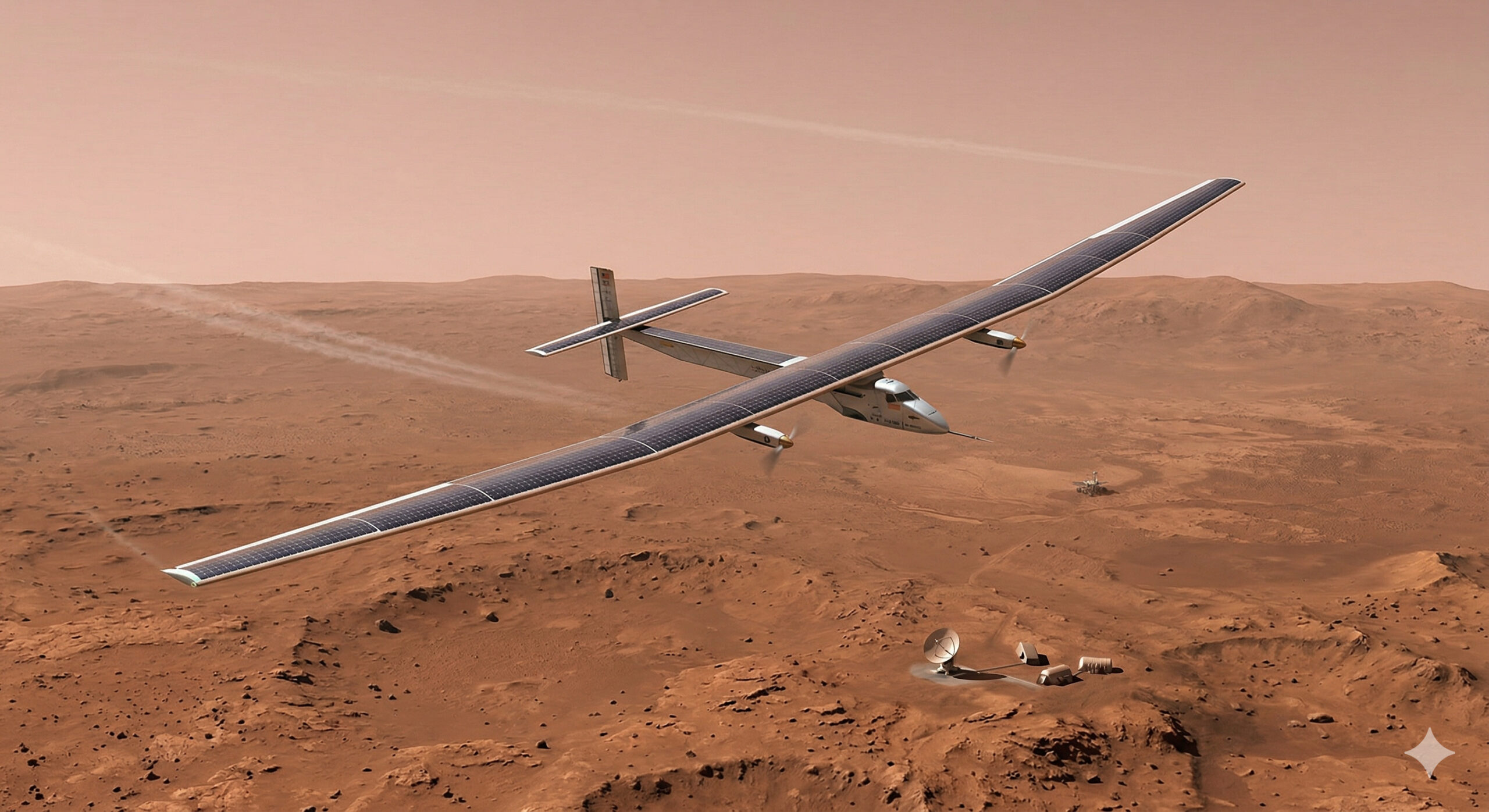
An engineer designs a solar plane to fly on Mars at an altitude of 1,000 meters and a speed of 300 km/h, covering 16,000 kilometers in a Martian year, 900 times the distance traveled by the Ingenuity helicopter in three years on the planet before experiencing a rotor failure, and NASA is already funding the feasibility study.
-
A new phenomenon of contactless magnetic friction intrigues scientists and questions a theory that has been valid since the 17th century.

-
An impressive phenomenon in Northern Brazil causes rivers of different colors to flow side by side, revealing secrets about sediments, currents, and biodiversity.

-
While many schools are still struggling with the basics, a teacher in China went viral for having elementary school students build a two-stage rocket using plastic bottles, water, and pressurized air in a science class that caught the attention of the entire world.


With 30 meters in length, the X-59 departed from the Lockheed Martin Skunk Works facilities in Palmdale, about 100 kilometers north of Los Angeles, and landed near NASA’s Armstrong Flight Research Center, 64 kilometers away. According to the engineers involved, the flight occurred as planned and demonstrated the project’s stability.
Reducing Noise and Travel Time
Since the 1940s, aircraft have reached supersonic speeds, but the explosive noise—the so-called sonic boom—led to the ban of these flights over land in the United States. The famous Concorde, operated by British Airways and Air France, offered transatlantic flights between the 1970s and 2000, but was retired in 2003 following an accident and high operational costs.
The X-59 promises a revolution by flying faster than sound with just a “slight bump,” as described by Lockheed Martin. If the project meets its goals, trips between cities like New York and Los Angeles could take half the current time, reopening the path for the resurgence of commercial supersonic travel.
NASA intends to use the results to propose regulatory changes that would allow the return of these flights over American territory, this time in a quiet and efficient manner.







-

Uma pessoa reagiu a isso.