





 Portuguese
  English
  Spanish
  4 min of reading
  0 comments



With the Revolutionary Starship HLS from SpaceX and NASA’s Artemis III Mission, Humans Will Return to the Lunar Surface in 2026, Using Innovative Technologies Such as Orbital Refueling and State-of-the-Art Space Suits.
The race to explore space has gained new momentum with the partnership between NASA and Elon Musk’s SpaceX, which is redefining how we will return to the Moon. The Artemis III program promises to take humans back to the lunar surface, something that hasn’t happened since 1972. But this time, the mission is more ambitious, with cutting-edge technologies paving the way for the future of space exploration.
If you have ever wondered how this journey will be made, the answer lies in the Starship HLS, SpaceX’s revolutionary spacecraft. Let’s explore how this technology and other innovations will make history.
The Return of Humans to the Moon with NASA and SpaceX: An Innovative Vision
The Artemis III mission is the starting point of a new era. In collaboration with SpaceX, NASA is utilizing the Starship HLS, a specially designed version of the famous Starship. At 50 meters tall and 9 meters in diameter, this spacecraft is like a “beach house” for astronauts — only in space!
-
In Mexico, a 3,000-year-old Maya site with the dimensions of an entire city may have been built as a colossal map of the cosmos, created to represent the order of the universe and reveal how this people organized space, time, and rituals.

-
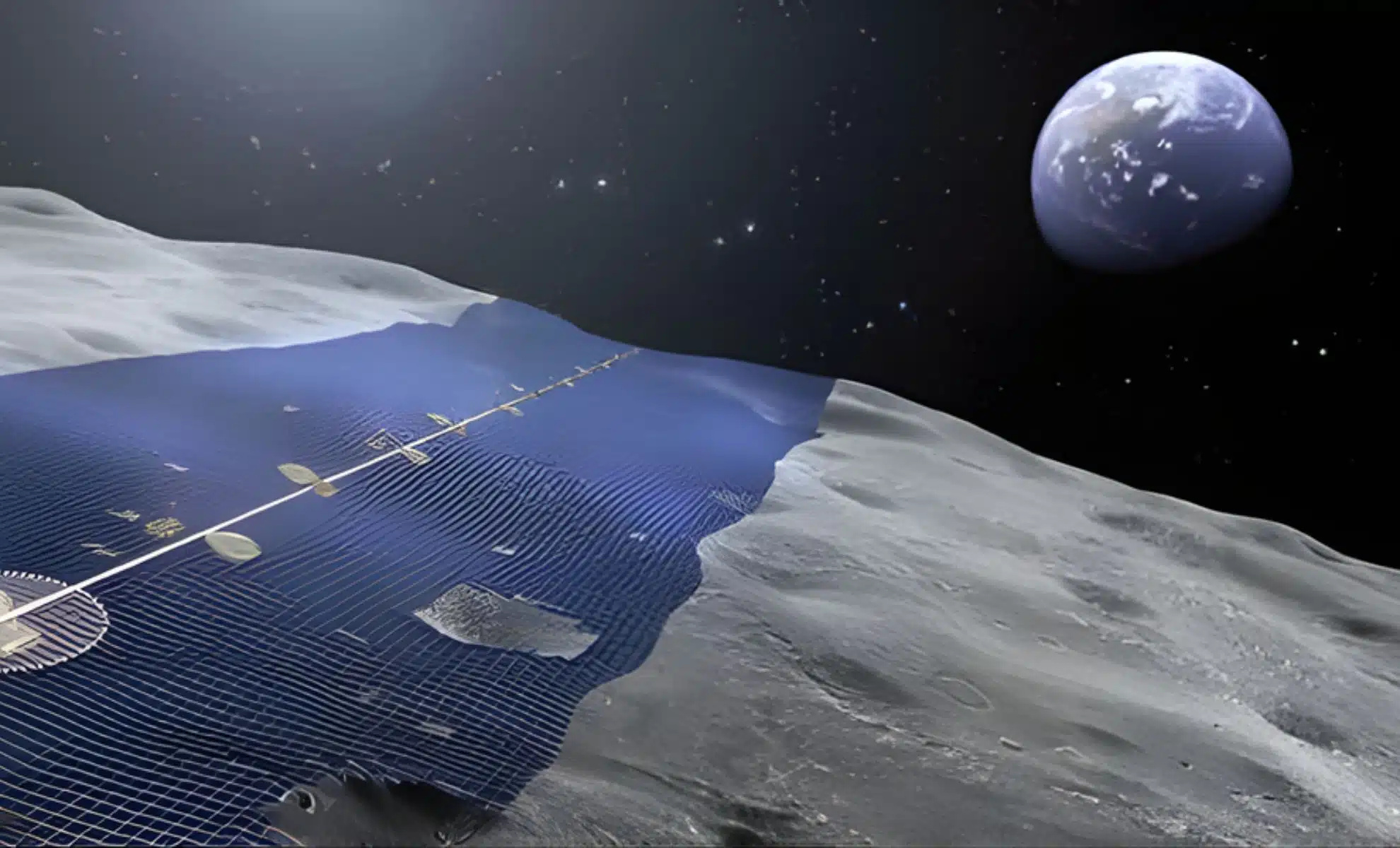
Japan wants to build a solar ring of 10,900 kilometers on the Moon to continuously send energy to Earth.
-
Weighing almost 1 ton, with temperatures of up to 3,000°C, the ability to launch 10,000 fragments within a radius of 1 km, capable of penetrating concrete and melting steel, Turkey’s terrifying bomb emerges as one of the most destructive non-nuclear weapons ever presented.

-
After a submarine disappeared beneath the “Doomsday Glacier,” scientists announce a new monstrous machine capable of operating at 3,000 meters depth to return to the heart of the ice and investigate a threat that could raise sea levels worldwide.


The plan includes the use of an orbital refueling system, a maneuver that seems straight out of a science fiction movie. Imagine: the spacecraft “stops” at a space gas station before heading to the Moon.
Starship HLS: The Spacecraft That Will Take Us Back to the Moon
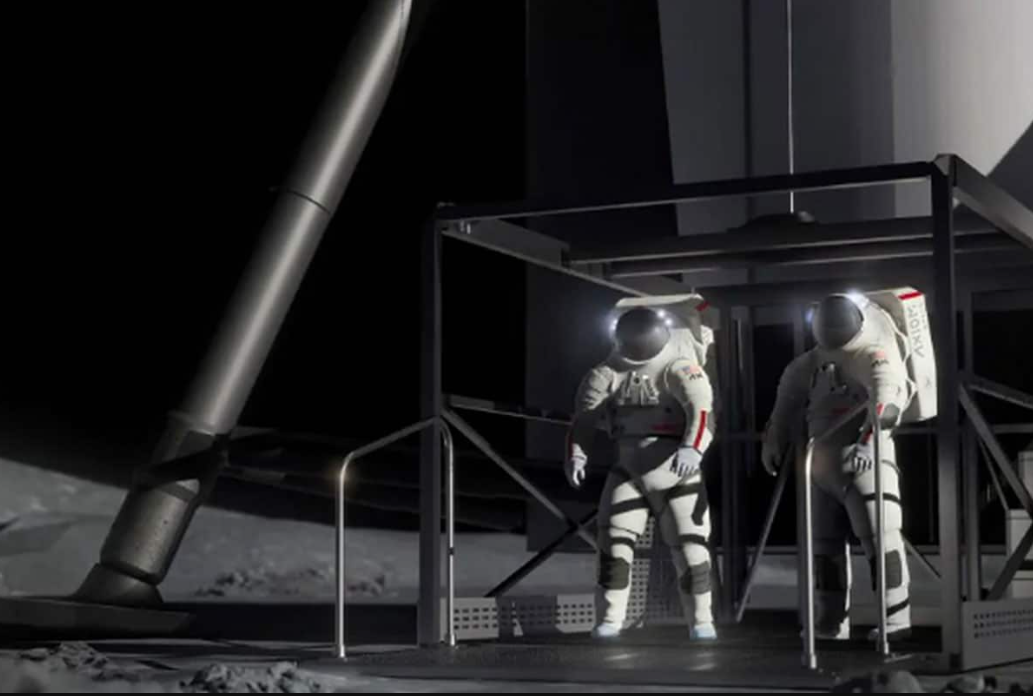
The Starship HLS is not just large; it is impressive in every way. Designed to meet the needs of a lunar mission, it brings advancements that go far beyond NASA’s old Apollo modules.
One of its differentiators is the in-space refueling system, which will have its first test in 2025. This technology will allow for longer missions, ensuring that the spacecraft has enough fuel to travel to and from the Moon.
Another highlight is the innovative elevator system, which allows for the transport of astronauts and cargo between the spacecraft and the lunar surface. Have you thought of a “shopping mall elevator” operating in space? It’s almost that, but much more robust and secure.
The interior of the Starship HLS was designed to be a multifunctional space, ensuring comfort and efficiency for the astronauts who will spend days on the lunar surface.
Preparations and Logistics of the Artemis III Mission
The lunar journey of NASA and SpaceX begins with the Orion capsule transporting the astronauts to lunar orbit. There, the Orion will dock with the Starship HLS, which will take two crew members to the surface. Meanwhile, the other two team members will remain in orbit to ensure support.
The precision of the landing will be assisted by Intuitive Machines, which will provide technology to ensure that the Starship HLS lands exactly at the desired location, with total safety.
Cutting-Edge Technology for Lunar Exploration
The spacesuits for this mission are a chapter apart. Developed by Axiom Space in partnership with Prada, they combine style and functionality. These suits offer enhanced mobility and greater protection, allowing astronauts to face the challenges of the lunar terrain with confidence.
All technologies undergo rigorous testing to ensure safety and efficiency. After all, space does not forgive mistakes.
A Future of Possibilities Beyond the Moon
The Artemis III mission is just the beginning. Starting with Artemis IV, the plan is for Elon Musk’s Starship HLS in partnership with NASA to begin operating at the Gateway station, a space base in lunar orbit. Think of it as a “five-star hotel” for astronauts, with everything they need to explore deep space.
The Gateway will open doors for longer missions, scientific studies in cislunar space, and even future trips to Mars. It’s like building a road to the unknown, with strategic stops to refuel and plan.
As we await Artemis III, it is clear that we are in an exciting moment of space exploration. NASA and SpaceX are proving that the sky is not the limit — it’s just the beginning.








-

-

-

7 pessoas reagiram a isso.