Portuguese
  Spanish


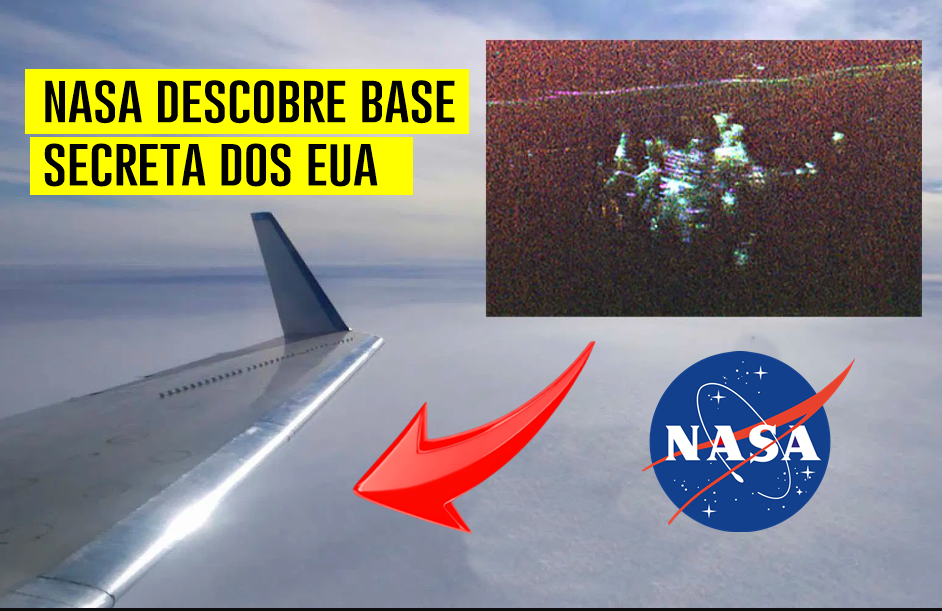

NASA Revealed The Existence Of A US Military Base, Built During The Cold War, Buried Under 30 Meters Of Ice In Greenland, Intriguing Scientists And Historians.
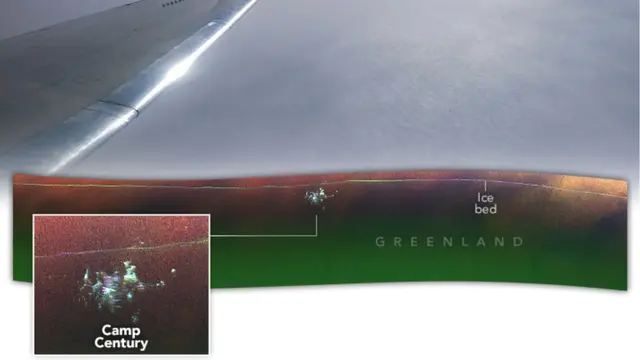
In April 2024, scientists from NASA made a surprising discovery during a flyover of Greenland. Hidden beneath more than 30 meters of ice was Camp Century, a military base of the United States from the Cold War era. Using advanced radar technology, the team led by Chad Greene captured detailed images of the site aboard a Gulfstream III aircraft.
“We were exploring the ice bed and suddenly came across Camp Century“, explained Alex Gardner, a cryospheric scientist at NASA. The discovery was unexpected, as the mission aimed to map the internal layers of ice, not to locate an ancient military base.
Built in 1959, Camp Century consisted of 21 underground tunnels extending over 3 kilometers. Although initially presented as a research facility, its true mission involved the Iceworm Project, a secret plan to store nuclear missiles in the ice as part of a strategy against the Soviet Union.
-
AI Security System in Brazil Aims to Cut False Alarms by Differentiating Pets from Intruders, Enhancing 24/7 Monitoring for Homes and Businesses

-
Archaeologists Discover 1,500-Year-Old Byzantine Mosaic with Greek Biblical Inscription in Israel, Uncover Ruins of 10 Buildings Near Kiryat Gat
-
Ohio Carpenter Finds 308-Gram Meteorite the Size of a Baseball After Dreaming of Its Location

-
Chinese Student Builds Humanoid Robot for $2,100 at Age 20, Now Leads Robotics Startup in China


A Military Base In Extreme Conditions
Camp Century was not a conventional base. Located in one of the most inhospitable environments on the planet, it faced temperatures dropping to -57°C and winds exceeding 190 km/h. Nevertheless, the facility housed 200 soldiers and had a portable nuclear reactor, the PM-2A, to provide power.
However, the extreme conditions of the ice made the Iceworm Project unfeasible. The dynamic movement of the ice layer compromised the stability of the structure, and the base was decommissioned in 1967. Remnants of its infrastructure and hazardous waste, including 47 thousand gallons of radioactive trash, remain buried under the ice.

A NASA Technological Re-discovery
The radar technology used by NASA revealed unprecedented details of Camp Century. The UAVSAR (Uninhabited Aerial Vehicle Synthetic Aperture Radar) system was designed to map the interior of ice layers and the rocky bed below. Unlike lidar, which uses laser light, UAVSAR utilizes radio waves to penetrate dense surfaces, allowing for high-precision visualization of hidden structures.
“We were able to identify individual structures of the base in a way that had never been possible before”, highlighted Chad Greene. In addition to providing clarity about the layout of Camp Century, the collected data reinforces the capability of new technologies to explore extreme environments and reveal historical information.
Risks And Concerns
The rediscovery of Camp Century raises environmental concerns. With the accelerated melting of Greenland’s ice due to climate change, there is a risk of exposure to the hazardous waste left behind. These materials include radioactive and biological contaminants that may pose serious issues for both the local and global ecosystem.
Additionally, the history of the military base serves as a reminder of the lasting implications of human activities in remote areas. During its operation, Camp Century collected ice cores that were crucial for understanding Earth’s climatic past. These cores revealed that Greenland was once covered by forests and inhabited by diverse wildlife, including mastodons.
Today, the abandoned base is a symbol of human ingenuity and boldness, but also of the unexpected consequences of ambitious projects.
The Future Of Polar Exploration
Camp Century remains frozen in time, but its rediscovery has rekindled interest in military and scientific projects from the Cold War. As scientists increasingly explore the frozen depths of Greenland, this discovery highlights the importance of balancing scientific curiosity with environmental responsibility.
More than just a military base, Camp Century is a frozen piece of history that reminds us of our technological achievements and the challenges we still face in dealing with the legacies of the past. With each new discovery, the ice of Greenland continues to reveal secrets that shaped the world as we know it today.